
Navigation
Install the app
How to install the app on iOS
Follow along with the video below to see how to install our site as a web app on your home screen.
Note: This feature may not be available in some browsers.
More options
You are using an out of date browser. It may not display this or other websites correctly.
You should upgrade or use an alternative browser.
You should upgrade or use an alternative browser.
will the t3i work well with DVX100
- Thread starter JONJON
- Start date
they are really apples and oranges, the DVX100b will give you high quality SD footage at 24p yes but its not going to instantly match the t3i's 1080p 24p footage. That being said you could fairly easily take both cameras out, hook them both up to the same monitor and switch back and forth while tweaking the canon's picture profile to get it as close to the dvx100b as possible. then in post you would have to do some scaling and resizing but your frame rate would match. I think you will find the t3i a much better camera. Nothing against the 100b, we all used it at one time or another and it was a great choice for a long time. But its really getting to be time to retire that old work horse.
Keep in mind that with the t3i you won't get a lot of the features that the dvx100b gave you. No full time AF in video so expect to manually focus, no solid quality auto video modes so expect to shoot again in manual mode to get the best results.
How much experience do you have shooting with a DSLR? There is most definitely a learning curve to the limitations and strengths of each camera, but a DSLR is a huge difference from a camcorder style.
Keep in mind that with the t3i you won't get a lot of the features that the dvx100b gave you. No full time AF in video so expect to manually focus, no solid quality auto video modes so expect to shoot again in manual mode to get the best results.
How much experience do you have shooting with a DSLR? There is most definitely a learning curve to the limitations and strengths of each camera, but a DSLR is a huge difference from a camcorder style.

SLavictoire
Well-known member
Hi! I'm at the same position of JONJON, I recently bought a T3i, but not for mixing footage with my DVX100.
I don't wan't to use the Magic Lantern Firmware for the Waranties issues.
I own a H4N Zoom wich I hooked up to the T3i, I tested out. The result in postproduction was so disapointing... The sound was noisy, I took precaution to put the sound in the T3i in manual with the actual settings.
On the visual aspect, I put all thing I could on manual. The only thing I didn't find to change will being in camera mode is the Iris. I could change the ISO but could found the Iris settings ine camera mode...
Well... like you said there is a HUGE difference between DSLR and Camcorders...
If you got ideas where we could try to learn to deal with DSLR, that would be great!
I don't wan't to use the Magic Lantern Firmware for the Waranties issues.
I own a H4N Zoom wich I hooked up to the T3i, I tested out. The result in postproduction was so disapointing... The sound was noisy, I took precaution to put the sound in the T3i in manual with the actual settings.
On the visual aspect, I put all thing I could on manual. The only thing I didn't find to change will being in camera mode is the Iris. I could change the ISO but could found the Iris settings ine camera mode...
Well... like you said there is a HUGE difference between DSLR and Camcorders...
If you got ideas where we could try to learn to deal with DSLR, that would be great!
firstly with your zoom into the t3i you are coming out of the Zoom at headphone level and into a mic level jack. this means that the signal coming from the ZOOM will be much much louder than the canon is built to handle. If you are planning on using the zoom mics or a mic plugged into the zoom you will need an attenuation cable like this one http://www.fullcompass.com/product/...ign=googleps&gclid=CICK0u_fh7gCFQE6Qgodk0cAbQ
That will help you with your audio problems.
The problem you are having with iris should be fixed if you go into the menu and put video mode on manual. Then you will change your aperture the same way you would in photo manual mode.
If you want something more in depth Mitch from PLanet 5d has made quite a few great ebooks found here
http://blog.planet5d.com/training/
As for ML voiding warranty i can tell you it does not. It is completely removable. You can check out some of the links here for other people backing me up on that front
https://www.google.com/search?q=wil...2.57j0l3j62l2.9593j0&sourceid=chrome&ie=UTF-8
That will help you with your audio problems.
The problem you are having with iris should be fixed if you go into the menu and put video mode on manual. Then you will change your aperture the same way you would in photo manual mode.
If you want something more in depth Mitch from PLanet 5d has made quite a few great ebooks found here
http://blog.planet5d.com/training/
As for ML voiding warranty i can tell you it does not. It is completely removable. You can check out some of the links here for other people backing me up on that front
https://www.google.com/search?q=wil...2.57j0l3j62l2.9593j0&sourceid=chrome&ie=UTF-8
SLavictoire
Well-known member
Thanks! All those informations will be greatefull!

maranfilms
Veteran
the more I think about it, I actually don't think the t3i has much more in the way of resolution over the Dvx100, I think the t3i uses aliasing to give the illusion that it's much more than standard def. With that said, I think it may be more of changing aspect ratio than changing resolution. I'm not sure how easy or difficult that is. I'm just saying they may be closer than you think.

JONJON
Well-known member
Thanks for the replies! I have heard there is a learning curve, i have an older rebel camera but i know its not really the same thing. i've read and watched videos about the t3i and magic lantern, and looks like something i would have to practice with for awhile, but not overly difficult. one of the things that worries me about them is the recording time limit of 12 minutes. i would use my dvx for most of the main audio, but i would want a small mic for the t3i just to help sync up later in post. i have a photographer friend that uses a t3i some and we are supposed to get together soon and see what all i can figure out  ,
,
,
SLavictoire
Well-known member
you will need an attenuation cable
When I tested I only used the cable from this set :
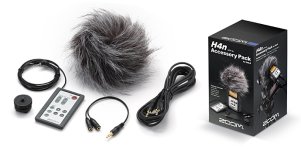
I didn't have time to check out, but the use of the "Y splitter" would help?
Also I didn't check the websites you showed, but they are bookmarked! ;-)
Thanks again!