Why I think Knee and Slope settings are the Devil

Weell, i don't think that vimeo video is too bad. This must be the NAB demo at sony. If you download the mts, and have a look it deals with the situation quite well in terms of resolution and range. It's a torture test and an awful lighting set up.

Interestingly the AVCHD compression is pretty bad. If you look at the green channel it's really nice, the red and the blue are awful. Preproduction compression? Or the source resolution is so sharp that it's obviously compressed now?

The aliasing issues that you can get on the 100 don't seem to be present, not sure if any of the contrast edges are high enough to provoke it.

It's quite noisy, i wonder what ISO.

Now whether the camera is exhibiting good range largely depends what that light is.

The orange clipping through yellow to white is RG clipping first but without seeing the dress material it could be like that in real life. The skin on the arm clips through yellow. Who knows what the profile setting are though. And was there an FS100 side by side.

cheers
Paul
 
There are several issues at play here and it generally comes down to the person holding the camera.

I am not singling anyone out an it is a very general observation based on a lot of images that I saw when researching the FS100.

1. Blown out highlights can only be blamed on one person.
2. Shooting a scene without adequate fill in a high contrast lighting setup and blowing the highlights can only be blamed on one person.
3. Not understanding how the picture profiles work and relying on 1 profile in every lighting setup which blows out the whites or produces poor skin tones can only be blamed on one person.
4. Raising the Black Level which destroys the cameras black resolution and reduces the dynamic range by 20%. But hey, it looks brighter in the view finder so it must be better, right?
5. Incorrectly using a low knee and shallow slope to correct for over exposed highlights can only be blamed on one person.
6. Blowing out the sky when you could've used a grad ND or circular pol can be only be blamed on one person.

Tips:
1. Don't overexpose. Simple. The sensitivity of the FS100 and absence of noise means there's a lot more information in the blacks than the onboard histogram suggests.
2. What's wrong with bounce cards these days? What's wrong with a bit of foundation make-up on the talent?
3. A picture profile should be tuned for the lighting set-up. It's quick and easy to alter even in busy situations. 6 slots is adequate but 99 is better. Avoid raising the black level if you use cinegamma2 otherwise when you apply your heavy handed "punchy" grade you'll have banding in the blacks.
4. Learn how to build your own profiles and not just use anything you find on the internet. A raised black setup does not make it Log.
5. The knee setting has a dramatic effect depending on which gamma curve you've chosen and the lighting setup of your scene. It's up to you to tune all three for the best image.

If anything above was news to you, you might want to reconsider referring to yourself as a cinematographer or DP.

I was fortunate to meet Christopher Doyle while backpacking round Vietnam 10 years ago, he was having a break from filming the Quiet American. Now he really is a cinematographer. I didn't recognise him and we sat chatting and drinking beers. I asked him why role he had on the film, he replied, "I'm the camera man." It wasn't until I'd finished my trip and returned to the UK and looked up his work I realised what a genius he is. He is one of the very few people qualified to call himself cinematographer or DP, IMHO.

Cheers
 
All of the above is true.

Now my higher paid profession is stills - which IMO leads the curve in terms of digital capture - my humble nikon D3 gives I guess an Alexa or Red serious quality match in terms of the files - they may catch up soon
But the big thing about the D3 is the huge ability to handle light of almost any nature has taken down barriers for shooting
Before I had a D3 my primary stills camera was a hasselblad with a 25 ISO back - that meant everything had to be lit - no questions - everything - my photography was a stayed world of planned setups - softboxes - 6-12 images per day
The D3 is a huge liberation for me, my back, and most important my clients
At least with still you have access to super powerful strobe lights that can get you out of most corners

ANy one in the motion world who is not seeking such liberation will end up sitting on the side lines

Eveything you suggest (apart from stopping down) - reflectors lighting slows down and makes a shoot less natural - less relaxed - more garbage - less set ups per day - more asisstants - higher budget -less value to the client- less repeat bookings

I think everyone here is happy to shoot with a Geny a few tens of K of HMI - and a scrim the size of a boat sail and a crew to manhandle it and a makeup truck

But when this is not avaliable one must use the tools at hand.. and make the best of them.. and on occasion just say 'sorry this cannot happen'

Making the best of the tools through information exchange at a place like DVXuser is part of that process

In terms of using the FS I have made some adjustments to my shooting for example getting a 12v supply for my Dedo DL4 to provide fill for car interiors a $40 upgrade to my kit - so worth it - I have also DIYed a bigger reflector!

Once again I offer you to post some screenshots, profiles etc to aid that process of making the best of the tools we are lucky to have.. because lets face it the FS is an amazing camera for the price if you understand the limits

Best

SMM
 
Last edited:
There are several issues at play here and it generally comes down to the person holding the camera.

I am not singling anyone out an it is a very general observation based on a lot of images that I saw when researching the FS100.

1. Blown out highlights can only be blamed on one person.
2. Shooting a scene without adequate fill in a high contrast lighting setup and blowing the highlights can only be blamed on one person.
3. Not understanding how the picture profiles work and relying on 1 profile in every lighting setup which blows out the whites or produces poor skin tones can only be blamed on one person.
4. Raising the Black Level which destroys the cameras black resolution and reduces the dynamic range by 20%. But hey, it looks brighter in the view finder so it must be better, right?
5. Incorrectly using a low knee and shallow slope to correct for over exposed highlights can only be blamed on one person.
6. Blowing out the sky when you could've used a grad ND or circular pol can be only be blamed on one person.

Tips:
1. Don't overexpose. Simple. The sensitivity of the FS100 and absence of noise means there's a lot more information in the blacks than the onboard histogram suggests.
2. What's wrong with bounce cards these days? What's wrong with a bit of foundation make-up on the talent?
3. A picture profile should be tuned for the lighting set-up. It's quick and easy to alter even in busy situations. 6 slots is adequate but 99 is better. Avoid raising the black level if you use cinegamma2 otherwise when you apply your heavy handed "punchy" grade you'll have banding in the blacks.
4. Learn how to build your own profiles and not just use anything you find on the internet. A raised black setup does not make it Log.
5. The knee setting has a dramatic effect depending on which gamma curve you've chosen and the lighting setup of your scene. It's up to you to tune all three for the best image.

If anything above was news to you, you might want to reconsider referring to yourself as a cinematographer or DP.

I was fortunate to meet Christopher Doyle while backpacking round Vietnam 10 years ago, he was having a break from filming the Quiet American. Now he really is a cinematographer. I didn't recognise him and we sat chatting and drinking beers. I asked him why role he had on the film, he replied, "I'm the camera man." It wasn't until I'd finished my trip and returned to the UK and looked up his work I realised what a genius he is. He is one of the very few people qualified to call himself cinematographer or DP, IMHO.

Cheers

That is a serious oversimplification of the problems, sure, ANYONE can say "Don't overexposure the camera" but I don't buy that, not for a second, and not with the research I have done on people using better cameras. Everyone on here says they never let the camera clip, yet, I've listened to PLENTY of behind the scenes interviews where people, professionals mind you, are talking about the beauty of letting an Alexa or an Epic clip and how well they clip when they need that kind of shot.

The problem I have is simple, when I shoot a high DR scene on the 7D, it's easier to get my highlights to roll off if I have any areas that are overexposed. They just look better, period. With the FS100, I have to spend a lot of time fixing them. Sure, I have shot a lot of scenes at lower exposure, but, while there is some more room in the shadows, the effect of crushing that lower end that the curves use, there is problems that come out of the shadows as well. Given the source material is 8-bit, I find that shooting where I need the main portion of the image to sit is the best thing I can do, and I do have multiple profiles for different situations.

When people shoot waves at the beach, I almost always see them let the white bits of the waves overexpose, since typical beach scenes or water scenes have a HUGE dynamic range. I have seen this be a test of cameras more often than not, and have studied footage from the 7D, AF100, FS100, C300, F3 and the Epic in this scenario. There are many circumstances where the FS100 just has a hard time with this type of shot alone, and cyan portions are all over the waves white areas. It is fixable, but, it's also difficult if you are recording in camera, because the area between the cyan and the white, and the are between the cyan and the dark water, gets REALLY dark sections that are nothing other than a failure of the 4:2:0 encoding. Those are REALLY hard to fix, if not impossible on moving objects.

The problem with using a reverse LUT is that the LUT is 3D. That means that the R, G and B value can be used to determine each value of R, G and B, so it's quite a bit more complex than just a simple curve on each of the channels. Worse, like I mentioned, is that once it goes through 4:2:0, there are lots of artifacts at the boundaries of high contrast areas and I've really no way to remove them automatically.

The simple fact is, there are times when I want the image to blow out. If I have a set of car headlights at night hitting my camera, I WANT that to blow out. What I don't want to see is a huge CYAN ring around the light that has no gradient into the cyan, and no gradient into the white. The FS100 is the single worst camera I have ever used for highlights. Yes, I still own it because all the other factors of the camera are fantastic, but that one thing which could EASILY be fixed in camera, is the one thing that plagues my shooting style.

For others, with controlled environments, it's not a problem, and that is awesome. That said, it doesn't mean people don't have a legitimate concern. If I could have anything from Sony at this point, it would be at least let me write my own 3DLUT. I'd be quite happy with crafting my own table.

And Morgan, I don't think that the RED channel is more sensitive, I think the curve is the problem. When I have a scene that is lit and looks perfect, skin tones included, if I drop the light source down, the skin tone changes color, often going purple. This shows me that the curve being applied on the channels relative to intensity is not scaling properly. I've shot these same scenes with the AF100 and the 7D and they don't do this. Red coming into the camera at different intensities is not scaling well.

Let me say again, I love my FS100. I'd just love to have maybe a selectable different highlight roll-off for those of us that prefer the way that Canon does it. Even the new BlackMagic camera rolls off highlights better. I'd rather lose detail myself than have huge sections of color shift.

I paid for the FS100 with my own money, so Sony should be thankful that I am willing at the moment to let the HL problem not keep me from owning the camera. Where the real question is now is the FS700. I like everything except the highlights. I'm not going to be thankful if I think Sony did a poor job at implementing highlight roll-off, and I think they have.
 
And Morgan, I don't think that the RED channel is more sensitive, I think the curve is the problem. .

Thats what I said - less sensitive - so drop the lights and the skintone swings blue because the red is dropping off too fast .. purple

ANd I agree - I want to blow my highs - car lights perfect example!

S
 
The simple fact is, there are times when I want the image to blow out. If I have a set of car headlights at night hitting my camera, I WANT that to blow out. What I don't want to see is a huge CYAN ring around the light that has no gradient into the cyan, and no gradient into the white. The FS100 is the single worst camera I have ever used for highlights. Yes, I still own it because all the other factors of the camera are fantastic, but that one thing which could EASILY be fixed in camera, is the one thing that plagues my shooting style.

The decision to do this should be in the hands of the operator. 100% agreement there.

Do you happen to have some samples of these issues you're talking about. I'm curious because i haven't really seen persistent issues as you mention. I saw loads with the AF100 (not that i owned one). I've not really been out and about the the FS so keen to see the situations causing the issues.

Aren't all sensors basically daylight balanced, the silicon is more sensitive to blue. In tungsten light the red has to be amplified. The sensor response is probably non linear, so if you have to boost the red then it may respond different relative to the blue as intensities change.

I've always tended to try and shoot around 4200K or above, even inside, if possible. I just think you get a better response and perhaps that's why. Yes i gel my daylight kinos!

cheers
Paul
 
I can generate a simple test case maybe tomorrow night just to show what the camera is doing. If I shoot the blue LED on my studio monitors, and let the center blow out, you will be able to see what i am talking about. Now, I know the minute I post it people are going to be like "Well, the problem is you need to light the rest of the room" etc, but, what I am trying to demonstrate is a situation where I like the results on my 7D better...which I think I have the test on my edit computer already so I might just grab 2 screen grabs off of that to show. What you'll see is that the 7D has less detail, but the FS100 has artifacts in the highlights. Stay tuned for those images...

Pertaining to the red sensitivity, even if it was less sensitive and non-linear, if you know the relationship to incoming level to recorded amount, you can easily apply a reverse curve to make that data linear. However, that is not what I see. This is why I'd REALLY like to create my own LUT where I could tune the camera to EXACTLY what I want.

Also, the R/G/B channels overlap too, which is what I think a 3DLUT is trying to account for as well since the separation is not complete. I really wonder what the affects are of those overlapping regions.

And I'd say, you can fix the red problem in post, but honestly, it's annoying. Sony could do a MUCH better job with their LUTs personally.
 
I think we all need to realize that the knee and slope setting is a compressor. It's artificially altering the look of your image into something ugly. The simple fact is that we are trying to go beyond the dynamic range limits of the camera and suffer the consequences. You can not pull any information out of a compressed signal. This is not a raw or log camera. My advice is to shoot it correctly and you will yield the best results. My examples were meant to show what different knee and slope settings were like at the same exposure. I could have easily underexposed and avoided compression on the second image, but then we wouldnt be having this awesome conversation!
 
Last edited:
I can generate a simple test case maybe tomorrow night just to show what the camera is doing. If I shoot the blue LED on my studio monitors, and let the center blow out, you will be able to see what i am talking about. Now, I know the minute I post it people are going to be like "Well, the problem is you need to light the rest of the room" etc, but, what I am trying to demonstrate is a situation where I like the results on my 7D better...which I think I have the test on my edit computer already so I might just grab 2 screen grabs off of that to show. What you'll see is that the 7D has less detail, but the FS100 has artifacts in the highlights. Stay tuned for those images...

Pertaining to the red sensitivity, even if it was less sensitive and non-linear, if you know the relationship to incoming level to recorded amount, you can easily apply a reverse curve to make that data linear. However, that is not what I see. This is why I'd REALLY like to create my own LUT where I could tune the camera to EXACTLY what I want.

Yes that would be great, if you have a 7D and FS example. Now a blue LED light. Hmm, that's kinda a weird spectrum isn't it? They do funny things to my eyes!

If i get a chance i might shoot a macbeth under different degrees of illumination to see how the colour balance changes, this is what you're questioning? Now under different illumination are you exposing up to get a decent image. I presume you are? So you can compare the sensitivity of the sensor?

cheers
Paul
 
I think we all need to realize that the knee and slope setting is a compressor. It's artificially late raring the look of your image into something ugly. The simple fact is that we are trying to go beyond the dynamic range limits of the camera and suffer the consequences. You can not pull any information out of a compressed signal. This is not a raw or log camera. My advice is to shoot it correctly and you will yield the best results. My examples were meant to show what different knee and slope settings were like at the same exposure. I could have easily underexposed and avoided compression on the second image, but then we wouldnt be having this awesome conversation!

Well not really. The world outside needs to be compressed into something that can be used. The dynamic range of sun light scene is incredible. Our eyes do an amazing job.

So every camera out there has to have some kind of compression.

cheers
Paul
 
Yes that would be great, if you have a 7D and FS example. Now a blue LED light. Hmm, that's kinda a weird spectrum isn't it? They do funny things to my eyes!

If i get a chance i might shoot a macbeth under different degrees of illumination to see how the colour balance changes, this is what you're questioning? Now under different illumination are you exposing up to get a decent image. I presume you are? So you can compare the sensitivity of the sensor?

cheers
Paul

I am changing the gain to compensate for the change in illumination. That's when I noticed the difference in two shots where the same person went from good skin tone to purple skin. This change was pretty drastic. I'll try and dig that out as well. The light source was the sun, but the time in the day was not hugely different. It wasn't like bright sunlight to magic hour shots. Of course, I feel it could be fixed in post, but still, I found it odd how much it shifted the skin tone.

I just used a blue LED because it was the easiest to point the camera at. I also have red, yellow, green :) I have lots of synthesizers with lots of LEDS.

What I wanted to understand was why I was disliking the blowout on the FS100 so much, and when I did this test to pixel peep closely (as I was writing a plugin for PPro and AE to fix this stuff) I really started to study what Sony was doing.

The reason I think it looks so bad is that our eyes seem to accept black and white and the ultimate in shadow and highlight. We expect it because that's what we are used to seeing with specular highlights. When we add a color shift, it looks fake. Cameras like the C300/Alexa and even the 7D have a little color shift as well, but, how they do that is it's within a pretty small transition to white, and to me, it looks fantastic.

Basically, each channel has an expander on it relative to the inverse of the other channels. What you are doing though is if ANY channel hits max value, all the other channels are max value, and detail is lost. Like the example of the sky being CYAN, there is detail there you can get out, and you can try and shift that sky color, but it's not going to be easy because if there are other colors using similar hues, you are going to fight not to change them as well.

The problem I have is sometimes I don't notice it is cyan in the sky because I might be shooting in a bit of sun, and don't have the hood with me. If the profile blew out the sky to white like I would do in post to fix the horrible cyan color, I would have realized I would have never shot the scene like that to begin with. I would have brought the sky down into the shot. I know the solution is to have a large monitor with me to check the color, but, this is not practical. I shoot handheld action shots and my rig HAS to be small and versatile (which I am very thankful for with the FS100).

I akin this problem to shooting log and having to look at it as log on the screen. This is NOT something I want to do because I want my visuals to show me an approximated S curve of the image so I can see it closer to what I am going to grade, but have the freedom of log on disk, just as the Epic does. This is why I don't use any of the gLog settings Frank came up with. Not because they don't produce some interesting results, but because it is hard to monitor without being able to apply different curves to what I see.

I shot similar things with the AF100 and FS100 when I owned both. I think the AF100 handling blowouts slightly better, but definitely not perfect. I liked everything else about the FS100 more so I kept it.
 
Well not really. The world outside needs to be compressed into something that can be used. The dynamic range of sun light scene is incredible. Our eyes do an amazing job.

So every camera out there has to have some kind of compression.

cheers
Paul

Sorry I should have said I could have avoided the ugly compression of hilights on my face rather than compression overall. Yes the camera compresses information on its own. But it's when you tell the camera to further compress outside what it was meant to do is when the knee and slope settings are the devil.
 
Well, I am hearing different stories with the FS700 now. It appears Adam Wilt and Art Adams did some tests with Cinegamma4 and it has GREAT HL handling it their opinion. I've written Adam to get some clarification.

(1) It would be nice to see that in the FS100 as well.

(2) I hope it's true! :)
 
The world outside needs to be compressed into something that can be used. The dynamic range of sun light scene is incredible. Our eyes do an amazing job.

So every camera out there has to have some kind of compression.

cheers
Paul

Not really IMO - we just choose which bit of the world we are going to look at in that frame.. maybe outside the window with the room in solhouette or the room with white outside - just I dont want the room with flouecent green outside!

S
 
I am changing the gain to compensate for the change in illumination. That's when I noticed the difference in two shots where the same person went from good skin tone to purple skin. This change was pretty drastic. I'll try and dig that out as well. The light source was the sun, but the time in the day was not hugely different. It wasn't like bright sunlight to magic hour shots. Of course, I feel it could be fixed in post, but still, I found it odd how much it shifted the skin tone.

Very interesting observations. I hope i can grab some time today to perhaps try a macbeth at different gains, that might show me what you're seeing. Is there any particular colour/gamma set up this is showing up in, or all of them?

It seems strange to me that sony would not compensate for this, the reason being that i'm pretty sure all sensors are going to need some form of compensation throughout the range so i'd have thought there would be something going on there. Most of what we're seeing is interpolated, from the bayer colours, fixing noise on the sensor and so on. Sony can obviously sort the highlight handling out - look at the F3 - so we must assume that either a) the 100s hardware isn't capable from a processing power point of view or b) it's a marketing led decision to not do it.

I've considered doing the plug-in thing as well. Although i'm hovering between FCPX and PPro so until i make my mind up i don't have the time to put the effort in (plus you can fix 99% of the stuff with combinations of other existing tools). Did you get very far along this line. Are you just writing direct plug-ins? (There's FxFactory which offers a nice shell for plug in development - i was looking at, not tried though).

Again monitoring is key, please petition smallhd to add separate RGB clip false colours, i have and i'm sure if they get enough interest it would be considered. I can't see it being very difficult for them.

Such a shame that Sony can't open up the firmware for 3rd party development - can you imagine what a hotshot coder could do to it :)

cheers
paul
 
Not really IMO - we just choose which bit of the world we are going to look at in that frame.. maybe outside the window with the room in solhouette or the room with white outside - just I dont want the room with flouecent green outside!

S
You don't really do that though, do you? Nobody actually shoots against the light do they?

The FS100 has 11.5 stops if DR (more than the 5D btw) which is plenty and if used and setup correctly will yield fantastic results.

I think most of the issues in this thread are operator error or lack of knowledge. 14 or 15 stops and supermegahypergammaslog curves aren't going to help without the basics of the craft being employed. Call me old fashioned but I still like to think what I/we do as a craft.
 
Yep I absolutely shoot against the light all the time

I dont even like to say it here because its such a great way of shooting that people will start to copy

Actually its more like considering the sun to be a light and the sky to be the wolrds bigest most flattering bounce board

(north light - you may have heard of some painters using it)

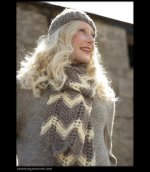
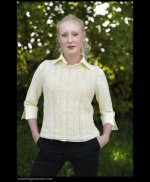
When the subject faces away from the sun thier eyes relax, their hair glows, they stand off the background, they are lit by a big source - thier skin looks great - they dont have panda eyes or hot highlights on thier skin, also the operator doesnt cast a shadow into the frame, not to mention that if you are shooting clothes (as below) there are no shadows creasing on the product..

Only, Sony test engineers, clowns who do 'shootouts', lowgrade videographers and box brownie users shoot with the sun on thier back.. except for a few minutes in magic hour :)

1.jpg

2.jpg

3.jpg

01.JPG
 
Last edited:
Back
Top