cyvideo
Veteran
89%Rotten Tomatoes
8.4/10IMDb
7.9/10Rating Graph
Having watched all the seasons so far I was interested to read the following technical production specs of what is obviously a successful string of series:
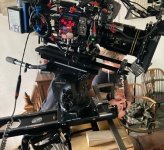
Technical preparation was eased by the fact that “Showtime was not bothered about the whole 4K thing, and they still don't seem to be, so we didn't need a 4K camera,” Polonsky notes, referring to the requirement of some other studios to shoot in 4K to help future-proof content. This led to a straightforward camera choice: the Alexa Plus, shooting 2K ProRes to SxS cards. “They were reluctant to have a traditional DIT on the whole show, so we wanted to put in place a workflow that was fairly bulletproof,” says the cinematographer. To this end, he used the conventional, built-in Alexa Rec 709 LUT, describing it as “a basic idea of what you want the picture to look like.”
Principal lenses were Angenieux Optimo 17-80mm (T2.2) and 24-290mm (T2.8) zooms. “[The 17-80mm] is not the newest thing,” Polonsky says, “but it offers a combination of being quite fast — T2.2, so it’s close to what a prime lens might offer you — and focusing close. It’s also not massive.” He estimates that 95 percent of the show was shot on the lens, often at the wider end of the short zoom. “Every time we used a wide-angle closeup, the results felt enormously three-dimensional. You have to be a little sensitive to the physiognomy of your actors, but we all felt that our characters could take it if we wanted to use it.” This effect was enhanced further in the geometric environment of the modernist Axe Capital offices: “On the 17-80mm, there was quite a lot of distortion. I initially thought this was a problem, then I realized I quite liked it.”
https://theasc.com/ac_magazine/April2016/Top-Dollar/page1.html
Chris Young