White Salt or Battery Acid looking substance on both my AF-101

Mikungfu

Active member
Hi everyone,

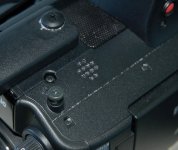
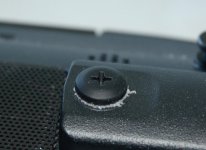
Today I opened my flight cases and found both my AG-AF101 with some weird white powder or salt on the handle and some upper areas of the chassis. Even the top screw holes in the handle had lots of that...

I really can't figure out what it is and I don't feel like tasting it to see whether it's salt or acid or whatever. But it doesn't make sense... How would it get that stuff inside my flight cases. I haven't been shooting at sea and there are no batteries that could have poured acid on the upper parts of the camera. What can this be????

Here are some pics:
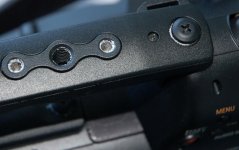
salt02.jpgsalt03.jpgSalt01.jpg

Thanks!
 
Last edited:
Hi Jan, thank you for your quick reply!

No, not really. These are cameras I have been using since December. The flight cases are what I use to transport them when I work but, not necessarily by plane. Usually by car. I had recently moved from an old house to the new one and I carried them in their flight cases. When I opened them to work today, I noticed it.

I have edited my post above with photos I've just taken. This will provide a more accurate idea of what I'm talking about.

Regards.
 
I am sticking with the TSA theory. Some powder they use to sniff explosives. If you can do a litmus test I would, and then quickly vacuum that stuff off your camera.

Best,

Jan
 
But is it possible that such powder was invisible for 6 months and suddenly show up now? Where would it have surfaced from? I am going to some nearby drugstore and get some tournassol paper to do the litmus test... And I'll post here how it went.

Still... this a nightmare! Looking closer and trying to remove it, it's more like a some goo than powder and it's vitually in almost every hole slit and joint, of the metal parts fo the chassis. In some parts it's like a thick glue. Otherparts it's like dried plaster and in some other parts it seems like a liquid slime. So it seems it started as liquid (humidity?) and it's drying up in most areas. But it's almost impossible to vaccum it.

If I could I would unscrew the chassis apart and clean everything up but, I'm affraid I would void the warranty like that. I'm really freakin out here... I waited forever for these cams and 6 months after, I get this surprise?.. I fear for what this is and what might happen.
 
Last edited:
Had the same thing with some sort of red substance on my HVX, mattebox and firestore a year ago, never found out what it was.
Non of the equipment ever saw an airport.

Frank
 
In this case, it seems to have only stuck to the metal parts... As if it was a substance that condensed against the colder parts. Same as if there was humidity inside the flight case and then it got colder and it condensed against the cold metal parts... But I mean, it's just a theory and one that doesn't explain the texture like salt or glue. The pics I attached speak for themselves... What you see there goes from the texture of dried plaster/salt, to a more wet paste.

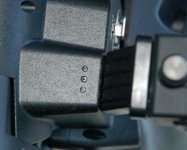
When I look inside the REC and Capture buttons near the handle, I also see some of this... I feel like opening everything up and clean... But I can't do that. But what if I leave it like that for being unreachable for cleaning? Will it spoil something sooner or later?

I definitely have to contact Panasonic and take advantage of my warranty, to take care of this. I won't play the smart craftsman, and loose both the camcorder AND the Warranty. That's for sure!

This happened to two separate cameras in separate flight cases.
 
I too had the salt like crystals around a few of the screws on my hvxs. I had no idea what it was. I cleaned it off with a toothbrush and the paint around it flakes away. I just thought it was from age and a ton of use or maybe , as gross as this sounds, sweat build-up.
 
Do you pack desiccant gel packs with your camera in your flight cases? Maybe it's trapped dampness/condensation that is causing this?
 
No, I don't but I mean... This is not rust or rusty substance. I'm not a specialist in dampness effects on cameras but this really looks like salt or battery acid. I'm saying it looks... Because it doesn't make sense to be battery acid in those places.

I see it has gotten into the rec and capture button holes... What should I do? it makes a certain crispy sound when I press those buttons. I didn't need this!..
It's mainly on the upper metal parts of the camera and it's gotten inside the tinyest holes, like screws and other tiny holes:

salt04.jpg
 
Mold? I used to see the same sort of thing on motorcycles that were left for a while unused under a cover.
I say taste it, its not like it will hurt you and you can quickly rule out salt if its not salty.
 
I lived in Dubai, and the sand is very fine there. It can find it's way into everything and everywhere.
I dreaded having my gear exposed when there was any hint of it in the air. Anyhow, if there was always sand in the air it would build up if I went from an AC to outside, from the stickiness of the humidity.
All I could assume is that somehow a bit of sand of grit got inside your case, and the combination of humidity and shaking the case as its being transported has left all the METAL items and small openings coated with this fine grain.
The metal cools slower then the plastic, so the metal joints would most likely attract moisture longer. Thats why its all built up around the screws.

Find a REALLY powerful vacum and a few cans of compressed air. Use both the air and the vacum in tandem, so your grit is sucked up and not just pushed around.
You could have it serviced, maybe they can take all the buttons apart.
Also, Isopropyl Rubbing alcohol is a good cleaner. It dosent eat MOST plastics and I use it to clean the exteriors of all my electronic gear, it DOES eat oil, so its good for cleaning.
I use it on all my lenses and LCD screens without issue.
 
Last edited:
Do you work near the ocean? Or could it be residue of sweat?

I've had salt build up on a 5D2's grip due to sweat, but not to this degree.
 
I have a quick little theory... I said I had 2 hvxs' with this problem before, but as I look back it was only one of them. It was the one that was kept in a flight case, the other was in a soft bag. Could it possibly be a chemical reaction to sweat, moisture, skin oil and the very strong chemical that is coating the padding on the inside of the hard case? i don't know about you but that pull and pluck padding always had a very strong chemical stink to it, like new car smell times 10.
 
The sand possibility is ruled out, as I don't virtually any sand in the air here. I live near the countryside... There only fruit trees and earth in the surroundings, as well as some concrete of course so, sand and salt are not very likely to find their way inside my flight cases. I still have to find somewhere to buy papaer for pH testings.

I have also sent an email to Panasonic tech support and am now about to contact my flight case manufacturer to see what I can figure out.

How am I going to clean inside the rubber rec/capture button holes?.. How am I going to clean this substance away from everywhere it's gotten into?? I don't want any corrsion by it, either outside or inside the camera. These cameras are virtually new!!..
 
Goo?

I must be some sort of mold. Are you in a damp/humid environment? Was the room the cases were in damp? Liquid spilled in the cases? Something spilled on the cameras?

Have you taken the cameras out of the cases and aired them in a dry environment?
 
Fruit trees as in commercial orchard? Do they spray the trees with something that may have deposited on the camera? It sure looks like a salt.
 
What manufacturer on the flight cases? Are they air tight? I know some of them are? Litmus paper can usually be found at a Phameceutical supply of Chemistry supply store, Probably easiest to find on the internet. Try Amazon.com.

For cleaning I would call Panasonic for suggestions, east of the Mississippi call Secaucus, west, call LA.

Keep us posted as to what you find out.

Best,

Jan
 
it looks to my like an electrolytic reaction, these are often kicked of by salt water (really badly) by moisture less so and do occur with neither of those at a slower rate in regular environs

fundamentally ER is caused by a mismatch of the metals in connection with each other or a failure of any coating designed to stop it (eg worn off anodising)

In the table "Anodic index" you can see magnesium alloys (the body?) have a very high anodic value and should be kept away from materials of a low anodic value..

http://en.wikipedia.org/wiki/Galvanic_corrosion#Galvanic_series

My guess its a mix of not the finest material choices in the design process excaserbated by the presence of hand sweat which is rich in salt which is a catalyst for the reactions

S
 
Last edited:
Back
Top