
Navigation
Install the app
How to install the app on iOS
Follow along with the video below to see how to install our site as a web app on your home screen.
Note: This feature may not be available in some browsers.
More options
You are using an out of date browser. It may not display this or other websites correctly.
You should upgrade or use an alternative browser.
You should upgrade or use an alternative browser.
White balance on the run
- Thread starter scorsesefan
- Start date
Bassman2003
Veteran
Ha! I would need to see certain things for me to switch. I have never worked with a Nikon camera, so I am not sure how they handle things like white balance etc... My still work has diminished in the last year, so I would be buying more for my personal photography use along with video for business. The Sony's A7 line has been great. I am not in love with the ergonomics as I had to augment the cameras with a bottom plate extender and a longer eye cup. My lens needs are less now and could probably sell some and whittle down a bit too. But no plans unless the next Nikon/Red is a real cracker for stills use and has all of the video goodness (with full sized HDMI & XLR audio).
So you can't get your hopes up yet Norbro. "But your sayin' there's a chance..."
So you can't get your hopes up yet Norbro. "But your sayin' there's a chance..."

cyvideo
Veteran
Hmm! Out of curiosity, I downloaded all the RAW Nikon Z R3D files they made available on the Japanese Nikon site. 1st observation. Very easy to work with in Resolve. 2nd observation, pleasant looking colors seem fairly east to arrive at. 3rd observation, to my surprise. The files were way noisier than I expected. Especially Chroma noise. Far noisier than any recent Sony files I worked on. The downloaded files are a mixture of files at Nikon's default 800 and second base 6400.Time to sell the Panasonics and Sonys, Bassman...Nikon, here he comes!
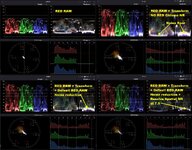
My workflow. Throw up two nodes. On node #2 apply a transform. The input one I used is the REDWideGamutRGB one, along with the RED Log3G10 Gamma selection. As is defined by the clips info under the RAW tab. On node #1 I make the RAW adjustments. All very easy... but the noise at 800 really did surprise me.
Under the RAW tab, there is a 'Chroma Noise Reduction' check box'. This was ticked 'ON' by default. I wondered why? Soon found out. With it off, the chroma noise goes up by at least 100-150%. The bottom of the waveform goes to total 'fuzz', with a lot of red/green blotchiness.
To have to introduce a 3rd node at the start of the node tree with a Resolve Spatial Noise Reduction setting of around 7.5-10 on TOP of the RED's RAW file Chroma noise reduction setting at the 'ON' position, did make me scratch my head. And this was on a well lit shot of multicolored food on white plates sitting on a Mission Brown colored wooden table.
Maybe I've fallen for all the hype. I must do a lot more experimentation with the assortment of files I have downloaded. Would like to hear others experiences if you have the time to download and exercise these files. There are eight ZR files and they can be found here:
https://nij.nikon.com/products/lineup/z_cinema/zr/features01.html?utm_source=chatgpt.com
Chris Young
Last edited:
morgan_moore
Major Contributor
The files were way noisier than I expected.
How full was the WFM of the untouched file?
How full was the WFM of the untouched file?

scorsesefan
Veteran
My ZR arrived Tues. and it's still in the box, Chris. There's a lot of hype surrounding this camera. Most likely I will return it and wait for what Sony has up its sleeve fx-wise to match my fx6. I feel like they kind of "Frankensteined" this camera and rushed it to market...Hmm! Out of curiosity, I downloaded all the RAW Nikon Z R3D files they made available on the Japanese Nikon site. 1st observation. Very easy to work with in Resolve. 2nd observation, pleasant looking colors seem fairly east to arrive at. 3rd observation, to my surprise. The files were way noisier than I expected. Especially Chroma noise. Far noisier than any recent Sony files I worked on. The downloaded files are a mixture of files at Nikon's default 800 and second base 6400.
My workflow. Throw up two nodes. On node #2 apply a transform. The input one I used is the REDWideGamutRGB one, along with the RED Log3G10 Gamma selection. As is defined by the clips info under the RAW tab. On node #1 I make the RAW adjustments. All very easy... but the noise at 800 really did surprise me.
Under the RAW tab, there is a 'Chroma Noise Reduction' check box'. This was ticked 'ON' by default. I wondered why? Soon found out. With it off, the chroma noise goes up by at least 100-150%. The bottom of the waveform goes to total 'fuzz', with a lot of red/green blotchiness.
To have to introduce a 3rd node at the start of the node tree with a Resolve Spatial Noise Reduction setting of around 7.5-10 on TOP of the RED's RAW file Chroma noise reduction setting at the 'ON' position, did make me scratch my head. And this was on a well lit shot of multicolored food on white plates sitting on a Mission Brown colored wooden table.
Maybe I've fallen for all the hype. I must do a lot more experimentation with the assortment of files I have downloaded. Would like to hear others experiences if you have the time to download and exercise these files. There are eight ZR files and they can be found here:
https://nij.nikon.com/products/lineup/z_cinema/zr/features01.html?utm_source=chatgpt.com
Chris Young
cyvideo
Veteran
Don't know how well these JPGs will come through, but they, as the old saying goes, "A picture is worth a thousand words."The files were way noisier than I expected.
How full was the WFM of the untouched file?
Chris Young
EDIT: INTERESTING! CineD, have just delivered their Lab test results on the Nikon ZR. And what they are saying about the noise at three stops under is very much what I am seeing on the low lit areas of some of the shots I have here.
https://www.cined.com/nikon-zr-lab-test-rolling-shutter-dynamic-range-and-exposure-latitude/
QUOTE: "
Now, moving to 3 stops of underexposure (i.e., 7 stops of exposure latitude), we get the following images (2 over to 5 under = 7 stops for R3d, 4 over to 3 under = 7 stops for ProRes RAW). We are now utilizing the default “chroma noise reduction” in the camera RAW tab of DaVinci for R3D:
In both images, we are already seeing heavy noise, and the R3D image gets slightly pinkish, whereas the ProRes RAW image gets greenish. Let’s apply noise reduction:
They both clean up nicely. Now let’s look at 8 stops of exposure latitude, namely 4 stops under for PRR and 6 stops under for R3D:."
Agreed. The R3D does clean up pretty well, but IMHO there is very little, from what few files I have played with, that I would let go without some kind of noise reduction. And that's even at 800ISO if you have scenes with lots of contrasting well lit and deep shadows scenarios it is a must from what I have seen so far. 6400 needs a fair bit of massaging.
Attachments

Last edited:

NorBro
Major Contributor
I haven't checked out the ZR's files yet but I don't doubt it.
CinemaDNG (Blackmagic), Canon's R5's RAW (originally just Canon RAW) and various REDs produced some of the most noisiest footage I have seen throughout my career.
The general consensus over the last 10+ years has been that the noise reduction turns off in the camera once any RAW is chosen - and, interesting enough, changing any of the cameras above to ProRes or H.264/5 cleaned everything right up.
The Canon R5's RAW was so noisy I actually thought it was broken.
I don't know, but it's a consistent theory I'd accept after many years of RAW on my end (very early adopter, wasted thousands in media costs and other).
And that of course doesn't mean all RAW should be noisy (because it's not) - but some can be, and definitely will be when compared to the other compressed options with excellent in-camera NR.
CinemaDNG (Blackmagic), Canon's R5's RAW (originally just Canon RAW) and various REDs produced some of the most noisiest footage I have seen throughout my career.
The general consensus over the last 10+ years has been that the noise reduction turns off in the camera once any RAW is chosen - and, interesting enough, changing any of the cameras above to ProRes or H.264/5 cleaned everything right up.
The Canon R5's RAW was so noisy I actually thought it was broken.
I don't know, but it's a consistent theory I'd accept after many years of RAW on my end (very early adopter, wasted thousands in media costs and other).
And that of course doesn't mean all RAW should be noisy (because it's not) - but some can be, and definitely will be when compared to the other compressed options with excellent in-camera NR.

Peter C.
Veteran
Recent Nikon reviews mention Nikon stacked sensor trade off for faster read out is more noise.Hmm! Out of curiosity, I downloaded all the RAW Nikon Z R3D files they made available on the Japanese Nikon site. 1st observation. Very easy to work with in Resolve. 2nd observation, pleasant looking colors seem fairly east to arrive at. 3rd observation, to my surprise. The files were way noisier than I expected. Especially Chroma noise. Far noisier than any recent Sony files I worked on. The downloaded files are a mixture of files at Nikon's default 800 and second base 6400.
Chris Young
In general RAW has more noise because it lacks the in camera noise reduction people are unaware of in standard video.
I no longer care about these small differences of image quality between the brands. I find cameras that are easy to access controls more beneficial. For example for many years in order to get a custom white balance from Canon mirrorless cameras you had to take a photo and navigate to it which was so ridiculous I stopped using them.
In my experience, complex cameras, the extra work to achieve these small gains, don't make sense if it increases your chances of making mistakes or makes you job harder. It also gets expensive chasing every new camera.
Last edited:
NorBro
Major Contributor
Okay, I actually doubt it a little bit.I haven't checked out the ZR's files yet but I don't doubt it.
CinemaDNG (Blackmagic), Canon's R5's RAW (originally just Canon RAW) and various REDs produced some of the most noisiest footage I have seen throughout my career.
The general consensus over the last 10+ years has been that the noise reduction turns off in the camera once any RAW is chosen - and, interesting enough, changing any of the cameras above to ProRes or H.264/5 cleaned everything right up.
The Canon R5's RAW was so noisy I actually thought it was broken.
I don't know, but it's a consistent theory I'd accept after many years of RAW on my end (very early adopter, wasted thousands in media costs and other).
And that of course doesn't mean all RAW should be noisy (because it's not) - but some can be, and definitely will be when compared to the other compressed options with excellent in-camera NR.
I was expecting much worse.
For some of them, I would say they are not noisy at all. (The plate of food did not need any NR, IMO.)
I haven't used Resolve in years, but in FCP with the native RAW inspector settings/RAW control provided from RED they are very good-looking files.
cyvideo
Veteran
That's where a lot of this is subjective. If I was editing that Nikon plate of food into a series of shots from a Sony A7iv at it's base ISO I would definitely have to NR it as it stands out as being a fair bit noisier shot. On the other hand, if that shot was within a series of shots all off the Nikon, then I tend to agree with you. They will all have a similar look and be totally acceptable as they are.Okay, I actually doubt it a little bit.
I was expecting much worse.
For some of them, I would say they are not noisy at all. (The plate of food did not need any NR, IMO.)
I haven't used Resolve in years, but in FCP with the native RAW inspector settings/RAW control provided from RED they are very good-looking files.
For me, very often the real world is files from maybe half a dozen different cameras, not all on the same codec. And this is common on long term documentary work shot over a number of years. Shot in different countries under many varied conditions at many different ISOs. For consistency of look, it's not unusual to have to grade every single shot.
Look, for the price the ZR is selling for, I think the Nikon is a phenomenal piece of kit.
Technically though, from my POV, a DR point of view, the ZR sit's right in the middle of the road with it's 10.2 stops at a signal-to-noise ratio (SNR) of 2. This is where I think it falls down somewhat. Put that up against the Sony A7iv's 12.9 stops at SNR = 2, and you really do see the difference when mixing cameras on the timeline. All the bit rate in the world doesn't compensate for over 2.5 stops less DR and a much lower noise floor. DR I need every day, not crazy good rolling shutter performance. If I need that, the tool to use in my choice of cameras is an A7Siii, FX3 or FX6.
As an aside, I do think it's quite unnecessary in this day and age to use data rates such as these for 99% of work. 4000 - 5000 Mbps at 6K ????. But that's just my opinion. Sure, the ZR does offer sane data rates. Some though I guess may feel the need to use the more massive data rates on offer. Why? May I ask?
Quote:
[Apple ProRes RAW HQ] 6048 x 3402 : 29.97p (5000 Mbps), 25p (4170 Mbps), 23.97p (4000 Mbps)
Compare this to Sony's X-OCN XT (Extreme) 16-bit Linear RAW (eXtended tonal range Original Camera Negative) that goes to 965Mpbs in 4K and, 3861 Mbps in 8K. Bearing in mind, that this is all in 16-bit Linear. Which is way above anything anyone is offering in these modern mirrorless cameras. And in 95% of applications those Sony data rates are just not required.
For some of the long and I mean long 3-4 hour long doco interviews shoots where we will shoot material with one interviewee to cover maybe six episodes, those sorts of numbers just don't make any sense. This brings up my other caveat. The run times listed by Nikon. And this is using an external power source at 77 degrees ambient:
Quote:
Up to approx. 125 minutes (When recorded in R3D NE 6K 59.97p, with auto temperature cutout set to [High], at 25°C /77 °F, paired with an external power source)
Run times are very important for the work I cover when not editing, shooting sports, long form entertainment shows, documentary etc. With a Jupio Sony ProLine BP-U100 6700mAh battery that communicates accurately with the camera, I am getting just shy of five hours run time on the one battery on the FX6. With no temp or time considerations to have to worry about. So again it comes down to the age-old question, of using the right tool for the job in hand.
Yer' takes your pick, don't you.
Chris Young
morgan_moore
Major Contributor
"A picture is worth a thousand words."
Usually. but not when evaluating noise on images when those images have been subject to unkown recompression through web delivery.
This is where a WFM has 'power' as it will not be degraded significanly be compression.
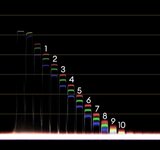
In this attached image.. I dont know what CineD are doijng.. but they have not opened up the iris/shutter to fill the WFM so this '1o stop' image looks more like it would be 12+ stops to me.
morgan_moore
Major Contributor
The general consensus over the last 10+ years has been that the noise reduction turns off in the camera once any RAW is chosen
My general concensuss over the last decade is few 'DP' know how to expose and that situation mixed with over zealous manufacturer claims poor luts has lead to 'noisy'' raw files.
Sam how come you are you the unique master of this?
I weas battling with raw on still cameras like the phase one and kodak DSLRn long before most 'DP' left film or sony EX1 world. Also I learned image testing at college not on tok-tik.
2003.. https://luminous-landscape.com/expose-right/
NorBro
Major Contributor
That's where a lot of this is subjective. If I was editing that Nikon plate of food into a series of shots from a Sony A7iv at it's base ISO I would definitely have to NR it as it stands out as being a fair bit noisier shot. On the other hand, if that shot was within a series of shots all off the Nikon, then I tend to agree with you. They will all have a similar look and be totally acceptable as they are.
For me, very often the real world is files from maybe half a dozen different cameras, not all on the same codec. And this is common on long term documentary work shot over a number of years. Shot in different countries under many varied conditions at many different ISOs. For consistency of look, it's not unusual to have to grade every single shot.
Look, for the price the ZR is selling for, I think the Nikon is a phenomenal piece of kit.
Technically though, from my POV, a DR point of view, the ZR sit's right in the middle of the road with it's 10.2 stops at a signal-to-noise ratio (SNR) of 2. This is where I think it falls down somewhat. Put that up against the Sony A7iv's 12.9 stops at SNR = 2, and you really do see the difference when mixing cameras on the timeline. All the bit rate in the world doesn't compensate for over 2.5 stops less DR and a much lower noise floor. DR I need every day, not crazy good rolling shutter performance. If I need that, the tool to use in my choice of cameras is an A7Siii, FX3 or FX6.
As an aside, I do think it's quite unnecessary in this day and age to use data rates such as these for 99% of work. 4000 - 5000 Mbps at 6K ????. But that's just my opinion. Sure, the ZR does offer sane data rates. Some though I guess may feel the need to use the more massive data rates on offer. Why? May I ask?
Quote:
[Apple ProRes RAW HQ] 6048 x 3402 : 29.97p (5000 Mbps), 25p (4170 Mbps), 23.97p (4000 Mbps)
Compare this to Sony's X-OCN XT (Extreme) 16-bit Linear RAW (eXtended tonal range Original Camera Negative) that goes to 965Mpbs in 4K and, 3861 Mbps in 8K. Bearing in mind, that this is all in 16-bit Linear. Which is way above anything anyone is offering in these modern mirrorless cameras. And in 95% of applications those Sony data rates are just not required.
For some of the long and I mean long 3-4 hour long doco interviews shoots where we will shoot material with one interviewee to cover maybe six episodes, those sorts of numbers just don't make any sense. This brings up my other caveat. The run times listed by Nikon. And this is using an external power source at 77 degrees ambient:
Quote:
Up to approx. 125 minutes (When recorded in R3D NE 6K 59.97p, with auto temperature cutout set to [High], at 25°C /77 °F, paired with an external power source)
Run times are very important for the work I cover when not editing, shooting sports, long form entertainment shows, documentary etc. With a Jupio Sony ProLine BP-U100 6700mAh battery that communicates accurately with the camera, I am getting just shy of five hours run time on the one battery on the FX6. With no temp or time considerations to have to worry about. So again it comes down to the age-old question, of using the right tool for the job in hand.
Yer' takes your pick, don't you.
Chris Young
Back in 2014, the original URSA shot such a high data rate that there weren't any CFast cards available yet that could capture it, ha.
And when there were, it was like $1200 for 120/128 GB (still hurts me).
It's been many years of unnecessarily high [for most people] data rates (and even resolutions), but it's better they offer them so any little competition continues and remains.
___
As far as the noise and anything else, the technical evaluations are necessary, but the good ole eye test is what I prefer.
For me, pretty colors with enough resolution and a perfect balance of contrast are going to win every time.
They did with early Canons and then Blackmagics and 2K ARRIs and sometimes still today do a double-take when I see people messing around with altered 5D Mark IIs.
Sony has some really clean resolution, so sharp, especially with beautifully shallow DOF - and I could almost always tell when I see something from the flagships shot on TV with that signature brownish tint - but I can't say I really enjoy looking at the pictures.
cyvideo
Veteran
They haven't opened it up any further, as the first patch of the waveform is already clipping. As they quite correctly explain in the test.Usually. but not when evaluating noise on images when those images have been subject to unkown recompression through web delivery.
This is where a WFM has 'power' as it will not be degraded significanly be compression.
In this attached image.. I dont know what CineD are doijng.. but they have not opened up the iris/shutter to fill the WFM so this '1o stop' image looks more like it would be 12+ stops to me.
View attachment 5712975
QUOTE:
"I have expanded the RGB curves towards 5600K using the white balance slider to demonstrate a RED-specific phenomenon, which is called “highlight recovery”, built as default into the IPP2 color science (REDWideGamutRGB, Log3G10) – visible for the second patch from the left, which is not clipped, but the red and green channels are recovered and not visible. This is why we can only start to count from the third patch (from the left), which is not clipped – please also have a look at our RED KOMODO X Lab Test here, or the RED V-RAPTOR [X] 8K VV Lab Test here. The third to the fourth patch is the first stop of dynamic range, the fourth to the fifth is the second stop, and so on."
This is common with RED REDWideGamutRGB, Log3G10.
Below are the RED V-Raptor-X and Komodo-X waveforms exhibiting the same behavior. Very much a RED thing. Just as clipping at 93/94 IRE is the clip point for Sony's S-LOG3.
Back to noise floor. The Sony A9iii has a Global Shutter. Global shutters are well known to lose around one stop of DR over their rolling shutter counterparts. The very fact that global shutter cameras tend to generate more dark current noise is also well known. Elevated noise levels are nearly always mentioned in A9iii photo lab tests. Now compare the noise levels at blanking of the global shutter Sony A9iii vs the rolling shutter of the Nikon ZR you posted. Absolutely no comparison.
Sure, there is a big price difference between the two cameras. But there is also a big difference in the noise levels between the two cameras. I guess you get what you pay for. Regardless, I would not consider the ZR to be delivering anywhere near it's claimed 15 stops and its noise levels are, so far that I have seen, are very middle of the road.
In this price bracket, if I was buying today and didn't have a collection of Sony lenses, my personal $$$ would be on the Panasonic LUMIX S1II. It beats the ZR at virtually every performance metric. And with the addition of ARRI LogC3 it is delivering very nice images.
Chris Young
Newsshooter: Panasonic ARRI LogC3.
https://www.newsshooter.com/2025/07...r-matching-with-arris-digital-cinema-cameras/
Attachments


Peter C.
Veteran
No offense but I view the Panasonic Arri log as a gimmick. I don’t see a scenario where a Arri cameras would be used with Panasonic S1ii and need to color match the two. It’s being sold to make budget filmmakers more premium or legitimate.
The Arri magic happens with their sensor and its hardware implementations. This would be like me saying I could turn my iPhone into an Arri camera by slapping on an Arri Lut.
The whole noise issue is a tricky issue. Shooting Raw has no baked in NR which is only good if you think you can do it better than what’s done in the camera and don’t mind the added work slower processing in editing. Just like color grading only a benefit if you have the time and expertise to do it better than the camera.
If you seen a Gerald Undone video you’ll realize how NR can be used to inflate DR. I’m with NorBro I prefer the eye test over stats and charts.
The Arri magic happens with their sensor and its hardware implementations. This would be like me saying I could turn my iPhone into an Arri camera by slapping on an Arri Lut.
The whole noise issue is a tricky issue. Shooting Raw has no baked in NR which is only good if you think you can do it better than what’s done in the camera and don’t mind the added work slower processing in editing. Just like color grading only a benefit if you have the time and expertise to do it better than the camera.
If you seen a Gerald Undone video you’ll realize how NR can be used to inflate DR. I’m with NorBro I prefer the eye test over stats and charts.
cyvideo
Veteran
Exactly. I think nearly all these "LOG" solutions are very often solutions looking for a problem that doesn't exist. Let's face it. The Panasonic doesn't have the DR to fill the ARRI Log bucket. The ARRI 35 on the other hand does. It delivers 15.1 stops at a signal-to-noise (SNR) ratio of 2, and 16.3 stops at SNR = 1. That is serious, DR. The world of transitory video production of here today gone tomorrow in areas such as YouTube, TikTok etc. don't really require Log workflows for 709 delivery. We might like to think our masterpiece requires it. And if you are working on your masterpiece presentation, good on you.No offense but I view the Panasonic Arri log as a gimmick. I don’t see a scenario where a Arri cameras would be used with Panasonic S1ii and need to color match the two. It’s being sold to make budget filmmakers more premium or legitimate.
The Arri magic happens with their sensor and its hardware implementations. This would be like me saying I could turn my iPhone into an Arri camera by slapping on an Arri Lut.
The whole noise issue is a tricky issue. Shooting Raw has no baked in NR which is only good if you think you can do it better than what’s done in the camera and don’t mind the added work slower processing in editing. Just like color grading only a benefit if you have the time and expertise to do it better than the camera.
If you seen a Gerald Undone video you’ll realize how NR can be used to inflate DR. I’m with NorBro I prefer the eye test over stats and charts.
In reality, with nearly all cameras delivering less than 14 stops Sony's S-LOG2 which was designed to handle these sub 14 stop DRs, color dynamics aside. By using a 14 stop curve with a 14 stop camera almost every bit of available data is utilised, there is no wastage. So S-Log2 makes better use of the data you have available. Using a 15 stop bucket with 10-12 stop cameras, you will clip highlights long before you reach the limit of the LogC3 curve. It's like the age-old argument of 8-bit cameras recording 10-bit ProRes. You are not using what is available to you. The last two bits are just padded.
You mention Gerald Undone. That's exactly right, NR increases DR. The very fact that the Red Raw from the ZR actually has a NR toggle and that it is toggled ON by default to improve DR tells us something. In some ways, I prefer this approach to Sony's in camera NR that cannot be switched off, like in the A7Siii. At least with the FX6 you can turn it off or set different levels of NR. Often OFF is the best approach if you have the luxury of grading your material, as you can then apply exactly what is necessary to obtain the results you require.
And yes, agreed. The final arbiter is how does it look to the best camera ever made. The Mk 1 human eyeball, when looking at real world images, not charts.
Chris Young
Bassman2003
Veteran
Always to good to get to the bottom of sensor hardware and what is really going on. Once again, the camera industry always sets pricing on end image quality. They know where the 'good stuff' is and they price accordingly for the most part. My view remains that it might be best to wait for the $4,500 camera body to have better performance.
To me, the interesting development is the RED color science. In a recent video I watched the guy compare an h.265 codec to the RED Raw codec and the color was much better using the RED Raw. Granted the data rate is much higher so everything is better including detail. But packing that into a small body is the story for me. Once this color science/data rate/codec is combined with a higher performing sensor, it will be worth more of a look.
To me, the interesting development is the RED color science. In a recent video I watched the guy compare an h.265 codec to the RED Raw codec and the color was much better using the RED Raw. Granted the data rate is much higher so everything is better including detail. But packing that into a small body is the story for me. Once this color science/data rate/codec is combined with a higher performing sensor, it will be worth more of a look.
NorBro
Major Contributor
We get so spoiled, lol (including me).
I chased full-frame - 4K/60p - AF - 10-bit/RAW for 12 years...no one offered all four our entire lives until the R5 in 2020 (and it line-skipped the FF 4K/60p) and then the a7SIII.
This thing is so solid for $2200.
As far as the ARRI/Panasonic relationship, predicting that would have never been in my cards, but figured it was just a play by Panasonic a few months after Nikon acquired RED.
Panasonic actually did make a point of mentioning the matching of cameras in one of the press releases (like Peter talked about) and maybe more teams use them together than we think (I would have doubted it), but it's likely more about improving the brand recognition.
I also feel like V-Log wasn't ever that great in these smaller cameras, so maybe they also needed some extra help.
I chased full-frame - 4K/60p - AF - 10-bit/RAW for 12 years...no one offered all four our entire lives until the R5 in 2020 (and it line-skipped the FF 4K/60p) and then the a7SIII.
This thing is so solid for $2200.
As far as the ARRI/Panasonic relationship, predicting that would have never been in my cards, but figured it was just a play by Panasonic a few months after Nikon acquired RED.
Panasonic actually did make a point of mentioning the matching of cameras in one of the press releases (like Peter talked about) and maybe more teams use them together than we think (I would have doubted it), but it's likely more about improving the brand recognition.
I also feel like V-Log wasn't ever that great in these smaller cameras, so maybe they also needed some extra help.
scorsesefan
Veteran
So I wound up playing with my ZR. My first impressions are that there’s a lot of NR going on in the h265 (more than my fx3 as I recall) and the low light performance at 6400 is ok but pretty noisy. The AF with my Sony lenses is decent with the megadap but not native lens good. My main concern with this camera is the average DR which has me on the fence about returning it. But for $2200 am I being nit picky?