WHITE BALANCE for a new era

  • Thread starter Thread starter Guest
  • Start date Start date
G

Guest

Guest
Why haven't cameras come out with a white balance compensation for tinted flo and LED?

I dislike having to offset the white balance every time I go into a room with "warm" fluorescents, but when I turn around and have to shoot into a room with true tungsten, I have to go back into the offset.

Would be so much better to have a WB preset for warm flo's and led's.

Especially when shooting video in 8bit, and then realizing too late that your WB is tinted Magenta, because last night you filmed in an office that had warm fluorescents.


C'mon, we have had these new lights for years!
 
Why haven't cameras come out with a white balance compensation for tinted flo and LED?

Because there's so much variance that "tinted flo and LED" can't be defined. If you can't define your problem, you can't solve it.

That said, almost all modern cameras let you make a manual white balance against a gray card. And nearly all of them correct not just the orange-blue axis, but also the magenta-green axis as well. So if you make a manual white balance, most of your problems are really diminished.

If what you want is an auto white balance that does this, well I think you're asking a lot. Without a gray card reference, you're asking the AWB to figure out the difference between a light pastel and a color cast, on the fly. If it's wrong it's just substituting one color cast for another, which isn't really an improvement. As one of my old Japanese engineering friends used to say to any number of my impossible requests: (sound of sucking air through front teeth) "...that will be very difficult."
 
Because there's so much variance "...that will be very difficult."
I hear you.

'Variance' is part of light. Would be nice to have a preset which corrected for the green spike in warm lights as well as traditional white flo's.

There are many work arounds, but nothing so simple as factory WB presets. It should be a minimum requirement from all manufacturers. Something with close to 3200K with some Magenta in it. gets closer than 3200K without Magenta offset.

The WB offset option, and user preset WB is awesome, but there are plenty of situations where the dependability and ease of factory presets come in handy.


I have been in situations where I went to use a "user preset WB" and it was not there. Or where setting up a white balance card is not conducive to the shoot at the given moment.

In the world of 8bit video, 'getting closer' is invaluable.
 
Think about all of the venues that use lighting with the dreaded "green spike":

Churches
Hotels
Airports
Homes
Offices
Government facilities
Schools

Ugh... basically everywhere.

Just a preset for the warm fluorescents would be good enough. Those are the main trouble makers out there.


Issue: Warm tinted fluorescent lights have a green hue

Solution: A preset white balance of 3200K with a magenta/green correction to offset the unnatural look of warm fluorescents.
 
What are the scenarios where taking a white balance off a card or piece of paper are not conducive? We did it that way for so many years (before cameras had dialable color temps), it's not complicated or time consuming--a piece of paper in someone's back pocket will do. Chances are you will get that that much closer than you ever would with an all-size-fits all "add green" setting, since many environments present mixed light (even if all fluorescent, for example, often times the tubes are mixed).
 
What are the scenarios where taking a white balance off a card or piece of paper are not conducive? We did it that way for so many years (before cameras had dialable color temps), it's not complicated or time consuming--a piece of paper in someone's back pocket will do. Chances are you will get that that much closer than you ever would with an all-size-fits all "add green" setting, since many environments present mixed light (even if all fluorescent, for example, often times the tubes are mixed).

Also, keeping a Rosco swatch book in the camera bag offers all sorts of gel swatches to alter white balance. Holding a little CTO, CTB, plus green, minus green, etc. in front of the lens can allow for shifting the balance as needed.
 
What are the scenarios where taking a white balance off a card or piece of paper are not conducive? We did it that way for so many years (before cameras had dialable color temps), it's not complicated or time consuming--a piece of paper in someone's back pocket will do. Chances are you will get that that much closer than you ever would with an all-size-fits all "add green" setting, since many environments present mixed light (even if all fluorescent, for example, often times the tubes are mixed).

Difference being how I shoot occasionally. Sometimes things are rolling in the car, and then head into a building I have never been before, switching presets takes 1 second and one hand, and I can do it wherever I am, pulling out a WB card can require several seconds more, by requiring a change in exposure, potential moving to where light is optimally represented (subject may be under different lighting conditions), etc.

Under most circumstances, doing things the old way is cool. But new tech allows for new ways to work, even if the results are not cinema gold, it is a different and viable way to work.
 
Not really trying to change the paradigm on how to shoot and get the best results, I just think an additional WB preset is warranted considering the popularity of tinted flows and low end LEDs.
 
But doesn't compensating for the color shift in white balance negate what the lighting temp is trying to achieve? Yeah, you can re-balance the colors for a specific temp, but when you shoot with kino's there is a reason you are using kinos. same with tungsten. You are trying to achieve a particular look. Slapping a white balance into the camera just based on a simple balance can negate the color work you are trying to get.
 
But doesn't compensating for the color shift in white balance negate what the lighting temp is trying to achieve? Yeah, you can re-balance the colors for a specific temp, but when you shoot with kino's there is a reason you are using kinos. same with tungsten. You are trying to achieve a particular look. Slapping a white balance into the camera just based on a simple balance can negate the color work you are trying to get.
Kinos are fine. I am talking about the consumer fluorescents that are used in many homes, and most companies, as an energy efficient alternative to incandescent/tungsten bulbs (globes).

If I buy a light, like an LED, I will gel it. However, I generally shoot in available light, and have little to no control over what other people and businesses decide to use in their lamps and overheads. When I have the time, I replace bulbs, or used old manual procedures for WB, and when I don't, I work with the odd colors, but occasionally it would be nice to have a factory preset for "consumer warm tinted fluorescents".


Stylistically, it can be nice to use all the odd colors of varying light sources, but I find the cheap tinted fluorescents to be annoying since they have a orange/green look and yet are supposed to look like incandescent.


It would be nice to have a factory preset for something that has become so common. WB3200K, WBshift towards magenta, which requires going into menus, while I never use strobe or shadow WB presets in video, I come across warm fluorescents everyday, and I think it would be nice for all cameras, in particular consumer cameras to have a way to compensate for that kind of green/orange light.


There are times when I really like street lights and break lights, or any number of odd colors:

(Break lights as the soft key, sodium vapor street light as back light and fill. White flouro in the background generating a small amount of rim light on the cheek.)
But I definitely do not like this for every shot.
 
Last edited:
Ive always advocated the 'lock to card' workflow - but not done it in motion yet. It used to be in place on my high end Sinar stills camera.

1) film a gregtag colour chart under your light source
2) In software lock to the right colours
3) Further colour to taste

This should be simple with raw and 10bit cameras that have the lat to correct

With thinner cameras I agree that there should be a method of balancing on set, maybe, instead of a white card a colour card of some nature.

Cameras ($100 ones, not $10000 ones!) have face recognition, it should be trivial for a non $100 camera to 'spot' a card when it is held in the frame..

Camera manufacs, and workflow software makers are just off the ball by a decade compared to stills.

S

Yes, there is probably room for even more advanced white balance set ups than we currently have. I am generally happy with the daylight presets on most cameras, and make do with some of the tungsten ones, but there is nothing in the warm tinted fluorescent category, just cool white fluoro (4400K).

Newer energy efficient lights are everywhere now and they all still have a green tint to them. Manufacturers have not tackled this issue yet, despite the wide spread use of such lights. Most high end cameras are fine with manual WB, but at the consumer level, it is pretty bad. But even on the pro level, it would be an advantage to have the one additional WB preset.

You might be missing the point that a 'card method' like I am suggesting would flatten out frequency spikes, ie where you have a green spike the 'profile' would add a green dip, which is what is needed to do the job properly - adding a general magenta hue does not do it - you can do that with balancing to a grey or white card.

S

Card methods are awesome! I am only suggesting though... there are many uses for a warm flo factory preset. Especially in the consumer/hobbyist segment. But even in the pro documentary or indie film world, it could come in handy. "Oh, the card is in the bag, and I want to get this moment, but if I move, I lose it, miss it." Not something we hear onset very often, but happens in documentary and at home far more frequently. Most consumers do not know anything about green spikes (choosing WB is still new to many). A preset would be nice.

But despite majority of homes and businesses incorporating warm flos and led's with green spikes, the WB preset does not exist yet. Haha.

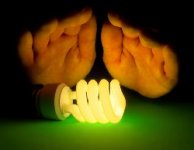
Cameras should have a "Warm Flo" White Balance preset.
warm-fluorescent-light.jpg
 
Last edited:
Sure the preset would be great you are correct.

A camera like the NEx5n seems to have a bunch.

Overall Im interested in getting technical good which would be the card method.

S
 
Sure the preset would be great you are correct.

A camera like the NEx5n seems to have a bunch.

Overall Im interested in getting technical good which would be the card method.

S
Ah, very cool. The NEX 5n is nearly a dream camera (from a specs perspective). So much to like about that one, keeps popping up.

As far as I know, most dslr's will allow WB with a card, but I like your idea of using facial recognition technology to recognize a card in the frame for white balance. And making it easier for stills and video users alike.

There are times when I have used actors as subjects because they are so amiable to the process of getting better images, but their are sometimes long days with subjects who are camera shy, and getting them has to be at the right moment, occasionally ends up being an unexpected one too, and that is when not having to fish out a card comes into play. I tend to run entirely on daylight and Kelvin settings. And at home, I do no bother with the cards too much. But having a preset green spike killer would be an advantage.
 
Back
Top