F65: Venice vs Monstro vs Helium

Very impressive. From that lightbulb shot, it looks like Red may have finally caught up to ze Germans in highlight latitude(!)

18mm high sensor = full, 4-perf 2x anamorphic shooting - that's terrific.

And the 3200 ISO stuff looks terrific. Losing two full stops in the highlights is a bummer, but if Gemini has gained an extra stop in the highlights compared to Dragon (which the lightbulb suggests may be true), then you've still got quite a decent range anyway.

This sounds like a very appealing camera.
 
I'm also very impressed with it.

$34k USD for a fully functioning camera with everything you need to start shooting... and it does 5k @ 120fps as well, no pixel binning, no tricks, no extra $10k recorder required.

One thing i like about RED is they never stop working on advancing their color science and make continuous improvements. It's good and bad depending how you look at it, but overall I think it's good.
 
Last edited:
You've got your concepts wrong Noah. That's neither how Exposure Index or dual-native ISO work.

Shooting in native 500 ISO mode, and rating the camera at 2500 EI, you would GAIN 2+1/3 stops worth of highlight latitude, not lose it. So you'd have 8+1/3 stops over middle grey.

Shooting in native 2500 ISO mode, and rating the camera at 2500 EI, you would get the camera's native split of 6 stops over middle grey.

You would have to be shooting in native 2500 ISO mode, but rating the camera at 500 EI, in order to LOSE 2+1/3 stops of highlight latitude.

I actually said exactly what you just said but with different words. For some reason you took my word "earlier" to mean highlight range over middle grey when I meant earlier in absolute exposure. I'm talking about highlight latitude or highlight dynamic range over middle grey. Clearly Sony says there will be 6 stops of highlight range over middle grey at both base ISOs. I'm talking about absolute white clip. If you have a subject that is just under white clip at ISO500 and then you switch to ISO2500 it will be now blown out and you'll have to dim down your light or ND the lens 2-1/3 stops to get it back to just under white clip.

And yes of course changing EI on Venice will change highlight range trading highlight and shadow stops, just as it does on Monstro/Helium. That's why it makes no sense to pretend EI changes on Venice equate to 12db gain (usually notation for analog gain in this case, which is not present) while somehow increasing the EI/ISO on Monstro leaves it at 0db. Not to mention EI/db is all relative to completely arbitrary "base" numbers that are up to the manufacturer and have no real relevance to a comparison of cameras from different manufacturers especially when no manufacturer actually discloses how they derive the number except to use it as a suggestion. Ostensibly Sony chose ISO500 as a base because they always specify 6stops of highlights at base and Venice's white clip happened to be 6 stops over at ISO500. RED's base ISO's on the other hand use no such methodology, it seems to be more of a suggestion based on some kind of balance of subjective noise and highlight preferences, or perhaps it's just a firmware holdover from their past cameras...

My point is that If we take this test as essentially a DR test, and I am suggesting that given manufacturer specified white clip and ISOs it appears it may be appropriate to look at it as a DR test, then Venice appears to have substantially less DR at its base ISO than Monstro and even Helium. It would be unusual if the higher base ISO increases DR, but perhaps it's possible (why even use or offer the low base ISO then? especially when there are such plentiful ND options). All I'm saying is that it's possible that the higher ISO2500 base ISO may help Venice do slightly better in low light than Monstro, but it almost definitely will still fall short in dynamic range.
 
Last edited:
Very impressive. From that lightbulb shot, it looks like Red may have finally caught up to ze Germans in highlight latitude(!)

Now if they would catch up in the ergonomics, form factor and general attitude surrounding the whole thing it could start to get interesting. But I don't see this happening.

How are the old problems these days? Heat, fan, boot, reliability etc with the cameras? I lost interest long ago and stop following it.
 
So? What is the verdict between F65 and the new-comers?

Is it buying used F65 better than used Alexa?
(Thanks on possible answers)
 
I don't know if your question is industry question, or just independent owner operator perspective. But here's my view;

At an industry level, as much as people say in magazine articles they love F65 etc.. they mostly go back to ARRI in subsequent projects if you research it carefully.

I am in Sony camp and its working for me, but it's funny to think why anyone who has the opportunity to work with ARRI would say, "no hey you know I was thinking about it, and man I really think we should shoot this next project with Sony". Ok there are the guys maybe who obsess with new cameras and want to work with new Sony cameras but generally most shows/films are shot with ARRI cameras.

Sony needs to really thank Netflix requirements and fact that ARRI did not have a 4K camera for a long time (anyone know if Arri mini 4k counts as 4k to netflix?). For 4k requirements it left many professional DP's with the choice to shoot with RED, or Sony.

As independent owner, F65 is a great camera for the projects that can support it with budget, crew/resources in my opinion. If the project can support it I would't hesitate. For $12k you are getting something really special. Venice is looking good so far, but its 6 times more in cost. Is it 6 times better? I don't see how.
 
As independent owner, F65 is a great camera for the projects that can support it with budget, crew/resources in my opinion. If the project can support it I would't hesitate. For $12k you are getting something really special. Venice is looking good so far, but its 6 times more in cost. Is it 6 times better? I don't see how.


That's not really a fair, apples-to-apples money comparison. You're comparing an F65 on the used market vs. a new Venice. Wasn't the F65 a little under $100K US when it launched?
 
well it seems leteeci was talking about used camera's in general, so we can discuss image or current market price. I'm not sure what the problem is with this sorry.
 
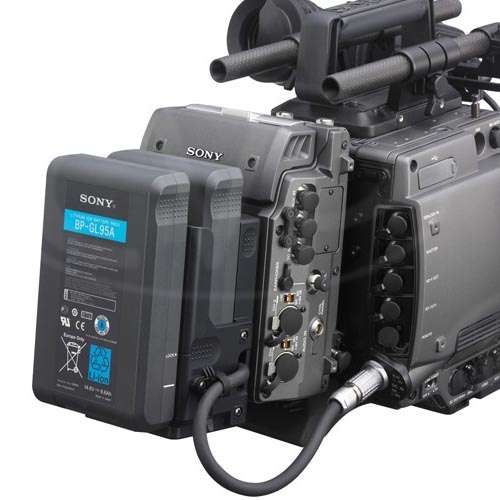
Starcentral, thanks for your answer/opinion!! This is very helpful!! I am just a little bit consern about what batteries to use with F65..is Alexa better in this compartment?

On the other hand, I have a feling that Alexa is a heavier setup (am I wrong?) and no 4K..
 
F65 is 12 lbs without anything on it yet. Once you load it up, you'll be at +20lbs in no time.

Power consumption table: https://www.paguk.com/sites/default/files/pdf/Camera_Power_Consumption_Table.pdf

10%2010%2020121349860918bkw-r4_2.jpg


Alexa xt also heavy beast yes, and can have fake 4k upscale using open gate mode (full sensor use). See also ARRI mini 4k, it's 5lbs body only.
 
So? What is the verdict between F65 and the new-comers?

Is it buying used F65 better than used Alexa?
(Thanks on possible answers)

Here is my take. A F65 probably won't get you many jobs. You would be buying it for yourself. An Arri will get you jobs.

If I was buying a camera for myself or personal stuff I would buy a F35 instead of a F65. Kind of the same beasty type of camera. Would need much of the same stuff like batteries, hefty tripod etc. But it looks much better than the F65 IMO. F35 might not get me jobs just as the F65 won't. But at least I will smile every time I look at footage, instead of trying to figure how can I grade it so i like it. Yes the F65 is 4K. But meh. My Alexa is not 4K and neither I or anybody I do jobs for ever misses it when they look at the image. The same is true for the F35. Mojo in spades. To me since the F65 is not in demand or commercially popular and doesn't please me with the image, it's a no go. Just my opinion.
 
The F65, Alexa EV, and Alexa Plus are all about the same price on the used market. A lot of the Arris can be had with high speed licenses, as well. The thing going for the F65 is the 4k. For everything else the old Alexas are still great. Great image, great EVF, great form factor, great menus, great durability, affordable & easily swapped mounts (EF, Nikon, Leica, etc.), etc. The F65 is a very fine camera, but if you're shooting the kinds of projects that these cameras are built for then the Alexa seems to be the better choice in my view. Then there's the reputation and what kinds of gigs an Arri can open doors to.

If you absolutely need higher res than 2k on an Alexa you can pick up a used Convergent Design Odyssey 7Q with the RAW license for couple grand and do a 25% upscale from 2880 to 3840 for UHD delivery.

Regarding weight, once they're kitted with batteries, lenses (and on the F65 the recorder, etc) they weigh about the same, in the 10-12 kilo range for common shooting. Of course you can always add bigger lenses and more bits and bobs and equipment to make it weight more, but that's true of any camera.

The thing going for the F65 is absolutely the best color gamut going to date, even for today. No other camera even touches it. It also has a rotary shutter model which greatly helps to create filmic movement. This is a camera that was poorly marketed and never recovered, and it is a beast in terms of weight, but image wise, it is anything but meh.
 
The thing going for the F65 is absolutely the best color gamut going to date, even for today. No other camera even touches it. It also has a rotary shutter model which greatly helps to create filmic movement. This is a camera that was poorly marketed and never recovered, and it is a beast in terms of weight, but image wise, it is anything but meh.

Except this is all only on the paper. You never really see this absolutely best color gamut you speak of. F35 colors look better, Arri colors look better. Heck even Blackmagic colors look better.
 
I don't think the F65 wasn't poorly marketed, one big issue with it was the data it produced. 60 minutes = 1 TB, for Evil Dead remake shot on F65 they were carting off 3TB a day. Redcode at 4k FF 4:1 compression ratio yields 200 minutes / TB by comparison. Remember the F65 was released in 2012 and even now 8 years later 3-5 TB for a 21 day shoot is just a serious tonne of data.

I think the F65 was initially released with 3:1 compression ratio for RAW, then after came out with 6:1 "lite" version. From what I read, SR SQ was only available in HD (same as F5/F5) so really the only option for 4k was recording RAW.

Sony really screwed this up if you ask me.
 
Back
Top