GH4 v-log dynamic gain

mash_gh4

Active member
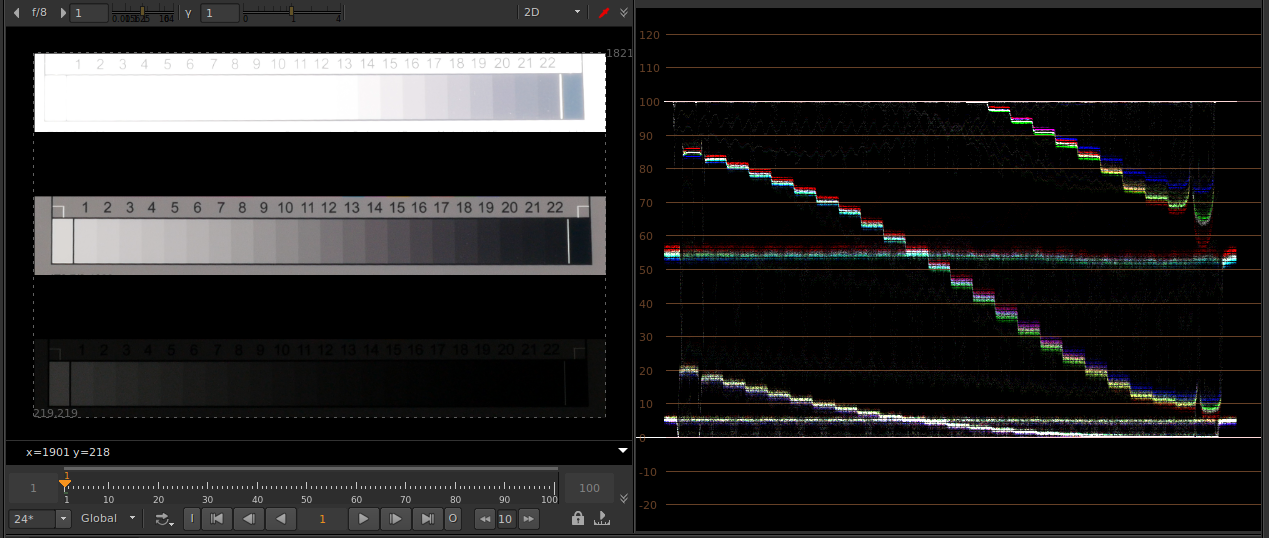
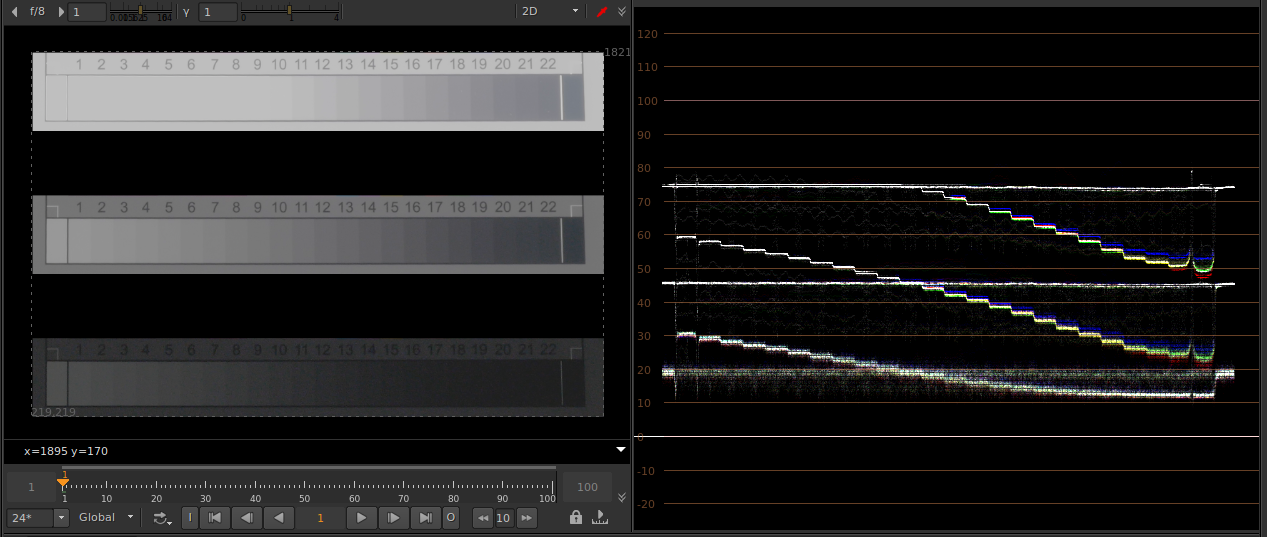
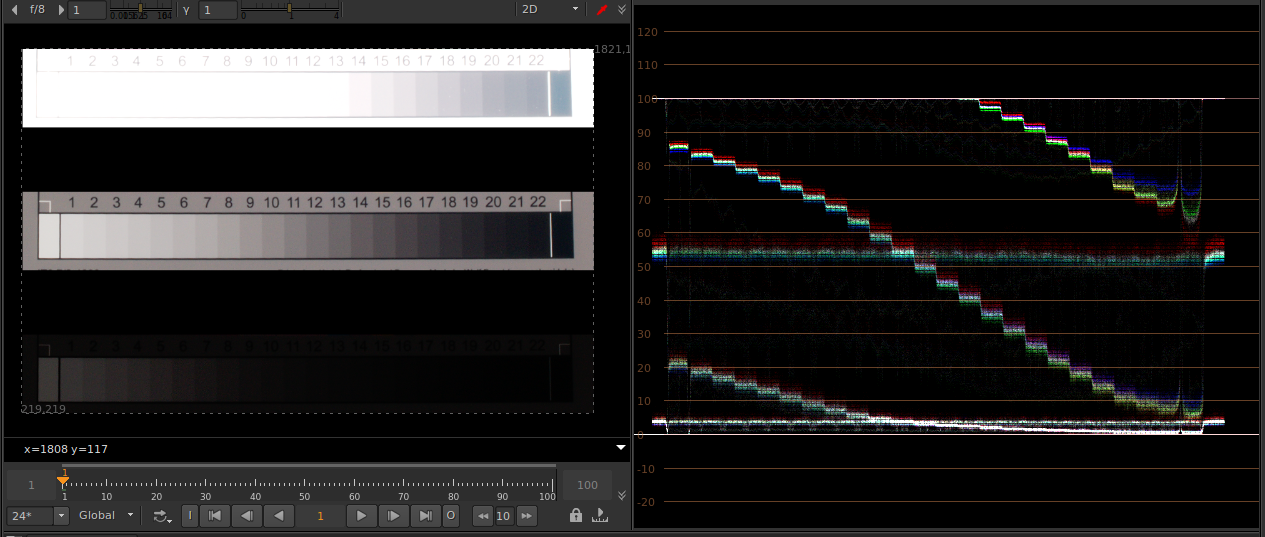
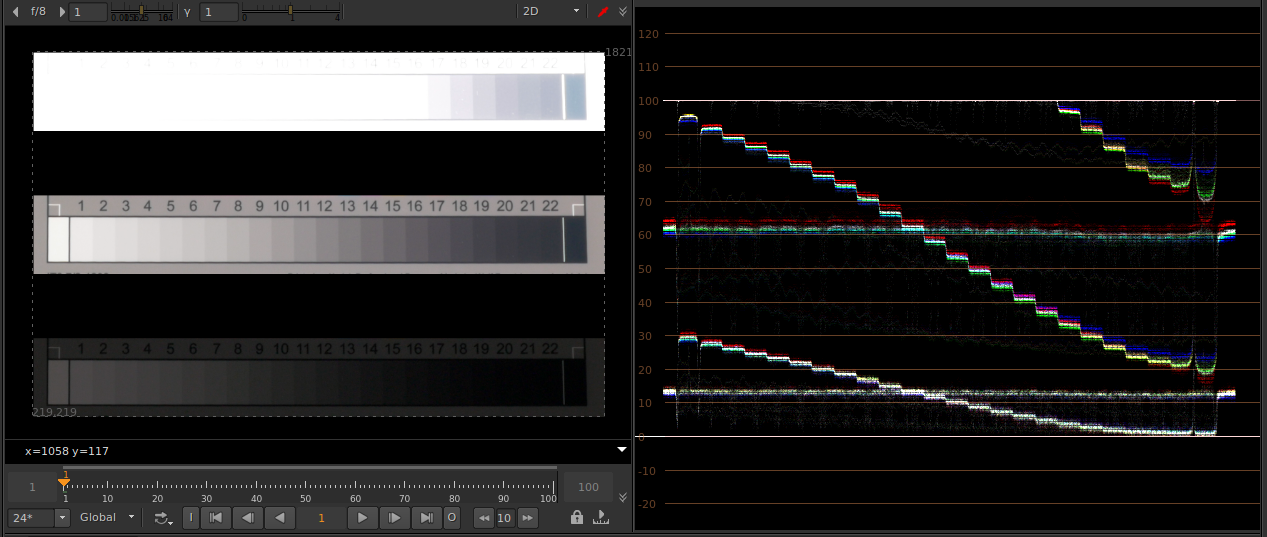
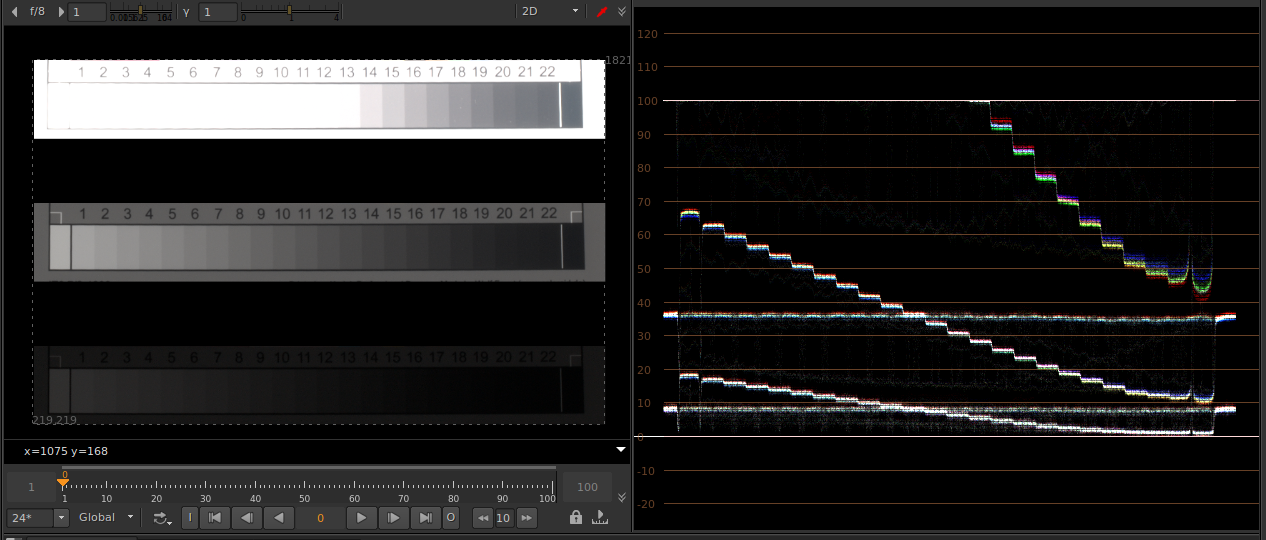
here are some simple tests for estimate the dynamic range of different recording profiles
i used the gray control strip if an it8.7 test chart and +/4 LV under/overexposure

1. std profile -- ISO200, f16, 1/15-1/250-1/4000, full range, default settings
std-shot.png


2. v-log profile -- ISO400, f16, 1/25-1/400-1/6400:
vlog-shot.png


3. raw photos processed by darktable and its default settings -- ISO200, f16, 1/13-1/200-1/3200:
raw-shot.png


4. cine-d -- ISO200, f16, 1/8-1/125-1/2000)
the exposure isn't perfect in this case. it's more of an ETTR example ;)
and the camera wasn't reset to defaults :( => (highlight/shadow: 0,0 contrast: -1 sharpness: -5 noise reduction: -1 saturation: -1)
cined-shot.png


i hope it's useful to get an idea about the dynamic range capabilities of this different modes of recording.
 
Dynamic range is bounded by noise on the bottom and clipping on the top. Noise is exactly the same in the different photo styles. It's produced by the sensor, and also present in the image (shot noise). The different photo styles have different clipping levels. I measured very carefully to compare Standard and V-Log L (using your videos!) and measured 1.30 more stops in V-Log L at the same ISO setting. But of course V-Log L is only available down to ISO 400, vs. ISO 200 for all of the other photo styles. So the net gain for V-Log L is just 0.30 stops. Really nothing much.
 
hu-uh! nu-uh! PANASONIC says TWO stops!

;) I bought the lie like many others did. "fool me once....."
 
I'm a newbie to log profiles. I don't understand the purported benefit of added dynamic range. I mean...I see the extra dynamic range in the flat image. But by the time you process that image to a useable state (contrast, etc), aren't you going to lose that little extra DR? How is that final pp image any different than the DR you'd get from one of the pre-baked profiles?
 
I'm a newbie to log profiles. I don't understand the purported benefit of added dynamic range. I mean...I see the extra dynamic range in the flat image. But by the time you process that image to a useable state (contrast, etc), aren't you going to lose that little extra DR? How is that final pp image any different than the DR you'd get from one of the pre-baked profiles?

The benefit isn't that we're going to keep that DR through the whole grade. The benefit is that we have more of a say in how those bits get redistributed. Of course, the best results will be when you record that V-LOG L signal externally.
 
hu-uh! nu-uh! PANASONIC says TWO stops!

;) I bought the lie like many others did. "fool me once....."
It depends how you measure. If you are interested in the absolute dynamic range, which is to say the range from the brightest white that the camera can distinguish from any brighter whites down to the darkest grey that the camera can distinguish from any darker grey, V-Log L might indeed be two stops more than Standard. (I didn't even try to measure that way) But to measure the dynamic range that way ignores all of the noise in the shadows. That noise practically constrains you to keep the lowest parts of the V-Log L image down low in your final output. If you try to lift the shadows, it will just be a noisy mess. And so the exposure latitude of V-Log L is only 1/3 of a stop better than Standard. Really, exposure latitude is one of the biggest benefits of a camera log color space, at least on cameras with more dynamic range than the GH4. The real joy of a log working space (for me, anyway) is that you can go out and shoot and not get the exposure and the color balance set perfectly, but then come home and make the adjustments so they do look perfect. That doesn't even require a camera log color space. It just requires some way to accurately map from the camera's color space to a log working space. V-Log L gives us that, because Panasonic precisely specifies V-Log and how it should be interpreted. But that could be done for any color space, even a non-log one.
 
I'm thinking, based on the numbers present for the LUT they provide, couldn't we reverse engineer the differences needed to create a LUT that is accurate for the other profiles? Film a color chart, see what the VLOG LUT does to it on scopes, and mimic those changes into a LUT for Natural or Even CineD based on what those producse for the same color examples.
 
@mash-gh4 for raw you should have done full highlight recovery, I garrentee there is more there to be had.

here is a slightly better version of the raw data respose from the sensor. it's bypassing the basecurve and i/o-profiles in darktable -- just taking the linear data...
highlight reconstruction doesn't change the clipping...

raw-lin-shot.png


but it's a very insufficient way of measuring. using a dsc xyla or similar device would lead to much better and clear results.

balazer gave a very realistic overview about real world expectations.

looking for better calibrated/corrected import for std and cine-d profile footage looks much more worthwhile than accepting the shortcomings of this actual v-log-l implementation.
 
Last edited:
Back
Top