Imamacuser
Veteran
A few thoughts on Blackmagic's forthcoming Ursa Cine 17K 65mm camera.
It's a poor man's Arri Alexa 65 that can emulate Todd-AO/Super Panavision, intended for certain DP owner operators and rental houses.
It sounds like the price will be equivalent to the RED One's release price (if adjusted for inflation) or maybe cheaper, considering how RED nickel & dimes you on the necessary accessories.
Some YouTubers say Blackmagic is disrupting the industry, bringing 65mm to the masses, but there's one really big issue, lens availability.
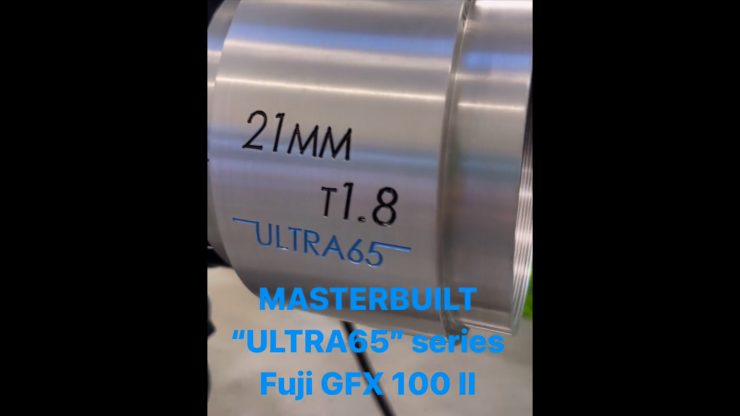
Blackmagic didn't announce a partnership with an optical company to produce medium format lenses for their 65mm camera, although that could be secretly happening behind the scenes, but as far as we know, the only options are purchasing medium format photo lenses or renting Todd-AO, Super Panavision, or Arri DNA lenses, and I've heard the Arris are just rehoused medium format photo lenses.
Medium format lenses tend to be slow, have significant focus breathing, with very few focal focal length options.
Medium format lenses can give you better background separation at close distances, but you reach the point of diminishing returns very quickly when compared to fast VistaVision lenses.
The Ursa Cine 12K looks more appealing, as there are a myriad of affordable, light weight, fast cine and photo lenses that cover VistaVision.
VistaVision is the sweet spot in terms of wide aperture, light weight lenses.
Plus you can use a Kipon focal reducer to closely emulate medium format.
Perhaps companies like Rokinon will produce medium format lenses if there's more 65mm cameras in circulation, but we'll have to wait for the R&D process to run its course.
In conclusion, the advantages of the Ursa 65 are latitude, and resolution for VFX plates, if you can source compatible lenses.
It's a poor man's Arri Alexa 65 that can emulate Todd-AO/Super Panavision, intended for certain DP owner operators and rental houses.
It sounds like the price will be equivalent to the RED One's release price (if adjusted for inflation) or maybe cheaper, considering how RED nickel & dimes you on the necessary accessories.
Some YouTubers say Blackmagic is disrupting the industry, bringing 65mm to the masses, but there's one really big issue, lens availability.
Blackmagic didn't announce a partnership with an optical company to produce medium format lenses for their 65mm camera, although that could be secretly happening behind the scenes, but as far as we know, the only options are purchasing medium format photo lenses or renting Todd-AO, Super Panavision, or Arri DNA lenses, and I've heard the Arris are just rehoused medium format photo lenses.
Medium format lenses tend to be slow, have significant focus breathing, with very few focal focal length options.
Medium format lenses can give you better background separation at close distances, but you reach the point of diminishing returns very quickly when compared to fast VistaVision lenses.
The Ursa Cine 12K looks more appealing, as there are a myriad of affordable, light weight, fast cine and photo lenses that cover VistaVision.
VistaVision is the sweet spot in terms of wide aperture, light weight lenses.
Plus you can use a Kipon focal reducer to closely emulate medium format.
Perhaps companies like Rokinon will produce medium format lenses if there's more 65mm cameras in circulation, but we'll have to wait for the R&D process to run its course.
In conclusion, the advantages of the Ursa 65 are latitude, and resolution for VFX plates, if you can source compatible lenses.