The New Cinema Camera

G

Guest

Guest
These are more lists of great speculation than based on any scientific testing.

1. Dynamic Range listing
This list is based on SamH’s list.

Cameras ranked by dynamic range:
1. Arri Alexa LF (-2,+6)
2. Arri Alexa (-2,+6 with slightly larger grain than LF)
3. Sony Venice (-2,+5, with consistent colour through all exposures)
4. Red Monstro (-3,+4)
5. Red Gemini

- Kodak Film -

6. Varicam 35/LT
7. Black Magic Ursa Pro (not sure which model exactly)
8. Mavo LF
9. Canon C700FF

Sam H has done many of his own DR testing and also crossed referenced many existing camera tests to come to a pretty close true representation of DR scores.
 
Last edited:
2. Cameras rated on overall qualities for film making.
Ok, real quick, this is similar to the ‘New Lens’ thread, except, i’ll be rating cameras.

All these new cinema cameras, and they are all good. Long gone are the days of complaining about 8bit.

Below is the running list, and the cameras will be rated on their overall average benefits


this list is based on how a camera might be rated base on all the factors it brings to a cinematic shoot.

Top 10

1. Arri Alexa Mini LF
Pros - superior image quality and resolution, met with a decently compact form factor that plays well with gimbals. Pairs with Alexa LF perfectly.
Cons - high price

2. Red Monstro
Pros - 8K full frame on a gimbal.
Cons - price, and Alexa cameras still best it in some ways

3. Arri Alexa Mini s35
Pros - is basically the standard right now
Cons - resolution and noisy from iso2000. Some don’t consider these cons.

4. All the heavy Alexas
Pros - high end look, literally the best in the industry
Cons - heavy and expensive battery hungry

5. Sony Venice
Pros - 1-8 stops ND internal, fantastic image and great out of box look that rivals the best cameras available. Rialto mod makes camera great for high end 3D work
Cons - Price and need for purchased upgrades to access the things that make the Venice a unique asset. Rialto requires reconfiguring vs just having two Red bodies. And Venice and Monstro are actually tied for 2nd, but anyone who might prefer a Venice over a Monstro, might actually prefer an Arri anyway. In the broadcast world, Venice seems is would easily rank above the Monstro, in the creative and Cinematic world. Even if the Venice could be argued to have technical advantages over a Monstro.

6. Red Gemini
Pros - usable image at iso5000. Comes in both Ranger and DSMC2 bodies. May have a good companion in the Komodo. Lower data rates, lower compression, and higher frame rates in s35.
Cons - Since the Sony A7s came out, the expectations for light sensitivity and low noise have changed. The Gemini, like the Varicam 35, these cameras get called “lowlight” cameras, but they only get usable up to 6400 iso, and even that has noise. Which by many people’s standards is just “normal light camera”. Considering most cinema cameras max out at iso 1600-2500, then iso 5000 or 6400 start to sound good.

7. Panasonic Varicam 35
Pros - detachable front allows for swapping to a 2/3” highspeed sensor, or great for lightweight jib or special mounting options. There original dual iso cinema camera. Highlight roll off and colour science.
Cons - currently no cons, as they are relatively inexpensive.


9. Red Helium
Pros - Red brand, actually these sensors bring features that make me feel i should rate these cameras higher, but other cameras bring additional functionality to the table, and Red already has the Monstro and the Gemini holding down top spots. So, while amazing, possibly just getting sidelined by other amazingness. Great for macro shots.
Cons - Red brand

Canon C500mkii
Pros - plugs into an existing C series eco system and offers familiar colorimetry and easy out of box look. Gimbal friendly body. Internal ND system. Raw internal. Possibly the most user friendly camera from cost to ergonomics, to menu. Light weight, can even handhold relatively comfortably.
Cons - B the time you get an Oled evf, and add on module, and a cage, the camera will be over USD$20K. Being new, rentals will be higher.


10. Sony F55
Pros - Familiar battle proven camera with global shutter and internal ND
Cons - long in the tooth. While this camera has a lot going for it, it ends up living in the eng world more than the cine world. Only reallt rating this below the C500ii and Fx9 because if iq was the main concern to choose the F55 over the two new kids, than why not pick something else? Meanwhile, the new mid tier cameras have things like ff35, variable nd, internal raw, better low noise performance, and or a few other things that some film makers might value. However, the F55 is a global shutter camera and worth a consideration, especially when combined with the raw recorder.


Sony Fx9Sony may meed to introduce some firmware updates to get this camera back in the running as a “cinema” option, but for its intended purposes, this camera is already quite capable. A lot of potential for this to make a good cinema camera, as well, just has a few firmware quirks:
- LUT issues
- downscaling artifacts
While small issues, it just doesn’t quite feel like a top 10 CINEMA camera contender at this time. Venice is already handling a top spot. Should see this camera be reborn with some updates. This rating has no baring on its intended use and design. The Fx9 is already ready to be put to use for tv, documentary, indie no budget films, web influencer content, Corporate, you name it. I’m really hoping these small issues get ironed out. Could be a game changer.

Should solidly take over the segment that the Fs7 previously dominated. While occasionally doing what previously would have been high end only. This camera is in its own, and has few if any real competition once one factors in all the features. In some ways, this camera could be the C300 of our day, giving wonderful iq and a no fuss body with internal variable nd that will speed low budget film making process. Only rating the C500ii higher because of internal raw and that indie love for Canon colour. However, the Fx9 does appear to have better highlight retention and roll off, and being able to precisely dial in the ND that is a powerful tool towards getting the best possible exposure.


Top 25

Panasonic S1H - growing pains, but this has got to be one of the most exciting cameras. same sensor as the Nikon cameras, but it doesn’t do raw. The body is just a little too big to be compact, and too small to fit in the hand. My pinky hangs of the bottom- can be remedied by the extended battery grip. Does that make it an uncommited design, or a goldie locks? The EVF is great! Rivals the $4,000 Red OLED!

11. Black Magic Pocket 4K M43 and Pocket 6K s35 (may need reranking in light of the recent additions to the list)
Pros - makes “cinema camera” a light hearted term. Low learning curve. out performs the 6K in that it brings features to the cinema camera world that even higher end s35 cameras do not have. Namely, dual iso and m43 cine zooms like the DZO lenses. While i may change their rating, i have these rated high because of what they bring to the anyone/anywhere cinematographer. They are cheap and easy to learn. Is a democratizing tool, open to many more people than before.

12. Zcam s35 and ff35
Incredible size to performance ratio. These cameras open up new angles, that even small DSMC2 can’t attain. Oh, they are also affordable. Image quality in some aspects is better than Black Magic Pocket cameras.

13. Kinefinity
Better image than Black Magic and Zcam, but at a price. Perhaps the most overlooked bang for buck, because of the high export price compared to its in country price (double).

14. Sony F35/Alexa Classic HD/Red Dragon
Essentially the top three vintage mojo cinema cameras, that have been given new life in the used and modded upgrade world.
Cons - outdated.

15. Sony F65
Pros - still relevant
Cons - maybe never was particularly relevant

16. C300mkii
Love it, hate it, get paid with it. An unassuming workhorse, and brought cinema to the reality world, and cinematic documentary world. Despite everything, Canon has remained an indie darling for many.

17. Fs7 mkii
Pros - improvements on the already established Fs7. Outspec’ing all competition. Internal ND. External video centric controls.
Cons - image straight from camera may lead to video look in post. Some ergonomic oversights.

18. Black Magic Ursa Pro G2
Pros - Some of the best image quality according to some, allowing indie filmers to shoot with out limitations. Is said to have a more filmic look than similar Sony or Canon offerings. Comes with a free copy/license of Davinci Resolve. Ergonomics put essential features easy to reach.
Cons - the camcorder design, is both good and bad. Build quality low - which is probably the only real drawback. the three friends I know with one are beginning to fall apart within the first two years. Low score is only due to how many options there are, and build quality. On a different list this camera would score much higher.

19. Panasonic EVA1
Pros - budget friendly compact and lightweight cinema camera, with dual iso and huge latitude for this segment. Great feature set and good colour science. BETTER Image Quality than either the Fs7ii or C300mkii.
Cons - was late to the segment, and the “look” had already been defined by other cameras, so, Panny colour is still not favoured, even if it might be better.

25. Nikon Z6/7
Pros - Raw external w Nikon science behind the Sony sensor!
Cons - everything else.


Not Yet Ranked:
Black Magic 12K - should get a high rank for its unique scaling ability. Braw has come into its own now.
Panavision DXL2 (while not for sale, and based on the Monstro, the camera offers unique approach)
Mavo Edge
Mavo LF
C300mkiii (dual gain sensor and Canon colour science? yes please)
Komodo (looking to see what this does for image quality in this form factor)
Sony A7sII - while i want to kick this one off the top 25 A cams list, this camera still stuns. If you already own it, it is a great A cam for all kinds of projects. It is still one of the few true “low light beasts” for in camera iso/noise performance. I feel somewhat obligated to add it back into the list, but will perhaps leave it here as the honorable mention.

Sony Fs5mkii (difficult to say if this can be calssified as a “cinema” camera. A good little work horse, but ultimately doesn’t make the cut as an A cam. Definitely bolsters the Sony Eco system though, and a great little camera. Sony has so many B and C cameras to choose from.


The above list is not final. Just a temporay off the top of my head list. Will update soon. Just adding as a book mark. The Sony F35, F55, and Fx9 pose particular problems in rating, as they all excel in some areas, and not in others in terms of modern day cinema. Red also currently has 4 sensors available, so that means some cameras get a lower average rating.

Logic is something like this: Red Helium and Dragon are great sensors, and the Helium in particular brings 8K in an s35 form factor, but Sony has the F65 and Red has the 8K Monstro, so for a cinematic experience, not sure what Helium is offering that would be required. Helium is probably amazing for commercial work, studio work, and table top work. Also, Sony Venice and Monstro go head to head and it is pretty uncertain which one should be ranked above the other. Monstro is currently ranked higher because of the small size, the extra resolution, and the near same level of image quality. Sony Venice has some clear advantages that make it possibly better than Monstro.

The C500ii and Fx9 are still tbd. I may change their status. Mainly because i’ve not actually had ample time with them.

The Mini LF gets a pass by being the same tech as the original LF, just in the mini body.

And i’ll admit, even i have issues with my current list.
 
Last edited:
While it's currently a lot of work in post, AI upscaling will make old great cameras great again, e.g. the F35 and ~2K Alexas:

https://topazlabs.com/gigapixel-ai/
https://captrobau.blogspot.com/2019/05/tutorial-upscaling-video-with-topaz-ai.html

As AI scalers improve, 2K to 8K will even be possible. On that note, on Black Friday I went to Magnolia/Best Buy in Hollywood to check out the latest and greatest TVs and projectors. The 8K Samsung (only one on display) just played a looping video of CGI- no examples of AI Upscaling, so at this point I've got to give them a rating of shenanigans lol. In order to be useful for pro/cinema use, AI Upscaling has to be pretty much perfect- e.g. no funky artifacts (which could be way worse than typical sharpening methods which can cause ringing edges, aliasing, sparkles etc.).

Excellent oversampled ~2K upscaled (bicubic or better) to 4K and sharpened will give all (fake) "4K" cameras a run for the money in terms of perceived detail. Real 6K => 4K cameras will have a real advantage (true 4K detail), however most people won't notice the difference unless using a great display and sitting fairly close. The whole "Netflix" approved argument is bogus- that's only for Netflix sponsored productions. Get sponsored using a 2K Alexa then take funding to buy/rent an Alexa mLF as A cam and Red, Sony, Canon for B, C cameras etc.

For pure image quality and over/under protection + real DR and exposure invariant color + best skin tones & accurate color, any ARRI that fits the budget is my first choice.

For pure detail, the 6K Venice or 8K full frame+ Reds for outdoor shots look really great. Alexa 65 is (supposedly) rental only.

For high quality slomo, Alexas are hard to beat there too. For super slomo, renting Phantoms makes sense.

If AF is needed, C500 II and/or FX9. Here's a demo of Alexa AF (using sonar) vs. the EOS R (not a great comparison; shows the current tech required to get an Alexa any kind of AF at all + EOS R color matches well to Alexa in these shots): https://www.youtube.com/watch?v=VwB654FdLgI . Perhaps ARRI will add a DPAF system to a future camera which can drive a servo to provide high quality AF (+ with AI for face/eye/body/object tracking) using any cinema lens.

The 1DX II 8-bit 422 4K, with optimized in-camera color (Filmic Skin) + extended DR- very close to CLog on the EOS R, is fantastic in the studio when lit and shot for in-camera color. Works great outdoors too however DR is limited compared to e.g. Sony's latest A7x offerings. Manually setting WB or even using AWB I don't have to do any color work for skin tones in post- just like what's possible with ARRI cameras :) (not as good, but good enough + these cameras provide DPAF).
For YT & IG, the EOS R + Filmic Skin is well priced and works fine for 4K and 1080p (medium/close only else too soft).
 
Almost anything can be done nearly as well or better on the Pocket 6K.

Even small long zooms?

I’ll admit, the BMP6K is still a mighty bang for buck camera. Maybe i am down playing it too much.
 
I have a p4k, and it's great, but definitely inferior to the p6k, namely because almost everything is identical but the p6k has 1.5 stops more DR, which I definitely didn't expect but is clear if you watch the lensprotogo latitude tests. I think the p6k should be 11th on your list, and the p4k should be 12th.

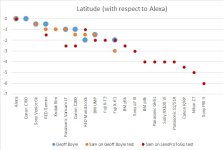
DR_tests.jpg
 
Interesting chart. Are those numbers based on entire dynamic range, or just in relation to highlight clipping? I find it difficult to assume the C700 has the same latitude as the Alexa. With those colours,, low light performance, and FF35, if it had that kind DR numbers it would have taken off!

I tend to believe the Gemini is 1.5 stops behind the Arri Alexa. The advantage to me, is, that dual gain IMAGE OVERLAY of the Alexa looks Ever so slightly funky to me. A little clay-like. I like the look of a sensor that just has that range. Seems more natural. However, until a sensor can outdo the Alexa dual gain OVERLAY strategy, then we’ll never know for sure. But i know how well the F35 tone curve handles skin texture, so, i’d assume a native hdr sensor could look better...

...Also, the Alexa starts looking anemic at iso3200, whereas the Gemini can do 3200-5000 fairly well. I have yet to determine how much noise reduction can even the playing field between the Alexa and some of these dual NATIVE iso cameras can be. Haven’t seen many tests either.

The Venice numbers wouldn’t surprise me. Even the F55, despite specs was head and shoulders above the Red MX. Of course, that didn’t stop good movies from being shot on the MX (Girl with the Deagon Tatoo, Social Network, Elysium) And similarly, ‘The Crown’ is one more testament to the F55. But, that said, i’d be surprised if the Venice were able to handle those stops as gracefully as Arri. Some reports the Venice as ~noisy, which i’d say that means it is diggining into the depths of the sensor limits to get those DR numbers. Venice, like the F65 and F35 before it, is probably underrated.

The Varicam 35 has been mentioned to be noisy, similar to the Sony Venice. I assume this is also a slight artifact of reaching deep down into the full sensor potential. I kinda wish i bought an LT when they were on sale. Idk about anyone else, but i’d be hard pressed to prefer the XT3 orver the Varicam, even if the DR numbers are better for the XT3. I did not care for the look of that camera. Good for the price, but again, so is the LT at $10K.

The Monstro.... i am surpsrised by that assessment. I’d assume it was beyond, even the Gemini in total DR, though, i could see it as potentially having less in the highlights... potentially. But i see YOUR rating is actually a half stop more than the Gemini, which is my impression too. I am just not super familiar with the Monstro.
 
Last edited:
It's taking into account both over and under range, and that's what's making the C700 look so good. Geoff Boyle rated the Alexa to be good up to +5 and -2, and the C700 up to +3.5 and -3.5, which means they have the same DR but with different distribution.
About the Venice, he noted: "The highlights clip slowly and smoothly and the colour is not that “Sony Look” it also has the most consistent colour across the exposure range."

https://cinematography.net/CineRant/2018/07/30/personal-comments-on-the-2018-cml-camera-evaluations/

I ranked the DR of the Monstro and the Gemini differently when looking at the clips posted by Geoff Boyle or by LensProToGo, so I'd say it's a match. Geoff boyle saw a big advantage for the Gemini, but looking at his clips I'm seeing a much smaller difference. It may be the vimeo compression equalizing them, but then again, the LensProToGo clips actually reverse the order so I won't doubt my own impressions too much.

LensProToGo clips: https://www.youtube.com/playlist?list=PL2uqF5F7qLmUEFLZ2RvUU8AmdX_6l3WXY
Geoff Boyle clips: https://vimeo.com/280683552
 
It's taking into account both over and under range, and that's what's making the C700 look so good. Geoff Boyle rated the Alexa to be good up to +5 and -2, and the C700 up to +3.5 and -3.5, which means they have the same DR but with different distribution.
Oh, interesting.

Samuel H said:
About the Venice, he noted: "The highlights clip slowly and smoothly and the colour is not that “Sony Look” it also has the most consistent colour across the exposure range."

https://cinematography.net/CineRant/2018/07/30/personal-comments-on-the-2018-cml-camera-evaluations/
Very cool. I’m hoping to do some side by sides with the Venice, Gemini, Alexa, and C500mkii once the Canon is shipping. Hoping i can throw some 16mm in there somewhere, just for fun. May have access to one or two other cameras, bjt those are the ones i am most interested in seeing next to each other.
 
In any case, the DR gap Arri has had, has narrowed quite a bit.

If you are willing to trade off a stop/stop-and-a-half in the highlights, you get access to features from other brands and price points.
 
The Varicam 35 has been mentioned to be noisy, similar to the Sony Venice. I assume this is also a slight artifact of reaching deep down into the full sensor potential. I kinda wish i bought an LT when they were on sale. Idk about anyone else, but i’d be hard pressed to prefer the XT3 orver the Varicam, even if the DR numbers are better for the XT3. I did not care for the look of that camera. Good for the price, but again, so is the LT at $10K.

The VariCam LT special Instant Rebate offer has been extended to March 2020. $9,995 gets you the body, monitor/control panel, locking EF mount (PL-style clamp), top handle, and all the built in I/O connectivity with integrated battery mount. Many of those items cost extra on other high end camera systems. The offer on the VariCam LT is an incredible deal.
 
Pretty sure Geoff was wrong about c700 but who knows. Interesting way of combining some qualitative assessments into a quantitative chart. Seems fairly accurate otherwise. There is a lot more to seeing the full picture of these cameras. For example Gemini is great and doesn't do too bad in low light except the blue channel can still leave a lot to be desired though you don't notice it unless you have some fairly saturated blue detail in shadows.

I'd like to imagine this is totally correct as an owner of a Gemini and xt3 both of which seem to be class leaders according to this chart. I think their position may be slightly inflated by underrating of some other cameras. Monstro seems underrated here but the canons seem overrrated. It's interesting to see the wide discrepancy in ratings of the c200...
 
Last edited:
Unfortunately, i made up a bunch of reasons why i needed something else.

So, i bought a camera that was a decent amount more, when i didn’t have any real business logic to spending more. I mean, it will make the money back, but the LT could too, but for less.

What did you go for?
 
What are the quirks/flaws you're referring to?

The flaws are continuous autofocus that use to be reliable was ruined in their 3.0 and above firmware. Fujifilm zooms have visible exposure shifts during zooming. Essentially making them variable primes. The video portions during the zoom action are mostly unusable.

Quirks include a round about way of getting to 180 degree shutter angles. In video mode you can get to the correct shutter speed but you have turn both the dial and then the wheel to get to shutter speeds that would line up with corresponding 180 degree shutter. The 601 to 709 colorspace issue in premiere pro. Final Cut and Resolve have this worked out, but still it's a quirk to record 2020 HDR, and 709 UHD but use a 601 color matrix. Why do that? A couple more minor things but those are the ones that bug me.
 
The flaws are continuous autofocus that use to be reliable was ruined in their 3.0 and above firmware. Fujifilm zooms have visible exposure shifts during zooming. Essentially making them variable primes. The video portions during the zoom action are mostly unusable.

Quirks include a round about way of getting to 180 degree shutter angles. In video mode you can get to the correct shutter speed but you have turn both the dial and then the wheel to get to shutter speeds that would line up with corresponding 180 degree shutter. The 601 to 709 colorspace issue in premiere pro. Final Cut and Resolve have this worked out, but still it's a quirk to record 2020 HDR, and 709 UHD but use a 601 color matrix. Why do that? A couple more minor things but those are the ones that bug me.

I'm not sure I really see the zoom exposure ramping as that big of on issue. The Fuji stills zooms aren't parfocal, so zooming mid-shot is hugely problematic for focus for anyway. Sure it'd be nice if they didn't do it, but they're focus-by-wire, stills lenses, and whole inappropriate for manual video shooting anyway. Just use an adapter and manual lenses if you want proper lens control (like you would with any other camera).

And set the dial to "T" and you have full control of the shutter via just the dial (without any need to adjust the wheel on top).
 
Back
Top