The Crown BTS

It ensured my camera would always be the A camera. The other cameras were never going to match no matter what was done on location because in those days painting the cameras had to be done by taking the side panel off and using a screw driver to turn pots on the board. If other people had foolishly paid an engineer to tweak their camera to have a muddy look, that was their business and they weren't about to undo it. It was a far different era than today where scene files can be shared. And in the end, yes we were all friends, but also competing for the same work, and the "look" of my camera was proprietary and gave me a competitive advantage. Plus I was an outlier shooting on Ikegami instead of Sony, which almost everyone else was using in my area, so there's really no way in hell their cameras could ever match anyway. I was doing about 225 shoots per year in those days and less than 10-20 involved multiple cameras, so I'm hardly going to give away information that makes it easier for competitors to compete the rest of the year. In the end, this is a business and you have to treat it that way sometimes.

Joking aside, (and I was joking), what I find interesting is you'd do a multi-camera shoot where everyone brings their own camera - and different makes of camera too. Doing that now, you have a better chance of matching everything up but doing that 20 years ago would have been a nightmare.
 
Joking aside, (and I was joking), what I find interesting is you'd do a multi-camera shoot where everyone brings their own camera - and different makes of camera too. Doing that now, you have a better chance of matching everything up but doing that 20 years ago would have been a nightmare.

Doesn't it depend a bit on what you're shooting? People mix looks on concert films. On docs etc, people mixed film stocks and certainly lens lines. Isn't the need for a perfect match between cameras a little bit arbitrary or at least dependent on the type of film you're making?
 
Joking aside, (and I was joking), what I find interesting is you'd do a multi-camera shoot where everyone brings their own camera - and different makes of camera too. Doing that now, you have a better chance of matching everything up but doing that 20 years ago would have been a nightmare.

That's why we had CCU's and CCU operators and TD's to dial everything in. All broadcast cams had standard SMPTE matrix adjustment circuits so you could dial all the various brands, Sony, Panasonic, Ikegami, JVC, Thompson, BTS what have you to a semblance of a common look. IT chips, FIT chips and FT chips and they all had their own characteristics. In the sixties, seventies and even later with tube cameras if you had a tube go down on one of the cameras the techs would rush out, swap whichever tube had gone down, and spend what seemed like an eternity with the alignment convergence patterns up aligning the tubes and then bringing the camera back up on line. The TD on that camera would then sweat on the camera's output and track it because as the tube "burnt in," settled in in over the following hours in other words its output would constantly change. So the TD who's chain of cams that cam was in was constantly 'tweaking' the output from that camera to keep its black levels, gain levels and gammas within spec to match the others involved in the production. Twenty-eight cameras on a twelve-hour endurance car race and you could almost guarantee one cam would go down sometime somewhere. I TD'd for some years. Some lovely tension-filled memories they were :)

Chris Young
 
are these still available? I can't seem to find them online.

To the best of my knowledge they are. I've just had a quick look and found the following. The first link is after Tiffen sold DFX to Digital Film Tools (DFT) and the last link is a Boris FX video stating that "DFT is now a Boris FX product! DFT (aka Digital Film Tools)". Have a look at Tiffen's original video on Vimeo, below, as it will give you an idea of what you can achieve very quickly. So I guess you need to chase up Boris FX. As somebody said on RedUser some time back "Yes, I've used Tiffen DFX for a couple of years and pull that out as a secret weapon."

UPDATE!! Found it. Its name has changed and its price has dropped.
https://borisfx.com/faq/optics-faq/...rmerly called DFT,called Boris FX Optics 2021.

Chris Young


https://www.toolfarm.com/news/new_tiffen_dfx_v4_now_available_with_new_ofx_suppo rt/

https://www.youtube.com/watch?v=wwLeeObKBPY
 
Last edited:
Doesn't it depend a bit on what you're shooting? People mix looks on concert films. On docs etc, people mixed film stocks and certainly lens lines. Isn't the need for a perfect match between cameras a little bit arbitrary or at least dependent on the type of film you're making?

That's a choice. It used to work better with film - mixing Super16 with Super 8, colour and black and white , for example, but if you were doing a five-camera event on Betacam you generally wanted all the cameras to be the same and set-up the same. These days it's not so important. I carry four cameras with me to most shoots - all different.
 
I agree with that attitude for today's cameras. But back in the day of my Ikegami HL59 Betacam I kept a Tiffen Soft/FX 2 discreetly screwed onto the front of my lens 100% of the time. I never took it off and clients and other crews (on multi-cam shoots) could never figure out why my camera always looked so much nicer than all the others, especially the Sony D600. The filter, combined with some tweaks to the circuit boards took that "video-edge" off the picture just enough, while still keeping eyes and details sharp. It was a time when the "Macie look" was all the rage in New England and I thought it looked awful (too muddy) so I took the side panel off and painted the camera myself. Back in those days you couldn't just export a scene file so it made it easy not to share the secret sauce. I used Macie for my repairs, but I'd never let an engineer touch my picture settings. Of course all that changed around 2005 when I got my cheap little Z1U and it clearly blew the doors off the $60K Betacam. What we all thought had been good enough turned out to look like s*%t. Never looked back.

We’ve had the Macie discussion before ; ) . In the “Beta Days”, I liked the look, as did many others. But beyond that, no. I sent one of my Vari’s to them and was severely disappointed. I immediately went back to my look that I created (that is still floating around on a lot of cameras). I’m not even sure if I know where that card with their files on it is.

I knew guys that swore by Ike’s. One of my friends only shot Ike’s until the VariCam’s came out(I was told that the Panasonic VariCam’s looked so good, because some former Ikegami engineers went over there).

I remember doing a multi-cam shoot years ago(we were at least into HD, though) with this older guy that was super protective of his “look”. He barely wanted to allow me to use it, but it was a multi-cam deal and they had to match. He loaded it into my camera himself. He wouldn’t even let me load it off of his card. Then he told me I had to wipe it out of my cam when we were done with the shoot. Then by the end he had “softened up” and said I could leave it in, but I could not share it with anyone. I think I blew it out the very next day.
 
Last edited:
Joking aside, (and I was joking), what I find interesting is you'd do a multi-camera shoot where everyone brings their own camera - and different makes of camera too. Doing that now, you have a better chance of matching everything up but doing that 20 years ago would have been a nightmare.

Back in those days, networks and the like usually had a couple of preferred camera models(sometimes ONE preferred model) that you had to own if you shot for them and some of them even required you to have had your camera set-up by the aforementioned Roger Macie, so that they would match or match as close as possible in the field.
 
Doesn't it depend a bit on what you're shooting? People mix looks on concert films. On docs etc, people mixed film stocks and certainly lens lines. Isn't the need for a perfect match between cameras a little bit arbitrary or at least dependent on the type of film you're making?

It’s one thing if it’s BTS of a concert where the footage is gonna be purposefully funked up in post anyway. In a multi-cam sit-down interview or live show, the cameras are supposed to look identical. And I wish people still adhered to that today. I see studio work all the time with usually at least one camera that does not match, and I was flipping through the channels a few nights ago and ran across some crappy holiday themed contest show and I don’t think I saw a single camera that matched another one. Pretty F’n disgraceful and sloppy. Another reason I weep for this once great industry.
 
It’s one thing if it’s BTS of a concert where the footage is gonna be purposefully funked up in post anyway. In a multi-cam sit-down interview or live show, the cameras are supposed to look identical. And I wish people still adhered to that today. I see studio work all the time with usually at least one camera that does not match, and I was flipping through the channels a few nights ago and ran across some crappy holiday themed contest show and I don’t think I saw a single camera that matched another one. Pretty F’n disgraceful and sloppy. Another reason I weep for this once great industry.


Meh. I see the point, of course. and I think that exact matching is the way to go if you want the film form to be invisible, which is their goal whether it should be or not

But I think it's overblown. I mean, you don't want anything to look s*%tty, which is another story. But what if mismatching is the best look? Like getting a lower-contrast shot of the dark audience so you can see more detail? What are we matching, camera settings or visible detail level?

People know they're watching video. Nobody is going to scream about foregrounding the camera. They probably wont even notice.

I think that in coverage of a scripted scene, it makes sense to get exact matching. But I hate it when movies have completely consistent aesthetics throughout - same lighting designs and ratios, compositional logic etc. And I say that as a film buff and not a cameraman. It's boring! (Ok, not the same thing as mixing and matching within a scene.) But it seems like a sloppy kind of carefulness. Like - we're not going to work out when and where to deviate, we'll just shoot it all the same so there'll never be a problem.

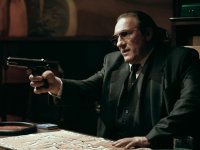
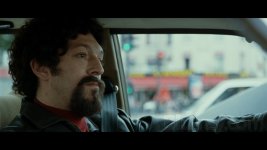
I like movies like Mesrine (part 1: killer instinct and part 2: public enemy number 1) - 2 fantastic Vincent Cassel gangster flicks for anyone who hasn't seen them! There was a nice variation of mood and aesthetic in there. Some visual palette cleansing. Not everyone has to mix it up like Natural Born Killers (genius movie btw) but I'd say this is the bare minimum (and yes I'm talking lighting not cameras but it's all aesthetics):

3960_1.jpg

MV5BMTMwNDg2MTMzNF5BMl5BanBnXkFtZTcwOTg4MTY2Mw@@._V1_SX1500_CR0,0,1500,999_AL_.jpg

depardieu-d19370ad1dd62bd6da144f0722486f7c62c38006-s800-c85.jpg
 
Meh. I see the point, of course. and I think that exact matching is the way to go if you want the film form to be invisible, which is their goal whether it should be or not

But I think it's overblown. I mean, you don't want anything to look s*%tty, which is another story. But what if mismatching is the best look? Like getting a lower-contrast shot of the dark audience so you can see more detail? What are we matching, camera settings or visible detail level?

People know they're watching video. Nobody is going to scream about foregrounding the camera. They probably wont even notice.

I think that in coverage of a scripted scene, it makes sense to get exact matching. But I hate it when movies have completely consistent aesthetics throughout - same lighting designs and ratios, compositional logic etc. And I say that as a film buff and not a cameraman. It's boring! (Ok, not the same thing as mixing and matching within a scene.) But it seems like a sloppy kind of carefulness. Like - we're not going to work out when and where to deviate, we'll just shoot it all the same so there'll never be a problem.

I like movies like Mesrine (part 1: killer instinct and part 2: public enemy number 1) - 2 fantastic Vincent Cassel gangster flicks for anyone who hasn't seen them! There was a nice variation of mood and aesthetic in there. Some visual palette cleansing. Not everyone has to mix it up like Natural Born Killers (genius movie btw) but I'd say this is the bare minimum (and yes I'm talking lighting not cameras but it's all aesthetics):

View attachment 141643

View attachment 141644

View attachment 141645

And that attitude right there is part of the reason the industry is going down the sh!ter.

I’m not talking about different scenes in a movie trying to convey different moods. I’m talking about multi-camera productions where the cameras are supposed to look identical as they are cut between. Even “taped” stuff from the same show, network, production used to have the same consistent look. You used to be able to walk into even a local newsroom and pick up any ENG camera and shoot with it and then pick up any other random ENG camera out of there and shoot something else, and presuming the person knows how to expose and white balance(which is NOT a given today), the cameras were going to look the same/have the same look. And the same with studio cameras. As the director cuts around, one camera should not look more green than the last and the next shot should not have lifted blacks/lower contrast, etc. I mean, what if you’re watching a scene in a movie and it’s two characters standing outside in an open field in the sun and they have a side two-shot and then an over the shoulder of each and as they cut from the two to the OTS of one of the actors and for no motivated reason it has a magenta tint. It’s jarring and totally takes you out of the moment.
 
Let's just say I dont think you should have a mismatch without a reason. But you shouldn't compulsively match if you have a reason not to.

I'm thinking more like gopro footage cutting into real camera footage. Not so much "oops we forgot to match scene files"
 
And that attitude right there is part of the reason the industry is going down the sh!ter.

I’m not talking about different scenes in a movie trying to convey different moods. I’m talking about multi-camera productions where the cameras are supposed to look identical as they are cut between. Even “taped” stuff from the same show, network, production used to have the same consistent look. You used to be able to walk into even a local newsroom and pick up any ENG camera and shoot with it and then pick up any other random ENG camera out of there and shoot something else, and presuming the person knows how to expose and white balance(which is NOT a given today), the cameras were going to look the same/have the same look. And the same with studio cameras. As the director cuts around, one camera should not look more green than the last and the next shot should not have lifted blacks/lower contrast, etc. I mean, what if you’re watching a scene in a movie and it’s two characters standing outside in an open field in the sun and they have a side two-shot and then an over the shoulder of each and as they cut from the two to the OTS of one of the actors and for no motivated reason it has a magenta tint. It’s jarring and totally takes you out of the moment.

I shoot multi cams of theatre shows with three Nikon Z6's and a Sony FS5. My biggest headache by far in the entire process is matching my FS5 to the Nikons. I confess that I struggle. Sometimes it takes me longer to get an acceptable match than it does to edit the entire show. Drives me nuts but to me it is vital to get as good a match as possible so I completely agree with you.
 
I shoot multi cams of theatre shows with three Nikon Z6's and a Sony FS5. My biggest headache by far in the entire process is matching my FS5 to the Nikons. I confess that I struggle. Sometimes it takes me longer to get an acceptable match than it does to edit the entire show. Drives me nuts but to me it is vital to get as good a match as possible so I completely agree with you.

Have you tried cinematch? Do they have your cameras?

One thing about matching cameras... what about matching lenses? How many of us are using color-matched lenses on multi-cam stuff? (...or different shots from a single-cam shoot...)
 
IMy biggest headache by far in the entire process is matching my FS5 to the Nikons.

The best time to match cameras is before you press the record button. Actually, before you ever leave home. If you've got scopes and charts it is easier, but even just with a monitor that has an A/B switch it shouldn't take too long to get a close look that can then be touched up in post after the shoot. Save the settings on SD cards -- and then you never have to do it again.
 
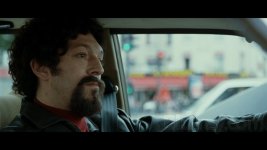
Now would you match them? As you say it's all a matter of aesthetics which is subjective. When matching cameras for a major baseball, football, or sporting event cameras have to look pretty close. Can you imagine the example variations above being used in a sitcom :) Would be interesting. A quick rough and ready match!

Chris Young

CC02.jpg
CC01.jpg
CC03.jpg
 
Have you tried cinematch? Do they have your cameras?

One thing about matching cameras... what about matching lenses? How many of us are using color-matched lenses on multi-cam stuff? (...or different shots from a single-cam shoot...)

I use two 24-70 Nikon zooms and usually two Sigma Art primes and often a 14-24 Nikon zoom. They all look extremely similar to me. Any difference is certainly smothered by the difference in the respective cameras. I have a Nikon 85 1.4 D prime and that is completely different to any other lens I have. That cannot be used side by side with other lenses during a multicam.
 
The best time to match cameras is before you press the record button. Actually, before you ever leave home. If you've got scopes and charts it is easier, but even just with a monitor that has an A/B switch it shouldn't take too long to get a close look that can then be touched up in post after the shoot. Save the settings on SD cards -- and then you never have to do it again.


I am not sure I have the knowledge for this yet! I have a large enough X-Rite chart. The only scopes I have are the waveforms etc on my Blackmagic video assist and Ninja V which I guess would be ok. I just right now don't understand how to paint my cameras. When I look at all the Sony parameters that can be changed I have little idea of what I am looking at if I'm honest.
I am grateful that I have a lot of work right now but I am so busy editing I daren't stop for a day or so to try and test. I suspect I would need a week given my inexperience.
Nobody has called me out on a mismatch yet but I would love to have something consistent to work with.
I can achieve a close enough match eventually but given that I am in constantly changing theatre lighting I find that what works with one show doesn't seem to work in another!
It's quite a source of anxiety for me as I am sure is plain.

I think you would need to match the hue and saturation on a vectorscope as well as matching the exposure output on a waveform.

But - unless I'm mistaken - the exposure and color output could shift differently for different cameras at different exposure levels and at different ISOs, so if you match them at one setting they may not match under other circumstances. Which is where Cinematch comes in, I believe. (Someone correct me if I'm wrong.)

I haven't tried Cinematch yet because I don't have a large need for it and it's not available for FCPX, but some on this forum are quite taken with how much easier it is to match cameras using it.

I am on FCPX as well.
 
Back
Top