Studio layout advice requested

A couple of thoughts from my experience having helped my friends design and convert a 4,000 sqft warehouse into a studio w/ offices that I worked out of for years and having worked in many of the studios in town with clients on set...

How you think you'll use the space (and how you think others would use it if rented) will almost certainly be different than how you (and renters) end up actually using it unless you're building this space for a specific project(s) that you are already producing and know exactly what you need for it. In our studio we built a 20' x 30' white cyc, a smaller dark gray cyc, and a semi-permanent living room set with wood floors. 3 years later and I can say that everyone uses the white cyc or builds their own set in front of the cyc. Everything else that gets done in there could be done with a paper roll (heck even a lot of the white cyc stuff could be done on a 12' paper roll). Not one single request for green screen. Painting a cyc green is the last thing I would ever do. At my current agency we have a really high quality, very thick (almost foam like) green screen that goes onto a frame that is about 12' x 20' or so and gets a perfect key and is fully packed away when not in use.

A 30' x 30' set is small and will get even smaller very quickly as soon as you start setting up lights, modifiers, props, set pieces, etc. I'd highly recommend getting rid of the garage and combining that to get a 30' x 50' set in which you can still park your one vehicle with gear at night. Even if you don't think you need the extra space now, having the extra room will open up a lot more potential studio rentals. I know you're more focused on your own work, but trust me, having other people pay all of your bills for you and then some is VERY nice. Having a large studio with good amenities will also attract more professional clients. There is another studio 3 min down the road that is like 15' x 20' and the people that rent that studio are youtubers and amateur photographers trying to squeak in hourly rate rentals while our studio consistently books $1,000+/day rentals to professional photographers, tv shows, documentaries, ad agencies, production companies, etc. One studio that I shoot at often has a white cyc that is maybe 25' x 30' that's in about a 25' x 50' room and for the extra space they put carpet down which helps a ton with the sound, but is also great cause you don't have to worry about tearing up the floors. When I shoot there I often have the talent right at the carpet line to get as much depth behind them as possible since I rarely do head to toe shots in studios. Sound is nice cause they're on the carpet part. that also gives us the whole white cyc space to use for set design if we're not doing the infinity white look. Come to think of it, I don't think I've ever done head to toe shots on white cycs - personally I think it looks weird unless you're spoofing the Mac vs. PC commercials. And at that particular studio for every shoot I've done there, I've almost always had the talent at the edge of the cyc.

Most clients that are on set aren't super active in the shoot. They will most certainly be multitasking all day, so having great high speed internet, places to lounge and desk spaces to work, along with snacks, drinks, and easy access to their own bathroom are huge wins here. Comfort, convenience, and a little wow factor will keep clients coming back. Speaking of convenience having that big roll up door will also be a big win for the crews, just make sure to budget for a 'door inside of the door' because the rolling door will be your biggest and weakest link in keeping outside sound out. We didn't do that at my old studio and we were at the mercy of every UPS, Amazon truck, or the plumbing warehouse a few doors down and the occasional crazy loud motorcycle from the freeway hundreds of feet away. The studios I've been at that have the best sound have a thick giant sliding door inside the roll up door that you can close behind you and it makes the thing soundproof. Also, no matter how posh you try to make a client viewing area outside of the shooting space, almost every client will want to spend at least some time in the actual room to be near the action as well, so don't be bummed if you set their room up like a 5-star resort and instead they sit on a folding chair in the shooting space all day with their laptop instead.

Not sure what type of shoots you'll be doing, but if you have HMU they will easily fan out with all their gear and take up a lot of space in your work room area. They also need to talk freely with the talent so you'll for sure want them doing hair and make up outside of your shooting space so they can work while you're shooting if necessary. It helps them if the lighting in their area is same color temp as the lighting in the studio, so you'll want to make sure there's ample lighting in the space they might work. At my old studio we built a pretty great HMU room and it rarely got used. A lot of times they preferred the lobby cause it had big windows.

Feel free to ignore all of this if it doesn't fit your situation. If I had to do my last studio over again I'd curb my excitement about building my dream space and would have just focused on building the white cyc, making sure all the amenities are really dialed in, invested more in dampening the sound inside and blocking sound from outside and then just used and rented the studio as is for a year at least and then see how I and other people actually use the space before making any more customizations. At the end of the day a lot of productions just want a big, quiet space that they can customize to their specific project with the amenities that make their production easier.

Hope this helps, exciting!
 
Last edited:
I do not like working high from ladders, especially above a hard floor,

Im not talking about liking. Im talking about UK law ("working at height regs")- which may or may not have a US parrallel.
 
Thank you for all the great input. I "think" I know how I will use it, but not renters. As you said that may change entirely. Sounds like you might be looking at the earlier version layout as I made a different one for opinions that did away with much of the garage in order to have a bigger stage/cyc. The newer idea is 50deep by 38wide, but after the cyc curves are made I will lose almost 6 feet I think. After all the input on here I have no intention of painting and leaving a permanent green but instead hope to accomplish it via a roll down or sliding/moveable fabric. But I realize I may sometimes have to temporarilly paint the entire white set green for a large scale green set.
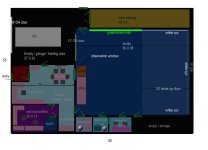
I'll attach the newer idea here againD studio ALT misc2a.jpg - Click image for larger version  Name:	D studio ALT misc2a.jpg Views:	10 Size:	51.9 KB ID:	5676121
A couple of thoughts from my experience having helped my friends design and convert a 4,000 sqft warehouse into a studio w/ offices that I worked out of for years and having worked in many of the studios in town with clients on set...

How you think you'll use the space (and how you think others would use it if rented) will almost certainly be different than how you (and renters) end up actually using it unless you're building this space for a specific project(s) that you are already producing and know exactly what you need for it. In our studio we built a 20' x 30' white cyc, a smaller dark gray cyc, and a semi-permanent living room set with wood floors. 3 years later and I can say that everyone uses the white cyc or builds their own set in front of the cyc. Everything else that gets done in there could be done with a paper roll (heck even a lot of the white cyc stuff could be done on a 12' paper roll). Not one single request for green screen. Painting a cyc green is the last thing I would ever do. At my current agency we have a really high quality, very thick (almost foam like) green screen that goes onto a frame that is about 12' x 20' or so and gets a perfect key and is fully packed away when not in use.

A 30' x 30' set is small and will get even smaller very quickly as soon as you start setting up lights, modifiers, props, set pieces, etc. I'd highly recommend getting rid of the garage and combining that to get a 30' x 50' set in which you can still park your one vehicle with gear at night. Even if you don't think you need the extra space now, having the extra room will open up a lot more potential studio rentals. I know you're more focused on your own work, but trust me, having other people pay all of your bills for you and then some is VERY nice. Having a large studio with good amenities will also attract more professional clients. There is another studio 3 min down the road that is like 15' x 20' and the people that rent that studio are youtubers and amateur photographers trying to squeak in hourly rate rentals while our studio consistently books $1,000+/day rentals to professional photographers, tv shows, documentaries, ad agencies, production companies, etc. One studio that I shoot at often has a white cyc that is maybe 25' x 30' that's in about a 25' x 50' room and for the extra space they put carpet down which helps a ton with the sound, but is also great cause you don't have to worry about tearing up the floors. When I shoot there I often have the talent right at the carpet line to get as much depth behind them as possible since I rarely do head to toe shots in studios. Sound is nice cause they're on the carpet part. that also gives us the whole white cyc space to use for set design if we're not doing the infinity white look. Come to think of it, I don't think I've ever done head to toe shots on white cycs - personally I think it looks weird unless you're spoofing the Mac vs. PC commercials. And at that particular studio for every shoot I've done there, I've almost always had the talent at the edge of the cyc.

Most clients that are on set aren't super active in the shoot. They will most certainly be multitasking all day, so having great high speed internet, places to lounge and desk spaces to work, along with snacks, drinks, and easy access to their own bathroom are huge wins here. Comfort, convenience, and a little wow factor will keep clients coming back. Speaking of convenience having that big roll up door will also be a big win for the crews, just make sure to budget for a 'door inside of the door' because the rolling door will be your biggest and weakest link in keeping outside sound out. We didn't do that at my old studio and we were at the mercy of every UPS, Amazon truck, or the plumbing warehouse a few doors down and the occasional crazy loud motorcycle from the freeway hundreds of feet away. The studios I've been at that have the best sound have a thick giant sliding door inside the roll up door that you can close behind you and it makes the thing soundproof. Also, no matter how posh you try to make a client viewing area outside of the shooting space, almost every client will want to spend at least some time in the actual room to be near the action as well, so don't be bummed if you set their room up like a 5-star resort and instead they sit on a folding chair in the shooting space all day with their laptop instead.

Not sure what type of shoots you'll be doing, but if you have HMU they will easily fan out with all their gear and take up a lot of space in your work room area. They also need to talk freely with the talent so you'll for sure want them doing hair and make up outside of your shooting space so they can work while you're shooting if necessary. It helps them if the lighting in their area is same color temp as the lighting in the studio, so you'll want to make sure there's ample lighting in the space they might work. At my old studio we built a pretty great HMU room and it rarely got used. A lot of times they preferred the lobby cause it had big windows.

Feel free to ignore all of this if it doesn't fit your situation. If I had to do my last studio over again I'd curb my excitement about building my dream space and would have just focused on building the white cyc, making sure all the amenities are really dialed in, invested more in dampening the sound inside and blocking sound from outside and then just used and rented the studio as is for a year at least and then see how I and other people actually use the space before making any more customizations. At the end of the day a lot of productions just want a big, quiet space that they can customize to their specific project with the amenities that make their production easier.

Hope this helps, exciting!
 
Last edited:
We need to stop the misinformation on ladders. The UK HSE went on a "we did NOT ban ladders" campaign to try to right the misunderstandings. Ladders should not be used when there are better alternatives, and price is NOT a reason. However, in a studio, ladders are the most practical, quickest and safest when you do the risk assessment. I do a LOT of these in venues in the UK and the ones who try to ban ladders always have flawed Risk Assessments, or have been done by the well meaning, but incompetent.

There is an often quoted rule about 3 point contact - two feet and a hand minimum, but the reality is that hanging a lighting fixture and plugging it in takes TWO hands. In a telescope basket, your hands are both free and the basket prevents you over stretching and falling out. A handrail does not. Standing on the top platform of an A frame ladder, or one of the movable steps requires one hand to go on the support. Letting go with two hands with nothing to brace against is very unsafe feeling as they all wobble to a degree. A Zarges has the correct angle to allow you to go up so your head overhangs the top of the ladder and your torso leans into the ladder. This is the most wide contact area, is comfortable and above all, safest of all the techniques. Both hands are free and you can also haul up the fixture, even heavy ones with a line and the overhang allows no crashing into the aluminium supports. You can hang it, attach the safety bond and then plug it in feeling very much safer. Current guidelines in the UK simply require the most appropriate device, and often a ladder can be the safest. Indeed - in a studio with a fixed rigid tube grid, the ladders can be fitted with hooks making them impossible to fall when weight is on them, so ordinary ladders would do well in some risk assessments. Likelihood of ladder falling? Virtually none other than structural collapse. The body leaning into the ladder is a substantially secure system allowing full use of your arms, and far better than using something that feels less stable. Many people have a good sense of safety built in, and can happily climb a ladder. Give them an Arri 1K to carry up the ladder starts to worry them, and trying to get it over the tube, secured, and then fitted with a safety bond and plugged in with just one hand is impossible. All the clever steps on wheels require the CoM (mass rather than the old gravity term) to be inside the ground contact area, and if you lean on the rail to have hands free at the side, any weight, especially moving weight takes the CoM outside the base area, and when you approach this, you feel insecure. Idiots push it too far. Hence why even the bigger 6m Zarges feel safe to use, because it's very difficult to get the CoM outside the base, even with heavier loads to hang.

This are how it currently is in the events industry in the UK - ladders are NOT a problem, used appropriately. Using one for laziness reasons would be!

PAINT

An easy one. Oddly a US product too! Rosco. Formulated for what we do, it's easy to apply, tough and kind of a standard. Loads of types and good colour matching between batches if you use their green or blue chroma key paint. It's cheaper to go to Home Depot or similar, but Rosco is what scene painting firms use.
 
Last edited:
Thank you Paul. I see the advantage of the Varges ladder being able to lean into it while having to use both hands. I intend to get one of those for the on-set adjustments when I need something easily mobile to negotiate a setup stage.
I was looking at the Rosco paint. I also was wondering about white exterior floor/deck paint. Sounds like the Rosco paint will be the way to go.

Chris, thanks again for the input. Right I default to thinking of my projects in the space so all the great input from you guys helps a lot in looking at it from a client/renter end-user. Do you think having the bathrooms and makeup room is a bad idea at the edge of the studio space? I put them there to wrap the studio with rooms as a sound barrier from the outside and also to keep the plumbing all close together for cost. But anyone that has to use the restroom will be walking at the edge of the studio room.

It's looking like I need to go back to the idea of having 18' clear height instead of only 16'. You guys agree?
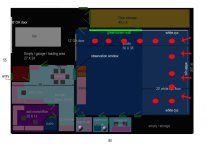
Which of the 2 layout ideas is better?
 
Paul - all my language has been purposely vague as Im not hse qualified or a lawer - im making notes and personal guidance not trying to 'lay down the law' :)

Our own experience in the studio was that some jobs like the initial construction needed a platform, which we rented, and simple adjustments later used a ladder but to be fair did not always feel 'right'

we would never allow a client a ladder.

https://www.hse.gov.uk/pubns/indg455.pdf (uk)

refers to 'light' work (to which I tke to mean low mass - not illuminaire fixture!) being done from ladders. I would suggest that many lamps are not light/low mass, while some are.

it is worth considering the effects of a cove on 'reach' although the cove i sketched above has a balcony.

I have ladders for location and our big A that we used in the studio, they are not banned around me, but with a larger space I think a tower might be appropriate. I noted above that the bottom section could be modified to be a poly board stoage system. (large and low mass)

--

a further consideration is the effect of an electrical short circuit through the ladder and operator from top electrical ring. Our studio we had a 'one switch' that would isolate (turn off) the whole top grid. Again im not an electrical designer.. that is just how we built it and it seemed sensible.

we also has a pole so we could fungle fixtures from the ground.
 
All I can tell you is that the entertainment industry has researched this subject continually, and those that use towers hate them! Well, those that drag them around with a person on top love them, because it's fast, but incredibly unsafe. If you are installing a grid - then using a zip up tower is totally the best solution, but once the grid is in, rigging lights from a tower is so time consuming. If you have a large space, then a tallescope with outriggers is the ONLY tower type access system that is approved to be moved with somebody aloft. Union involvement and so many yes/no arguments. At one point, the manufacturer banned use of them being moved this way, but eventually with HSE and BECTU and I think the ABTT involved, a code of safe practice was set up.

HSE are perfectly happy with ladders for focussing and rigging lights. If a safer system is available and practical to use, they advise using it - but very often it simply isn't. Ladders are surely no different from a tower from the electrical safety point of view. If your hard power is protected by the usual protection devices the risk is minimal and the ladder indoors is not a normal conduction path due to the floor type and the plastic inserts on the ladders (and rubber types on towers). Almost every lighting bar is grounded, so the likely shock path is from faulty light, back through the hanging bar - I have a scar on my hand from this myself. I don't include the ladder or tower as an addition to the risk of shock.

My post stems simply from the assertions many people make that ladders = danger automatically, and for so many things they are the best solution because they are quick, and less tiring than other systems. Not sure about the pole - a simple hauling line is the usual method for those uncomfy with the weight of some fixtures. Zarges cope with Coves quite well, due to the overhang.
 
Last edited:
Clearly you have good knowledge of this, and I some too. In the main we might open to the OP some of the bridges he will have to cross in the manner appropriate to his own project :)
 
I gotta say 18 feet as a minimum. While I'm sure it adds a significant building cost it also is perhaps the #1 deal-breaker for a lot of uses.

I also have a big problem with this greenscreen. In my opinion they are always in the way and a hassle, and whenever I shoot greenscreen it's either in a dedicated greenscreen space (not multipurpose) or we bring in a portable greenscreen. Because a portable setup is either all you need or you're going to do something so big that you'll require a dedicated Greenscreen studio. No in-betweens. I did a huge campaign across a dozen or so college campuses where we brought in portable greenscreens, rigged them up and frontlit them evenly, with setup maybe 30 minutes for two people. That's just nothing and works great, and far, far better than being saddled with the albatross of some big hanging greenscreen curtain always in the way and in danger of getting dirty or bouncing green onto your set.

If I felt I needed to cover the floor in green I might get a pair of these to stick side-by-side.
​​​​​​https://www.bhphotovideo.com/c/prod...k_5x12_x_drop_wrinkle_resistant_backdrop.html

If I didn't need to cover the floor and really want to keep it simple then I might get this and call it a day. I think I've needed green on the floor twice in 30 years so this would be my choice.
​​​​​​https://www.bhphotovideo.com/c/prod...lb7622_panoramic_background_13_chromakey.html
 
Clearly you have good knowledge of this, and I some too. In the main we might open to the OP some of the bridges he will have to cross in the manner appropriate to his own project :)

You guys are great. I hadn't thought about a client renting the space and wanting to hang their own lights and then wanting to use one of my ladders and then hurting themselves and blaming my equipment.
 
I gotta say 18 feet as a minimum. While I'm sure it adds a significant building cost it also is perhaps the #1 deal-breaker for a lot of uses.

I also have a big problem with this greenscreen. In my opinion they are always in the way and a hassle, and whenever I shoot greenscreen it's either in a dedicated greenscreen space (not multipurpose) or we bring in a portable greenscreen. Because a portable setup is either all you need or you're going to do something so big that you'll require a dedicated Greenscreen studio. No in-betweens. I did a huge campaign across a dozen or so college campuses where we brought in portable greenscreens, rigged them up and frontlit them evenly, with setup maybe 30 minutes for two people. That's just nothing and works great, and far, far better than being saddled with the albatross of some big hanging greenscreen curtain always in the way and in danger of getting dirty or bouncing green onto your set.

If I felt I needed to cover the floor in green I might get a pair of these to stick side-by-side.
​​​​​​https://www.bhphotovideo.com/c/prod...k_5x12_x_drop_wrinkle_resistant_backdrop.html

If I didn't need to cover the floor and really want to keep it simple then I might get this and call it a day. I think I've needed green on the floor twice in 30 years so this would be my choice.
​​​​​​https://www.bhphotovideo.com/c/prod...lb7622_panoramic_background_13_chromakey.html

Thank you again Mitch. After losing ~3.5 feet height to lights it sure looks like 18' will be necessary else that may be the first limiting factor now in a ~50'X38' space. 20' would be better but I don't see that happening.

I had one other idea (which actually I think you thought of first), regarding trying to have an albatross hanging green screen.....maybe have it roll up like a projector screen above? But then you would still have a green object (just much smaller now) that could potentially cause issues? I'd have to cover it once rolled up.

Maybe I should give up on the hanging green screen ideas and just do one of the portable solutions you shared above. They look like a good way to go.
 
As your studio area is quite large, lighting is actually quite tricky if it’s going to be multipurpose. My studio is not large and height limited, but I never have lights in the right place. As soon as you spread the space this issue gets worse. We’ve talked about lighting the edges, but even an interview in a larger space needs work. The height means kit that needs remote dimming as a minimum. Pole operation of pan and tilt adds a lot of money, so that’s more ladder work for most studios on tighter budgets. I have lots of hire stock of moving head lights but they’re a pain because they have fans. A stage full of them often means for comedy, which we do, it’s one person and a mic, yet you can hear the fans live. In the studio it’s even more annoying. So my most useful lights are silent. In one of my old studios we had travelling track. You mounted tracks in parallel 3m apart. On these ran swivels to more 3m tracks running 90 degrees across. You could drag them around with poles so you could rig your lights but then have some adjustment of positions. My current studio has a pipe grid, but I can move the cross pieces by undoing the scaff couplers. Not remotely as good, time wise, but moving the hanging tube is a useful thing to be able to do.

Power wise, nothing is permanent. I have lots of rubber cable and small distrokid boxes, and run it, and DMX to where it’s needed. You need to give thought to DMX. It’s a daisy chain system, so moving one light can mean extending or moving the control cables. I use 4 way DMX splitters all over the place so running just one new cable in to a light isnt too tricky. Even though LEDs are not power hungry, your space does need power for those times LED isnt enough. I’ve just done a job with LED video screens as backing, and had to go back to real lights for face light, as even on its lowest setting the video left the people as silhouettes. Over ten Kilowatts of power. Luckily the venue had power available. My studio has nothing like that available as everything is LED there.

your new space has corporate features. The offices and working space. So you need corporate potential. I mean versatility. Cooking programmes are common TV here yet they might need gas and electric for the cooking gear. Not every studio can do this, and of course water in and water out! What you want to do in it is important. Pop videos need sound insulation or angry neighbours. News and many corporate shoots need autocue, in house or hired. For my studio this is used far more than I expected.
 
oh no the filmng kitchen - honestly id minimise that and have them bring in gas bottles if a 'proper' range is needed. its another very specialised area.

if you are going to live there is think seperation is primary. have a door round the back - no one wants to look at your dirty washing. ever. - or even clean.
 
D studio ALT misc2a L.jpg - Click image for larger version  Name:	D studio ALT misc2a L.jpg Views:	0 Size:	55.2 KB ID:	5676243Thanks again. I knew I'd be needing DMX to control some function of lights since there will be several and also up high. I'm still trying to figure that out.
I've never had anyone call me about doing a cooking show, but I also never had a space that could. Other than a cooking show, is there any other good reason to have gas available?

In the newest layout idea, my living space is up the stairs and behind a locked door. So no one could accidentally go in, or have a reason to go up there in the first place. Sufficient?

RE lights: My idea was to line some LED space lights around the edges (qty and locations TBD). The red circles are space lights. And some back/hair lights (red arrows). I was hoping to control them (output/color) via DMX. I was hoping to get the space lights in position for evenly lighting the cyc walls and then be able to leave them alone. The hair lights I thought I would mount several and then turn on the ones I needed, but if reposition was needed I would still have to climb up there to adjust. Is that realistic goal or am I dreaming?
All other lights would be done per/project and change as needed.
 
Last edited:
I think for insurance purposes you probably shouldn't have your living space within the shell of the studio, meaning within this building. You could have a secondary building upgainst one side and sharing a (fire-rated exterior) wall. That way you can have a full kitchen in your home without there being such a thing in the studio. You not living in the space defines it as a strictly commercial space rather than a residential or mixed use space, which changes building codes, taxes, mortgage, and insurance. Ask an accountant but I believe in most places in the US you'll be far better off with a secondary building attached to the side. Not to mention the annoyance factor reduction when you have clients who want to build a set overnight or shoot when you're trying to sleep, etc.

LED lights dedicated for the cyc makes sense and when youre ready I can even help offer a deal on this. You should plan on going DMX and LED as much as possible, otherwise your electric bill for powering tungsten lamps and more importantly air conditioning will be astronomical. This is the way of the future and frankly many clients (not the DPs and Gaffers but the people footing the bill) will not be willing to deal with the heat of tungsten lights.

A proper cooking show has specific requirements for a studio space, and generally they use a standing set with a fully functioning kitchen. And whether the on-camera kitchen is a full one or a minimized one, they will need a separate prep kitchen which is fully functional and has lots of counter space. So I wouldn't bother as this is all hugely expensive.
 
Thanks again Mitch. I checked on zoning but need to look into insurance/mortgage/taxes like you said. I agree the cooking show possibility is way too much especially since I have no client demand for it at all and thus out. I can hardly imagine the power and heat of that many high power tungsten lights so I already decided to go LED, and likely bi-color.
I am not familiar with DMX so I have been trying to figure out which controller to get. I'll need to be able to power on, dim, and change color temp via DMX I think.
 
while dmx and bi colour a great to have it is worth looking at the lumens per $ - my godox 200 are up there.. in fact they even have an app Ive never tried for control.. but the reality is that 3m over a cove through a sheet or china ball they need one setting.. 'full power'

having some lights like mitch distributes could make sense on the floor.. but in the ceiling .. lumens per dollar is the metric.
 
edit.. once again the choice of lights is on the sort of job.
what you dont want is expensive rgb just blasting white for thier whole life.
but what you might want is what Id call 'the full package' which is the ability to run a sequence
0-2 fade up to yellow
2-6 strobe between yellow and purple
6-8 fade to red

meet that gaffer has a couple of vids on light control
 
Pretty well the major players in lighting control have nice simple systems that run on an old laptop and aDMX dongle. I can explain if you want - but these things run the same software that the big consoles do - but the faders are on the screen. Some even have phone apps to control the lighting. The way modern kit works is that every light has a number of DMX channels that do different things - so a bi colour light might just have 2 channels - one brightness and the other colour. A similar light from a different manufacturer might also need two channels but have them the other way around. Cleverer kit might need lots of channels - so the lighting controllers need to be able to tease these things out so a level fader works level on everything and colour works the fixtures that can do colour change. With your space light idea, they will stay in one place and might just all be connected to a single fader. The snag comes from the rest of the stuff. Your talent will never ever stand in the same place. A one person setup often ends up with that person central so cameras have the best eye lines without revealing the edges of the background. They might be closer to the camera out closer to the background. One person means one or two back lights probably with cameras spread wide, and again, you have to have them contend with the spill from the space lights and the background. You then probably end up with a key and fill - somewhere. Turn the one into two and depending on their spacing, you might end up with two keys and one fill, or two fills and two keys, or whatever. Bring in say, a car, and your light quantity goes up - so a common feature of bigger studios is a saturation rig - loads of lights in the useful places and you select which ones you need and leave the others off. Almost certainly you need to re-focus them. In my small studio - it's 7m wide and 8m deep, I have black cloth left, green centre and white on the right, and for the people I have 6 panel LEDs and a supposed LED equivalent to the Arri 1K and 1.2K in the store. I've got a few variable beam LED spots too, but don't use them much. I don;t move stuff around much, but I do refocus them all the time. My height is limited so for me it's not that difficult, as a poking stick is enough!
 
Back
Top