Star Trek: Picard & Discovery

Did anyone else see the SNW finale? I enjoyed it (especially the lighting effects they adopted, with improvements, from TOS), but I gotta say that their casting for Captain Kirk is all wrong. Age and hair color aside (which some have noted), the primary characteristic of Shatner's Kirk that sticks in my memory was his ridiculously cocky self-assuredness. This guy just doesn't have it!

Spoiler: SPOILER ALERT:
On the balance, I'd say that the TOS episode that the finale played off ("Balance of Terror") was better - one of the best TOS episodes. I think the dialogue writing of TOS was generally better as well (except for the dialogue they lifted from it). But it's fun to come into this episode with a knowledge of what happens based on seeing the original episode. From the start of the wedding scene, I knew exactly what was happening.

A couple irksome points of sloppy writing: they claim that the Romulan weapon was fired from too far away to severely damage them, but the ship was actually quite close. In Balance of Terror, they had to retreat at maximum warp for minutes to get far enough away for the weapon to dissipate. Also, Kirk beams back aboard the Enterprise while their shields should still be up, which is impossible. The Romulans should easily be able to scan the drone mining ships and realize that they're unmanned and unarmed. And finally, it really shouldn't be so easy to alter the future one sees in the time crystal.

All in all, it's another "golden age of TV" episode where the cinematography far outshines the writing.

EDIT: I see one viewer pointing out that the "Spock owes Pike a debt" bit foreshadows why Spock fights so hard to help Pike get back to Talos IV in The Menagerie. That's a nice touch.
 
Last edited:
Lost in Space aired in B/W in 1965, with an evil robot and more deliciously evil Dr. Smith, but had turned into a parody by its second season. Star Trek aired in color in 1966 targeting adult viewership and adult themes. Notably absent today is the Y chromosome and the magnetic attraction between a man and a woman. The woke generations of the present are of the same age group as the Trekkies of the syndication years 1969-1991 but the Y chromosome contains only a fraction of the genes. While I grant you the production values have advanced since 1966, all attempts at replacing Shatner's Kirk have drowned in the shallow end of the gene pool.
 
Lost in Space aired in B/W in 1965, with an evil robot and more deliciously evil Dr. Smith, but had turned into a parody by its second season. Star Trek aired in color in 1966 targeting adult viewership and adult themes. Notably absent today is the Y chromosome and the magnetic attraction between a man and a woman. The woke generations of the present are of the same age group as the Trekkies of the syndication years 1969-1991 but the Y chromosome contains only a fraction of the genes. While I grant you the production values have advanced since 1966, all attempts at replacing Shatner's Kirk have drowned in the shallow end of the gene pool.

I probably wouldn't put it in those terms, but I think that your assessment is correct. Captain Kirk has been deemed toxic masculinity. Indeed, there was a lot of sexism in the original series. And aspects of the Chris Pine version were pretty gross -- hitting on every woman who walked by, peeping on his colleagues undressing. TOS Kirk was sexually liberated but he was a gentleman. But I appreciate the Pine interpretation more after seeing this new one.

This new Kirk felt and sounded an awful lot like the new Captain Pike. Anson Mount's Captain Pike really threaded the needle of being assertive but collaborative and somewhat docile when he made an appearance on Discovery. He kind of comes off as avuncular. I think that's all well and good, but you can't go distorting such an established character as Kirk and just make him something he's not.
 
Shatner's Kirk (and T.J. Hooker) portrayals were the least toxic of any of the mysoginistic alpha male roles of his contemporaries, Brando, Connery, McQueen, Eastwood, Marvin, Wayne, Boone. Heston, Moore. (All of whom I enjoyed!) :Drogar-Kriz(DBG):

To be honest, I don't like most of the remakes of Hawaii Five O, Magnum P.I. either, except I do like the 1995 The Outer Limits, mostly better than the sixties original.

One of my favorite reruns from the sixties is about "an innocent victim of blind justice, falsely convicted for the murder of his wife, reprieved by fate when a train wreck freed him en route to the death house, freed him to hide in lonely desperation; to change his identity, to toil at many jobs; freed him to search for a one-armed man he saw leave the scene of the crime; freed him to run before the relentless pursuit of the police lieutenant obsessed with his capture."
 
Another ahem, gentleman. The censors took away his gun belt, the show was untimately cancelled at the height of popularity. Cancel culture is not new.

 
Yeah, punching that lady looks pretty awful devoid of any context... love the animation though

Shatner's Kirk (and T.J. Hooker) portrayals were the least toxic of any of the mysoginistic alpha male roles of his contemporaries, Brando, Connery, McQueen, Eastwood, Marvin, Wayne, Boone. Heston, Moore. (All of whom I enjoyed!) :Drogar-Kriz(DBG):

I think it's a pretty low bar to clear. We can moan about the very real excesses of wokeism, but the reality is that women have been 2nd class citizens in our society until recently. And in some ways still are (although in some ways it feels like men are becoming 2nd class citizens)

What was interesting about TOS was that so many women were working in prominent positions, including as first officer in the original pilot (whose character is reprised in Strange New Worlds). But there was continuous commentary about the women having to prove their abilities, or about how some pretty young officer would probably be lost to the service once she found a man and retired to have a baby. It's as if the writers could imagine women coworking equally with men but couldn't quite imagine it becoming normalized

Which brings me to a tangent about the new series (Picard, Discovery - which apparently Trekkies are calling NuTrek). When I'm often annoyed about some contemporary slang or hyper-woke dialogue slipping in, I used to say to myself, "the older series never catered to their eras this much!" Now, having rewatched them all, I realize that each show had lots of political and linguistic references to their own time. (There's a corny TOS episode with some very thinly veiled hippies who play guitar and rebel against Kirk whom they see as The Man.)

NuTrek doesnt bother me because it has contemporary references. It's just that they employ many specific references and cultural takes which annoy me in real life too

Also. Discovery cast Stacey Abrams as president of earth in a brief scene. Regardless of how you feel about Abrams, I fhink it's a seriously divisive move to bring in a politician, let alone an active politician. Star Trek was supposed to be about uniting people

Speaking of inclusivity and cancel culture, i was thinking about how Kirk handled the situation in the original episode SNW references, Balance of Terror. His helmsman suggests that Spock might be in league with the Romulans because he looks like them. Kirk snaps, "Well, here's one thing you can be sure of, mister: leave any bigotry in your quarters. There's no room for it on the bridge."

The logic of cancel culture would have been to bounce the helmsman out of his post. But it becomes a teaching moment when he has to work with Spock and Spock saves his life. Kirk doesn't try to police his thoughts, just his actions. That used to be the Liberal model for enforcing equal rights
 
Last edited:
I choose movies and programming for entertainment value.

This isn't true of most of what I watch, but Star Trek has always entertained me largely as a pure fantasy of a future I wish I could live to see. The technology isn't even as important as the politics (in a word, egalitarianism). If I can't get behind the politics, I can't get into the show

But in general, I doubt anyone would be entertained by something that offended their core beliefs, no matter how exciting and compelling the storytelling. Politics and philosophy are integral to and inseparable from story
 
Last edited:
Sure, but for example you expressed an interest in strong male archetypes, alpha male characters -- presumably because they represent qualities you feel a man should possess, or strengths that you aspire to have, or simply a model of behavior that's required to survive in this crazy world. I feel the same way.

And when you see a story where the hero is the opposite of that or where strong male archetypes are vilified and degraded, then the story probably lacks appeal and feels false.

Most of our politics and philosophy on-screen and in life is expressed implicitly through our choices and actions rather than through slogans and manifestos. But we each have a clear worldview that influences our interests and preferences
 
Not necessarily any of those qualities. Hoffman and Voight revealed vulnerability. Newman had charisma. Redford had grit. Connery had GQ. Moore had impeccable style. McQueen was car-cool. Boone romanced with quotes from Shakespeare. Henry Fonda had piercing eyes and my favorite role was "Once a Upon a Time in the West" where he played a child murderer, revenged by Bronson who I had no aspirations to be. Eastwood had the irreverent Dirty Harry quotes. Everyone had something to like about. Pacino exhausted me in Insomnia and Robin Williams was just great as the villain. Hillary Swank, Milla Jovovich, Kate Beckinsale Jodie Foster Natascha Mcelhone are great as alpha male, as are Kiefer Sutherland, James Spader. Eastwood poked politics in the eye which was refreshing. Jake Gyllenhaal in Brokeback Mountain, Audrey Hepburn in "Wait Until Dark." Sidney Poitier "In The Heat of the Night," and "Lilies of the Field," also "Guess Who's Coming to Dinner." "All the President's Men." I love them all as actors and actresses, Gay and Straight, Black and White, Jew and Catholic but the minute you make a movie (or series) with undertones into a *commentary* on activisim, speech, gender, race, politics I'm out. "Thor: Love and Thunder" is not on my list. "Blood Diamond" raised awareness. "Cat On a Hot Tin Roof," "Bye Bye Birdie"; wonderful. The list is endless but the point is politics and philosophy can blend, they are not integral and inseparable, and in most cases ruin it.
 
Last edited:
the minute you make a movie (or series) with undertones into a *commentary* on activisim, speech, gender, race, politics I'm out. "Thor: Love and Thunder" is not on my list. "Blood Diamond" raised awareness. "Cat On a Hot Tin Roof," "Bye Bye Birdie"; wonderful. The list is endless but the point is politics and philosophy can blend, they are not integral and inseparable, and in most cases ruin it.

I also hate overt political statements in movies. But mostly just because they're artless.

The original Star Trek was absolutely a political statement. In the wake of WWII and during the heart of the cold War, it depicted a Japanese man, a Russian man, and Americans serving together on a ship. Roddenberry was a pacifist who believed that mankind was destined to unite and that the wars of the 20th century would be remembered as barbaric savagery.

TOS was supposedly the only show that MLK would let his kids watch because it showed a Black woman doing something besides house-cleaning. Nichelle Nichols says he personally convinced her not to leave the show to pursue a career on Broadway. TOS depicted the first interracial black-white kiss on TV. All this was groundbreaking at the time. But they didn't hit the viewer over the head with it, it was all just in the background of the story. But inseparable from the story.

I'm not talking about formal philosophy or electoral politics. To give an example - most East Asian societies hold a different view of the relationship of the individual to the community and what his/her rights and responsibilities are. Basically all of the characters and actors you mentioned are in the vein of Western individualism. And that's so natural to people who grew up here that we don't even realize it.

You had a negative and colorful reaction to the lack of strong male characters in Discovery. I would call that gender politics.

Blade Runner is sort of the inverse of Star Trek to me. Star Trek shows the future I dream of. Blade Runner shows the future I expect. But it's important to me that the aspects of Blade Runner that I consider dystopian are portrayed in a negative light by the filmmaker. If the feeling were, "Isn't it great that humanity will end up like this?" I don't think I could get into it

EDIT: Actually, I'm probably understating how overtly political Star Trek was. There are numerous monologues in every series where the main characters extol the principles and virtues of the Federation, and demean Earth's past
 
Last edited:
I also hate overt political statements in movies. But mostly just because they're artless.
Roddenberry was a pacifist who believed that mankind was destined to unite and that the wars of the 20th century would be remembered as barbaric savagery.

You are misinterpreting my disdain for politics with political science. They are distinct as Colbert and Kissinger.

TOS was supposedly the only show that MLK would let his kids watch because it showed a Black woman doing something besides house-cleaning. Nichelle Nichols says he personally convinced her not to leave the show to pursue a career on Broadway. TOS depicted the first interracial black-white kiss on TV. All this was groundbreaking at the time. But they didn't hit the viewer over the head with it, it was all just in the background of the story. But inseparable from the story.

You said Kirk was toxic. When he wasn't breaking racial barriers he was just womanizing? BTW. the kiss between Katharine Houghton and Sidney Poitier happened earlier but it wasn't anything new either, not really. It was just taboo.

You had a negative and colorful reaction to the lack of strong male characters in Discovery. I would call that gender politics.

What I said was they lacked the Y chromosome, responsible for the attraction between a man and a woman. There is no chemistry and thus no romance.


EDIT: Actually, I'm probably understating how overtly political Star Trek was. There are numerous monologues in every series where the main characters extol the principles and virtues of the Federation, and demean Earth's past

That's fine but the generations have come of age, haven't solved any problems, only seem to point blame at each other. I wouldn't count on tv or the movies too heavily.
 
You are misinterpreting my disdain for politics with political science. They are distinct as Colbert and Kissinger.

Political science is the study of politics, divorced from political opinions and philosophical preferences. Every artwork has clear political and philosophical opinions. Political science is neither here nor there

You said Kirk was toxic. When he wasn't breaking racial barriers he was just womanizing? BTW. the kiss between Katharine Houghton and Sidney Poitier happened earlier but it wasn't anything new either, not really. It was just taboo.

I said Kirk was deemed toxic. Not by me. The virtue of the kiss wasn't related to his character. It was actually an involuntary kiss. But the representation on TV is significant. Guess Who's Coming wasn't a TV episode. And it was more than just taboo. Loving v Virginia was only decided a year earlier, which put an end to interracial marriage bans at the state level. We forget how much the US has changed in the last 100 years

What I said was they lacked the Y chromosome, responsible for the attraction between a man and a woman. There is no chemistry and thus no romance.

Ah then you're way off the mark. The main character has 2 lovers over 4 seasons (1 quite seriously) and there's lots of romance. There's also a lot of queer romance, including the on-ship marriage between two men, the doctor and the chief engineer. All I said that prompted your comment was that all the alpha males in the show are depicted in a negative light.

That's fine but the generations have come of age, haven't solved any problems, only seem to point blame at each other. I wouldn't count on tv or the movies too heavily.

The fact that everything groundbreaking about Star Trek TOS no longer seems groundbreaking is proof that we've made progress and solved problems
 
Ah then you're way off the mark. The main character has 2 lovers over 4 seasons (1 quite seriously) and there's lots of romance. There's also a lot of queer romance, including the on-ship marriage between two men, the doctor and the chief engineer. All I said that prompted your comment was that all the alpha males in the show are depicted in a negative light.

Making sure every group gets its fair representation is democratic but definitely not sexy nor appealing, to what a single leading man and lady can bring.

This is democratic, does not work at all:

R.2b3a3d875b2164073501cb8817d8ae79


This is liquid heat. The sexual tension, the desire is palpable.

atasteofarmageddonhd181.jpg


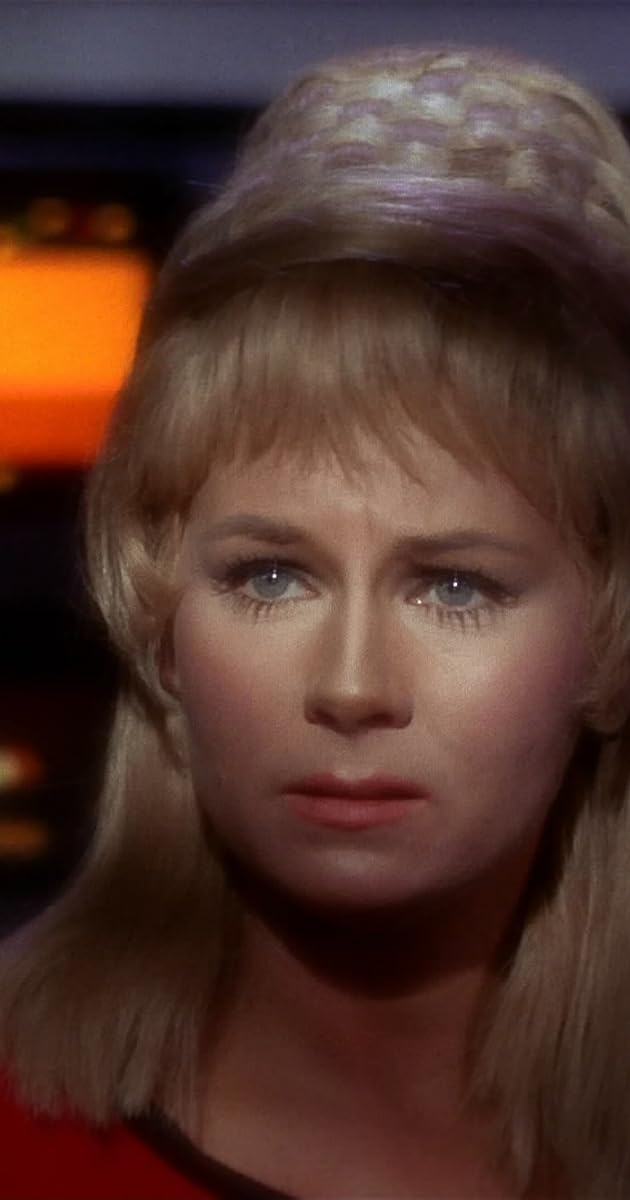
Yeoman Rand by the late Grace Lee Whitney. The portraiture with use of shadow is alluring.

MV5BMTc1OTg2ODgzMl5BMl5BanBnXkFtZTgwNzI1NDA2NTE@._V1_UY1200_CR485,0,630,1200_AL_.jpg
 
What's the point of Neelix and Kes? Just that they didn't work? They're both white, right? They flopped because Kes was boring and Neelix was disgusting.

Part of the point of a broad inclusion of different people is just that everyone on the planet will be working together in the future and there won't be national divisions. But of course, they massively underrepresent Chinese and Indian people relative to the human population because the show is so grounded in the US.

I thought the Voyager cast had plenty of sex appeal. And the romance between Paris and Torres was electric, mostly because of strong character-writing and performances.

I'm sure the relationships and romance in Star Trek Discovery appeal to some people, just not to me.

But I think it's usually the specifics of the execution - as you point out, the lighting, the casting - that make it work or not. It's not like the political choices doom them to failure. For example, there's a very diverse cast on the bridge of Discovery. But I don't know who any of them are save one or two because the show spends zero time developing its characters. Which I blame on having 10-episode plot-driven seasons.

Strange New Worlds practically developed more characters in 1 season than Discovery did in 4!
 
Coincidentally, one of the most compelling subplots on Discovery was about the non-binary and the Trans actor. Not because that's what they are, it was just compelling. Basically, they were young lovers on a ship that was struck by an asteroid. He is injured and dying and his symbiont (he's a Trill) will die if it doesn't find a new host, so she (they?) take it before he dies. But the incident is so traumatic that they repress the memories and have to painfully uncover them later. It was one of my favorite episodes of the series, very moving and sad. Not at all because it had non-cis (or whatever the term is) actors, just because it was compelling. There are components of the story (gender fluidity, assuming a new identity) that pertain to Trans issues. (And for that reason, I think the Trill have always held a resonance for Trans people.) But the story succeeded for me on a basic plausibility/intrigue/emotion level. It wasn't guaranteed to succeed or doomed to failure on account of its probably political casting choices. And it probably would have worked just as well with a man and a woman
 
I wanted to comment here in a non-controversial, unbiased way as much as possible but all of these gender terms, cisgender, gender fluidity, transgender, binary, are contrived and unnecessary. There is only one gender, it's biological gender, in humans the presence of the Y chromosome in the male and absent in the female. All of the other gender terms have been created for various reasons but central to gender interpretations are (3) aspects, the gender that is assigned at birth, the gender that is chosen by the individual and the biological gender. In sci-fi or fantasy, it makes interesting and thought provoking story, super fun. In real life, I recognize people identify with various gender roles but do not recognize attempts at redefining or to give equal weight to biological gender.
 
Back
Top