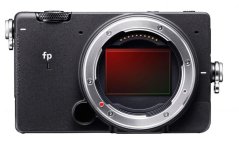
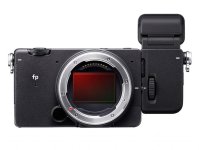
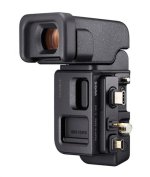
Sigma fp

Yep it's a DSLR/Mirrorless. 20.3 ms of rolling shutter is just too much.
Single largest give away for budget cams.

I agree, I think you’re right.

The RS is also felt more readily with these smaller modular (read - unergonomic) cameras.

I like the look of it as a stills camera / finder though.

JB
 
I suppose Sigma could consider adding a compressed RAW format to the camera, but then they risk running afoul of the RED patents. Technically, I think the RED patents only apply to lossy compressed RAW, so perhaps they could add a lossless compressed RAW format. The DNG specification does include a lossless JPEG-based compression option with a typical compression ratio of about 1.5:1 (approximately, it varies based on the content). Despite the modest compression ratio, this would be actually enough to put the 4K RAW formats within range of UHS-II card write speeds.

It's possible Sigma would want to play it safe and stay away from any kind of internal compressed raw though. Blackmagic's cameras had lossless compressed Cinema DNG as an option along with a few lossy compressed DNG formats, but they eliminated all of them when switching to Blackmagic RAW (citing patent considerations as one of the reasons for dropping the old formats).

The typical lossless dng compression ratio is ~2:1, and it appears to hold true for the (limited) available fp samples. Blackmagic cameras are the only cameras known to me that drop down to ~1.5:1 (for very specific reasons). Since the fp probably shoots log raw in 10-bit (the 8-bit raw is log, so this won't be a surprise), the 12-bit linear should be pretty much redundant, and in 10 bits they can likely surpass 2:1 (compared to an uncompressed 12-bit base).

Now, whether the hardware can do this in 4K at the necessary frame rates is a different story.
 
Thanks for the comments. Did you talk to them about the firmware updates? Any sense of whether they'll fix the minor but important things? Any chance they'll get 12-bit cDNG working internally? How do they get 4k raw out of a 6k sensor?

("I'm just busy" --> OK here you have a lengthy questionnaire - sorry XDDDD - feel free to ignore, you already did plenty)

You wont get 12bit onboard. The SD cards dont have the write speeds. its just not possible.
 
The typical lossless dng compression ratio is ~2:1, and it appears to hold true for the (limited) available fp samples. Blackmagic cameras are the only cameras known to me that drop down to ~1.5:1 (for very specific reasons). Since the fp probably shoots log raw in 10-bit (the 8-bit raw is log, so this won't be a surprise), the 12-bit linear should be pretty much redundant, and in 10 bits they can likely surpass 2:1 (compared to an uncompressed 12-bit base).

Now, whether the hardware can do this in 4K at the necessary frame rates is a different story.

It doesnt have LOG as of now but it will come soon. This will mean offboard recording is a thing.
 
It doesnt have LOG as of now but it will come soon. This will mean offboard recording is a thing.

I think you are confusing the uses of log here. The 8-bit raw sample in the Cinema5d review is definitely using a non-linear (quasi log) transform to squeeze higher DR in limited bit precision. This is common engineering practice and it might be independent of any future log space/curve developments from Sigma.
 
Thanks for the comments. Did you talk to them about the firmware updates? Any sense of whether they'll fix the minor but important things? Any chance they'll get 12-bit cDNG working internally? How do they get 4k raw out of a 6k sensor?

("I'm just busy" --> OK here you have a lengthy questionnaire - sorry XDDDD - feel free to ignore, you already did plenty)

4K RAW is oversampled from 6K readout, it's possible because the DNG RAW is already debayered RGB.
 
4K RAW is oversampled from 6K readout, it's possible because the DNG RAW is already debayered RGB.
If the 4K CinemaDNG files are debayered and downsampled from the raw sensor output, what about the files can still be considered RAW anymore?

This also raises questions about the data rates, however. A debayered RGB frame has 3 values per pixel vs. 1 value per pixel for a RAW bayer output, so a debayered format effectively triples the data rates. The manual lists the bitrate for 12-bit CinemaDNG at 3840x2160 @ 24fps as 2400 Mbps, which is about what you'd expect for uncompressed RAW output from a bayer sensor with 1 value per pixel. In RGB format, the data rate would require more like 7200 Mbps.

If the DNG stills really are RGB, it might help explain why the file sizes for the RAW stills are so much larger than you would expect for a bayer format. The manual lists the size of a 12-bit RAW still at 3840x2160 resolution (Super 35 crop) as 21.1 MB. But for a bayer sensor output at that resolution, it should really only be about 11.9 MB of data. Uncompressed RGB, would be about 3 times that or 35.6 MB, which doesn't match the number in the manual either. Given that the manual page for DNG stills says "the file sizes change depending on subjects," it seems likely that some kind of compression is being applied to the DNG files. If we assume lossless DNG compression at around 1.5:1 compression ratio, then we get close to the 21.1 MB file size reported in the manual.

Even this doesn't fully resolve things, though, because a 21.1 MB frame x 24 fps = 506.4 MB/s or about 4051 Mbps which is still higher than the 2400 Mbps the manual mentions for CinemaDNG in that recording format. So assuming the file size numbers given in the manual are accurate, there must be some difference in the individual DNG files in stills vs. in the CinemaDNG recordings.
 
The number 1 thing I am excited about with this camera is the imminent release of $5 Sigma L-Mount Body caps. Currently only $40 Leica body caps are available for L-mount, this was also true of rear lens caps until Sigma released their $5 L-mount rear lens cap.

So, yeah, body caps. The best thing about the sigma fp (opinions may vary ;)).
 
If the 4K CinemaDNG files are debayered and downsampled from the raw sensor output, what about the files can still be considered RAW anymore?

This also raises questions about the data rates, however. A debayered RGB frame has 3 values per pixel vs. 1 value per pixel for a RAW bayer output, so a debayered format effectively triples the data rates. The manual lists the bitrate for 12-bit CinemaDNG at 3840x2160 @ 24fps as 2400 Mbps, which is about what you'd expect for uncompressed RAW output from a bayer sensor with 1 value per pixel. In RGB format, the data rate would require more like 7200 Mbps.

If the DNG stills really are RGB, it might help explain why the file sizes for the RAW stills are so much larger than you would expect for a bayer format. The manual lists the size of a 12-bit RAW still at 3840x2160 resolution (Super 35 crop) as 21.1 MB. But for a bayer sensor output at that resolution, it should really only be about 11.9 MB of data. Uncompressed RGB, would be about 3 times that or 35.6 MB, which doesn't match the number in the manual either. Given that the manual page for DNG stills says "the file sizes change depending on subjects," it seems likely that some kind of compression is being applied to the DNG files. If we assume lossless DNG compression at around 1.5:1 compression ratio, then we get close to the 21.1 MB file size reported in the manual.

Even this doesn't fully resolve things, though, because a 21.1 MB frame x 24 fps = 506.4 MB/s or about 4051 Mbps which is still higher than the 2400 Mbps the manual mentions for CinemaDNG in that recording format. So assuming the file size numbers given in the manual are accurate, there must be some difference in the individual DNG files in stills vs. in the CinemaDNG recordings.

DNG stills from this camera are not debayered. Three random full sensor 14-bit samples from here show that they are Bayer. They use lossless compression, and the compression ratio in these three images ranges from 1.85:1 to 2:1, but they all include huge previews (7MB to 11MB for the previews only), which inflates the size additionally.
 
Well turns out the Sigma FP basically does internal 4k 12 bit RAW.

You can hook up an SSD directly via USB-C and record to that, so no external recorder needed. Why in the world can't the S1H do this...
 
Well turns out the Sigma FP basically does internal 4k 12 bit RAW.

You can hook up an SSD directly via USB-C and record to that, so no external recorder needed. Why in the world can't the S1H do this...
For 12-bit 4K RAW up to 30 fps, they probably could do this on the S1H, if they wanted to. They would have to enable a USB host mode option to enable connecting a USB drive for storage (currently the USB port on the camera only operates in device mode for connecting to a computer and offloading files).

But for the S1H, Panasonic has announced plans to support 6K RAW full frame up to 30fps and 4K RAW in Super 35 crop up to 60fps (https://www.panasonic.com/global/consumer/lumix/s/s1h/firmware_atomos.html). This approach seems like it makes a bit more sense than whatever the Sigma fp is doing, because it will use a 1-to-1 pixel readout for all of the RAW video modes. The downside is that the data rates will be higher:

  • 6K (16:9) 12-bit RAW: 5888x3312 @ 30fps = 837 MB/s
  • C4K (17:9) 12-bit RAW: 4096x2160 @ 60fps = 759 MB/s
  • UHD (16:9) 12-bit RAW: 3840x2160 @ 60fps = 712 MB/s

This presents a problem for recording to a USB drive, because most of the current crop of USB Type-C SSDs (like the Samsung T5) seem to be using SATA-based drives internally, which means their write speeds top out at around 500 MB/s or so. And according to the specs on the camera, the USB-C port is 3.1 Gen1 (5 Gbps) rather than Gen2 (10 Gbps). So even if manufacturers did start making faster NVMe based USB-C drives, the camera's USB port would still be a bottleneck (limiting things to 625 MB/s or less).

By sending uncompressed RAW over HDMI (which has a bandwidth of 18 Gbps), Panasonic can enable these higher quality RAW output options. And on Atomos recorders which support compressed RAW formats like ProRes RAW, it will be possible to record at lower data rates that fit within the write speeds of current SATA-based SSDs. So all-in-all, it's not a terrible approach, given the constraints (and since Panasonic already followed a similar RAW output approach with their existing cameras like the EVA1, it probably made them more comfortable with this path).
 
But for the S1H, Panasonic has announced plans to support 6K RAW full frame up to 30fps and 4K RAW in Super 35 crop up to 60fps (https://www.panasonic.com/global/consumer/lumix/s/s1h/firmware_atomos.html). This approach seems like it makes a bit more sense than whatever the Sigma fp is doing, because it will use a 1-to-1 pixel readout for all of the RAW video modes. The downside is that the data rates will be higher:

One of the benefits of this approach is that ProResRaw is more manageable by far than cDNG, and it also allows for the possibility of using other recorders... like the BMD Video Assist that was on demo at IBC.

This presents a problem for recording to a USB drive, because most of the current crop of USB Type-C SSDs (like the Samsung T5) seem to be using SATA-based drives internally, which means their write speeds top out at around 500 MB/s or so.

Power might be part of it, since the camera is also powering the SSD and the USB controller. Panasonic might have chosen to go for a lower end USB controller to save power since it was planning to use HDMI for raw output anyway.
 
Hopefully the repurposing of this camera in this camera repurposing year includes better internal specs.
 
Maybe the “L” stands for “log” since they infamously promised it for the original and discovered they couldn’t for technical reasons...
 
That's a good guess!

[Supposedly there was some workaround or setting in the camera that was eventually introduced via FW but not an official LOG.]
 
whatever shortcomings this camera has, it can produce really lovely images.

at least the footage i have seen online sure does look mighty purrtee.

stay well.

rob
smalltalk productions/nyc
 
Back
Top