
Navigation
Install the app
How to install the app on iOS
Follow along with the video below to see how to install our site as a web app on your home screen.
Note: This feature may not be available in some browsers.
More options
You are using an out of date browser. It may not display this or other websites correctly.
You should upgrade or use an alternative browser.
You should upgrade or use an alternative browser.
Scarlet Announcement
- Thread starter Max Smith
- Start date

Luis Caffesse
Admin
Ouch, that's going to make it even harder to sell all the used red ones from trade INS. I mean that statement would make me not want to buy one for $5k.
I don't think they ever had the intention of reselling them.
At least, I've never seen anything to suggest that.
I don't think they ever had the intention of reselling them.
At least, I've never seen anything to suggest that.
It would be a shame if they destroid them, think of all the universities and film schools / starving artists that could further their education from them being donated or put to good use, one of the reasons avid's $2500 media composer cost students $250.
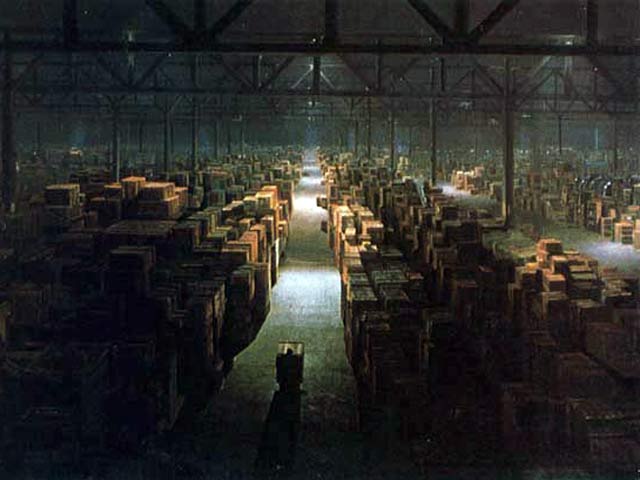
All I know now is there will be a warehouse full of used red ones. I hope they have the chance to find good homes.
Luis Caffesse
Admin

snowleopard
Well-known member
LOL Luis!
 rogar-BigGrin(DBG)

Ryan Patrick O'Hara
Veteran
Nothing will ever last forever. Just look at the film world. A film camera's LOOK is captured by only two things. The film stock and the lens. Those are the only two things in the camera that effect the image. Thus any 35mm camera that could properly pull film through at 24fps is really 'future proof', since you just load a new film stock with a new lens and the image will look like any other camera with the same stock and lens, despite when it was made.
...but it's not future proof. They (arri, panavision) still made camera model after camera model, with tiny little changes. I think it's funny I can shoot an Arriflex 35III from 1979 with a new Vision 3 film stock and Arri Masterprime lens, and it would look identical to an ArriFLEX 235 from 2004 with the same Vision 3 stock and Arri Masterprime lens. In fact, the Arriflex 35III shoots up to 50fps natively or up to 120fps with a speed base! Not shabby, huh? But still, Arriflex made small improvements over time and sold them to the world.
It's product. It's business. Do you ever really think anyone is going to make the 'ever-lasting-gobstopper' camera? No. They loose money. In the end a re-configurable or modular RED system may last much longer then the R1, but expect to constantly be buying new modules to keep up with the joneses because there will always be capitalism and industry competition. I'd expect you'll find even with a modular upgradable camera, you'll simply be spending what you would have for a new camera, but spread out over time by upgrading the one you have.
I'm not saying this is bad. I think it's great. But don't kid yourself that anything will never be obsolete.
Last edited:

youngindiefilms
Well-known member
Nothing will ever last forever. Just look at the film world. A film camera's LOOK is captured by only two things. The film stock and the lens. Those are the only two things in the camera that effect the image. Thus any 35mm camera that could properly pull film through at 24fps is really 'future proof', since you just load a new film stock with a new lens and the image will look like any other camera with the same stock and lens, despite when it was made.
...but it's not future proof. They (arri, panavision) still made camera model after camera model, with tiny little changes. I think it's funny I can shoot an Arriflex 35III from 1979 with a new Vision 3 film stock and Arri Masterprime lens, and it would look identical to an ArriFLEX 235 from 2004 with the same Vision 3 stock and Arri Masterprime lens. In fact, the Arriflex 35III shoots up to 50fps natively or up to 120fps with a speed base! Not shabby, huh? But still, Arriflex made small improvements over time and sold them to the world.
It's product. It's business. Do you ever really think anyone is going to make the 'ever-lasting-gobstopper' camera? No. They loose money. In the end a re-configurable or modular RED system may last much longer then the R1, but expect to constantly be buying new modules to keep up with the joneses because there will always be capitalism and industry competition. I'd expect you'll find even with a modular upgradable camera, you'll simply be spending what you would have for a new camera, but spread out over time by upgrading the one you have.
I'm not saying this is bad. I think it's great. But don't kid yourself that anything will never be obsolete.
Amen to that! Couldn't have said it any better. :2vrolijk_08:

Stephen Mick
Totally Usable
Well, to be fair, the RED ONE could be considered the last camera you'd ever NEED. But judging from the amount of discussion on the boards about cameras, there's always going to be another camera you'll WANT.
Nothing will ever last forever. Just look at the film world. A film camera's LOOK is captured by only two things. The film stock and the lens. Those are the only two things in the camera that effect the image. Thus any 35mm camera that could properly pull film through at 24fps is really 'future proof', since you just load a new film stock with a new lens and the image will look like any other camera with the same stock and lens, despite when it was made.
...but it's not future proof. They (arri, panavision) still made camera model after camera model, with tiny little changes. I think it's funny I can shoot an Arriflex 35III from 1979 with a new Vision 3 film stock and Arri Masterprime lens, and it would look identical to an ArriFLEX 235 from 2004 with the same Vision 3 stock and Arri Masterprime lens. In fact, the Arriflex 35III shoots up to 50fps natively or up to 120fps with a speed base! Not shabby, huh? But still, Arriflex made small improvements over time and sold them to the world.
It's product. It's business. Do you ever really think anyone is going to make the 'ever-lasting-gobstopper' camera? No. They loose money. In the end a re-configurable or modular RED system may last much longer then the R1, but expect to constantly be buying new modules to keep up with the joneses because there will always be capitalism and industry competition. I'd expect you'll find even with a modular upgradable camera, you'll simply be spending what you would have for a new camera, but spread out over time by upgrading the one you have.
I'm not saying this is bad. I think it's great. But don't kid yourself that anything will never be obsolete.
All really good points.
I think the idea though is that what Red is doing is besides the new cameras, they are also letting you upgrade the sensor in their old cameras which is kind of like using new film stock in an old camera like your example.
Barry_Green
Moderator
They are indeed, and that's great. Except, to be fair, for the cost of the upgrade you could buy a complete AF100, and still have your old Red One. Or, instead of upgrading the Red's sensor to M-X, you could buy two 5D Mark II's. Or three 7D's. Or six T2i's. And still have the original Red One too.I think the idea though is that what Red is doing is besides the new cameras, they are also letting you upgrade the sensor in their old cameras which is kind of like using new film stock in an old camera like your example.
So there's nothing wrong with modularity. You just have to ask yourself if it makes sense for your particular situation. In an industry where technology is advancing at a furious rate and prices are plummeting just as fast, where even cell phones now have 720p HD video on them, what's the landscape going to look like three years from now?
And it's not like it's a new idea.
http://www.pstechnik.de/en/digitalfilm-16sr-magazine.php
I doubt it'll be all that successful though. People just don't seem to be in the mood to put a lot of money into an old system; not when brand new stuff is so cheap! Would you buy a "digital film magazine" for your old Arri 16SR, for $30,000, and have 16mm DOF? Neither would I.
And neither, apparently, did anyone else when Joe Dunton tried the same thing back in 2002.
http://www.urbanfox.tv/articles/cameras/c19joedunton.htm
I dunno, it just seems like "modularity" is one of those ideas that sounds fantastic on paper, but never really seems to play out. Even Red's own Red One was supposed to be "the end of obsolescense" and yet just a couple of years later they're going to discontinue it and instead go with the Epic/Scarlet. Which, again, makes me wonder what'll be on the market a couple years from now...
Last edited:
Well, to be fair, the RED ONE could be considered the last camera you'd ever NEED. But judging from the amount of discussion on the boards about cameras, there's always going to be another camera you'll WANT.
The DVX100 is the last cam you'll ever need if your really good at what you do and want to sell stories (for a small indie), not stock footage or client work.
In 3 years it will be SOOOO refreshing to see a movie in SD that has the washed out low dynamic range 'Traffic' look again that's fuzzy.
Crazy how this board was all over the 'film look' then misunderstood it (not everyone) and now wants razor sharp video footage for shorts and movies, I know it's an artistic choice but......
snowleopard
Well-known member
That's a very good point. Especially for indies, and not insisting on trying to earn a living. This could be argued about just about any camera since the DVX along these lines (HVX200, HMC150, Canon XH-A1, Sony V1, JVC HD100, etc.).The DVX100 is the last cam you'll ever need if your really good at what you do and want to sell stories (for a small indie), not stock footage or client work.
About 25,000 posts ago Barry aptly pointed out that we had already passed the point of "good enough". How right he was.

Terry_Tsurugi
Active member
"[...]And suddenly, one day some little fat girl in Ohio is going to be the new Mozart and make a beautiful film with her father's camcorder and for once, the so-called professionalism about movies will be destroyed, forever, and it will really become an art form."
Maybe we're there already?
Maybe we're there already?
Barry_Green
Moderator
We've been there since 2003 when the DVX first hit.
snowleopard
Well-known member
Make that 37,600 posts ago, when Barry probably said it on 2-Pop...
rogar-SunGlass(DBG
rogar-SunGlass(DBG
David G. Smith
Steak Knife Member
......what's the landscape going to look like three years from now?
.... Which, again, makes me wonder what'll be on the market a couple years from now...
I swear... it really blows my mind sometimes just thinking about it. It an exciting time.
I swear... it really blows my mind sometimes just thinking about it. It an exciting time.
... While at the same time making me wonder how fast equipment bought now will depreciate in value by then.