S-Log for dummies?

It would be great to hook up a Ki Pro Mini. It's been recently reported that it will support 25P in 60Hz tape Varicams so I am very interested in addition to how it can work with S-log in 4:2:2 on the F3. AJA has been deathly quiet about the Ki Pro as to when it's shipping. It's been in the trade mags for months. I would buy it tomorrow if it was available.
 
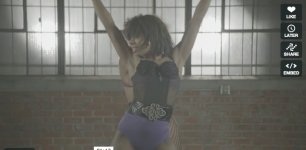
BTW, here is an S-Log image taken from a white-paper test of the F35 by Alfonso Parra:

http://www.alfonsoparra.com/php/baul/F35TestEV.pdf

SLog.jpg

There's nothing exotic or extreme about it, the gamma curve is gentle, and you could easily edit without modification or a LUT.

In fact, the gamma modification is so mild in fact, I'd probably elect not to use LUTs for it in my Davinci. It's just more simple and direct, and I can see immediately how much shadow/highlight detail I have to work with rather than what a LUT gives me, which always requires some screwing around to find out what's really in the image.

Not to mention, anybody who's colored flat Red transcodes in 10bit will be at home as well, I'd think.

Compare to Alexa Log-C:

http://vimeo.com/18316283 (I colored this test, didn't shoot it)

LogC.jpg

Not completely apparent here, but Log-C is really kinda out there. You'd probably want to use a LUT with it...attempting to bring things close to normal with the lift, gamma, and gain wheels gets it close but not 100% right. It needs a more careful curve.

By the way, it's the Alexa tests that I did with my friend, that let me in on something I never guessed: a quality, low-noise 10-bit image can be just as good or better than Red RAW, which for the prior 2 years is all I've worked with. We did Alexa at 10bits Prores 4:2:2, and 12bit Prores 4:4:4 in LogC for both, and the difference was very, very minor. And that's after putting some really extreme looks on the footage.

Which has led me to this camera.
 
Last edited:
It would be great to hook up a Ki Pro Mini. It's been recently reported that it will support 25P in 60Hz tape Varicams so I am very interested in addition to how it can work with S-log in 4:2:2 on the F3. AJA has been deathly quiet about the Ki Pro as to when it's shipping. It's been in the trade mags for months. I would buy it tomorrow if it was available.

AJA Ships Ki Pro Mini Portable Flash Disk Recorder

http://www.aja.com/news/index_article.php?id=137
 
In fact the uncorrected image is so flat and washed out that it can make judging the optimum exposure difficult and crews using S-Log will often use traditional light meters to set the exposure rather than a monitor or rely on zebras and known references such as grey cards. For on set monitoring with S-Log you need to apply a LUT (look Up Table) to the cameras output. A LUT is in effect a reverse gamma curve that cancels out the S-Log curve so that the image you see on the monitor is closer to a standard gamma image or your desired final pictures. The problem with this though is that the monitor is now no longer showing the full contrast range being captured and recorded so accurate exposure assessment can be tricky as you may want to bias your exposure range towards light or dark depending on how you will grade the final production. In addition because you absolutely must adjust the image in post production quite heavily to get an acceptable and pleasing image it is vital that the recording method is up to the job. Highly compressed 8 bit codecs are not good enough for S-Log. That’s why S-Log is normally recorded using 10 bit 4:4:4 with very low compression ratios. Any compression artefacts can become exaggerated when the image is manipulated and pushed and pulled in the grade to give a pleasing image. You could use 4:2:2 10 bit at a push, but the chroma sub sampling may lead to banding in highly saturated areas, really Hypergammas and Cinegammas are better suited to 4:2:2 and S-Log is best reserved for 4:4:4.

From the xdcam user article. This is the point Ive been trying to make. Can you do it in 4:2:2, sure. But it you dont have the chroma stretch of 444.

At the end of the day I think hypergamma will be more than enough for most applications.
 
Dude, there is no "chroma stretch" in 4:2:2. You get banding from from stretching a low bit depth image, such as 8 bit, not from chroma subsampling. Unless it's way way down, like 4:2:0. But even then, you run into reduced bit depth artifacts way before chroma subsampling artifacts. Either way this is irrelevant, as gamma is a function of luma, not chroma. The "stretching" going on natively when working with log is in the luma domain.

F35, Genesis, and Viper users record 4:2:2 log curves ALL the time, and those cameras log curves are much more aggressive, and require much further "stretching" to get a "normal" looking image than sony's s-log will. And they rarely run into artifacts. It almost seems like you don't want people using s-log. It's very sad to see someone as intelligent and respected as Alister Chapman say something like "S-Log is best reserved for 4:4:4." What everyone seems to be forgetting is that gamma is a function of LUMA. 4:2:2 compresses (very efficiently) CHROMA. All your luma information is still there, to be pushed or pulled into or out of a linearized looking fashion.

So I'll say it one last time - Due to the specification of dual link sdi - whether sony allows s-log out of a single port SDI or not - it won't matter. When s-log is operating in dual link, the first link is a valid 4:2:2 10 bit feed, that can easily be sent to a ki pro and recorded in s-log. And it will be beautiful. And you will not run into banding. And it will be visually indistinguishable from 4:4:4, unless you're zoomed in or scaled up around 200%. When you're working with 4:2:2, the internal engine of whatever program you're using has plenty of information when it interpolates to 444 rgb internally, and the interpolation is almost spot on. The artifacts people run into when doing hard color correction is 95% of the time reduced bit depth.
 
Last edited by a moderator:
Meh. Its a new camera with new (to most people) outputs. There is bound to be some misinformation until we can all get our hands on them. Its happened with all the new cameras.

I'm betting the 8bit Nano files will be perfect for hypergammas, but might not fair as well with the s-log. I'll reserve that for actual testing though.
 
Yeah, the nano should be great for the hypergammas. However s-log will not hold up in an 8 bit space, with only 256 values per channel available to assign the sensors entire range of output.
 
First off, my bad on terminology - I should have said "reach" not stretch.

Secondly, Im not attacking you personally here. I just happen to agree with the article. Now weather I do or not, does not have any effect on you or anyone else, or their ability to shoot on an F3 and make stunning images - I think we are going to see many of those as the camera is released.

Dude, there is no "chroma stretch" in 4:2:2. You get banding from from stretching a low bit depth image, such as 8 bit, not from chroma subsampling. Unless it's way way down, like 4:2:0. But even then, you run into reduced bit depth artifacts way before chroma subsampling artifacts. Either way this is irrelevant, as gamma is a function of luma, not chroma. The "stretching" going on natively when working with log is in the luma domain.

F35, Genesis, and Viper users record 4:2:2 log curves ALL the time, and those cameras log curves are much more aggressive, and require much further "stretching" to get a "normal" looking image than sony's s-log will. And they rarely run into artifacts. It almost seems like you don't want people using s-log. It's very sad to see someone as intelligent and respected as Alister Chapman say something like "S-Log is best reserved for 4:4:4." What everyone seems to be forgetting is that gamma is a function of LUMA. 4:2:2 compresses (very efficiently) CHROMA. All your luma information is still there, to be pushed or pulled into or out of a linearized looking fashion.

So I'll say it one last time - Due to the specification of dual link sdi - whether sony allows s-log out of a single port SDI or not - it won't matter. When s-log is operating in dual link, the first link is a valid 4:2:2 10 bit feed, that can easily be sent to a ki pro and recorded in s-log. And it will be beautiful. And you will not run into banding. And it will be visually indistinguishable from 4:4:4, unless you're zoomed in or scaled up around 200%. When you're working with 4:2:2, the internal engine of whatever program you're using has plenty of information when it interpolates to 444 rgb internally, and the interpolation is almost spot on. The artifacts people run into when doing hard color correction is 95% of the time reduced bit depth. This should all be common knowledge for someone advertising a grading suite in his signature. Sorry if this sounds harsh, but I'm just appalled at all the misinformation being thrown around here with the advent of this latest crop of cameras. I'd be happy to link you to some 4:2:2 log video, and you can see for yourself
 
Understandable. Sorry about how harsh my post came off as, I'm not a morning person :) I just wanted to clarify that technically, 4:2:2 chroma subsampling does not have a waywardly adverse effect on log curves, and that stating it is "best reserved for 4:4:4" is very technically misleading, and I feel that article could stop people from experimenting with s-log and reaping it's glorious benefits. with 4:2:2, all your full raster luma information is still there, and this is what log curves deal with. This is why DIT's have been shooting 4:2:2 log on f35's, vipers, genesis, and alexas for some time now, and the results are beautiful with tons of latitude. Here's a couple Prores 4:2:2 LogC files shot on an Alexa for you to play with, if you're curious: (I dare you to find artifacts :) )

http://www.cinematography.net/Alexa/Interior/Int_PR422HQ_LogC.mov

http://www.cinematography.net/Alexa/Exterior/Ext_PR422HQ_LogC.mov
 
There is so much confusion out there about what chroma subsampling and what it is. And moreover how when it's bad, how it affects making good images. Chroma subsampling doesn't cause banding. Nor does it cause limitations in how far you can alter gamma/exposure. It causes blurring/aliasing on edges comprised of saturated colors. That's it. Oh, and it compromises chroma keying. Because that saturated green edge has less resolution than the details of the wispy hair you're trying to key...as an example.

In color correction, it matters if say you have a red ball on a blue sky that's relatively unsaturated...and you want to crank the saturation. Do that on a 4:2:0 image, and the apparent sharpness will go down. If it's a picture with lots of fine, fine detail in that unsaturated color and you go CRANK that color up, the fine detail will get nasty and aliased. Which is hard to see clearly in an HD image. It just starts looking nasty in a subtle way that's hard to describe. That's my definition of an image "falling apart".

I've been coloring video professionally for a number of years now, and it's importance definitely takes a backseat to things like bit-deph, compression ratio/codec efficiency, and camera noise level.
 
I'd say there is also some more chroma noise introduced by subsampling, since you are averaging out neighboring colors to do it (similar to quantization noise when your bit depth is limited). So, in a soft transition between strong colors you may see some more chroma noise after massive manipulations. But I believe you rarely need such massive manipulation that it will show in 4:2:2 vs. 4:4:4 (I can see it in quite a few situations on 4:2:0, though).
 
I'd say there is also some more chroma noise introduced by subsampling, since you are averaging out neighboring colors to do it (similar to quantization noise when your bit depth is limited). So, in a soft transition between strong colors you may see some more chroma noise after massive manipulations. But I believe you rarely need such massive manipulation that it will show in 4:2:2 vs. 4:4:4 (I can see it in quite a few situations on 4:2:0, though).

wouldn't say rare, just situation dependent.
 
Back
Top