Navigation
Install the app
How to install the app on iOS
Follow along with the video below to see how to install our site as a web app on your home screen.
Note: This feature may not be available in some browsers.
More options
You are using an out of date browser. It may not display this or other websites correctly.
You should upgrade or use an alternative browser.
You should upgrade or use an alternative browser.
Photos from the "old days"
- Thread starter DLD
- Start date
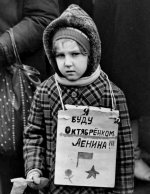
OK, so it looks like the girl is being led to the guillotine. I reality, the sign says, "I will be Lenin's Octoberist". Not much difference, I suppose.
(Oktobrists were a communist youth organization for children 7-9. If one wants to read up more - https://en.wikipedia.org/wiki/Little_Octobrists)
Tim Sewell
Well-known member
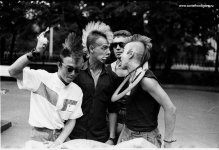
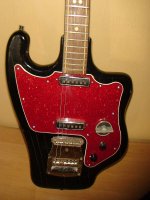
Lots more like this at https://rarehistoricalphotos.com/soviet-subculture-hippies-punks-goths-metalheads/
Thanks. A lot of great photos.
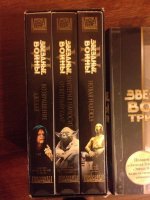
Just to add that, with the arrival of Mikhail Gorbachev in 1985, a slight change occurred in the following two years. No laws were specifically rewritten but the CPSU/KGB led policies were enforced far less frequently. People still got arrested for throwing the "VCR parties" but that also began to dwindle.
There was a great moment in the film "The Courier", where the main hero, a 17 year old boy at his first job, gets into a conversation with his coworkers. One of them asks, "Ivan, what are you dreams and aspirations? He replies, "Global communist victory". And everyone looks at him, as if he were insane. Or really putting them on.
Well, in earlier films, they had to play it straight. In 1986, when the film came out, the scene was not only not punished but was allowed to stay in. A few months thereafter, Gorbachev announced glasnost and perestroika and punks and metal heads came out of their grandparents closets.

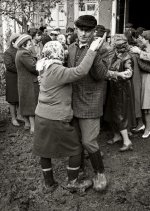
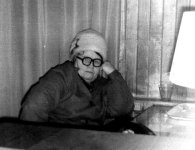
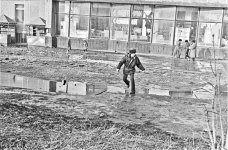
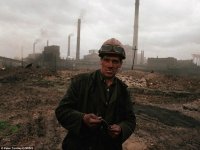
Peter Turnley is a renown American photographer, who has traveled the world. This is from a mining town in Siberia from 1991.
(give PT a plug- https://www.peterturnley.com/about
(give PT a plug- https://www.peterturnley.com/about
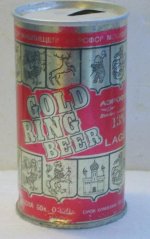
Soviet beer. It was supposed to be made for foreign visitors to the 1980 Moscow Olympics. Prior to that, Soviet beer only came out in glass bottles. The production line was purchased in Germany but they couldn't find cans for it. They bought cans in Japan, except the cans were of a different size. They couldn't make own cans because they lacked suitable tin. Finally, they did make cans themselves but had to figure out how to weld bottoms to the bodies. Then the problem became with the content. The Soviet beer was awful. At the end they only made 15,000 beers with that and, after the 1980 Olympics were over, everyone involved with the project was fired and given a dishonorable mention on their party membership resume.
PS. The price was 60 kopeks per can, roughly an average hourly wage from that era.
PS. The price was 60 kopeks per can, roughly an average hourly wage from that era.