Navigation
Install the app
How to install the app on iOS
Follow along with the video below to see how to install our site as a web app on your home screen.
Note: This feature may not be available in some browsers.
More options
You are using an out of date browser. It may not display this or other websites correctly.
You should upgrade or use an alternative browser.
You should upgrade or use an alternative browser.
Photos from the "old days"
- Thread starter DLD
- Start date



jackramirez
New member
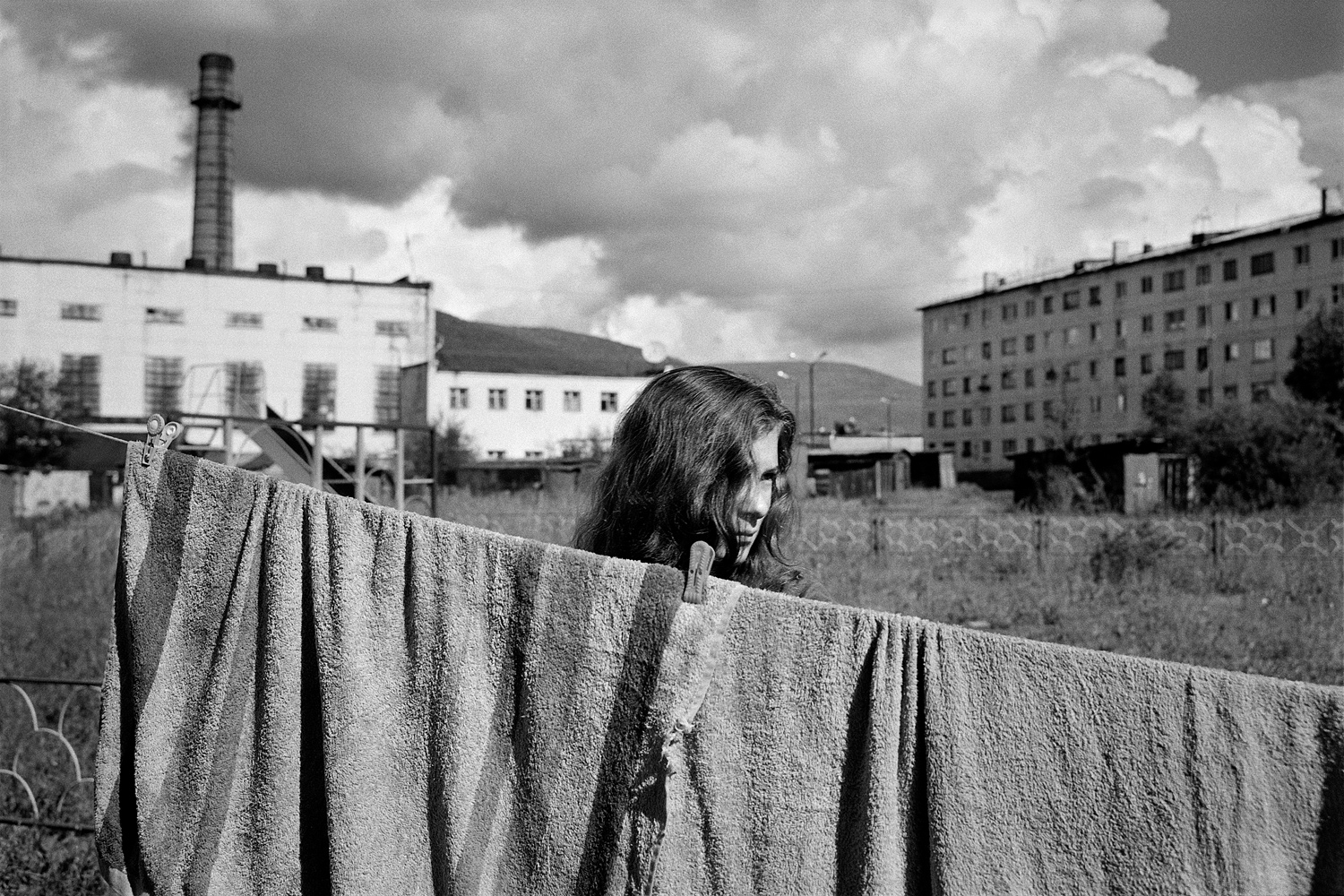
Oh, guys. A few years ago I lived in Russia. I have been written scientific work. And there are a lot of very old towns in Russia. Not like Moscow. Like Chernobyl. Like city-ghosts. It is very scary! No joy for you, especially new upcoming slots
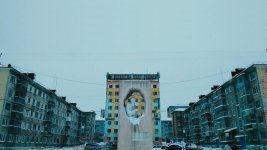
For example, Vorkuta and Kolyma. Many years ago it was the prison zone. But now almost all people have left there.
The first photo - Vorkuta, the second - Kolyma

For example, Vorkuta and Kolyma. Many years ago it was the prison zone. But now almost all people have left there.
The first photo - Vorkuta, the second - Kolyma
Last edited:
An article on Kolyma in English. A scary place.
https://www.rbth.com/multimedia/201...-the-most-frightening-gulag-camp-today_327857
And a few great photos from the article. I'll clip one.
https://www.rbth.com/multimedia/201...-the-most-frightening-gulag-camp-today_327857
And a few great photos from the article. I'll clip one.

We collected them in the 90s, quality bags because of the thickness (waste of plastic tho).
Plastic bags were extremely valued in the USSR from the mid-1970's to the end.
First of all, they were easy to store and carry.
Second, unlike the avos'ka string bags - the type you see packing oranges in the US supermarkets - they kept the contents private.
Third, they often had some "foreign" writing and images on them. Those made you instantly super cool.
Fourth, when not overloaded, they could last quite a long time.
PS. Back in 1977, my mom and I took a train trip to the Baltic states and brought home similarly sized bags made of burlap. Those had thin rope handles and printed cartoon images, much like the plastic bags. I carried school books in them several times ... much to the dismay of our teachers. I was - literally! - too cool for school.

Run&Gun
Veteran
A little random but - do you remember if they had toys in the Kinder Surprise Eggs in the 1970s/80s?
(These were eventually banned in the USA for putting toys in chocolate, lol.)
Stumbled across this a few weeks ago...
A little random but - do you remember if they had toys in the Kinder Surprise Eggs in the 1970s/80s?
(These were eventually banned in the USA for putting toys in chocolate, lol.)
Who needs Kinder when you gots Faberge!

Seriously, I don't remember them in the USSR but were in Italy in 1978-79 ... and the idea looks familiar but no solid memories.
Oh, the alleged story on fake Faberge. There were 52 originals, with the last made in the early 1900's. But they were in much demand in the West (the last real one was sold for around $9M) and so the Soviet organized crime created a new business - making fake Faberge eggs for export. Unlike a bunch of forgeries, these were indeed labeled as replicas and sold for around $30,000 when smuggled out. That was close to 100,000 rubles on the illegal currency market and, with an average wage being around 2,000r/year, one could hire a top jeweler to work on a design and have enough money leftover for bribing the customs officials.
As to the art forgeries - rumors have it that almost half of the painting in L'hermitage in Sankt Peterburg (aka Leningrad) are fake, albeit immaculately done.
Last edited:
... Who needs toys when they put vodka in their chocolates (I'm serious).
Actually, they put in a different liquor (rum or cognac/brandy) and that wasn't rare at all.
OK, the painting story is from a Russian crime novel but it's based on a real story. Here it is off Google -
"On 15 June 1985, Rembrandt's 17th-century painting Danaë was attacked in the Hermitage Museum in Russia. A man, later judged insane, first threw sulfuric acid on the canvas and then cut it twice with a knife. The entire central part of the composition was virtually destroyed."
The alleged plot from there went like this - the painting went to the top Soviet artists for restoration. Once the project was completed, it was returned to the Hermitage ... except it wasn't the original but the copy that no one could tell apart from the original, fake aging and all. It's based on a real Leningrad based crime ring that indeed smuggled works of art to the West. In the book and later the TV series called "St. Petersburg, the city of bandits", the painting becomes a battle between two "thieves in law" (Russian euphemism for "made men") and their gangs.
Danae by Rembrandt.


NorBro
Major Contributor
Actually, they put in a different liquor (rum or cognac/brandy) and that wasn't rare at all.
Nah, many were Vodka in Poland. Literally says it on the wrapper, Wódka.
They still import them at my local deli, I'll take a picture next time I'm there.
No doubt they have rum/cognac/brandy (definitely tried them at some point in life), and/or have tried any other liquor under the moon as well.
Rum the Soviets got from Cuba (presumably under a barter system, "we give your nuclear warheads, you gives us rum and cigars"). Cognac, as it was called then, was made in Armenia and called Ararat.

For a long time, the Soviets boasted, "Winston Churchill called it the best cognac in the world".
Here's the story behind it. Churchill, apparently, was indeed a cognac lover and the Soviets gave him a case of Ararat around 1943 or so. Upon a gulp, Churchill indeed uttered that phrase. The problem, however, was that Churchill was fully aware that the only branded cognac had to be bottled in France. In the city of Cognac, in the Southwest of the Country. And, right at that time, in order to get a bottle one had to send an airborne division over there because the Germans held the distribution rights. To all French brands. And Hitler was loath to let them go. Thus, there was no cognac available. Except the self-anointed Soviet brand.
Side note - the Armenian brand went broke and then acquired by a French distillery in 1998. I am not a real drinker, so I can't tell if the current iteration is any good. Off the various web sites, the most common review is, "good for the money".
On the subject of Vorkuta. Off Accuweather.
https://www.accuweather.com/en/trav...-abandoned-russian-town-frozen-in-time/911317
https://www.accuweather.com/en/trav...-abandoned-russian-town-frozen-in-time/911317