
Bruce Foreman
Veteran
Leeming LUT for HLG in second half of lens review
https://www.youtube.com/watch?v=lzhCxgin0UY
To my eye (I'm a retired portrait photographer) the skin tones in this look gorgeous, absolutely perfect!

Follow along with the video below to see how to install our site as a web app on your home screen.
Note: This feature may not be available in some browsers.
Leeming LUT for HLG in second half of lens review
https://www.youtube.com/watch?v=lzhCxgin0UY
Is there a LUT which converts a 12 stops HLG to 12 stops good looking 8bit 0-255 video? So that we can have the best dynamic range but still quite normal looking 8bit video without dull colors? Is it always necessary to crush and clip the 8bit video for 6 stops? Must the highlights always be clipped and without texture? Must the blacks always be plain black without shades?
I can make good looking 8bit srgb photo from RAW containing 13 stops of dynamic range and with HDR even more. Why cant video look good? Why a sunset in video must have just plain white image in sky? Why must a sun light in face make a white hole in head? No modern display shows only 6 stops. Why must we follow 5-6 stops of rec709 old rule? After all it is just a recommendation. True 6 stops rec709 looks horrible in good display or TV.
8 bit V-LogL is a non-starter in my books as there's way too much banding and chroma errors.
8 bit HLG in theory should be pretty good since it uses 5-95% IRE of the full range of 0-100% IRE. There will be slightly more banding than Cine-D but it'd be similar to Slog2 on Sony cameras - you can find banding if pressed but it's nowhere near as prevalent as V-LogL.
The thing about 8 bit HLG is that I've not seen any mode where it can be recorded, meaning you need to fall back to Cine-D again.

Is there a LUT which converts a 12 stops HLG to 12 stops good looking 8bit 0-255 video? So that we can have the best dynamic range but still quite normal looking 8bit video without dull colors? Is it always necessary to crush and clip the 8bit video for 6 stops? Must the highlights always be clipped and without texture? Must the blacks always be plain black without shades?
I can make good looking 8bit srgb photo from RAW containing 13 stops of dynamic range and with HDR even more. Why cant video look good? Why a sunset in video must have just plain white image in sky? Why must a sun light in face make a white hole in head? No modern display shows only 6 stops. Why must we follow 5-6 stops of rec709 old rule? After all it is just a recommendation. True 6 stops rec709 looks horrible in good display or TV.

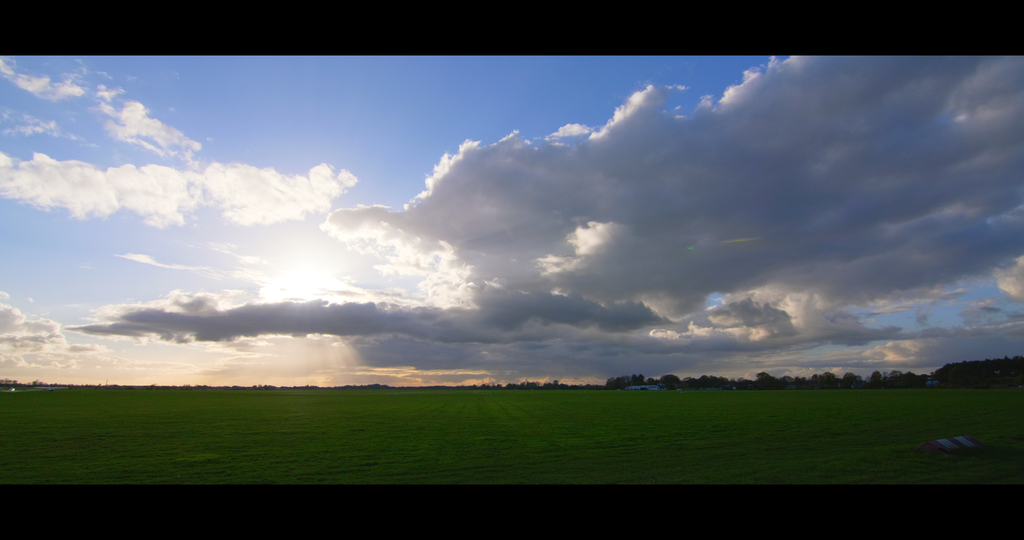

The answer to your question is exactly the topic of this thread....
My LUT of course!
There's no harsh clipping of highlights, no clipping deep blacks. Just everything the sensor can produce, brought into the regular Rec709 space.
Cheers,
Paul
You are confusing capture DR with display DR. To display a large capture DR on a small display DR you compress not cut the data.Thanks. How can this 12 stops of dynamic range video frame fit in rec709 space because rec709 allows only 6 stops of scene DR? You must clip the highlights if you want to call it rec709 video. When I show these kind of examples experienced film makers say "you cant do it, rec709 cant have more than 6 stops".
.
You are confusing capture DR with display DR. To display a large capture DR on a small display DR you compress not cut the data.
If video's are captured with clipped highlights then they will be displayed as clipped highlights. News and broadcast will often be captured in REC709 as there is no time to 'grade' so it's not possible to capture in LOG or another flat profile and so highlights will get clipped. Unless your are shooting straight to broadcast there is no reason to shoot in REC709 and using a camera profile with a larger DR like LOG or HLG and proper exposure and lighting you can preserve the full tonal range of the scene without clipping. HLG will likley in the future replace REC709 for broadcast capture so with a HDR TV you will see less clipping.Someone else is confusing captured/displayed DR too because I see all the time videos with harsh clipped/cut DR and when I am trying to make good looking videos I hear complaints it is not possible/allowed with rec709.
News and broadcast will often be captured in REC709 as there is no time to 'grade' so it's not possible to capture in LOG or another flat profile and so highlights will get clipped.

I don't get what you are doing here. The shot I showed was the full dynamic range of the sensor shooting HLG, properly compressed into a Rec709 profile space, while retaining all the highlights and shadows of the original 12 stops. Shirozina is right - it's not about cutting off dynamic range, but rather compressing it into the available stops you have in the container format you are outputting in.Thanks. How can this 12 stops of dynamic range video frame fit in rec709 space because rec709 allows only 6 stops of scene DR? You must clip the highlights if you want to call it rec709 video. When I show these kind of examples experienced film makers say "you cant do it, rec709 cant have more than 6 stops".
IN rec709 space it should look more like this:
View attachment 128076
GH5 HLG is indeed impressive. I am going to shoot Christmas lights with it. It records colored light dots so much better than normal profiles. It has also less noise in dark scenes.
These shots are awesome JonA couple of screen grabs from today's shoot. HLG, ISO 400, 400Mbps All-Intra. If anyone has 8-bit footage that looks as good as Paul's HLG, I'd sure as heck like to see it! =)
https://jonpais.wordpress.com/2017/11/30/more-sigma-16mm-f-1-4-dc-dn-sample-footage-on-the-way/
Thanks for sharing.
Can anyone clarify what recording mode is best for HLG. Putting aside the All-I 400mbps, is the 150mbps .mov H264 or the 72mbps .mp4 H.265 providing the best results?
That's what I'm using until I can buy some faster UHS-II cards.I don't get what you are doing here. The shot I showed was the full dynamic range of the sensor shooting HLG, properly compressed into a Rec709 profile space, while retaining all the highlights and shadows of the original 12 stops. Shirozina is right - it's not about cutting off dynamic range, but rather compressing it into the available stops you have in the container format you are outputting in.
The PNG file I posted IS a Rec709 frame, created from HLG, using my LUT.
Cheers,
Paul
