objective low light assessment

tired

Well-known member
a fellow producer shooting dance concerts with a Sony PXW-X160 want me to help out with a series of jobs and I was looking for a panasonic alternative - even with side by side tests it's hard to be sure.

why isn't there an objective measure for low light performance??

I can look at the specs for most cameras on the market and compare frame rates, recording codecs et etc - but not low light performance, at least nothing that can be easily and objectively compared with another camera.
 
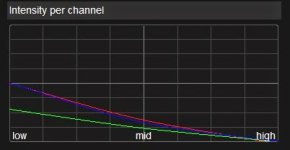
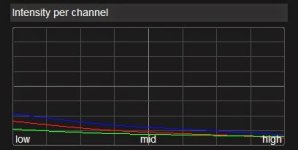
Nucoda Filmmaster's DVO Clairity creates a noise analysis graph per color channel, it's the gold standard of noise reduction
 
so you're suggesting I buy any camera and just use the software????

I want to be able to look at the specs for a number of cameras before purchase and have a good idea of how they'll perform in low light. Low Light performance seems to be the thing that no manufacturer wants to openly compare with.
 
I think they DO offer a low-light spec.

I remember when Nikon came out with the D750 and Sony just came out with the A7s there were lots of discussions about these cameras' low-light capabilities and I remember seeing something about "minimum lux" or something close to that terminology.

If I recall correctly - this 'minimum lux' value gets you 'close' to an understanding of the camera's low-light function, but each camera still has its own differences in how it picks up each of the color channels and how its noise behaves.


I have had 3 different Panasonic cameras and personally I would say that NO Panasonic cameras are great low-light cameras.

Full Frame cameras are generally the best low-light performers. Canon 6D, 5D, and higher (C100, C300 1DC). Also the Nikon D750 and D810.
Sony has the full frame A7s but it has a nasty habit of colors freaking out when the camera is looking into lights like are common with stage lighting.
I have heard the Sony FS7 does a great job in low-light.
 
I am planning on purchasing sometime on the next couple of months, and certainly this is why I'm interested but this question is more general - surely we are all interested in low light performance and wouldn't it be great to compare the light sensitivity of two cameras in the same way we compare the maximum frame rate.

Lux is certainly a measure we've seen but it's use is intermittent & subjective. I found an interesting article on the subject:

"A camera with a 1-lux rating claims to be able to produce an image by the light of one candle that is about three feet away from the subject. Many cameras on the market today can do just that. The problem is that the resulting image may be of very poor quality.
When a manufacturer slaps a 1-lux rating on the side of its camera, it is giving a subjective opinion of what is an acceptable image. While the ratings are more uniform, objective and scientific than they have been in the past, what a given manufacturer considers "acceptable" is probably not up to the standards of the quality-conscious videographer. A grainy, monochrome form is probably not what you had in mind when you purchased your "low light" camera.
Also, since "acceptable image" is a subjective term, lux ratings will vary from one manufacturer to another. Brand X's 2-lux camera may produce a noticeably better image than a competitor's camera also rated at 2 lux. There's no way to know without testing them both. This is changing. The Electronic Industries Association (EIA) has created a new standard (EIA-639) that has wide industry support. This should remove the subjectivity from lux ratings and indeed many companies are already using the new EIA-639 standard. We are crossing our fingers that they will also start writing "EIA-639 Lux rating" on their boxes so we'll know what to look for "

full link:

http://www.videomaker.com/article/9466-what-is-lux-shedding-some-light-on-low-light-cameras

That was written in 2003 and while I've seen other references to the EIA-639 it seems to have wasted away - perhaps because it's not the manufacturers interests to have an objective measurement
 
I really don't think there even is a way to measure low-light performance without getting into subjective descriptions.

It's just a bugger - but I really don't see any other way besides someone doing a competent 'in-use' test.

But as I listed above, Full Frame does the best. Sensor size (pixel size) seems to be the general determining factor. The smaller the sensor the less it performs in low-light....generally speaking.
 
so you're suggesting I buy any camera and just use the software????

I want to be able to look at the specs for a number of cameras before purchase and have a good idea of how they'll perform in low light. Low Light performance seems to be the thing that no manufacturer wants to openly compare with.

no.. i'm sugesting you test the camera's under consideration, and test using a software that can report back to you with values that are objective, and do this for yourself, not rely upon someone else to do it for you... esp not rely upon the mfg's spec's...

as an example here's what it said about Red Dragon....

Dragon noise.jpg

and here's what is said about RedEpic noise;
Epic noise.jpg

i have a decent starting point to work from becuase i tested for myself... i 'm really recomending you do the same
 
Last edited:
The problem with tests and trying to get an objective rating is that you're dealing with so many variables. Lux ratings are next to useless because they don't define the noise levels at which a manufacturer thinks their camera is at it's limit. Worse, many cameras use in camera noise reduction techniques which may well reduce noise - but cause other problems in their place.

Personally, my preferred comparative testing is to use both models side by side to record the same scene, and that has to be one which is dim enough that neither is really capable of a "good" image - the question becomes just how bad each is. So expose each to get the same brightness of image with iris wide open and then adjust gains. Then compare the results. Such a test takes into account any aggressive noise reduction used - the worse camera may not show a greater noise level as such, but will likely show a severe softening of the image or smearing on movement compared to the better camera.

As far as your personal needs, then if you're now getting a camera in the first place to shoot alongside a fellow producer, then does it not make sense to go with the same camera as he is using as his main? That way you know there can be no complaint?
 
FWIW, new D810 Astro is supposed to have a terrific low light performance.

As to buying camera on specs, it's sort of like buying audio on specs. Or cars. Or cake recipes.
 
I can see your point Dermot but I need to get my hands on the cameras to do the tests. Living in regional Australia that's not all that easy but even if I could get down to my local B&H (in my dreams) are they likely to let me run these sorts of test on a number of cameras?
 
Back
Top