FS7: NO Sony Fs7!!

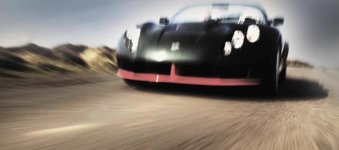
Please post picture of the sports car!

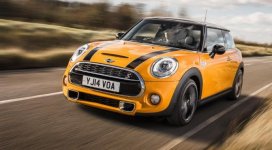
Nothing fancy or exotic. Just a Mini Cooper S that t looks exactly like this one. It is a lot of fun to drive and, as they as in the advertising, it has go-kart handling. I've always classified the money I make from stock footage as "found" money, so one year I decided to spend the proceeds on a little toy.
c7bfa9040bef5f5b20ead08f36c960ad.jpg
 
Sure not yet . 3-5 years though it will be standard .. the lens only needs the electronic contacts built in .. very easy.. without issue ..? Ive been a loader and FP and even with s16 there are often issues ..let alone FF and f1.4 lenses that are currently the trend .. or the buzzed take is used because the performance is better .. and many sleepless nights and calls to labs :) .. this was before monitors and it wasn't strictly the operators job to tell you if something was soft but most would .. if you are the FP really you wouldn't use a tried and tested AF system on your first day on the DeNiro shoot on the 135mm f2 FF shot .. I bet you would sir .. did you ever see the old video taps from Panavision and Arri cameras.. they were crap .. much better these days from a $3K camera .. why not use the new technology if its there .. its all stuff you can switch off anyway ..


Oh yes if the system was perfect, worked on modern cinema lenses with minimal breathing/shift, was more accurate than a 1st AC, was silent and durable and was switchable to manual mode mid-shot without disrupting the lens or your focus marks now being in the wrong place of course I would give it a go. Especially if the system could also be used with older glass. And if a frog had wings it wouldn't bump its arse a'hopping.

It isn't any of those things right now. There isn't currently a roadmap I am aware of from Cooke, Zeiss, Arri or Angineux for implementing the above and well, look how long it took them to update the Master Primes to the Supremes. It's going to be a while yet I feel.
 
Cumbersome...like this?

View attachment 143058

Nothing cumbersome about that once you know what you're doing. I've seen people look like tap dancers with them.


And that's kind of my point... look at the effort and expense people are currently going to to keep s*%t sharp

Well yes lots of people bringing out lots of products and lots of proofs of concepts and it's all very exciting and you can certainly see practical applications for some of this stuff down the line. But we all know that the vast majority of features are shot using far more basic and standardised kit than that for pulling.

EDIT: I don't really have anything else to add and am aware I'm just saying the same thing over and over in different ways now so will leave you crazy kids to it.
 
Last edited:
Well yes lots of people bringing out lots of products and lots of proofs of concepts and it's all very exciting and you can certainly see practical applications for some of this stuff down the line. But we all know that the vast majority of features are shot using far more basic and standardised kit than that for pulling.

It's not down the line. You didn't see the million articles that were written about the Light Ranger on Uncut Gems? (amateurly shallow DOF, that film). The 1st AC on that movie had this to say:

Chris Silano sent the following nice email to Alanna Berkson at Preston Cinema the other day and she forwarded it to me:

“You know, they call the Light Ranger the Focus Puller’s friend. And while that’s true, it’s much more.

First, it’s the Actor’s friend. No longer are they confined by marks or rehearsed positions. As the camera is free to move unrestricted, so is the drama.

“Second, the Light Ranger is the Director’s friend as they can use tight lenses for those massive close-ups at any time. Also, Directors have all of the performances to choose from, not just the later ones where the focus has settled in.

Third, the Light Ranger becomes the Editor’s friend as they aren’t forced into awkward cuts because the focus has fallen apart.

By now the Producer should realize how much the Light Ranger has saved them in time and production costs.

Finally, the Light Ranger is the audience’s friend as they get a better movie, every time.

“I kiss the ring on Howard Preston’s hand every day.”
https://www.fdtimes.com/2020/07/02/gods-of-focus-chris-silano/

In other words: focus-pulling is not a problem feature films need to solve. Because all they need to do is limit the types of shots they do, rehearse the positions, set marks, nail the blocking, and cut around the errors.

Apparently the light ranger has an autofocus mode itself. Another focus puller writes:

I use the LR2’s autofocus feature for fast push-ins and sudden actor movements, but only for portions of the shot. Autofocus is also helpful for quickly focusing on slates. With the push of the off-button, the lens snaps back to the manually set distance, before the Director can say action. This technique of snapping back to or from manual to autofocus is also useful when over- cranking the camera (where you need to speed up your racks).

https://www.fdtimes.com/2018/01/29/gods-of-focus-speak2/

I think that Papert and Brawley both said their ACs use depth mapping tools...I forget which

btw it's awesome that fdtimes has an article series called "Gods of Focus"
 
Last edited:
Oh yes if the system was perfect, worked on modern cinema lenses with minimal breathing/shift, was more accurate than a 1st AC, was silent and durable and was switchable to manual mode mid-shot without disrupting the lens or your focus marks now being in the wrong place of course I would give it a go. Especially if the system could also be used with older glass. And if a frog had wings it wouldn't bump its arse a'hopping.

It isn't any of those things right now. There isn't currently a roadmap I am aware of from Cooke, Zeiss, Arri or Angineux for implementing the above and well, look how long it took them to update the Master Primes to the Supremes. It's going to be a while yet I feel.

Though I think AF is a real selling point for the FX9 (and FX6), and the reduced DOF produced by the larger FF sensor - particularly when shooting wide open for super-soft backgrounds - makes AF that much more important for smaller, often understaffed productions, the one thing that we're not seeing a lot of is standardization across brands. For old school higher end lenses, manufacturing with a PL mount was the standard. For many of these lenses the PL could be swapped out to a different mount if necessary, but this didn't require much re-engineering from the manufacturer. This allowed manufacturers to concentrate on the glass and mechanics rather than the features.

I've been impressed with how well the AF works on the FX9 with a longer G-Master lens for interview situations, where in the current environment if we have two crew members for a 3-camera sit-down that feels like a fully staffed day. But if I were using a different brand of camera would I ever pick (or could I even use) a Sony fly-by-wire focus lens? My answer would be NO! Good AF on the FX9 and FX6 will sell a lot of Sony lenses. Maybe those lenses will help keep the owners brand loyal as well (since the camera body itself may cost significantly less than the lens kit if you have 3-4 zooms and half a dozen primes.) But the lack of standardization across brands creates a problem where in order for a lens manufacturer to create a compatible lens they may even need to reverse-engineer electronics to create compatibility with certain camera systems. Yes, there were a couple of different electronic connection standards for PL lenses, but at least they were standards. Now every time a new camera comes out there seems to be the question of whether certain lenses (or adapters) will work with it.

Considering the economics of the situation, I'm not looking for the problem to go away anytime soon.
 
It's a very impressive distance measuring focus assist tool that is not yet a standard on production but if anything it seems like a great use of tech for focus pullers which will be developed and refined just like current distance measuring tools as opposed to a demonstration of why autofocus is coming anytime right around the corner.

But we all seem fairly entrenched in our opinions so yeah I'll try again to leave it alone.
 
as opposed to a demonstration of why autofocus is coming anytime right around the corner.

Well, I didn't say that AF adoption in features was imminent. Just eventual.

But the light ranger is a LIDAR system with an autofocus mode that apparently people have already used on big-budget stuff we may have seen (which answers that question) and they've been toggling it on-and-off mid-shot like I predicted. And this is not on the low end, but starting at the top of the food chain.

Then on the low end you have the Komodo with PDAF. A lot of people think they'll be bringing PDAF to their higher-end cameras next. PDAF has a massive advantage in terms of reading image data right from the sensor and not requiring a separate system to set up and calibrate, not to mention that it moots lens collimation. Then all they have to do is feed that data to an external lens motor and people will be able to use whatever lenses they want and will have to find a new excuse to hate it.

Ah, Brawley has responded to my question and says his focus pullers use cvision: https://cmotion.eu/page/cvision?fbclid=IwAR0WQyNXyS5CFrPXsE3xhqFeMhEI3ThvwQX65Swc8stXI_-T0PLEwiPx0lU

"In combination with a cPRO lens control system, cvision offers advanced autofocus features but also manual control at the press of a button."

I dunno if they use the AF functions. But they're using the cvision on shows for streamers. Sounds standard enough to me. Just not something everyone can afford.
 
Brawley says his AC uses the autofocus of the cvision in certain scenarios:

You tend to see it used on more controlled scenarios where only one thing has to be tracked.

So a punctuation move where a Dolly push in from medium to close up like an “ah ha” moment. Would be perfect.

Someone running towards camera.
 
Why not use AF on a close up of De Niro?

Which cine lenses with all the performance you expect from them in all optical and mechanical areas can also incorporate silent and perfect AF motors that can stand up to production use?

A big ask to incorporate that in an Angie zoom or Supreme Prime or Cooke anamorphic at the moment. I'm sure someone will try it in the next few years.


In the meantime why not do it precisely the way thousands of films have successfully and without issue done it for decades? Again for feature films it is currently a solution to a problem people don't have.

As has been said, this is all still in its infancy, but we’ve already seen that you do not need “AF” lenses to have “auto focus” lenses. The focus barrel only has to be driven by an external servo(exactly like the vast majority of manual follow focus systems today). Just look at the incredibly cheap DJI ToF focus system available for the Ronin RS2. Yes, it’s kind of a blunt-force, basic and rudimentary tool right now, but it shows what is possible.
 
Haven't read all of the posts so not sure if it wasn't mentioned, but at some point it's not just about AF but about the camera having a bigger brain and understanding what's in front of it.

A few years ago Z CAM shared a deep learning AF video, but I can't find any references to it anymore. Basically, it was a rudimentary version of 'Terminator-version'...it had little words floating around the objects in the scene.

Apple. Window. Human. Dog. (Something like that.)

And if a camera will be able to learn like we learn, it could start making more decisions for you. Like offer suggestions on optimal white balance based on light frequencies or shutter speed based on slow-motion capture. It can learn how you film and what you've been doing a lot of lately (filming this person's face, or handheld panning left and right so it expects that and will assist with IS).

That's the worst nightmare for many, but the camera - a machine - could eventually become a decision-maker part of the crew. lol
 
Well, I didn't say that AF adoption in features was imminent. Just eventual.

But the light ranger is a LIDAR system with an autofocus mode that apparently people have already used on big-budget stuff we may have seen (which answers that question) and they've been toggling it on-and-off mid-shot like I predicted. And this is not on the low end, but starting at the top of the food chain.

Then on the low end you have the Komodo with PDAF. A lot of people think they'll be bringing PDAF to their higher-end cameras next. PDAF has a massive advantage in terms of reading image data right from the sensor and not requiring a separate system to set up and calibrate, not to mention that it moots lens collimation. Then all they have to do is feed that data to an external lens motor and people will be able to use whatever lenses they want and will have to find a new excuse to hate it.

Ah, Brawley has responded to my question and says his focus pullers use cvision: https://cmotion.eu/page/cvision?fbclid=IwAR0WQyNXyS5CFrPXsE3xhqFeMhEI3ThvwQX65Swc8stXI_-T0PLEwiPx0lU

"In combination with a cPRO lens control system, cvision offers advanced autofocus features but also manual control at the press of a button."

I dunno if they use the AF functions. But they're using the cvision on shows for streamers. Sounds standard enough to me. Just not something everyone can afford.

Brawley says his AC uses the autofocus of the cvision in certain scenarios:


Fair enough. It's not quite what I meant by 'standard' but the system itself sounds very interesting and from what you say is gaining traction. I wasn't aware of it having an AF mode. Will check it out, cheers.
 
Fair enough. It's not quite what I meant by 'standard' but the system itself sounds very interesting and from what you say is gaining traction. I wasn't aware of it having an AF mode. Will check it out, cheers.

incidentally, Brawley also added that he thought computational photography/light-field/focus-after-the-fact would replace ACs sooner than AF does. and pointed me towards the Focos app. (not that Brawley is the last word on all this, but he does have his finger on the pulse)

the thought of focus-after-the-fact makes me feel a little depressed and sort of "then what's the point?" which is probably how AF is making some of you lot feel :)

He also thinks that people will be shooting with straight, boring lenses and applying "lens LUTs" in post to mimic classic lens looks/bokeh. Which is even worse!

but ultimately, if the technology were available and I weren't exploiting it, I'd only be hurting myself
 
I said that about 5x in this thread, ha...I would really love that.

Fell in love with it after toggling the feature in Lytro's sample gallery, but that vanished once Google took over.

I have a feeling they are just waiting for the right time to reintroduce the option into a new generation of a phone, or some other product.
 
I remember attending a seminar on some new software called Photoshop,or something like that. Within a year I had sold my film based gear and bought into the brave new digital world. Never looked back. See any similarities here?
 
That sounds more like a drastic and at-the-time risky career change, lol - but there are definitely similarities.

And that also sounds like 35 years of Photoshop experience probably has your brain filled with lots of knowledge about it.
 
Oh yes if the system was perfect, worked on modern cinema lenses with minimal breathing/shift, was more accurate than a 1st AC, was silent and durable and was switchable to manual mode mid-shot without disrupting the lens or your focus marks now being in the wrong place of course I would give it a go. Especially if the system could also be used with older glass. And if a frog had wings it wouldn't bump its arse a'hopping.

It isn't any of those things right now. There isn't currently a roadmap I am aware of from Cooke, Zeiss, Arri or Angineux for implementing the above and well, look how long it took them to update the Master Primes to the Supremes. It's going to be a while yet I feel.

Sony hybrid AF is 90% there and that was only in the last few years .. the change from contrast only has been huge .. always an outside chance Im wrong :) .. but I would bet the farm within 10 years at the very most ,AF will be a thing in high end production.. camera first and some lenses.. then all the others will rush into it .. if its going to save time and so money it will happen ..
 
When the subject is under control of the production and there are blocking / marking rehearsals AF is less needed. “Less” needed.

They aren’t missing acceptable focus as much as Cam Op with no dedicated focus puller, in shooting where no rehearsal / blocking and subject independent of the production.

They least need AF. Which is why they are slower to adopt what is to some degree for them a solution in search of a problem.

Yeah but people alter and constrain their shots specifically to accommodate focus-pulling. So, if the current solution is NOT DOING something, maybe there would be a better solution that would allow them to do it? (that would allow them to improv or do more complicated shots or with a shallower DOF, for example)

Incidentally, Brawley thinks depth mapping autofocus (whether via lidar or simply stereoscopic camera feeds) is more useful in his line of work because it can instantly determine the exact distance to a subject. Whereas both phase-detect and contrast-detect work by determining which direction to adjust focus from the current focus position until they eventually arrive at the right place. But I could see multiple solutions being used simultaneously. I don't know if depth-mapping solutions can execute Eye AF. I guess it depends on how detailed they are and how much analysis that information receives.
 
This dude knew what's up in 2015...keyframing his photos' focus with racks and KB effects.

A little rough around the edges, but cool.

At first there is nothing too impressive about it until you realize those focus points are not supposed to change.

 
Back
Top