Need advice on shooting food for six commercials

The notion of "shooting food" could run the gamut from local cable commercial to national spot. As mentioned, I wouldn't go into this w/o some prep.

OP, you mentioned a chef being in frame & some of the kitchen details. Curious how much this is going to be like a "cooking show" with talent, versus the close up beauty shots of food like David posted. (I'm thinking the latter?) Cuz those could be 2 different things entirely.

I'm an amateur here, comparatively speaking, but I've worked with a good lighting guy in the past and tried to copy his moves. What do you guys think about using soft, indirect light sources on the food? Example: bouncing a fresnel off a white card. (using some flags to control the spill/shape the light.) I always liked that look, but I just worked on low, low budget productions when it comes to food.

Good thread, I'm taking notes. Like I said, I'm a novice here....I had to google dots & fingers.
 
Don't forget you'll need some macro capabilities in your kit. Extension tubes are okay but you probably want a proper macro lens.

Big soft light helps a ton. 5600k fluorescent lights are almost always best. Color is very important and you don't want to wilt things under heat.

A really nice, super heavy duty slider dolly is useful. Cheap sliders will kill you on small stuff. The turntable is a good idea, too.
 
Do as much prep as you can within the budget and come up with your desired looks in advanced. That way you have a pretty good idea which lenses you will use, any diopters, lighting style. Put together a shot list. Include stills of shots for a refresher if needed. Also be ready to punt and move on to plan B or C if needed. Things change. Be ready to keep things moving forward. Even when everything you were ready to do just got thrown out the window. Also shoot different angles and setups to further the footage down the line. Yes its nice to have all money shots, but I would rather have more than not enough.

Thanks David, As always, excellent advice. Great looking grabs by the way.
 
Don't forget you'll need some macro capabilities in your kit. Extension tubes are okay but you probably want a proper macro lens.

Big soft light helps a ton. 5600k fluorescent lights are almost always best. Color is very important and you don't want to wilt things under heat.

A really nice, super heavy duty slider dolly is useful. Cheap sliders will kill you on small stuff. The turntable is a good idea, too.

We're on the same page Professor, I've been doing some macro testing over the last few days. It opened some really awesome doorways.Thanks for the comment!
 
The notion of "shooting food" could run the gamut from local cable commercial to national spot. As mentioned, I wouldn't go into this w/o some prep.

OP, you mentioned a chef being in frame & some of the kitchen details. Curious how much this is going to be like a "cooking show" with talent, versus the close up beauty shots of food like David posted. (I'm thinking the latter?) Cuz those could be 2 different things entirely.

I'm an amateur here, comparatively speaking, but I've worked with a good lighting guy in the past and tried to copy his moves. What do you guys think about using soft, indirect light sources on the food? Example: bouncing a fresnel off a white card. (using some flags to control the spill/shape the light.) I always liked that look, but I just worked on low, low budget productions when it comes to food.

Good thread, I'm taking notes. Like I said, I'm a novice here....I had to google dots & fingers.

It's pretty much wide open in terms of creativeness. The chef is a guy bringing the sauces/marinades to market (Market Basket/stop-n-shop/) But we will also be doing some cooking shows down the line where he introduces the sauces/marinades to a variety of different dishes, I think it would be beneficial to show him as he will be the face of the product.

Here's where it gets really cool, the labels on the jar will have a QR code, so when the consumer holds their phone up to the jar, it will trigger a video to the phone via an app called Arazma, Sort of augmented reality in a sense. There will be little videos of different recipes and ideas on how to use the products. We'll also be doing a little vine to show shoppers how it works. As far as we know this is the first of it's kind in terms of using the app for something like this.

Thanks for chiming in Scott!
 
Forget fashion, forget product.... food photography is that hardest skill to master.

But the secret is pretty easy, soft backlight with minimal fill or bounce ( with not too much horsepower)
I agree, I tend to light with a soft approach, seems like it's somewhat of an extension to my style, so to speak. This thread is providing some great advice, much appreciated guy's!
 
So I will chime in with the crowd for a food stylist. A good food stylist along with the chef will get you food on dishes with accessories that is a joy to shoot. I did food television for PBS and Food TV for many many years, among the shows a James Beard award for best food tv series. All our food in all the shows was edible, prepared on site and designed by food stylist and chef. On the odd shot the propane torch came out for a little extra char and maybe an atomizer with spring water or a touch of canola oil but rarely. Our lighting was almost always large and I mean large soft boxes usually built on site from Rosco diffusion and duvateen and suspended directly over head and then the food was hit with kicks. There is a big difference in shooting food for video and shooting food for print or hi rez stills. You can try to emulate what a stills guy/gal will do with a plate of food in a few hours but they never seem to allow that kind of time for video unless its a prime time spot.
Good luck!
Thanks Brian, Great advice as always. I've been watching some crazy videos where they suggest using motor oil for things like maple syrup due to the way it photographs, a lot of little tips/tricks like that. The guy seems to be a perfectionist with his dishes so I'm pretty excited about the gig. I'm going to bring a lot of lighting instruments, I want to make sure all basis are covered, and as David suggest be ready for plan B if needed. Do you have anything online I can check out Brian?
 
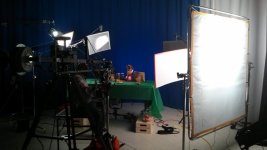
food shoot.jpg

There has been many great suggestions so far, here is a behind the scenes of a recent shoot I did. (The food is not on the table yet, just placeholders) But it should give you a general idea of the lighting used. We also shot it at 200 fps with a few moves to give it paralax. Generally starting at the end point and then reversing the footage in post. Hope this helps.

PS: I have come to love food shoots, best craft services by far :)
 
Its interesting to see how much food photography can vary across the globe.
Often find that american style is vastly different from fx. Nordic like we shoot.
Heck even german style is different from ours.
So I find it hard to give advice since it might not be right for your particular area.

I recently did a cookie commercial and while it was fun to do I couldnt help feeling that it was so not the typical way to shoot, but it made sense in context due to the nature of the product.

Basically we use single largr source lighting, like 2ks bounce of a white wall and then add additional bounce to lift the shadows if needed.
 
I art directed a lot of food in the film days and worked with some top-flight national shooters - really amazing people.

We never shot with just soft light; always some sort of fresnel or grid rake across the product in addition to the soft key. Brings out texture and adds gloss to "wet" things, and gives you some harder rims and outlines to differentiate the subject. With any amount of shallow DOF (not even extreme but some amount of focus falloff) we relied on DOF and hard light to really make things "glow". These weren't flat catalog-ish shots, more beauty/food-porn. One shooter became a good friend - I think he still shoots all the beverage for TGI Friday's menus. Hard light and very specific color gels to make colors pop.

Same with beverages and bottled packaging, you need some pinging light to make it pop.

Do some tests, but food can look pretty unattractive and flat without some amount of hard light. It's very much like shooting jewelry in some ways.

Styling is really important too - not just the food itself, but a setting/props that give a sense of the cultural origin or the target market - from rustic southwestern lit like sunset-through-a-window to colder whites and stainless lit like noon-through-a-window. Food usually looks more desirable in a setting that's lit like some glorious time of day.
 
We never shot with just soft light; always some sort of fresnel or grid rake across the product in addition to the soft key. Brings out texture and adds gloss to "wet" things, and gives you some harder rims and outlines to differentiate the subject. With any amount of shallow DOF (not even extreme but some amount of focus falloff) we relied on DOF and hard light to really make things "glow". These weren't flat catalog-ish shots, more beauty/food-porn.

+1

Yes. This is what my comment about a "hard cross-light" was all about. You still light with soft-lights, but use hard lights from the back or the side to bring up textures, edges, glows, etc... Sometimes with cucoloris to break-up the hard light and give a dappled sunlight feel across the table and the food. ( with still-photography we also used tons of grid-spots, which were black painted aluminum honeycomb light modifiers that would limit the hard light like a focused fresnel light does )
 
I almost always key with a hard 3/4 or backlight, with soft fill from front. This is more tedious to do than the typical huge softlight overhead, but I like the texture and sparkliness (is that a word?) much better.
 
Maybe he needs a Nordic or German style to set things apart for the masses???

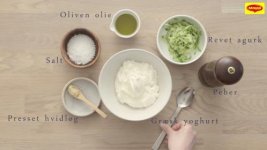
Here's a nordic food thing I'm still working on. Lights are only 2 bounced 2k open face lights into the wall that is 1.5 -2 metres away from the top part of the frame. No fill except the room itself which is all white.
Once you start using walls a light source, they act like a huge window and thus makes the light wrap in a nice way.

vlcsnap-2016-02-25-08h44m17s797.jpg

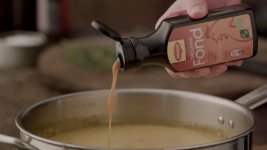
and this one is lit by again 2x 2k open face lights going through a 1.2 x 2metre frame on the left with one sheet of frost on it. Although I recall having a small foam bounce on the right to lift the label a bit.

vlcsnap-2016-02-25-08h48m29s802.jpg

Sorry for the compression... I blame the forum ;)
 
Do as much prep as you can within the budget and come up with your desired looks in advanced. That way you have a pretty good idea which lenses you will use, any diopters, lighting style. Put together a shot list. Include stills of shots for a refresher if needed. Also be ready to punt and move on to plan B or C if needed. Things change. Be ready to keep things moving forward. Even when everything you were ready to do just got thrown out the window. Also shoot different angles and setups to further the footage down the line. Yes its nice to have all money shots, but I would rather have more than not enough.

Those are good looking shots, but to me they're just too flat for food ("too flat for food" - need that on a t-shirt or something). No sparkle, deep blacks, the warm color balance is plugging things up. It's all very subjective, but food needs to be sensual and sexy. For me, it's usually hard light mixed with soft.

In the stills realm - before photoshop, it wasn't unusual to do dots and fingers of mild gels to do things like pop the green of a lime or add some pink to seafood skin. In motion that could be harder to pull off (but then there's motion tracking and masks to control that).

This looks pretty luscious… I also really like the flatter "rembrandt-ish" look with some muted colors that we're seeing in higher-end cookbooks (like this guy's work, yet there's a fair amount of hard light). And this shot isn't lit very hard but is really nice.

Just image-search "best food photography" and you'll see some gorgeous stuff (and some so-so…)
 
Back
Top