My thoughts on the current state of Canon HDSLR shooting.

nothing

Carbonite Member
I wrote the following as a response to a question about which Canon DSLR to buy and thought I'd share it here. I'm trying to write more these days and thinking about starting a blog to share my camera musings, so consider this practice.


Which Canon HDSLR?

I've been forced to shoot HD with Canon DSLRs (yes, I was forced to at first) for about two years now, and I've become somewhat of a minimalist with them - not that I'm not familiar with bigger gear. My thoughts on the options with regards to HD video (still photography not considered here), which are not at all the conventional wisdom:

5D2: Focusing is harder (already the most difficult aspect of HDSLR shooting for many) - in order to get more than one thing in focus (a necessity when making actual narrative films, rather than youtube "camera tests" featuring your cat) you have to stop down to the point that any fullframe lowlight advantage disappears. Fullframe zooms are heavier and more expensive. Few cinema lenses will cover the sensor, if you happen to like cine glass. The sensor is just too damn big, in my opinion - super35 is perfect. About to be replaced, so resale value will drop.

7D: More prone to overheating. No Magic Lantern support (a HUGE disadvantage). Exact same video quality as Rebels which cost less than half as much. Only recommended if you will be using an external monitor extensively (which I hate doing with these cameras, too clunky) as it's the only Canon DSLR that doesn't drop resolution on the HDMI output while recording. Probably will be replaced soon so resale value will drop.

I recommend the T2i with Magic Lantern if you are recording audio in camera (better preamps), or the T3i with Magic Lantern if you are recording audio separately (HD zoom mode at 3x is very useful and aliasing free). 60D is nice but I like a smaller, cheaper camera in this market segment.

For lenses, I use my old Nikkor primes (20, 24, 35, 50, 85, 105, 180, 300) when I have the time, but I like to move fast and stay light with these cameras so I often stay on the zooms: Tokina 11-16 and Tamron 17-50 non-VC (non-VC is key, the newer VC version is crap, but the older non-VC is a great lens for video and happens to be rehoused and sold by Red for $6000). The lightweight Angenieuxs work great with an adapter when someone else is paying the bill, but add a layer of complexity that I don't like - might as well be on a real movie camera at that point. The good Canon lenses are all full-frame - too big and heavy for my taste, and have annoying infinitely rotating focus rings. Unfortunately their 70-200L is the best choice I've found for a long zoom.

I would never put a mattebox on a DSLR, I find the hoods that come with the lenses and screw on filters to be adequate.

I pull focus on the barrel when operating (Magic Lantern focus peaking), have never bothered using a manual follow focus on a DSLR. Single channel Prestons can work well when needed for special situations.

Of course, if you care about "looking" like a pro you might not like the smaller cameras and my approach. I need no reassurance about my professionalism - I just want the best tool for the job.
 
Pretty accurate assessment , but I would point out that it is only valid for this point in time. New Canon DSLR's like the 7d mark2 and 5d mark3 may change things especially if they address moire and aliasing.

... and Tamron 17-50 non-VC (non-VC is key, the newer VC version is crap, but the older non-VC is a great lens for video and happens to be rehoused and sold by Red for $6000)

I'm curious about this statement you made. Where did you get info about RPZ is a rehoused Tamron?
 
Few things,
You're way exaggerating the focus issues on the 5D. Is it pretty damn shallow below 2.8, yes, but realistically you shouldn't be shooting that wide open most of the time anyway. Most lenses look better in the 4 to 5.6 range which is where the bulk of your shooting should be happening. On the few occasions where necessity or the look you want require crazy fast aperture (1.4 or 1.2) in a narrative situation it can be done. You'll have to rehearse the focus pull a few times for sure, but a good focus puller can get it.

I cannot even wrap my mind around shooting on any of these cameras without a monitor. 5.6" or 7" on the rig and in a narrative situation maybe another one in a video village.

I agree on the 7D, when I rent a second body (for slo mo) I always rent a 7D (instead of a t2i, 60D, etc...) just because I don't want to screw with SD cards in addition to CF cards, but except for the full res HDMI out it's just a way better deal to get one of the other cameras (t2i, t3i, 60D).

Vintage lenses are indeed the way to go, though not a fan of zooms.

Matte boxes are convenient, but by the time you factor in the cost of expensive 4 X 4 filters, it's a bit of overkill for a DSLR when screw on filters and hoods are cheap and available.

Focus throw on my vintage glass in mostly in the 270 degree range, virtually impossible to do without a follow focus.
 
I'm curious about this statement you made. Where did you get info about RPZ is a rehoused Tamron?
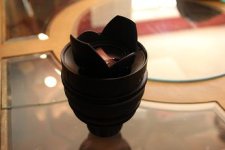
My own eyes. It's obvious when you have them side by side, the internal construction is identical. You can put the Tamron hood on the Red when you zoom it in.
rpro.JPG
 
Last edited:
After 2 years of continuos Canon HDSLRs use (both full frame & APC-S sensor size) my vote goes to '60D' as the overall winner. Here is why:

-ITLS -It is the lens stupid- ;) Canon EF-S 17-55 IS might as well be the greatest all-purpose lens every event cameraman needs. (Even the new 24-70L, all around lens designed for 5DMark2 lacks an IS) Also any full frame lens used on a crop sensor will perform even better. {many know why}
-Button layout & convenient LCD (better than Rebels & 7D*)
-Better ISO performance (beats the Rebels)
-Best price/performance (beats the 5D, infact you can get 2 60D bodies for the price of 1 5D)

I don't deny 5D's little bit better low light & ISO advantage, however when other factors combined I am convinced 5D's superiority is overrated.
Hopefully cameras like AF & FS100, C300, F3, (even Sony VG20) will bring back sense to community and help recognize the S35 sensor size as the 'proper standard' . I never understood why 'Full frame' is even included in the sensor size comparisons for the video/film cameras.

*Unless you are a still photographer I see no reason for buying a 7D
Note: From the perspective of an event cameraman.
 
I'ved used about 10 different kinds of Sony and Panasonic cameras ranging from $250 to $6000 (which isn't a lot compared to the 100k cameras), but I can say that I have never been more happier shooting on my Canon T3i, which is my first Canon and DSLR.
 
Me three: WOW! I'm almost determined to scoop up a Tamron 17-50 non-VC now..

Also, may I ask why the VC version sucks?
 
This has been thrown around a fair bit. Just because the patented element construction has been used for the RPZ does not equal to 'same' lens rehoused. The QC will be very different, the grade and grinding of the glass, and the overall construction far superior.
 
I wrote the following as a response to a question about which Canon DSLR to buy and thought I'd share it here. I'm trying to write more these days and thinking about starting a blog to share my camera musings, so consider this practice.


Which Canon HDSLR?

I've been forced to shoot HD with Canon DSLRs (yes, I was forced to at first) for about two years now, and I've become somewhat of a minimalist with them - not that I'm not familiar with bigger gear. My thoughts on the options with regards to HD video (still photography not considered here), which are not at all the conventional wisdom:

5D2: Focusing is harder (already the most difficult aspect of HDSLR shooting for many) - in order to get more than one thing in focus (a necessity when making actual narrative films, rather than youtube "camera tests" featuring your cat) you have to stop down to the point that any fullframe lowlight advantage disappears. Fullframe zooms are heavier and more expensive. Few cinema lenses will cover the sensor, if you happen to like cine glass. The sensor is just too damn big, in my opinion - super35 is perfect. About to be replaced, so resale value will drop.

7D: More prone to overheating. No Magic Lantern support (a HUGE disadvantage). Exact same video quality as Rebels which cost less than half as much. Only recommended if you will be using an external monitor extensively (which I hate doing with these cameras, too clunky) as it's the only Canon DSLR that doesn't drop resolution on the HDMI output while recording. Probably will be replaced soon so resale value will drop.

I recommend the T2i with Magic Lantern if you are recording audio in camera (better preamps), or the T3i with Magic Lantern if you are recording audio separately (HD zoom mode at 3x is very useful and aliasing free). 60D is nice but I like a smaller, cheaper camera in this market segment.

For lenses, I use my old Nikkor primes (20, 24, 35, 50, 85, 105, 180, 300) when I have the time, but I like to move fast and stay light with these cameras so I often stay on the zooms: Tokina 11-16 and Tamron 17-50 non-VC (non-VC is key, the newer VC version is crap, but the older non-VC is a great lens for video and happens to be rehoused and sold by Red for $6000). The lightweight Angenieuxs work great with an adapter when someone else is paying the bill, but add a layer of complexity that I don't like - might as well be on a real movie camera at that point. The good Canon lenses are all full-frame - too big and heavy for my taste, and have annoying infinitely rotating focus rings. Unfortunately their 70-200L is the best choice I've found for a long zoom.

I would never put a mattebox on a DSLR, I find the hoods that come with the lenses and screw on filters to be adequate.

I pull focus on the barrel when operating (Magic Lantern focus peaking), have never bothered using a manual follow focus on a DSLR. Single channel Prestons can work well when needed for special situations.

Of course, if you care about "looking" like a pro you might not like the smaller cameras and my approach. I need no reassurance about my professionalism - I just want the best tool for the job.

That's pretty much what I outlined in the FAQ for the Canon APS-C section. Even down to your conclusion.
 
When I owned my 60D, one feature that I really liked was being able to set the color balance via the color temperature scale. ( something I also do every time I use my GH-2 camera )

This and manual audio control were the main reasons why I bought the 60D over the 2Ti. ( I also like a bigger / heavier camera when I shoot still photos )

Don't forget Magic Lantern (often considered a must on these cameras) on the t2i gives better manual audio than the stock 60D firmware (even the ability to monitor with headphones) as well as the ability to dial in specific Kelvin values for color temperature. The 60D has better ergonomics that are especially useful for photography, but it doesn't offer anything that a ML-enabled T2i doesn't for video.

Is the t3i video 720p @60fps exactly the same as the 7D? And I'm not talking low light shooting.

Yes. There is a sticky that discusses that as well as what differences exist between these camera models here:
http://www.dvxuser.com/V6/showthrea...APS-C-Camera-models-(7D-vs-T2i-vs-60D-vs-T3i)

In a nutshell, the 7D is actually the most limited in video features of the APSC Canons (with the exception of full HD monitoring during recording), followed by the t3i (audio chip isn't supported by Magic Lantern for monitoring and extended manual control), and then the 60D and t2i are mostly tied for features (as long as the t2i has Magic Lantern installed).
Technically, the 60D would have the upper hand due to ergonomics and the flip out LCD, however the I feel that the T2i balances this out by offering the same image quality and features for much less.
 
Last edited:
if you're using canon lenses, the extra thumb wheel to set aperture may be enough reason to go for the 60D instead of a rebel


Would that matter much considering the resolution they're being used at? Also, at 5.6 they're even, and from 8 and on, the VC wins.
yes, it matters; look at the difference, in video mode, between the Tamron 17-50 f/2.8 non-VC and a 50mm prime: http://www.similaar.com/foto/lenstests/lenstestsv.html
and if you can just shoot at f/5.6 or slower, then stick to the kit lens: the ultra-cheap 18-55 f/3.5-5.6 IS has awful construction, but it's a surprisingly strong performer (sharp at center and corners at all apertures, and with much better bokeh than the tamron... but being so slow, very little of it)
 
Back
Top