My Mini 2K is here!

Grug said:
Woah! A 'real' camera... never thought I'd see one of these on here! :thumbsup: The blue and red tones seem somewhat undersaturated to my eye, but the image is gorgeous! (Real depth of field and low-light performance!!!)


Whereabouts in Van are you? *sigh*.......I miss Tim Horton's
Hey, I'm 1 block off the Drive. I've never been to Australia, but, somehow I still miss the weather!

I have to head out for a week (LA ... yay!) but when I get back I'll post more variety of shots, and some actual footage. These were all from one spot (my balcony) with one set of filters and one hazy but bright day. The day actually looked boring to the naked eye, and, not being pro by any stretch, I just try to get an image that is attractive to my eye.

I don't see any chroma abberations, but then, I don't know where to look!

Cheers. :beer:
 
Jason Rodriguez said:
I know you're not familiar with the "Neutral_Contrast_2.look" file that Chris mentioned, but it crushes the shadows quite a bit, so there is LOTS of shadow detail that you're not seeing on the screen in the RAW 10-bit log file.

Cool.
 
Hey,

Those pics, if they are still available, were shot before I took my zoom into Panavision and had it rebuilt. It is noticeably sharper now. I'm actually going to buy 2 more of these cameras (the full SI-2K with body) because they are so cool. I will hopefully find time soon to post some links to some finished projects. Cheers.

BTW, I've forgotten where I am in these posts, but fyi the vignetting issue was solved long ago.
 
What a rig!

All lens and... where's the camera? :)

It would be cool to see this developed into a form factor similar to a Medium Format still camera . Just place those cable inputs on one side, and bring that monitor down an' plop in on the back!

cool!
-andrew
 
wow. old thread revived.

The work flow since the last year has been SI-2K Cineform AVI > Premiere Pro, but we are switching to FCP now that Cineform is fully supporting it.

The workflow is really nice since the Cineform files allow you to drop your files right into your editor without having to encode or create proxies. Just drop them in your time line and edit away. The non-destructive meta-data is nice too.

Check out Danny Boyle's Slumdog Millionaire for an award winning feature that is out in theaters now (at least here) and looks fantastic.
 
Slumdog Millionaire shot with SI-2K Camera receives 10 Oscar Nominations

Slumdog Millionaire shot with SI-2K Camera receives 10 Oscar Nominations

Oscars.JPG


Slumdog Millionaire shot with SI-2K Camera receives 10 Oscar Nominations:

Slumdog Millionaire, which already swept 4 Golden Globes earlier this month continues its own rags-to-riches story with a total of 10 Academy Award nominations including Best Picture, Best Director for Danny Boyle and Best Cinematography for Anthony Dod Mantle. In the crowd pleasing fantasy, Danny Boyle tells a love story about a teenager who rises from the slums of Mumbai to win the Indian version of the television game show Who Wants to Be a Millionaire? Many of the fast-paced chase scenes and game show set were shot with the Silicon Imaging SI-2K Digital Cinema Camera.

“The film uses dazzling cinematography, breathless editing, driving music and headlong momentum to explode with narrative force, stirring in a romance at the same time” states Roger Ebert, for the Chicago Sun-Times.

The challenge of shooting of one of the densest and fasting moving cities in the world fell upon Director of Photography Anthony Dod Mantle, who most recently shot Last King of Scotland and had previously worked with Boyle on both 28 Days Later and Millions. The plan was to shoot in the heart of the city’s infamous but rarely explored slums, capturing their energy and urgency on-the-fly, with an unforced realism.

“Danny Boyle and I had made four films together prior to this and we have developed a method and a trust”, says Anthony Dod Mantle. We both have strong opinions about our work and about cinema in general and we always want to try to push ideas to the fullest.”

Danny Boyle was adamant that he did not want to take large, cumbersome 35mm cameras into the slums. He wanted to use smaller, more flexible, digital cameras to enable them to shoot quickly with minimal disturbance to the natural flow and communities.

“We started off using classical kinds of film cameras and I didn’t like it.” Boyle explains. “I wanted to feel really involved in the city. I didn’t want to be looking at it, examining it. I wanted to be thrown right into the chaos as much as possible.”

"I had to find a camera set up that would be ergonomic enough for me to throw myself around the slums chasing the children whilst, at the same time, withhold as much detail in the shadows and highlights” says Anthony Dod Mantle. Our producer, Chris Colson, had hoped for Danny and Anthony to repeat the efforts on Mini-DV”. This was all well and good, except for the monumental difference between shooting multi camera fiction on sets where I could light, sometimes quite heavily. We needed a digital camera with enough latitude to hold highlights and something very small so we could enter the children’s world at their level. “Slumdog Millionaire” needed a completely different tactical approach.”

They found the right combination in the innovative IT-centric Silicon Imaging SI-2K Digital Cinema camera. It delivered over 11 stops of dynamic range, flexible connectivity and film-like digital content, which could be easily inter-cut with traditional film footage.

Unlike modern HD cameras, which develop and compress colorized imagery inside the camera, the Silicon Imaging SI-2K streams 2K (2048x1152) data as uncompressed raw “digital negatives” over a standard gigabit Ethernet connection. An IntelCore 2 Duo processor-based computer embedded in the camera or tethered to a laptop up to 100 feet away, processes the digital negatives, where they are non-destructively developed and colorized for preview using the cinematographer's desired "look" for the scene.

The digital negatives and "look" metadata are simultaneously recorded to hard drive or solid state disk where up to 4-hours of continuous footage are captured on a single 160GB notebook drive; this is the equivalent of 14-reels of 35mm film which has an associated cost exceeding $25,000 for materials and processing. The recorded files, can be immediately played with the target color look at full resolution, without the need for film scanning, tape ingest, format conversions or off-line proxies.

A customized camera support and recording package had to be built to meet the unique form factor demands of the Slumdog shoot. . They enlisted Pille Film, of Wiesbaden Germany, to create a custom solution which included a gyro stabilizer for the base of the SI-2K Mini. Instead of using the traditional film-style camera body, they elected to use Apple Mac book Pro notebook, running Windows XP, for the recorders, and built them into ruggedized backpacks, to be worn inconspicuously. Stefan Ciupek, the show’s technical supervisor and additional camera operator, coordinated the design and modifications of the camera system with Wolfgang Damm of Pille, whose team worked around the clock to get the 2K Mini rigs built

Pille assembled four units for the production, and by testing them in a sauna, determined that the laptops would have to be packed in dry ice so they wouldn’t fail in India’s intense heat. Once shooting began, the dry ice had to be reloaded hourly; the production required up to 45 pounds of dry ice daily.

"I've done some odd things, but this was the oddest," Mantle says. "It was unknown territory and unknown technology, which was exciting. Attaching a gyro to the base of the handheld unit enabled me to move the camera in a very unusual way, somewhere between handheld and immaculate Steadicam,” says the cinematographer. I could make fast movements, throw the camera a certain way, swipe it up and sideways, and make a brake just before the gyro kicked in so it came to an abrupt stop. Boyle loved the results.“

“It’s not like jiggery-pokery handheld,” says director Boyle. “When you work handheld with a film camera, it’s always connected to the body mass, but Anthony separated the camera from his body weight, so his body weight could be on the left and the camera on the right. It was extraordinary what he could accomplish. He’s the greatest operator I’ve ever seen.”

“The SI-2K’s handled the highlights amazingly well.” stated Mantle. “I have since shot on the Red camera and found I had to be more wary of clipping the highlights in Scandinavia than I had to be with the SI2K in scorching India. Its weight factor obviously allowed me to operate more intuitively and emotionally instantaneously than I can with the normal weight of even a modern celluloid camera.”

The filmmakers originally planned to shoot specific scenes digitally and the rest on 3-perf Super 35mm, but Boyle was so pleased with the SI-2K performance that he gradually decided to shoot more and more with it. The SI-2K digital cameras also allowed me to shoot more content than I would have done, for a similar budget, on pure film stock.

“During the final grading of Slumdog Millionaire both Danny and myself used words such as magnificent, regarding some of the SI-2K scenes.” Stated Dod Mantle. Along the way I shot up to 5 different film stocks which were interwoven into the digitally captured material at the grade in London with the MPC team with the colorist Jean Clement. The conditions were tough for any camera including the heat, dust and rapid camera movement. I am deeply happy and excited about the final sheen this film will have and I think the SI-2K helped to bring out the vibrancy and the immediacy to what was always an amazing script.”

"This was not a conventional piece of cinematography, not one where I was able to start a shot and complete it and orchestrate it," he says. "I had to work my pants off shooting in the slums, with the unforeseeable rampant running. We shot crowd scenes, like the chase through Juhu slum at the beginning of the film, using the people who happened to be passing by on the street for added realism. The hyperkinetic chase sequence involving the young Jamal and Salim at the beginning of the film was filmed incrementally, built up, like a montage over a period of time. I had an unforgettable time shooting with the SI-2K in India and am very very grateful for the support I have been given by the Silicon Imaging and Pille Film team, making the film unfold in such a beautiful way.”

Anthony Dod Mantle, who received an oscar nomination for Best Cinematography, has already won honors for his color-infused photography on this film, including the Golden Frog from the Poland's CamerImage Festival; the most prestigious international award for cinematographers.

"I'm ecstatic! Thank you to the Academy from the cast and crew here in Mumbai where the film was made and where it's being premiered tonight. It feels like you've given us a billion nominations!" director Danny Boyle said in reaction to the nominations.
 
Silicon Imaging Oscar Filmmaking Digital Cinema Cameras go 3D

Silicon Imaging Oscar Filmmaking Digital Cinema Cameras go 3D

Silicon Imaging, the company that enabled the digital shooting of this years Oscar winning Best Picture Slumdog Millionaire, is now changing the face of stereo-3D cinematography and production. The company unveiled the world’s first integrated 3D cinema camera and stereo visualization system at NAB 2009. The SI-3D shoots uncompressed raw imagery from two synchronized cameras and encodes directly to a single stereo CineFormRAW QuickTime file, along with 3D LUT color and convergence metadata. The stereo file can to be instantly played back and edited in Full 3D on an Apple Final Cut timeline, without the need for proxy conversions.

Traditionally, 3D content was captured from two independent left and right cameras, each with its own settings, color controls, record start, timecode, content management and monitoring outputs. A variety of complex devices would be used to synchronize the recordings or combine the outputs for viewing. The content would then have to go through a tedious process of being ingested or converted to formats compatible with the editing or grading systems, matched up from the independent left and right sources, flipped if the shot was on a beam splitter and the timeline adjusted to have the first frame overlapped. A color grade could then be applied, convergence adjusted and finally a stereo image viewed for dailies playback.

"The SI-3D camera system streamlines the entire stereo-3D content acquisition and post production process;" states Ari Presler, CEO of Silicon Imaging. "Combining two cameras into a single control, processing and recording platform enables shooting and instant playback like a traditional 2D camera with the added tools needed on-set to analyze and adjust the lighting, color, flip orientation and stereo depth effects. In post, a unified stereo file plus associated metadata can be immediately graded for dailies, edited, and viewed in either 2D or 3D."

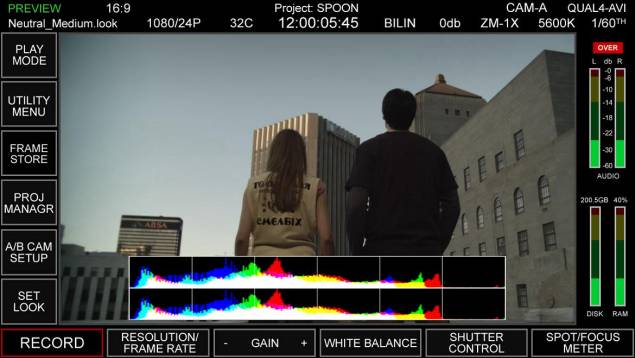
The SI-3D system uses two remote SI-2K Mini cameras with an P+S interchange lens mount connected to a single processing system via gigabit Ethernet where they are synchronized and controlled through the familiar SiliconDVR touchscreen interface. On-set, each camera can be viewed individually or in stereo mixed modes using modern 3D LCD and DLP displays. Various tools are used to visualize and adjust the focus, lighting and 3-D effects including alignment grid overlays, false color zebras, digital zooming, edge detection, spot meters, dual histograms, parallax shifts, anaglyph mixing and wiggle displays.

Unlike modern HD cameras, which develop and compress colorized imagery, the SI system captures raw "digital negatives" where they are non-destructively developed and colorized for preview using the cinematographer's desired "look" for the scene. This color metadata, along with stereo convergence, flip orientation from beam splitter rigs and alignment data are encoded into a single CineFormRAW QuickTime stereo file. These files can be edited directly in Apple Final Cut without the need for conversion or rendering. With the addition of CineForm’s Neo3D, convergence plus stereo or individual eye color adjustments can be dynamically controlled and modified, while viewing live 3D playback using side-by-side, over-under, or interlaced output modes.

"Driven by increasing numbers of 3D film projects planned by Hollywood studios, the demand for efficient 3D camera and post workflows has increased significantly in the last two years,” said David Taylor, CEO of CineForm, Inc. “The combination of the Silicon Imaging SI-3D camera with CineForm high-fidelity compression-based 3D workflow will significantly reduce overall project complexity and costs."

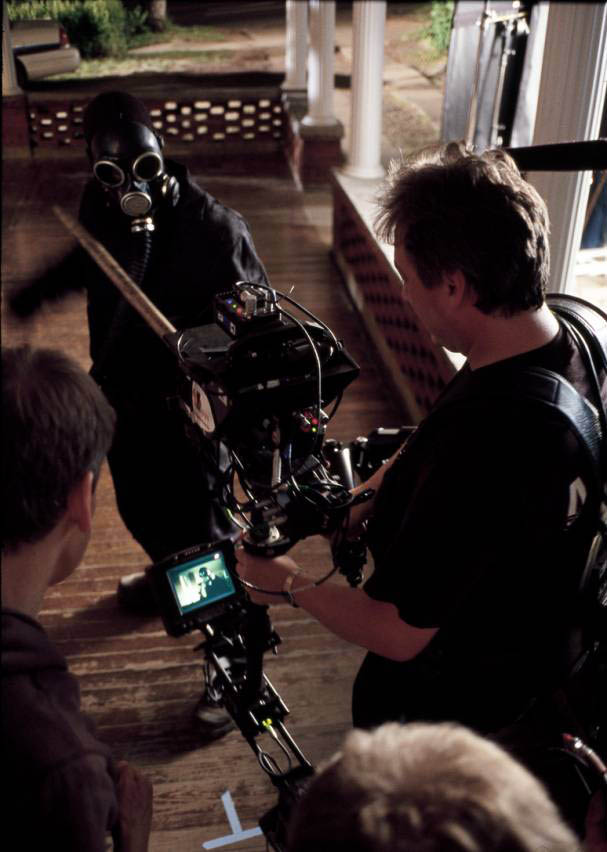
"The Silicon Imaging camera's form factor and flexible lens mounting system enable us to develop innovative lightweight beam-splitter and parallel rigs to shoot steadicam and hand-held stereo footage with incredible latitude and film like results" stated Max Penner, CTO of ParadiseFX. We have the SI Mini’s as part of our 3D camera package to shooting feature films including Thomas Jane’s "Dark Country 3D", Patrick Lussier's, "My Bloody Valentine 3D" and Joe Dante's "The Hole 3D"."

The SI-3D system is also establishing new benchmarks in image quality and data rates with its ability to record dual-stream 12-bit uncompressed raw directly to mobile 2.5” SSD (Solid State Drives), with peak rates up to 200Mbytes/sec (1.6Gbit/sec). A 250 GB drive can store up to 1-hour of footage per camera. The resulting Silicon Imaging Video (.SIV) footage can be seamlessly viewed and graded directly in Iridas FrameCycler and Speedgrade XR with look and stereo metadata applied. The files can also be exported as a CinemaDNG sequences or converted to CineFormRAW 2D or 3D files, at a later time.

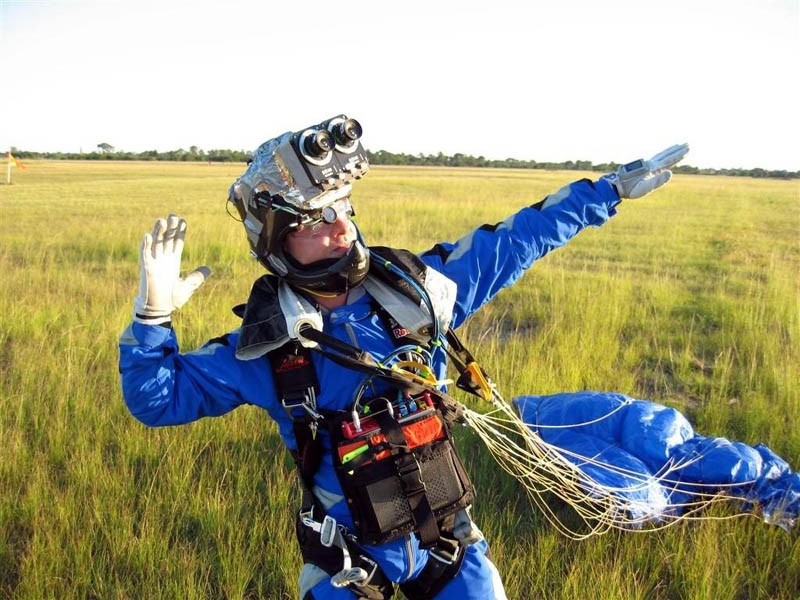
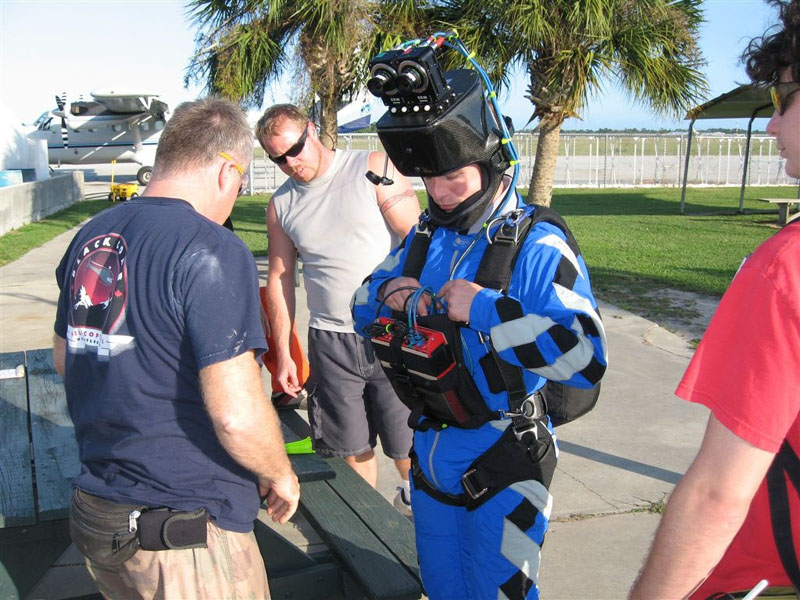
"There is an incredible amount of latitude and resolution from the Silicon Imaging cameras" states William White, CEO of 3D Camera Company. "Shooting directly to SSD gives us the flexibility to record stereo footage in an extreme lightweight and rugged configuration as shoulder or vehicle mounted for ‘Rescue 3D’ and even body worn for shooting from a skydiver in the upcoming 'Human Flight 3D'. The SI-3D system with on-set visualization and integrated stereo workflow will speed up our entire shooting and production process for creating compelling 3D content."

Silicon Imaging will be demonstrating the SI-3D system at NAB 2009 in Booth SL11605.

clip_image006.jpg


http://www.siliconimaging.com/DigitalCinema/News/PR_04_20_09_3D_Image2.html
clip_image008.jpg

http://www.siliconimaging.com/DigitalCinema/News/PR_04_20_09_3D_Image3.html
SI-3D System on 3D Camera Company "Human Flight 3D" Shoot

clip_image004.jpg


SI-3D Touchscreen Interface

clip_image010.jpg


http://www.siliconimaging.com/DigitalCinema/News/PR_04_20_09_3D_Image1.html
SI cameras on ParadiseFX rig shooting "My Bloody Valentine 3D"
 
Back
Top