Picturequest
Well-known member
Hello!
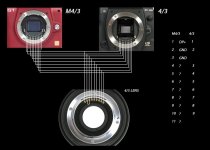
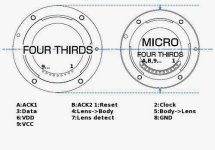
Before I reinvent the wheel, does anyone know the specs for micro 4/3 lens electronic pinout for the motor control? Since these lenses are shared amongst brands for autofocus, aperture, etc, I'd like to know what each pin does?
My idea was to make a paper thin ring with gold contacts on each side, like the ribbon cables used to connect laptop LCD displays. The signal would just pass through, but have a connector that can be tapped outside the lens.
With something like an Arduino microcontroller, you could monitor the signals, for focus etc. Then you'd be able to add an external potentiometer and let the Arduino send the focus signals.
So now you could have a relatively inexpensive electronic, or even wireless follow focus on any of you auto focus lenses.
I'm thinking, you could also do the same approach on a Nikon or Canon. Once the Arduino knows how to control the lens, you could add that to a m 4/3 adapter and use the internal motors of a canon/Nikon lens with the EFF (Electronic Follow Focus).
I can't imagine the signals from the camera to the lens to focus in or out would be to complicated.
So if anyone knows of the lens specs, please let me know.
Max
Before I reinvent the wheel, does anyone know the specs for micro 4/3 lens electronic pinout for the motor control? Since these lenses are shared amongst brands for autofocus, aperture, etc, I'd like to know what each pin does?
My idea was to make a paper thin ring with gold contacts on each side, like the ribbon cables used to connect laptop LCD displays. The signal would just pass through, but have a connector that can be tapped outside the lens.
With something like an Arduino microcontroller, you could monitor the signals, for focus etc. Then you'd be able to add an external potentiometer and let the Arduino send the focus signals.
So now you could have a relatively inexpensive electronic, or even wireless follow focus on any of you auto focus lenses.
I'm thinking, you could also do the same approach on a Nikon or Canon. Once the Arduino knows how to control the lens, you could add that to a m 4/3 adapter and use the internal motors of a canon/Nikon lens with the EFF (Electronic Follow Focus).
I can't imagine the signals from the camera to the lens to focus in or out would be to complicated.
So if anyone knows of the lens specs, please let me know.
Max