C300: Memory Keeper - Arri Amira & C300 Mark II

This was filmed in May of of 2017. Unfortunately had to keep it private for awhile for film festival runs (I hate film festivals!).

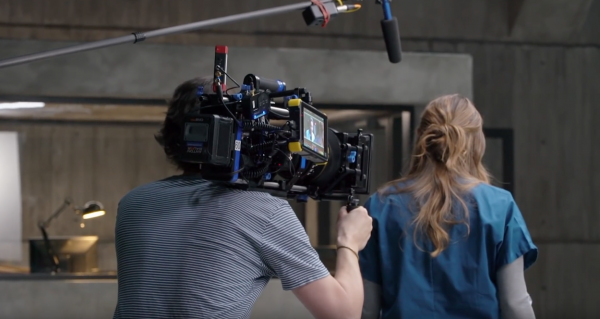
So the story with this short film is that a co-worker got booked for a generic corporate job with the Arri Amira, which he was going to rent for the project. He was hiring me as DP and he said it could be good to do a camera test before the shoot. So, at first we thought, maybe we just get a couple actors together, improv a script, film a brief scene, and call it a day. Then we decide to start talking script ideas, because improv may not be the best idea. So, we spend an entire day writing a script, no longer just a scene, but a short film. Okay, now we don't want to be lame about this, so may as well get a full crew together, costumes, set pieces, a cool location (with location scouting), spend money on the project, etc. 20 person cast and crew later, and we started filming in the afternoon on day one. Turns into a 20 hour shoot. Day one done. Day two with the camera, filming the actual corporate shoot, followed by filming a few more hours of the short film for day two of the short. Then we had to return the camera, but still had a few pickups to do.

So, we used C300 Mark II for the pickup shots, filming two more half days. In the movie, the beginning montage with the Memory Keepers, romantic flashbacks, etc., are with the C300, while the rest is with the Amira (scenes in the warehouse and sunset scene). Basic camera test turned into a four day movie shoot. Budget we spent on the project was about $1400, split two ways between co-worker and I, so $700 each.

After first filming it, looking at the Log footage from the Amira, and thinking, "This looks cruddy and noisy." Then brought it into Premiere, where the LUT is automatically applied, and thought, "I need to buy an Amira." And then I did, and my co-worker bought an Alexa Mini. Camera test successful.

Behind-the-scenes photos: https://www.facebook.com/pg/TwoSenseFilms/photos/?tab=album&album_id=1363615563745036


Equipment used:
Arri Amira Premium
C300 Mark II
Canon 15.5-47 T/2.8 Cinema Zoom
Canon 18-80 T/4.4 Cinema Zoom
Canon 24mm, 35mm, 50mm, 85mm CN-e Cinema Primes
Arri Skypanel, Litepanel Astras, Kino Celeb, Kino Flo
 
Last edited:
Nice job Eric! As usual, the C300 II cuts well with ARRI footage. Perhaps adding a little grain to the C300 II footage to more closely match the feel from the Amira. Perhaps a grading choice- the C300 II footage looked more "normal" in terms of skin color, shadows, and the Amira footage looks more stylized? (greenish skin tones, blue/green/magenta shadows).

I understand it's fun trolling the C300 II forum with Amira footage, however other than noise/grain/texture/(possibly highlights), the C300 II footage looked pretty good next to the much more expensive, heavy, power-consuming, bigger-files Amira. I thought your script, camera work, editing, and sound basically made the cameras invisible, and you could have shot the whole thing on the C300 II (or C200, 1DX II etc.) and it would not have made the production less entertaining. The only shot which stood out as out of place was the opening drone-like push in outside the building- was way too bright, clean and sharp relative to the rest of the footage. Thought it was drone footage, but apparently it was C300 II in 4K? Doing a simple stacked blur in Premiere along with noise grain and vignette (plus pull highlights) and the opening shot would match better.

After spending time editing and studying ARRI's latest and greatest cameras: the Alexa 65 and LF (available here: https://www.arri.com/en/learn-help/learn-help-camera-system/downloads/camera-sample-footage ), and comparing to what I could get with tweaked C300 II footage (tweaked in camera + post grading), I realized for almost every shot, I could fairly well match the C300 II to anything shot on Alexas. Where the Alexas win the highlights and Canon wins lowlight. Also agree that out of the box (709 out of camera or via LUT from log) the Alexa looks vastly superior to Canon with stock settings and no post work. The ability for Alexas to recover overexposure, as well as doing a very good job of (mostly) exposure invariant color (meaning limited green/magenta shifts as exposure goes up/down). So the value of Alexas is certainly there.

Here's a recent example of the Alexa Studio vs. the C300 II:

The Alexa is using an expensive lens (ARRI), the C300 II using a much cheaper lens (Rokinon). Surprisingly the C300 II highlights did OK. Canon color however was classically way off- way too much red. Why Canon ships these cameras with technically messed up stock color is puzzling.

It's possible to fix the in-camera color so that the color looks a lot more like stock Arri (less red, less magenta):

This is my custom settings (FSeWDR H), shot on green screen and keyed using Adobe's Ultra filter for green screen. There's still green spill on the hair and Ultra pushes the skin a little magenta (spill correction), however this shot didn't need any color work at all in post- no need to pull red or fix camera-induced magenta issues.

If you were to shoot the C300 II with FSeWDR H setings (or similar) against the Amira, you wouldn't need to pull red, etc., from the C300 II footage and you might just be surprised how good the C300 II can look out of camera. Likewise, 1DX II with a custom profile to fix stock color issues can IMO look even better than the (tweaked) C300 II color (8-bit 422 files are outclasses by 12-bit 444 RGB and less DR of the C300 II, however to my eye the (custom-tweaked picture style) 1DX II skintones look better):

As mentioned previously, I'm moving to smaller, lighter cameras and I hope Canon and ARRI move in that direction as well. Gimbals can be programmed to behave like 'perfect' steadicams (pleasing motion vs. the common robotically stiff motion in most gimbals) so there's no technical reason to want/need a big/heavy camera anymore. If ARRI worked with Sony to produce a full frame one-handed IBIS HandyCam form-factor camera that would clean up in the camera world. Heck if Sony just put their VENICE tech with a FF sensor in a HandyCam form factor that'd do the trick too!
 
This was filmed in May of of 2017. Unfortunately had to keep it private for awhile for film festival runs (I hate film festivals!).

So the story with this short film is that a co-worker got booked for a generic corporate job with the Arri Amira, which he was going to rent for the project. He was hiring me as DP and he said it could be good to do a camera test before the shoot. So, at first we thought, maybe we just get a couple actors together, improv a script, film a brief scene, and call it a day. Then we decide to start talking script ideas, because improv may not be the best idea. So, we spend an entire day writing a script, no longer just a scene, but a short film. Okay, now we don't want to be lame about this, so may as well get a full crew together, costumes, set pieces, a cool location (with location scouting), spend money on the project, etc. 20 person cast and crew later, and we started filming in the afternoon on day one. Turns into a 20 hour shoot. Day one done. Day two with the camera, filming the actual corporate shoot, followed by filming a few more hours of the short film for day two of the short. Then we had to return the camera, but still had a few pickups to do.

So, we used C300 Mark II for the pickup shots, filming two more half days. In the movie, the beginning montage with the Memory Keepers, romantic flashbacks, etc., are with the C300, while the rest is with the Amira (scenes in the warehouse and sunset scene). Basic camera test turned into a four day movie shoot. Budget we spent on the project was about $1400, split two ways between co-worker and I, so $700 each.

After first filming it, looking at the Log footage from the Amira, and thinking, "This looks cruddy and noisy." Then brought it into Premiere, where the LUT is automatically applied, and thought, "I need to buy an Amira." And then I did, and my co-worker bought an Alexa Mini. Camera test successful.

Behind-the-scenes photos: https://www.facebook.com/pg/TwoSenseFilms/photos/?tab=album&album_id=1363615563745036


Equipment used:
Arri Amira Premium
C300 Mark II
Canon 15.5-47 T/2.8 Cinema Zoom
Canon 30-105 T/2.8 Cinema Zoom
Canon 18-80 T/4.4 Cinema Zoom
Canon 24mm, 35mm, 50mm, 85mm CN-e Cinema Primes
Arri Skypanel, Litepanel Astras, Kino Celeb, Kino Flo

Nicely done Eric. I like it.
 
How did the 18-80 work out on the shoot?
Used it for a vertigo shot, camera on Rhino motorized dolly with servo zoom. Shot worked out okay but our AC was a bit soft on focus. Short focus throw on that lens makes focus pulling more difficult, plus our initial 1st AC was gone by then since it was 4am or so, and our initial was much better at focus pulling. Also used it for the shot where she walks up to the building with the forest background. Again, difficult to focus with the short throw. I didn't own the 30-105 yet at that point otherwise would have used that for that shot (just updated my original post to remove that from lenses used as we didn't have it on the shoot); bought it shortly after the shoot as a result. Now a days I typically only use the 18-80 on the Amira if I need a servo lens (which is practically never), but I'd be much happier with the 17-120 which is on my list of things to buy.

Video of our vertigo shot; I hadn't put the 18-80 on the camera yet when the BTS video was taken.

 
Last edited:
John, I think you really need to DP more narrative films with a proper crew and budget before going on about ideas of what is needed from camera and support gear when there is a crew and budget and clients. Filming basic interviews is a pretty different world with different needs.

For one, I find camera tests which compare a single shot and then grade them to match to be terrible ways of comparing image quality next to another camera. Like the Zacuto camera shootout which people went on to quoting Francis Ford Coppola as saying the GH2 looked as good as the Alexa. It ignores how the camera responds in a variety of situations as well as the amount of post work and workarounds needed to get the cameras to match well. I think a better test would be to film two of the same short films with the two different cameras being compared, and then write a blog post comparing the process of using them both to each other. For myself, I've shot a good number of films on the Amira and C300 and by far prefer the Amira for narrative work. For interviews and corporate work, the C300 is typically the easier camera to use and the Amira, while often a better image, isn't quite as much better as it is in the narrative world in large part because of the extra crew needed to support it.

You also like to talk about speculative theory which can be fun at times but is only of so much use, as we're working now with the tools available to us now. Currently, there is no gimbal available that can perfectly mimic the look of Steadicam. The Movi Pro is probably considered the best gimbal out there and it's nowhere near capable of doing that; I have co-workers who own it and their footage just isn't the same as Steadicam. Gimbals will forever by their nature be electronics responding to human commands, which will with current technology not be as immediate as the precision of a Steadicam which is the physical device responding to human fingers moving it. Aside from being more organic of a look, this is the reason that most big budget movies use manual tripod heads instead of motorized heads for tripod shots, as they're more precise and immediate in response. Motorized heads have been around for awhile and just aren't as popular as manual ones.

As for camera size, the Amira balances better on the shoulder than a C300 and takes less time to rig, which simplifies the shooting process. That's one of the main things with Arri, compared to Red and other cameras, it's simpler, and simpler means easier to get good shots and a good production. The larger size also leaves more real estate for ergonomically attaching things like wireless follow focus, wireless transmission, audio, etc., which takes even more rigging on a C300, or much worse on say a DSLR. Like the A7S used on The Possession of Hannah Grace (https://www.newsshooter.com/2018/12...feature-film-shot-entirely-on-the-sony-a7sii/), which was rather absurd and must have been quite a pain on set. Sure, they were able to get a decent image in the final product, but at what cost. Even fully rigged it still looks front heavy and uncomfortable.

Screen-Shot-2018-12-05-at-10.49.42-AM-600x319.png


Also, a small camera with a big lens always means that to balance the camera, the camera itself needs to be pushed further back, unless you have a lot of counterweight. With the C300 and cinema lenses, the buttons on the camera become harder to reach while with the Amira the buttons are more easily in reach. With the A7s, forget about it. I did a semi-rigged A7s shoulder mount shoot once, and every time I wanted to do anything with the camera I had to take it off my shoulder, even for things as basic as pressing record, such a pain.

Shoulder mounting is a well established look and gimbals are not going to make it go away, and larger cameras are better suited for shoulder mounting. Until we get anti-gravity cameras that can be wirelessly connected directly to a person's brain waves, it's going to remain the same, and that's just going back to future technology speculation. Cameras may get lighter than an Alexa XT, but I don't foresee big budget productions using an A7S sized camera as a regular A-cam on most productions even if the image quality was the same.

More weight also means more inertia, and inertia helps with stabilizing the camera. So, shoulder mounted shots are more stable, even the same with tripod shots. Steadicam in particular, man, I tried adding 10 pounds to my C100 rig when putting it on Steadicam, and that was a huge pain. Became a frankenrig. Put a four pound camera setup on a Steadicam and the shots are not nearly as smooth as a 20-50 pound camera setup on a Steadicam. Franken rigs also often are not as rigid as a single body like an Alexa, and the lack of rigidness can compromise steadiness.

There's plenty of wedding videographers out there who simply don't understand the reasons to spend more than $3000 on a camera, as they think their A7S II's are the best cameras in the world. And maybe they are, for weddings. But people need to think outside of the box more and realize that their particular line of work is not the only type of work there is, and that different cameras are suited for different jobs, and until you've worked and/or researched in a particular field, you may not fully understand the needs of that field.
 
Last edited:
But people need to think outside of the box more and realize that their particular line of work is not the only type of work there is, and that different cameras are suited for different jobs, and until you've worked and/or researched in a particularly field, you may not fully understand the needs of that field.

There was so much in your post that I agreed with and could respond and add to, but this is something I've thought about this site for a long time. One of DVX's biggest assets is the diversity of the members on here, BUT on the flip side so many think that their "world" is the only one and the way they do things in that field is the ONLY way to do them period. I see it a lot in audio related threads, particularly with those that do narrative preaching their brand of religion to those that may worship in the house of TV, ENG, events or doc's.

And just to reiterate it again... That Zacuto shoot out was absolute crap. So flawed. There was nothing constant. Everything was a moving variable.
 
Eric the future is small cameras with robotic stabilizers. You can see that, right? What's a more popular rental, the ARRI Mini or the bigger ARRI cameras?

The advantage of a heavy camera to dampen motion is gone even with good IBIS. I don't currently build gimbals, but if I did I could write code to simulate a pendulum (steadicam) for the gimbal control system. So I know it's possible. If you enjoy old school big heavy clunky and don't get the results you want with (smaller) recent technology, don't blame you for using what works for you.

I've produced, directed, written, shot, + sound, + lighting, editing + special effects + 3D animation + color + 2D art + still photography + movie poster + all in short films and commercials:
Steadicam shots:

1DX II + Ronin-M- shots not possible with an Amira + steadicam (1st time using a gimbal):

That's basically everything one could do in this industry, isn't it?*. Does it really have any relevance as to the validity of one's preference for camera systems, especially having a preference for the C300 II over an Amira in a Canon forum :)


* + I fixed Canon's color issues for the C300 II and DSLRs with Filmic Skin! :) I think FSeWDR H (or any FSe variant) more closely matches ARRI vs. the other profile I suggested). Still waiting for the C300 II vs. Amira test! C300 II + FSeWDR H vs. Amira with good lighting and proper white balace- no editing in post except a LUT to 709 where necessary. Edited side by side. If you don't feel like editing, I can take the raw footage and do the work & post it. (fixed) Canon vs. ARRI => Showdown! :)
 
I agree that many prefer the smaller size of the Mini over the Alexa XT, but the Mini still isn't really that small, particularly when rigged up, and many big productions are still using the XT, the LF, and the 65. Also, the Mini doesn't have electronic stabilization.

I don't think any of those videos are what I described, which is "narrative films with a proper crew and budget." What were your crew sizes on those shoots? I'm gathering they were one-man-band, or very small crew. Did you have separate people for a gaffer, 1st AC, 2nd AC, PAs, cam op, grip, makeup, AD, producer, director, script supervisor, electrician, etc.? Because I fully agree a large camera is a big pain on one-man-band shoots, but on a shoot with a full size crew, the disadvantages of a large camera are often minimized such that the advantages of the camera being large outweigh the disadvantages. And again, I'm saying it looks like you don't have experience with DPing larger crewed shoots to understand this point, and thus assume that what applies to a small crew or one-man-band style shoot applies to big shoots as well, which is often not the case.

I think a heavy camera with a good shoulder mount has a better and more natural look to the footage than a light camera with image stabilization or IBIS. I've used both and that's my conclusion. And whenever I use a C300 with an IS lens on my Steadicam, I always turn IS off. I don't want that cruddy floaty look ruining my Steadicam footage. Maybe some day electronic and optical IS can be programmed to mimic handheld, but that's not current technology. IS does have its uses, such as on longer focal lengths, shaky ground, lighter cameras, etc.

I'm not seeing anything in your gimbal footage that is complex movement or organic; it still has that dreaded mechanical look to it. Try following a subject on a 50mm lens while they turn corners unexpectedly while keeping their head perfectly in the rule of thirds and get back to me then. Sure there are shots a gimbal can do that a Steadicam and larger camera can't, but it goes both ways. I find the look of Steadicam preferable for most narrative work, and if you watched behind-the-scenes of Hollywood movies you'd see they agree, as gimbals still aren't used that often in Hollywood while Steadicam is. Saying you can make software to mimic Steadicam is rather meaningless if you aren't doing it and there's no product at market that can.

Slow motion is a form of stabilization so makes it difficult to ascertain the quality of the stabilization device. Shoot 1000fps handheld and it'll be as smooth as a dolly shot. You really need to view regular motion to judge it well.

The first video at 4:06 I'm not sure what you're using to stabilize, but you've got some pretty ugly warp stabilization going on and otherwise the camera is kind of bouncing all over the place. The walking shot at 2:33 is pretty rough, bouncing around, and I think a better shoulder setup with more inertia would have helped with that. I'd say the walking shots at 2:16 in Memory Keeper have a much better look to them.

*Was thinking about sending you a hard drive with the RAW footage from that one shoot, but haven't had a free hard drive laying around lately (plus am lazy about going to the post office or doing anything related to editing) and uploading large files never works well. You did the Alexa Studio test though, now, so haven't you had your Arri vs Canon chance and are all set? Amira is the same image as the Studio. Might be worth looking more into your scene files, particularly the ones that are baked in, as I always have trouble grading C300 log type footage. End of the day, many of us are not color grading experts, both me and my clients, so score another the simplicity of Arri there, as well as not needing to test out different picture profiles which takes time and effort, when I could just be shooting actual videos with the Arri instead of tests with the Canon.
 
Did you miss the compliment about Memory Keeper being well done to the point that I wasn't thinking about what camera was used? :)

Since you work in this field full time, I'm sure you're much better at being a DP- my response was pointing out that I have used steadicam + gimbal + small + large(r) cameras (have rigged the C300 II with V-mount battery and shoulder pad to use as a "big camera rig" though I never used it. Instead use a simple belt-rod for latest kinds of shoots. Agree that a well balanced and comfortable shoulder rig is better if walking around (or steadicam, gimbal etc.)).

First video: no steadicam or gimbal was used- all handheld (first go at doing a narrative short). Yes, everything is small crew / OMB, and I did all the post as well. Again, not making any comments about the quality or crew size other than I've done the work and used the tools, and thus have relevant comments about tool preferences. You're right about points of view- I work in software and am currently writing a VR flight simulator / game, and have written robotics software (hardware control loops), so I know gimbals can do a lot more regarding motion. In addition to pendulum simulation, I could program the gimbal to fly like a plane, smoothly banking turns etc. Thought I read a marketing blurb somewhere and that feature (steadicam-like motion) was already on the market. If not, I'm sure someday it will be- lots of competition and progress in gimbal tech every year. Again, using what works for you right now, makes sense.

I also 100% agree with your comment about color/quality out of the box of ARRI vs. Canon. When I realized I'd need to further "rig up" to make the C300 II work with a gimbal due to size+weight, that's when I decided that I really prefer smaller systems. Thus my C300 II spent most of the time in the studio sitting on a tripod (and why I'm now selling it). Where bigger camera are better for bigger crews, smaller cameras are better for smaller crews/OMB. In the farther future, big-crew cameras will have lots more wireless goodies and the cameras will still be able to support larger crews while being smaller/lighter systems. Think of an 8K per eye HMD with a wireless FF for the AC- no more missed focus shots! :) (at least due to 'hard to judge focus' issues)

Regarding doing color work- it's fun figuring out how to make the underdog (Canon) get closer to the top dog (ARRI), especially for us smaller crew folks who don't have an AC (note those missed shots in Memory Keeper (which I didn't notice BTW) could have been helped perhaps with the C300 II focus assist (still using MF, just adding the phase detect 'in-focus' indicator to better judge focus). I originally color tuned the C300 II to match the color tuned 1DX II and then realized the results should be closer to ARRI now and it would be cool to see a comparison. If you lived near LA I could arrange model(s) for such a test and would do the C300 II side (+ any editing since I know you don't like to edit/color). In any case I think FSeWDR H (FSeCL3 H etc.) are a better match to ARRI based on what you sent back previously. It'd be cool if you could try FSe* with the Amira sometime for the same shot, just a few seconds is all that's needed (even just the standard static shot with head turn left/center/right). If you want to mail a drive, I'll mail it back promptly when done. People love camera tests/comparisons (my highest viewed videos online are tests/camera comparisons (50K+ (still nothing in the grand scheme of things); need to work on content quality for non-tests! :) ).

EDIT: the C300 II Alexa comparison video wasn’t mine- if it was I’d have used the color corrected profiles on the C300 II.
 
Last edited:
This was filmed in May of of 2017. Unfortunately had to keep it private for awhile for film festival runs (I hate film festivals!).

So the story with this short film is that a co-worker got booked for a generic corporate job with the Arri Amira, which he was going to rent for the project. He was hiring me as DP and he said it could be good to do a camera test before the shoot. So, at first we thought, maybe we just get a couple actors together, improv a script, film a brief scene, and call it a day. Then we decide to start talking script ideas, because improv may not be the best idea. So, we spend an entire day writing a script, no longer just a scene, but a short film. Okay, now we don't want to be lame about this, so may as well get a full crew together, costumes, set pieces, a cool location (with location scouting), spend money on the project, etc. 20 person cast and crew later, and we started filming in the afternoon on day one. Turns into a 20 hour shoot. Day one done. Day two with the camera, filming the actual corporate shoot, followed by filming a few more hours of the short film for day two of the short. Then we had to return the camera, but still had a few pickups to do.

So, we used C300 Mark II for the pickup shots, filming two more half days. In the movie, the beginning montage with the Memory Keepers, romantic flashbacks, etc., are with the C300, while the rest is with the Amira (scenes in the warehouse and sunset scene). Basic camera test turned into a four day movie shoot. Budget we spent on the project was about $1400, split two ways between co-worker and I, so $700 each.

After first filming it, looking at the Log footage from the Amira, and thinking, "This looks cruddy and noisy." Then brought it into Premiere, where the LUT is automatically applied, and thought, "I need to buy an Amira." And then I did, and my co-worker bought an Alexa Mini. Camera test successful.

Behind-the-scenes photos: https://www.facebook.com/pg/TwoSenseFilms/photos/?tab=album&album_id=1363615563745036


Equipment used:
Arri Amira Premium
C300 Mark II
Canon 15.5-47 T/2.8 Cinema Zoom
Canon 18-80 T/4.4 Cinema Zoom
Canon 24mm, 35mm, 50mm, 85mm CN-e Cinema Primes
Arri Skypanel, Litepanel Astras, Kino Celeb, Kino Flo

The short looks Cool.

The back and forth posts about whose perspective is valid is not.
 
Glad I ran into your post. I had actually seen the short before seeing this post. In researching cameras for broadcast work, the one that keeps coming up is the Amira. In searching for info on it I stumbled on this short and enjoyed it. Also, obviously looking at image quality which was the purpose for my search, it’s looks fantastic. Coming from Sony 800’s and 500’s the Amira is really the natural evolution for what we do. We have FS7’s and I enjoy using them no doubt, but the value of having physical buttons for everything to change settings on the fly, and not having to dig through menus for basic needs, is huge.
 
For what I do, if money wasn't an object, I would have the exact same camera Eric uses, the Amira. I would still have a C200 because of weight, size, DAF and the ability to fly with it much more easily but for day to day shoots, the Amira would be my dream camera or possibly an Alexa Mini. You cannot argue with the simplicity, reliability and most of all image, Arri does it better than anyone else, by far, Hollywood agrees.
 
I bought an Amira late last year, and have to say, it's every bit as comfortable on the shoulder shooting doc. pieces and concerts, as it is shooting narrative films.
It's an underappreciated camera, and I'm glad it doesn't cost as much as a mini.

Here's a quick short I shot to get to know the camera:
https://vimeo.com/293648165
PW: hymn

Reading this this thread you can see how different the camera can look in different hands.

Nice work Bill. Curious, what did your waveform look like when shooting these scenes? They look right on the edge of exposure, at least on my iMac screen. Are these 50ire peaks or did you shoot it brighter and knock it down in post?
 
I bought an Amira late last year, and have to say, it's every bit as comfortable on the shoulder shooting doc. pieces and concerts, as it is shooting narrative films.
It's an underappreciated camera, and I'm glad it doesn't cost as much as a mini.

Here's a quick short I shot to get to know the camera:
https://vimeo.com/293648165
PW: hymn

Reading this this thread you can see how different the camera can look in different hands.

“The Mule” was shot on the mini...not good.
 
While ARRI makes great cameras, they are not foolproof:

Color is way off in some shots. Makes the 80D look really good :)

At one point I thought about acquiring an ARRI camera- not anymore. The GH5x, A7x III, X-T3, 1DX II (color tuned), C200/C300 II (color tuned), even the 80D (color tuned) provide excellent skin tones and overall color in compact form factors (1DX II pushing maximum density) ARRI still leads highlights, just about every other camera leads lowlight/noise.

Working in the tech sector I’ve seen the writing on the wall- upcoming AI color technology will level the playing field for color science, easily passing ARRI even in mixed lighting. It’s already possible to match ARRI in post with a little work (agree time is money). Sony makes the best sensors and overall has the best tech- they’ll pass Canon soon in AF (see latest firmware update). They’ve got AI upscaling in their 8K TVs- AI color for their cameras is coming soon.

Big heavy cameras will go the way of the horse and buggy. We’ll look back at the ridiculous frankenrigs and laugh at what was necessary to get stable shots and to protect the back. Enormous cinema lenses will go away as well (may take a while longer until computational cameras provide high enough quality (will provide lens simulation). Until then, enjoy the workout! :)
 
Hey puredrifting,

The waveform looked as you might expect it, very flat near 5 IRE.
I'm re-training my eye to expose to what I see on a calibrated monitor with the Amira and not get anxious about what I see in False Color or my WFM (unless we're talking about clipping, of course).

I did not use the ARRI709 LUT to light/color with on "Lost Hymn", it was Patrick O'Sullivan's "Dailies" LUT which he refers to as the Squish and Drop where the highlights are dropped about a stop from 709 and the black levels are lifted.

I did some other tests where I was shooting scenes that were less than 1 footcandle (in Rec709). At that point the camera did need a modest amount of denoising but was still completely useable.

What I have finally landed on is my own custom LUT which drops mids and highlights about 1.25 stops and keeps blacks fairly normal. I've also de-focused the red channel one micron. To me, this looks much nicer than ARRI's REC709. I've never been a fan of lifted mids on skin tones. I like saturated skin where the pigment matches what my eye sees.

Here are a couple frame grabs from my ARRI LUT which I'll just call "TotoloVision" in keeping with the naming convention I came up with a couple years ago for my Sony a7s picture profile. Just to be clear, this LUT has nothing to do with my Sony a7s other than the name:

vlcsnap-2019-01-07-19h10m10s707.jpg

vlcsnap-2019-01-09-00h26m54s097.jpg

These are ungraded, straight out of camera. The purpose of developing the LUT is for live streaming events or situations where budget requires a nice camera but can't support what I would qualify as a "professional colorist".
 
Last edited:
While ARRI makes great cameras, they are not foolproof:

Color is way off in some shots. Makes the 80D look really good :)

At one point I thought about acquiring an ARRI camera- not anymore. The GH5x, A7x III, X-T3, 1DX II (color tuned), C200/C300 II (color tuned), even the 80D (color tuned) provide excellent skin tones and overall color in compact form factors (1DX II pushing maximum density) ARRI still leads highlights, just about every other camera leads lowlight/noise.

Working in the tech sector I’ve seen the writing on the wall- upcoming AI color technology will level the playing field for color science, easily passing ARRI even in mixed lighting. It’s already possible to match ARRI in post with a little work (agree time is money). Sony makes the best sensors and overall has the best tech- they’ll pass Canon soon in AF (see latest firmware update). They’ve got AI upscaling in their 8K TVs- AI color for their cameras is coming soon.

Big heavy cameras will go the way of the horse and buggy. We’ll look back at the ridiculous frankenrigs and laugh at what was necessary to get stable shots and to protect the back. Enormous cinema lenses will go away as well (may take a while longer until computational cameras provide high enough quality (will provide lens simulation). Until then, enjoy the workout! :)

jcs,

No sarcasm or snarkiness intended, let me ask you one question:

Do you think you could shoot 40 setups/day on a professional set, with clients, producers, agency-provided director and crew looking over your shoulder, with wireless video, follow focus, and audio running on-board with PL lenses on one of the above mentioned dslr's?

As a DP here in Hollywood, not only do I have to account for camera, grip, and lighting, I have to ensure the smooth operation of a set as a whole. This means "casting" the right personalities from crew to electronic devices including the camera. A Nirius transmitter might work well in certain situations for wireless video but to protect myself I'll probably choose a Terradeck every time. Everything comes down to making the day as efficiently as possible while providing the opportunity for grabbing those extra shots that come up on the fly.

A lot of our camera decisions come down to how we work, what part of the business we're working in, and how much support gear/crew we have available. The Amira takes more support than an owner operator shooting weddings, but I've shot one-man band on corporate documentaries with it, and I've shot big concerts in the rain with it with a huge support staff.

Yes, I still own my A7s, I love it, it punches above its weight, but I can't expect to shoot an A list concert with it, and it won't be A cam on a commercial above $10K. In my humble opinion, of course : )

Oh, and with the DR of the ALEV sensor, the margin for error is much larger than on any dslr. I can underexpose, overexpose, get all sorts of color temps in frame and still recover shots and deliver great images. Not saying it's the perfect camera or even the best camera, but comparing it to a dslr in my mind is, well madness : ) I'm gently kidding you here, but it is way better in uncontrolled situations.

I do agree with some of your points, the camera is heavy, but it is so balanced that when I shoot HH with it I'm not exhausted. It takes me back to my EFP days shooting with HDX-900's, XDCams, and old Varicams. There are some workflows I find annoying, like if you change something in system settings, you have to remember to change what gets piped out of SDI 1&2, otherwise your image is viewed incorrectly. After a long shoot this can get forgotten very easily. Also the fact that the camera can't record in dual slot mode is annoying to me, but then again every camera has its quirks.
 
Back
Top