Mastering sound in post

drapeama

Well-known member
I've searched a bit over here and on several links/websites, but haven't really got an answer to my question. I've done a mix for online viewing for my last short film. I plan to submit it to a local festival/public viewing, which requires the sound to be "Industry Standard -12dB". Is this -12dB peak or average? Average would have some peak louder and closer to -6dB or so..?

My mix sounds good so far, everything is nicely balanced to me/my ears. I've asked a friend who's musician to check out the audio and he told me it was good. I'm no professional and I try to learn as much as I can in the audio department (I actually plan to add an external audio device to the gear to mix audio). But before investing more money in that (as it's a hobby) I'd like to take out the best I can out of what I actually have available (i.e. gear).

So I'm still trying to figure out what to do with that: simply lower the volume of the track, so it'll peak at -12dB as they ask, or re-work it entirely?
If there's good reading I should go through, feel free to point them, I'd be glad.
 
-12 is a peak standard for broadcast use but I tend to use -6 for on-line or web videos.

I tend to mix to the -12 broadcast standard but if I output a video for on-line I add +6db so it peaks at around -6.

You need to deliver to what is requested so if your festival is stating -12 as their peak levels then you need to stick to that.

As a general rules for broadcast 1khz line up tone is at -20dbfs and peak levels are -12dbfs (or -18dbfs and -10dbfs in the UK)

This UK diagram of how the various levels relate to each other may help:

 
There is no "industry standard" level for film, at least none in the US. Films are mixed by ear in a calibrated room. I'm assuming they are talking about broadcast or they just have their heads up their ...

The later would not be that unusual. I would ask what level they are looking for. "12dB" actually means nothing but 12dB lower than some unspecified standard. Is it dBvu or dBfs or dBu.

What they really want is for the films to all be at roughly the same level so they don't have one super quiet and the next blasting out the speakers. A quick and dirty test for you would be to stick your DVD in a player and set a good level. Then pop it out and stick a commercial DVD in and play that with out changing any levels. If it is also at a good level your probably fine. If the levels are far off you need to redo the mix.

If it's a small change you can probably do it with the master but volume also changes relationships so if it's a big boost or cut you will probably need to rebalance things.
 
You need to deliver to what is requested so if your festival is stating -12 as their peak levels then you need to stick to that.
I know that. The only thing I'm still trying to figure out is "how" do I properly balance everything in it. So far, I'd say my dialogs sounds good with the music and all. Nothing is "too much" compared to something else (to my ears, but I'm no pro here).

There is no "industry standard" level for film, at least none in the US. Films are mixed by ear in a calibrated room.
Well, that makes me think that I've done most of the mix using headphones, because I can't really calibrate it with the setup I have for now. So I guess I can't get something much accurate considering I'm simply using headphones.
I would ask what level they are looking for. "12dB" actually means nothing but 12dB lower than some unspecified standard. Is it dBvu or dBfs or dBu.
Good point. So, if it's -12dB peak, I'll need to rebalance everything to the closest possible to -12dB, so everything sounds good at that level.

A quick and dirty test for you would be to stick your DVD in a player and set a good level. Then pop it out and stick a commercial DVD in and play that with out changing any levels. If it is also at a good level your probably fine. If the levels are far off you need to redo the mix.
Nice advice. So far, I think the track I've rendered for on-line was hot a bit. I had to turn down the TV volume when I've checked the DVD.
As for now, I'm looking for an external sound card in order to work on this audio track (and some other of my older projects) to "re-master" them in surround sound. Any ideas/suggestions? So far, I've stopped my search on a Behringer FCA610. I've read a couple reviews where they say it's not the best one available, that the sound isn't great and all. But knowing that I actually work with an old Sound Blaster Audigy 2 Zs Platinum, and that I only need at least 6 analog output to plug into my surround sound system, I'd say this one could easily do the job? Otherwise, there was the M-Audio Fast Track Ultra 8R that was a possible option, but if the Behringer can do the job I'm after, I'd stick with the most affordable one, as I don't need any of the input, preamps and every other feature. I simply need an external sound card with physical outputs. Any suggestions are welcome as well.

If it's a small change you can probably do it with the master but volume also changes relationships so if it's a big boost or cut you will probably need to rebalance things.
As I said, I plan to rework the mix, at least for the DVD/BD release. I'm pleased with the final video compression in both SD and HD, I'm just worried about the sound as for now.
Thanks to everyone for the help.
 
Why on earth would you try to do surround sound? And you do know you can't do that on headphones.

You can probably find the threads on this list that go into all the various reasons surround sound is a bad idea if you don't have the time/ money to do it correctly. But the biggest one is there is no way to legally and affordably distribute your surround film.

BlueRay is very expensive to license, DVD is a maybe. Dolby has not said it is ok to distribute DVD's with out getting a license but they also, as far as I know, have not sued anybody either. There is no affordable big screen surround format that I know of. Dolby Digital is/ was $15,000 for the license and you had to mix at a Dolby certified stage (figure $500+ an hour and a feature takes about a week minimum to mix with 12 hour days). Then of course you need to distribute on a supported format like 35mm film.

There may be a way with one of the digital cinema formats. I haven't really dealt with them so that might be a possibility, but you would still need to get your project into one of those formats so it would still probably be $$$.

As to mixing you really need a surround system in a calibrated room. That is not in your budget range at all. Patching it into your TV is not a good alternative.

The only real mix in headphones option is the Lake Audio "theatrephone" box. It's OK but it's not made anymore. Dolby bought the technology and sat on it. The boxes went for $1,500, but you can find them every once in awhile on ebay for a lot less.
 
Well, that makes me think that I've done most of the mix using headphones, because I can't really calibrate it with the setup I have for now. So I guess I can't get something much accurate considering I'm simply using headphones.

Actually you can kind of calibrate headphones. Just stick the SPL meter in each cup and adjust the level using pink noise.

The problem is that things sound VERY different with headphones than they do through speakers in a room.


Well, that makes me think that I've done most of the mix using headphones, because I can't really calibrate it with the setup I have for now. So I guess I can't get something much accurate considering I'm simply using headphones.

So you've been mixing on headphones? Terrible idea. Headphones are misleading and sound much different from external speakers. You can check your mix occasionally on other systems and learn to compensate, but it's a far-from-perfect system, a real PITA, and an additional workload in post.

You may not be able to set up a professional, calibrated mix stage, but that doesn't mean that you can't get your system set up for better results. You need to make sure that the room is at least somewhat treated to knock down reflections and standing waves. Strategic application of acoustic foam, tiles, and bass traps will help. Also, you should be using a good pair of reference monitors - speakers - that are calibrated to the right levels. You can download pink noise files for free on the 'Net, along with instructions on how to calibrate your speakers. On mix xtages, they're calibrated to 85dB SPL (that's dB Sound Pressure Level, measuring the acoustic sound levels in the room). For small studio spaces (like spare rooms), you might calibrate it as low as 79dB SPL (this also requires an SPL meter... there's an iPhone app that may not be perfect but will get you close).

Once you have your speakers calibrated to your mixing/editing system, you can mix a bit more accurately. A lot of it, as Scott said, is by ear. Meters are there for reference and to keep you out of trouble, but to keep all things balanced in the mix (dialog, FX, music), it really is something that has to sound right... not meter right.

So, if it's -12dB peak, I'll need to rebalance everything to the closest possible to -12dB, so everything sounds good at that level.

Again, not necessarily. It's for theatrical screening, yes? If you try to peg everything at -12dBFS you'll destroy your audience. That may work for DVD and Internet distribution, but theatrical playback systems need more dynamic range. If -12dB is your required peak level, then make sure nothing peaks above that. Beyond that, dialog at normal speaking level may average from -22dB to -15dB (ballpark... none of this has absolute standards), with sudden shouts and screams hitting your peak level. Around dialog, music may be much lower if it's behind dialog, or riding around -16dB, give or take as needed when it is up front. FX and Foley may average at or below dialog, depending on where they need to fall in relation to the dialog, and sudden, loud sounds like explosions again may hit peak.

Again, these are ballpark levels. They are by no means in line with major motion pictures, but are very useful for theatrical screening at film festivals. One of the problems I often see in film festivals (where sound is an afterthought or is mixed by the video editor) is that music is pulled in from a CD, which is mastered to play loud and peak right up at 0dBFS, and all other elements are raised to match it. Loud is not good in a theater.

When I mix for film festival screening, I'll take the theatrical mix when it's done and apply some compression and brick-wall limiting to make a secondary mix for the web. I use that to bring the level up to -6dB and to compress the dynamic range a bit.
 
There are two levels here, and they're getting confused. The critical one is the electrical level - as in the peak level they want as a practical maximum, to allow best signal to noise on replay, and commonality in levels. It gets messed up a bit by perceived loudness, as in where the output is compressed and manipulated to give the impression of extra loudness - but that's not that the topic is about. It's about line-up - enabling matching levels between material from different sources.

The confusion is creeping in because people are talking about monitoring levels, and for individuals, this is personal. -10, or -12 as a peak can be ear shattering in the mastering suite, if that is what you want. Sure you could calibrate headphones if you want to, to emulate the level of the 'perfect' mastering suite. Most people have their own preference to level. A room approved and certified for XYZ or ABC surround is designed to sound very similar to the ideal venue the product will be replayed in. If we're not dealing with pro rooms, calibrated to suit certain equipment, the practical way to master is to have the volume loud enough to let you hear the quiet bits, and without the loud bits being overpowering. So room volume is what is comfy to the mixer. Headphones are great for noisy environments, but rubbish for mixing - movies, music or TV. The BBC have all their headphones fitted with limiters so they cannot go loud, as in loud enough to use properly, so their engineers hide boxes of non-limited ones around the building to bring out in secret!

Headphones don't sound like speakers and they are not stereo - so great for confidence monitoring but hopeless when the mix is destined for loudspeakers.

For me - I'll mix at higher volumes for speech, and lower levels for music. The ears work for content, the visual metering works for recording level.

To submit your work for this event, levels need to be what they want. Monitor volume at the level you want. Obviously monitoring level does need to be placed in context. If the presentation venue has loud air con, or lots of people movement, then when you are mixing, it's a bit pointless to mix in low level content that is so low, the audience can't hear it. It works in reverse too - if the presentation space is silent and people will really be listening, then you can expand the dynamic range to take advantage of it. That's where good mixers win over those with cloth ears. If we're talking mega-designed rooms, then they will sound similar, and engineers moving from one to the other carry across their common listening level. Broadcasters and audio studios don't have standard acoustics or commonality in listening levels, and concentrate on electrical levels - like Gary stuck up. If somebody needs a recording hotter than this level, they just turn down the monitor levels. Most people producing movies in their own studios don't even try to calibrate volume, it's chasing your tail if the acoustics are not perfect. Few of us have acoustics that make loudness calibration sensible, because trying to work like this doesn't produce your best work.
 
Why on earth would you try to do surround sound? And you do know you can't do that on headphones.

You can probably find the threads on this list that go into all the various reasons surround sound is a bad idea if you don't have the time/ money to do it correctly. But the biggest one is there is no way to legally and affordably distribute your surround film.

I've wondered this as well for 'my level' of production... which is no budget or less... I think I'm going to chalk it up to similar 'visual fetishes' that I see in the cinematography arena.
Unless of course someone is just doing a 'look-see' to understand how to do 'surround sound' design...


There may be a way with one of the digital cinema formats. I haven't really dealt with them so that might be a possibility, but you would still need to get your project into one of those formats so it would still probably be $$$.

DCP, Digital Cinema Package, includes audio that has 5 channels. Since this is a 'package' standard, it does not indicate any licensing fees/schedules that may apply. To wit, one could produce a monotrack and have it meet the DCP standard format.

As for licensing... I'm not at all familiar with the 'audio' side of things but the 'video' side, such as MPeg-4 and related media, have 'commercial licensing' which seems be used 'wide and far', and most likely not officially 'licensed' for such wide usage.

There has been some amount of vergage about Internet/Streaming licenses, and I don't recall the specifics but I think there has been some 'grant' for free use, provided the material is not for 'commercial' gain... how that figures into having youtube or other 'ad nickel snatchers', added to one's online clips, ostensibly 'for profit' by someone somewhere, is a mystery to me at the moment.
 
Something like Apple's Compressor 4 is quite cheap, and can produce the multi-channel AC3 files for surround, if you're very keen.
 
There are two levels here, and they're getting confused. The critical one is the electrical level - as in the peak level they want as a practical maximum, to allow best signal to noise on replay, and commonality in levels. It gets messed up a bit by perceived loudness, as in where the output is compressed and manipulated to give the impression of extra loudness - but that's not that the topic is about. It's about line-up - enabling matching levels between material from different sources.

Actually that was my interpretation of what the topic was about. If it's really about keeping playback somewhat even then they really should be specking a VU level AND a peak limit. If you haven't slapped a limiter on you could easily have a peak that set your average way too low. The VU (or some other averaging reading) is going to be much more relevant on perceived loudness than a peak will ever be.

The confusion is creeping in because people are talking about monitoring levels, and for individuals, this is personal. -10, or -12 as a peak can be ear shattering in the mastering suite, if that is what you want. Sure you could calibrate headphones if you want to, to emulate the level of the 'perfect' mastering suite. Most people have their own preference to level.

This is not true for film work. The calibration of the rooms and stages are not altered willy nilly but are kept to a standard. You may well turn them down for some editorial work but you always go back to the calibration point for level adjusting and mixing.

Broadcast is more about the numbers so as long as your meters are hitting the marks the specks require you can probably work at any level you want.

A room approved and certified for XYZ or ABC surround is designed to sound very similar to the ideal venue the product will be replayed in. If we're not dealing with pro rooms, calibrated to suit certain equipment, the practical way to master is to have the volume loud enough to let you hear the quiet bits, and without the loud bits being overpowering. So room volume is what is comfy to the mixer.

again probably fine for broadcast but not the way films are mixed. Especially on long form or multiple episode shows it is important to have a repeatable and consistent monitoring environment or your levels are going to roam all over the place.


Headphones don't sound like speakers and they are not stereo - so great for confidence monitoring but hopeless when the mix is destined for loudspeakers.

Not stereo? All of mine are. The stereo is actually more extreme since there isn't any crossover like there would be with speakers in a room. Conclusions are correct though, pretty useless for mixing.

For me - I'll mix at higher volumes for speech, and lower levels for music. The ears work for content, the visual metering works for recording level.

Again not the way film is mixed.

Now after having said that a few times, it doesn't mean you can't mix that way. If it's working for you go for it. But if you ever were to mix on a mix stage the tech's will calibrate the room and you will have no control over the amp levels, so if you just mix one hotrter than the other that is how they will end up in the mix. Which I take it is not what you are trying to do.

I also try to discourage the practice of playing with amp levels because in the end the mix is often very uneven since there was no consistent monitoring level. Parts that were mixed on a day when for some reason the amps were hotter will end up lower than intended and visa versa. I've just seen it happen way too many times. I suspect that you with years of doing it this way are very good at internally compensating so it isn't a problem but the OP is not that experienced and it's kind of a land mine waiting to go off if they don't work to a set monitor level.

To submit your work for this event, levels need to be what they want. Monitor volume at the level you want. Obviously monitoring level does need to be placed in context. If the presentation venue has loud air con, or lots of people movement, then when you are mixing, it's a bit pointless to mix in low level content that is so low, the audience can't hear it. It works in reverse too - if the presentation space is silent and people will really be listening, then you can expand the dynamic range to take advantage of it. That's where good mixers win over those with cloth ears. If we're talking mega-designed rooms, then they will sound similar, and engineers moving from one to the other carry across their common listening level.

If you are talking film mix stages that is true to a certain extent. Dolby certification and THX certification are an attempt to make this happen, but even high end stages differ quite a bit.


Broadcasters and audio studios don't have standard acoustics or commonality in listening levels, and concentrate on electrical levels - like Gary stuck up. If somebody needs a recording hotter than this level, they just turn down the monitor levels.

The biggest difference is the size of the mix room. In both cases the acoustics are approached pretty much the same. Rooms are mapped out for resonant frequencies and treated to be non reflective but not "dead". A mix stage is designed to mimic a theatre and so is a lot larger and has the mixers in a specific relation ship to the space. Music is usually mixed in the control room of the studio and is much smaller.

Most people producing movies in their own studios don't even try to calibrate volume, it's chasing your tail if the acoustics are not perfect. Few of us have acoustics that make loudness calibration sensible, because trying to work like this doesn't produce your best work.

This is not correct. VIDEO folks doing their own sound are not calibrating because they don't know much about sound generally. No sound post person worth the name is not paying attention to level calibration. Acoustics and level are mostly apples and oranges. They interact to a certain extent but are largely independent. You do not have to do a huge amount of acoustic treatment on a room in most cases. Putting stuff on the walls, bookshelves work well, will break up most of the standing reflections. Some soft surfaces and some carpet will be enough to deaden it to a good level. You might have a nightmare room that needs a lot of work but that is not the norm.

None of that however will radically affect the level of the sound, so there is no good reason to not calibrate your room for level.

You should aim to be in the ballpark of standard calibration levels. A mix stage is calibrated at 85 SPL with -18dBfs pink noise at unity through the system. Edit rooms are smaller and are generally calibrated at 75 - 80 SPL. The actual number is less critical (except on the mix stage) than that the same number be used all the time.

Edit rooms are hardly ever acoustically treated more than what I described above but other than dialog, ADR and Foley (which are cut but not mixed and often edited on headphones) all rooms are normally calibrated. Edit rooms that are meant for design work are usually carefully treated and calibrated since they need to function as mini mix stages.

If you ask around here you may well find a bunch of folks not calibrating since many/most here have either little experience with sound or are primarily picture folks doing their own sound. If you pop over to the Digidesign postproduction list where you will find mostly folks working on small budget to large budget films and ads you won't find many who don't calibrate fairly regularly.
 
Something like Apple's Compressor 4 is quite cheap, and can produce the multi-channel AC3 files for surround, if you're very keen.

That was what I was talking about that Dolby won't define what the licence covers. I think it's safe to assume that DVDs you author and hand out are covered. You can also probably sell them. But Dolby has never given away licenses for "theatrical" uses. So can you legally use the stream for big screen showings? I've aske their legal department a couple of times for clarification but have gotten nothing back. It's probable that your fine as long as you don't use the Dolby logo anywhere or say the film has Dolby sound but?

You can buy the "Dolby Stereo" (4.0) encoder boxes on eBay pretty cheap. They are what create the non Digital Dolby Surround that is used on optical tracks of 35mm and is basically the same as ProLogic. But you can't legally use them to create a sound track with out a license from Dolby. People can slip under the wire if they don't use the name Dolby anyplace and just hope that the theatre runs it through the matrix box, but it's not technically legal. That I did get clarification on from Dolby.

I did a stack of research on this a few years ago for a small project that we wanted to do in surround. In the end we went with SRS which was VERY affordable (till they got out of the market). But it was still a big mistake. Small festivals get few films that are matrixed and they would just run it straight out. The matrix is "stereo compatible" but as was standard at the time we also SR encoded the track. So if they bypassed the matrx they almost always bypassed the SR and that made it sound HORRIBLE.

We ended up doing a stereo mix that was what we sent out unless we could talk to the projectionist and go by and make sure things were set up correctly.

BTW

For all that are going "But you said not to do surround on no budget films!" Yes I do say that. I had some favors I could call in and we mixed at the Saul Zaentz Film Center on the same stage that they were doing the Godfather REDUX mixes. With out the favors that mix would have cost about $15,000. We did it for the hard costs of about $350. That was still a lot on a $35,000 film.
 
Thanks to everyone that has replied, suggested and answered some of the questions I had. I was about to reply with multiple quotes, but since the page has been opened for too long, I've lost the novel I've written down...
I will have to rework the complete soundtrack since I've been doing it wrong since the beginning.
Thanks again, I'll try to stick with the suggestions and advices I've got in this thread. Try to make the best I can. If anyone has some other suggestion on what to improve as a setup for audio studio at home, let me know, that would be much appreciated.

That was what I was talking about that Dolby won't define what the licence covers. I think it's safe to assume that DVDs you author and hand out are covered. You can also probably sell them. But Dolby has never given away licenses for "theatrical" uses. So can you legally use the stream for big screen showings? I've aske their legal department a couple of times for clarification but have gotten nothing back. It's probable that your fine as long as you don't use the Dolby logo anywhere or say the film has Dolby sound but?
That's what I thought as well. I remember to have read something about it a while ago, that as along as the logos are not used, the use of the Dolby track isn't prohibited. But I may be wrong and information on internet may not be accurate neither.
 
Isn't the point rather that few of us are working in certified rooms - I'm certainly not, and I'm fighting a fairly high noise floor from a few bits of kit I have in the room that have fans in.

The OP has been given a peak level to follow - and there seems no correlation between this and listening volume.

As for headphones. Headphones are binaural, not stereo. Your ears hear sounds from left and right, so setting pan and musical balance, let alone speech v music can work very badly on headphones. Sounds a great mix, but on speakers it's very 1970s!
 
If you're serious about setting up a DIY space for audio mixing - google up Ethan Winer's forum. Lots of great advice on treating a room reasonably for low $$. You want to get rid of early reflections and kill phase cancellations, etc. You can find the rough spots and get a room sounding fairly decent pretty quickly. it won't be Abbey Road, but start with solid advice.

And you'll want some powered reference monitors. These days, at the DIY level, you only need a hardware mixer for dealing with various outputs to your speakers (computer output, protools or interface output, etc). My experience anyway...
 
Isn't the point rather that few of us are working in certified rooms - I'm certainly not, and I'm fighting a fairly high noise floor from a few bits of kit I have in the room that have fans in.

The OP has been given a peak level to follow - and there seems no correlation between this and listening volume.

Not working in a certified room and not calibrating levels are apples and oranges. You could not get most rooms THX certified (for example) since there are volume requirements. You also can not get an edit room Dolby Digital (theatrical version) certified largely for the same reason. Basically if you are not working on a proper mix stage you are not going to be working in a certified room.

I'm working out of a small home studio for low budget stuff and even with the ads we did, all the editorial was done in a small studio. Calibration is just a basic task that should be done always, ta least for film work.

I'm not even sure what your last sentence is about? It seems to imply that he might as well turn off the monitors and just look at the meters. Of course a peak level relates to listening levels. But even that is kind of immaterial since the point is that you NEED to keep a standard output level so that your mix does not drift all over the map. You need to be able to open the session up later and know that you are hearing what you heard before.

Otherwise it's like doing color correction on an uncalibrated monitor that you set up randomly every time you turn it on. Day one you correct the first ten minutes with the monitor overly blue the next day you do the next ten with it pinkish and the third with a yellow cast.
Play it all back on any monitor and it will look like CR%$, because you failed to do the basic first step of calibrating.

I don't know of anyone doing decent sound work that doesn't calibrate. Most don't do it everyday+ as a mix stage would but at a minimum they calibrate and mark the amp volume positions. After that you don't touch the amps and every once in awhile recheck.

I check calibration at the start of every project and again before the mix if the amps have been touched. I have the calibration point marked so for editorial I can change the level if I need for some reason and get back to about right. I also have a fader in front of the amps so I can turn down the level and easily go back to calibration.

The specific SPL is much less important than that you know what it is and can get back to that point consistently.

As for headphones. Headphones are binaural, not stereo. Your ears hear sounds from left and right, so setting pan and musical balance, let alone speech v music can work very badly on headphones. Sounds a great mix, but on speakers it's very 1970s!

Actually they are binaural and can play stereo recordings, at which time they are stereo.

Binaural
The word "binaural" literally means "pertaining to both ears." The term can be applied to headphones, headsets and hearing aids simply to distinguish models that provide sound to both ears from those that provide sound to a single ear. The contrasting term is "monaural."


Binaural vs. Stereo
According to the Handbook of Acoustics, binaural devices stimulate both ears but can deliver either the same or different signals on the two sides. If both ears hear the same signal, the binaural device is monophonic, or "mono." If the ears receive different audio, the binaural device is stereophonic, or "stereo."


Read more: http://www.ehow.com/facts_7148011_binaural-headset_.html#ixzz2o1wrG11Q
 
If you're serious about setting up a DIY space for audio mixing - google up Ethan Winer's forum.
Thanks for the input. I'll check that. At least if I have a small idea on how to start, it'd be a very good point.
These days, at the DIY level, you only need a hardware mixer for dealing with various outputs to your speakers (computer output, protools or interface output, etc). My experience anyway...
As I said in a previous post, I'm currently looking to get an external USB or FireWire sound card with 6 to 8 analog outputs.

Not working in a certified room and not calibrating levels are apples and oranges.
I simply can't afford, as a hobyist, to build a room that would be some kind of "certified" sound stage. It's a hobby, at best.
I'm working out of a small home studio for low budget stuff and even with the ads we did, all the editorial was done in a small studio.
Well, I'm sure some good stuff can be done in small studio. Worst case, it'll be pretty basic mix.
Calibration is just a basic task that should be done always, ta least for film work.
I'll have to read and learn more about it as well.
I don't know of anyone doing decent sound work that doesn't calibrate.
That make sense. But one thing to remember, I'm not much knowledgeable about audio at first, I'm a one-man crew, which can be heavy to stand when you're doing all the work on all the levels. But I like it as a hobby. I want to make it better from a short film to the next. I know I still have many things to learn in order to become better, and achieve a certain "minimum-quality" in my work.

On a side not, what would be a good and affordable SPL meter? I've seen a couple different models from like 60$ to 350$+. I know a Pyle reseller near where I work, if they're not bad, I'd get one to start with...
 
...

On a side not, what would be a good and affordable SPL meter? I've seen a couple different models from like 60$ to 350$+. I know a Pyle reseller near where I work, if they're not bad, I'd get one to start with...
For basic monitor level calibration The Source (ex-Radio Shack) has a couple of models for about $50 that work fine.
 
As I've already asked on another forum:

I'm currently looking to get an external sound card or audio interface to my setup. I've already explained why and it's already been discussed in this thread, so I'm simply looking for some advices or guideline to get one. I'd rather invest and keep it longer, than getting a cheaper one and upgrading it in a year.
So far, I've spotted these, in price order:

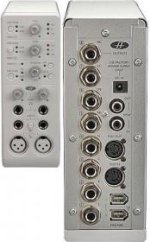
Focusrite Saffire - No longer available on B&H, used at the local music store for 200$. Missing the power supply and drivers, but can run via FireWire powered and the drivers are still available on the web. Might even be able to drop the price to 150$:
379066.jpg
8 analog output, nothing fancy and seems to be quite what I'd need, but it's used...

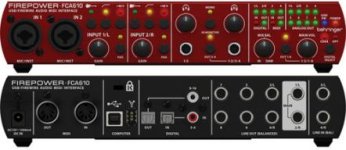
Behringer Firepower FCA610 - 199$ on B&H:
behringer-862516.jpg
8 analog output, everything is brand new and reviews are good for what it is. AC or Firewire powered. Might be interesting.

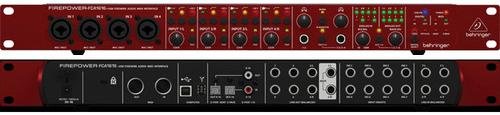
Behringer Firepower FCA1616 - 249$ on B&H:
Behringer-862514_0.JPG
8 analog output, brand new and rack-mount format, which isn't a problem for my setup. AC or Firewire powered. Also interesting.

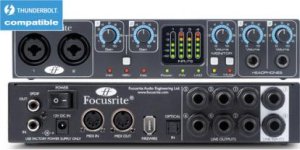
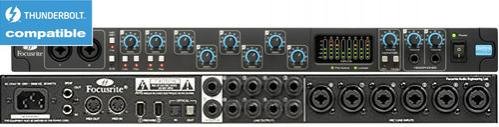
Focusrite Saffire PRO 24 DSP - 291$ on B&H, not available to ship to Canada. Local Focusrite reseller, at 399$:
Focusrite-654238.jpg
6 analog output, seems very good quality for the price. Reviews are good. More expensive locally & not available from B&H.

Focusrite Saffire PRO 40 - 375$ on B&H, not available to ship to Canada. Local Focusrite reseller, at 499$:
605595.jpg
8 analog output + 2 for monitoring, very good quality for the price. Reviews are good. More expensive locally & not available from B&H

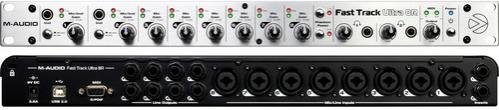
M-Audio Fast Track Ultra 8R - 399$ on B&H:
IMG_210380.jpg
8 analog output, 8 input with preamps and phantom power. Too much stuff for what I need, but never know.


Any other suggestions?
 
Back
Top