C200: Lenses for C200

Most of my equipment is Nikon based so I had no Canon lenses when I purchased my C200. For lenses I took my C200 to a local camera store and tried several to see how they performed and ended up purchasing the Sigma 24-105 f/4 Art lens and the Canon 70-200 f/4 IS. Eventually I will add a 35mm f/1.4 to have something faster for low light situations. Most of my work at this time is corporate based, interviews, conferences, etc. and f/4 is fast enough for now.

I tested several Canon lenses, I really wanted to like the 17-55 f/2.8 as it is wider and a stop faster but the samples I tried at the store performed poorly having autofocus and face tracking issues. In contrast, both lenses I purchased were quick to autofocus, and the Sigma even performed better than comparable Canon lenses. It was fast and face tracking performed exceptionally well and it is very sharp across the entire frame.
 
I think the lenses for the C200 are a bit of a conundrum.
The ones that do both AF Speed and AF Response are either low resolution, generation II, or expensive.
I have a 17-55 and even with no filter at 2.8 I have to rack it out to 33mm to get the vignetting to go away, and I've turned on vignetting in the menus.
Also, none of my zoom lenses zoom smoothly. They're all pretty jumpy.
I'm personally leaning toward using FF lenses. They tend to be just as sharp as the S lenses I have.
Although I'm giving up range.
The 18-200 lens is an old design. It's worthless for autofocus on my C200.
 
While I use the 17-55 2.8 a lot on the C200, I agree with Stills2HDConvert, it's a compromise lens at best. The AF is slow and clunky, the zooming is crunchy, not that you could use zooms from a still lens anyway and the build quality is barely adequate. The hot tip on the C200, IMHO, is the Canon CNe 18-80 T4.4, the C200 is good enough at higher ISOs to where the T4.4 is workable in many situations. The servo is amazing and the quality is very good too. Not cheap but worth it as your main workhorse lens.
 
35mm IS USM 2 - AF noiser than the 24mm. Decent quality though and the IS is nice on this focal length. MF fiddly.

Can you elaborate further? How noisy is it? What makes the MF fiddly? This seems like a perfect lens for the c200
 
The hot tip on the C200, IMHO, is the Canon CNe 18-80 T4.4, the C200 is good enough at higher ISOs to where the T4.4 is workable in many situations. The servo is amazing and the quality is very good too. Not cheap but worth it as your main workhorse lens.

Never thought I'd consider an ENG style lens with a servo but the 18-80mm T4.4 just ticks so many boxes for me. I feel like this lens would be great for just about any scenario besides low-light.
 
Never thought I'd consider an ENG style lens with a servo but the 18-80mm T4.4 just ticks so many boxes for me. I feel like this lens would be great for just about any scenario besides low-light.

Agreed. I have tested and written about it twice, its really a unique and useful lens, I have two colleagues who have bought it and I may pick one up this year.
https://www.hdvideopro.com/gear/lenses/putting-canons-dynamic-lens-duo-to-work/
https://www.hdvideopro.com/gear/lenses/hands-on-with-canons-new-compact-servo-18-80mm-t4-4-ef-lens/
 
Never thought I'd consider an ENG style lens with a servo but the 18-80mm T4.4 just ticks so many boxes for me. I feel like this lens would be great for just about any scenario besides low-light.

Agreed. I have tested and written about it twice, its really a unique and useful lens, I have two colleagues who have bought it and I may pick one up this year.
https://www.hdvideopro.com/gear/lenses/putting-canons-dynamic-lens-duo-to-work/
https://www.hdvideopro.com/gear/lenses/hands-on-with-canons-new-compact-servo-18-80mm-t4-4-ef-lens/

I have had the 18-80mm T4.4 for a year and love it.

Much depends upon the way you film and what you film but if the T4.4 is fast enough, if you don't need hard stops, and if you embrace DPAF the lens really shines. It lets you do things as a one-man band you could never do otherwise. Even if you are going full manual the lens performs nicely with a longer focus throw, de-clicked aperture, etc.

Here's write up I did recently:

http://blog.jonroemer.com/2018/01/the-canon-cn-e-18-80mm-t4-4-compact-servo-lens-one-year-in/
 
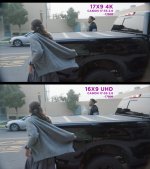
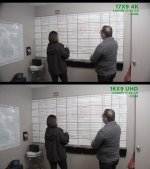
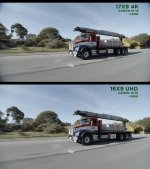
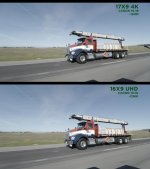
I did a 3-day shoot the other week where I started out with the Canon 17-55 f/2.8 EFS IS lens as my main lens, but after the first day, I ended up switching to my Canon 16-35 f/4 II L IS for day 2 & 3 after looking at some of the footage. Client wanted to shoot in 4K raw and even though I knew that most, if not all of the vignetting would get cropped out when edited in a 16x9 UHD timeline, I couldn't bring myself to deliver them 3 days of footage that would look problematic upon first glance - especially since this was a brand new client that was going to be working on C200 footage in post for the first time.

Interestingly, I also used the Canon 10-18 lens which was also an EF-S lens, but I feel vignetted less than the 17-55.

Here are some side by side frame grabs including an interesting lighting scenario in the top left photos in which the 17-55 needed to be cropped even more in post than what's shown below to get past the lens flare/vignette in the lower right corner. The unpredictability of the 17-55 is what scares me for projects when I'm just handing over footage to the production company.

17-55_Academy.jpg17-55.jpg10-18_10.jpg10-18_12.jpg
 
I'm sort of done with S lenses. My 17-55 2.8 is a vignetting mess at 2.8. My 10-22 has to be at 11 or 12 before it settles down.
The 1.53 versus 1.6 crop factor does matter.
I'm back to using only FF lenses.
 
I have had the 18-80mm T4.4 for a year and love it.

Much depends upon the way you film and what you film but if the T4.4 is fast enough, if you don't need hard stops, and if you embrace DPAF the lens really shines. It lets you do things as a one-man band you could never do otherwise. Even if you are going full manual the lens performs nicely with a longer focus throw, de-clicked aperture, etc.

Here's write up I did recently:

http://blog.jonroemer.com/2018/01/the-canon-cn-e-18-80mm-t4-4-compact-servo-lens-one-year-in/

Nice and very thorough write up Jon. Wish I didn't have word count restrictions, I always feel like I can't go into depth when my editor gives me only 1200 words (My reviews still appear in print, inside Digital Photo Pro, where HD Video Pro now resides). Good video samples too. I keep contemplating putting this sort of content on my own website but then I see there are lots of people doing the same and I think, "Meh, why bother?" With stuff like your content, what am I going to offer that's different and the audience is just mainly us techno nerds, not potential clients. ;-) Good work, your writing is appreciated.
 
I did a 3-day shoot the other week where I started out with the Canon 17-55 f/2.8 EFS IS lens as my main lens, but after the first day, I ended up switching to my Canon 16-35 f/4 II L IS for day 2 & 3 after looking at some of the footage. Client wanted to shoot in 4K raw and even though I knew that most, if not all of the vignetting would get cropped out when edited in a 16x9 UHD timeline, I couldn't bring myself to deliver them 3 days of footage that would look problematic upon first glance - especially since this was a brand new client that was going to be working on C200 footage in post for the first time.

Interestingly, I also used the Canon 10-18 lens which was also an EF-S lens, but I feel vignetted less than the 17-55.

Here are some side by side frame grabs including an interesting lighting scenario in the top left photos in which the 17-55 needed to be cropped even more in post than what's shown below to get past the lens flare/vignette in the lower right corner. The unpredictability of the 17-55 is what scares me for projects when I'm just handing over footage to the production company.

View attachment 129615View attachment 129616View attachment 129617View attachment 129618

Wow, these look bad as far as the vignetting, I don't blame you for not wanting to shoot with it. My copy doesn't vignette in the corners that badly. I think the lens is cheap enough that there is a lot of copy to copy variation?
 
Nice and very thorough write up Jon. Wish I didn't have word count restrictions, I always feel like I can't go into depth when my editor gives me only 1200 words (My reviews still appear in print, inside Digital Photo Pro, where HD Video Pro now resides). Good video samples too. I keep contemplating putting this sort of content on my own website but then I see there are lots of people doing the same and I think, "Meh, why bother?" With stuff like your content, what am I going to offer that's different and the audience is just mainly us techno nerds, not potential clients. ;-) Good work, your writing is appreciated.

Thanks Dan!

Sometimes having an editor is better. I always end up editing what I write long after I post it (I found a few grammatical errors in the 18-80mm review this afternoon.)

I do debate posting the stuff.... In this case I did feel I had some thoughts to add beyond what I had read online. I also do it as sort of a public journal. It forces me to write down my notes after I test equipment.

I will say that while the audience is not directly clients - I have gotten work through social media because of blog posts like the one on the 18-80mm lens and I have made some connections with manufacturers which have been helpful when I have hit some walls with equipment.
 
I've been running with two Canon C300 II's with the 18-80mm on one and the 70-200mm on the other. It is really hard to find a reason to take those lenses off. I've sold most of my other lenses to pay for them. I know some people like lower depth of field, but I've always felt that a t/4.4 is a more natural look and it is much easier to handle when trying to track focus.

The 70-200mm isn't nearly as satisfying as the 18-80mm, but it is the perfect pairing when you've already committed to the 18-80.
 
I've been running with two Canon C300 II's with the 18-80mm on one and the 70-200mm on the other. I

What has kept me away from the 18-80 is that I don't see how you could shoot with it without a shoulder rig. Am I right about that? Is everyone using it also using a shoulder rig?
 
What has kept me away from the 18-80 is that I don't see how you could shoot with it without a shoulder rig. Am I right about that? Is everyone using it also using a shoulder rig?

I've shot handheld cradled with the 18-80. Makes it pretty front heavy but it's not unusable. Definitely favors a shoulder mount setup. Canon really should have thought out the power cable better, even with the Zacuto right angle cable, it's a hot mess.
 
What has kept me away from the 18-80 is that I don't see how you could shoot with it without a shoulder rig. Am I right about that? Is everyone using it also using a shoulder rig?

I've shot it handheld many times. In general, I shoot it on a monopod or sticks. I tend to prefer a monopod to a shoulder mount but I have rigged it up for shoulder mount shooting a couple of times. Depends on how ENG style you want or need to be.
 
What has kept me away from the 18-80 is that I don't see how you could shoot with it without a shoulder rig. Am I right about that? Is everyone using it also using a shoulder rig?

I like to use them with the Zacuto base plate and support so that automatically adds weight. The lenses are lighter than the 70-200 f/2.8, but the are long. I don't tend to use it handheld that much, but If I did then I wouldn't use the servo grip. A nice thing is that the zoom control can be easily controlled with just the thumb.
 
Back
Top