Large format angle of view

Normal is based on societal norms. I like to be closer to the screen and fill my vision more than most others. So a “normal” lens looks incorrect, at least it does if I’m not also someone who like to shove my nose in someone’s face when I talk to them.
 
In photography around 40-60mm on FF is considered normal, around 35 or less wide, around 70 or greater telephoto.
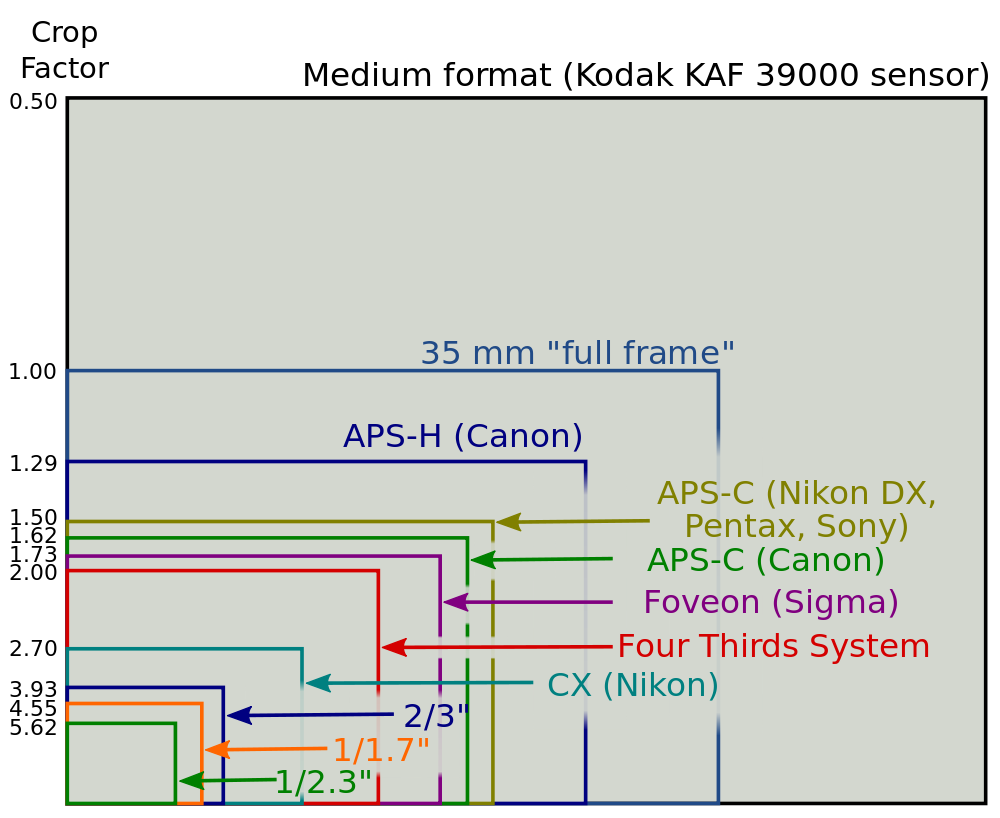
Crop factor can be used to figure out those looks for any sensor size.
Useful for understanding looks and communicating them.
Personal preference can be anything, though using common terms helps in defining those preferences when working with others.
 
Normal is based on societal norms. I like to be closer to the screen and fill my vision more than most others. So a “normal” lens looks incorrect, at least it does if I’m not also someone who like to shove my nose in someone’s face when I talk to them.


In terms of shooting distance and what looks 'right' I agree with you.

I still think 'normal' (glasswise) is when looking through a imager size GG one sees no change from reality.

I think you are describing 'right' not 'normal'

As for social norms well you can portray character with subject distance.. we know those people who stand too close.. if you want to portray a character as a space invader then shoot them close.

As a camera op I often get abnormally close to get the audience to a place they could not generally go in real life. I think deakins does this too? Typlically getting the camera between characters rather than shooting OTS.
 
Last edited:
In terms of shooting distance and what looks 'right' I agree with you.

I still think 'normal' (glasswise) is when looking through a imager size GG one sees no change from reality.

I think you are describing 'right' not 'normal'

As for social norms well you can portray character with subject distance.. we know those people who stand too close.. if you want to portray a character as a space invader then shoot them close.

As a camera op I often get abnormally close to get the audience to a place they could not generally go in real life. I think deakins does this too? Typlically getting the camera between characters rather than shooting OTS.

Actually, Deakins' point is to go where you WOULD normally go to be inside a conversation and connected to the subject rather than be further back and separated from the subject. He famously discussed this in the documentary Cinematographer Style, when he admonished the traditional camera placement for his own interview and then demonstrated the difference and why. Which one feels more "normal" to you?

https://www.bing.com/videos/search?...BA6795F60CDCA3F64047BA6795F60CDC&&FORM=VRDGAR

Yep its a good clip.. and I feel that I would not be that close to him.. we are strangers and we are british (our society) I might shoot that close because I have permission from actors and may want my audience to be that close.

--

Ive been thinking on a 'normal' lens - could it be one when a print is made and held in front of the viewer at the point it was taken, the print is then taken away and the original scene then revealed ther is no shift in perspective.

A bit like this set of jokes you may have seen floating about your feeds
d1ec62ef14cc26dd960b8d338aaff99d.jpg
 
Yep its a good clip.. and I feel that I would not be that close to him.. we are strangers and we are british (our society) I might shoot that close because I have permission from actors and may want my audience to be that close.

And this proves my point. Normal is subjective.
 
Wide, normal, tele are about FOV/AOV. Distance to subject is an orthogonal parameter. DOF is a mixed parameter. They all interact for the resulting look.

Deakins isn’t right or wrong- one opinion. Debating the normal lens classification is like debating mm vs inches: doesn’t matter as long as the units are defined and understood. Don’t like the word normal? Come up with a better term and encourage its adoption as an improvement.
 
And this proves my point. Normal is subjective.

I think you are at talking at cross purposes. Maybe I think normal (shooting style) is shoving a 9mm in someones face. Yes subjective not normal to many shooters.

But in terms of glass normal is a lens that creates the effect somewhat replicated in the record cover. That image - the record cover (almost) matches the the perspective of the 'real' scene - and I think that is somewhere between 40 and 50 - S35 shows a small portion of the real scene, vista/35 slightly more.

But maybe you are right because filling a frame (face) with a 9mm on 2/3 does is not as wildly off kilter as filling a frame/face with a 9mm on S35.
 
Part of my rage against the so-called normal lens is that over the years there’s been a good deal of pseudo-science and math doodled up on it. There are people with math theories based on the diagonal length of the frame and lots of other baloney.

Wanna know where the most common focal lengths came from? Taylor-Hobson (before Cooke) was an optical firm in England. They came up with some nice lenses early on (I have some). Focal lengths? 1 inch, 1.5 inch, 2 inch, 4 inch, and so on. So happens that works out to about 25mm, 37mm, 50mm, 100mm. No great plan there, just some common English measurements that made things easy. It really isn’t any more complicated than that.
 
Indeed, simple math and trivial diagrams are conspiracy theories. Image circle crop factor is way beyond baloney, right up there with pastrami. Is gaslighting a fun hobby?
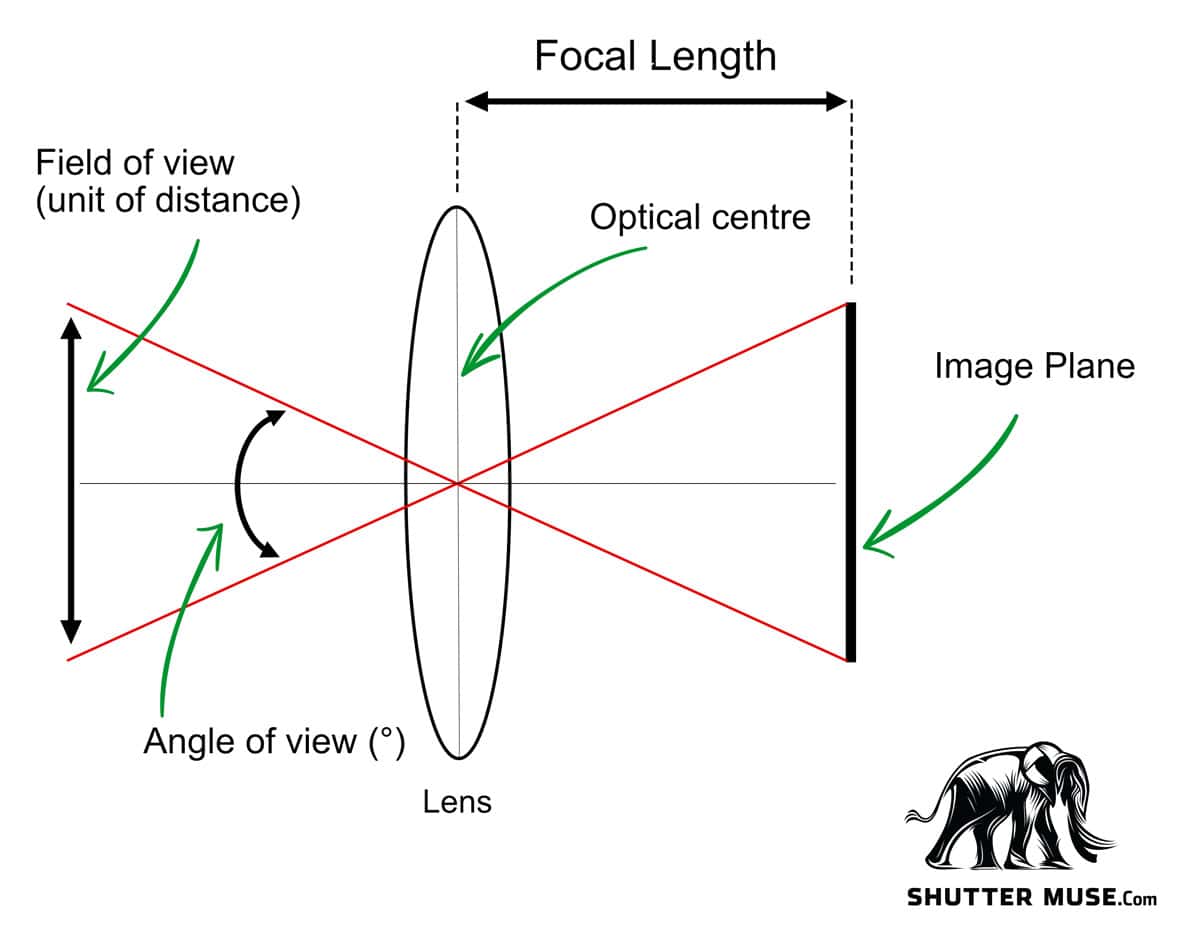
Field-of-View-diagram.jpg

Sensor-Sizes-and-Crop-Factors.png

crop-factor.jpg


Normal lenses are an industry definition of a look related to sensor size and focal length, which most people perceive as not distorted (too wide) or too compressed (too narrow or long).
https://shuttermuse.com/glossary/normal-lens/
https://www.howtogeek.com/309816/what-is-a-normal-camera-lens/

The elegance of truth is its simplicity.
 
From shuttermuse link:
A ‘normal lens’ is a Lens with a focal length approximately equal to the diagonal of the film format or of a digital camera’s image sensor. A scene viewed through a normal lens appears to have the same perspective as the way your eye sees it. Most 35mm cameras normal lenses have a focal length of approximately 50 mm. Normal lenses are extremely popular with street photographers because the perspective captured in an image shot with a normal lens will be extremely true to life, having the effect of placing the viewer in the scene as a witness.

Using this concept we don’t need to think about crop factor- simply choose a lens with a focal length near the length of the sensor diagonal (this is also the image circle diameter). For full frame that’s 43mm. 40mm, 50mm, and 55mm are common choices.

As we go lower focal length we start to distort the image, and longer focal lengths start to compress the image. 50mm makes sense as that’s slightly compressed and people look better (eg wide angle up close is typically not flattering).

This affects motion perception too: a camera moving in a car at 65MPH looks like 65MPH with a normal lens. A wide lens feels faster and a tele lens feels slower.

Similar effects with panning- a normal lens looks like a natural head turn, wide and tele do not.
 
Last edited:
Wanna know where the most common focal lengths came from?

We might not be talking about the same thing here—but maybe I caught you out of context here?

When people discuss the "normal" lens or "standard" lens, they don't mean "what they are 'normally' using or what their 'goto lens' is. So it's not a question about what's common...

It's a question about what focal length/format gives the same perspective as a human would have if they stood in the same place where the camera is placed.

But as mentioned previously, we have an ability for "selective" vision (which can be quite narrow) while maintaining large peripheral 'awareness vision' at the same time.
 
It's a question about what focal length/format gives the same perspective as a human would have if they stood in the same place where the camera is placed.

Yeah, and I still say it's contextual as it refers to how much attention we pay to our peripheral vision. Human angle of view is something like 120 degrees, but we pay attention to something between 25 - 90 degrees. That's still a huge range, and the part you pay attention to defines what you consider normal. And different people from different cultures pay attention to different AOV. There is no normal.
 
Human angle of view is something like 120 degrees

I agree. Can everyone agree that we cannot define a normal lens by the one whose angle of view matches ours?

the part you pay attention to defines what you consider normal

Once you have ruled out total angle of view, this seems like the only choice left.

different people from different cultures pay attention to different AOV

I would go further and say that each person's attention varies from moment to moment.

There is no normal.

And this is the logical conclusion if the definition of a normal lens is the one whose angle of view matches the angle of view of your attention.

---

But all this fails to address the experience that everyone has had who has lifted a 35mm SLR, fitted with a 50mm lens, up to their eye. It looks like you're looking through a cut-out square, not through a lens that widens or magnifies.
 
Normal as defined by the industry has nothing to do with attention- it’s about perspective, distortion, and compression. I’ll post more math in a bit, related to:

X’ = f*X/Z
Y’ = f*Y/Z

f is related to focal distance and field/angle of view (atan() etc.).

Normal = natural, not distorted, not compressed.
 
From shuttermuse link:


Using this concept we don’t need to think about crop factor- simply choose a lens with a focal length near the length of the sensor diagonal (this is also the image circle diameter). For full frame that’s 43mm. 40mm, 50mm, and 55mm are common choices.

As we go lower focal length we start to distort the image, and longer focal lengths start to compress the image. 50mm makes sense as that’s slightly compressed and people look better (eg wide angle up close is typically not flattering).

This affects motion perception too: a camera moving in a car at 65MPH looks like 65MPH with a normal lens. A wide lens feels faster and a tele lens feels slower.

Similar effects with panning- a normal lens looks like a natural head turn, wide and tele do not.

This seems to have been overlooked, as well as the posts talking about how the eye and brain work together to form the concept of vision. https://www.epd.gov.hk/eia/register/report/eiareport/eia_2522017/EIA/html/Appendix/Appendix 11.1.pdf This is part of a larger work, and is what I sort of remember from long ago. Notice the three distinct visual areas shown, wide (perception), medium (the "normal" stereo visual area) and tight (ultimate concentration on an item). What this comes down to is that you would want to find the lens focal length on the sensor that you are using, that most closely matches the angle of view for the stereoscopic part of vision. Another article mentioned/posted earlier talks about this as well. https://wordpress.lensrentals.com/blog/2009/03/the-camera-vs-the-eye/
 
Back
Top