Eric Coughlin
Veteran
I don't know if I'm getting my terms right here...my question is, okay, so, say you have a 50mm lens on a Super35 sensor, and that gives you the same framing as say a 100mm lens on an Alexa 65 sensor.
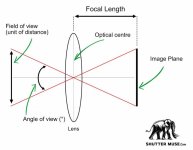
Now, I know with a 100mm lens on a Super35 sensor compared to a 50mm lens on a Super35 sensor with the same framing, that you're now seeing less of the background, not in terms of depth of field (as you can just stop down to get the same depth of field), but in terms of angle of view, I believe is the term.
Okay. So does that mean that on an Alexa65 sized sensor, you're always seeing less of the background because your angle of view is narrower to achieve the same framing?
And now if we exaggerate this and imagine a massive sensor, say 10 times the size of Super35, that now needs a 500mm lens to get the same framing, are all the images from that going to have a super compressed background making it practically impossible to ever see much of the background, even with what is wide framing?
And the follow up question, what angle of view in relation to sensor size most closely matches human eyesight?