Komodo is Officially On Sale

Is there anywhere online to download A7siii or FX6 files the same way RED makes samples available for download? I would love to try and throw some grades on some A7siii and FX6 files and check out skin-tones in comparison to Komodo or Gemini (own both).

I used to own an FS5 and shoot raw over SDI exclusively to an Atomos Ninja Inferno for many years. Raw external recording produced 12-bit depth rather than 8-bit out of the FS5 so the image was greatly improved at 4k resolution and it also unlocked some HFR in 4k (120fps burst) that was not available in camera. That camera is what I built my business on and it treated me well despite it having various nuances. Honestly, the FX6 does seem to have come a long way in image quality, at least from the examples I have seen on Youtube as color science and DR look much improved over the original FS5/FS5ii. I used to wrestle with a lot of aliasing and moire from the FS5 and that is one area I feel RED does a really nice job with very nice OLPF's. The internal ND on the FS5 had lots of color cast so I would be interested to see how the FX6 compares as a good set of old fashioned ND's won't have this issue and color accuracy is important to some industry professionals. The FS5 would also definitely clip and blow-out highlights fairly easily but that is because you were always on that brutal edge of trying to expose +/- 1.5-2 stops over for S-log on a camera with average DR. I would be interested if the process of over-exposing log to get higher DR will remain the same with the FX6 or if they have somehow made the exposure process for Sony log more simple? It would be nice if Sony could implement a feature like the "stop-lights" and "goal-posts" that RED offers as exposure tools based on the RAW metadata to ensure you are feeding the sensor the right amount of light and not always going off of a histogram that is on the IRE scale. That is one thing with RED camera's I find greatly separates them from a lot of competition is their exposure tools really ensure that you get a fat digital negative.

For medium budget run-and-gun, no thrills corporate/commercial work, travel/doc, and weddings I do have to admit I see the FX6 really taking over. As much as I love Komodo and my RED cameras there are a lot of times clients won't even be able to tell the difference between "camera A" and "camera B" so using the camera that makes your day on the job easier and allows you to secure the shots you need (with or without a large crew) is the best option, not the one that gives you 15-25% better image quality but requires a heftier or more time-consuming workflow which may not even be fully appreciated by the client at the end of the day. I am a sucker for maximum image quality but for some its about making money and paying the bills at the end of the day too.

How do you like the Komodo compared to the Gemini? Image wise.
 
I used to wrestle with a lot of aliasing and moire from the FS5 and that is one area I feel RED does a really nice job with very nice OLPF's. The internal ND on the FS5 had lots of color cast so I would be interested to see how the FX6 compares as a good set of old fashioned ND's won't have this issue and color accuracy is important to some industry professionals. The FS5 would also definitely clip and blow-out highlights fairly easily but that is because you were always on that brutal edge of trying to expose +/- 1.5-2 stops over for S-log on a camera with average DR. I would be interested if the process of over-exposing log to get higher DR will remain the same with the FX6 or if they have somehow made the exposure process for Sony log more simple? It would be nice if Sony could implement a feature like the "stop-lights" and "goal-posts" that RED offers as exposure tools based on the RAW metadata to ensure you are feeding the sensor the right amount of light and not always going off of a histogram that is on the IRE scale. That is one thing with RED camera's I find greatly separates them from a lot of competition is their exposure tools really ensure that you get a fat digital negative.

For medium budget run-and-gun, no thrills corporate/commercial work, travel/doc, and weddings I do have to admit I see the FX6 really taking over. As much as I love Komodo and my RED cameras there are a lot of times clients won't even be able to tell the difference between "camera A" and "camera B" so using the camera that makes your day on the job easier and allows you to secure the shots you need (with or without a large crew) is the best option, not the one that gives you 15-25% better image quality but requires a heftier or more time-consuming workflow which may not even be fully appreciated by the client at the end of the day. I am a sucker for maximum image quality but for some its about making money and paying the bills at the end of the day too.


I've shot with a same setup (FS5+Atomos), so agree with the each word in your post. 12 bit raw with the moire, line-skipping and blowing out highlights (because you always need to overexpose this narrow sensor in log).

You can download tons of the Komodo footage from the youtube reviews like CVP etc. Just google "komodo test footage download". I've played with it a lot and must say that it delivers the best overall image below $10K.
Oh right, I have heard about the Fs5 raw being bad.

Though, I never liked that camera. Someone here posted a video they shot on it, and I was amazed at how well they wrangled that image, and made a very compelling piece or commercial.

Philip Bloom may have some review on the raw video performance of the A7s3 and Fx6, but I haven't seen the Fx6 review yet. I should probably check it out.
 
James, if I am correct I believe you currently own a Ranger Gemini, so you are fairly familiar with its capability in terms of IQ. How Komodo compares to Gemini I will try and sum up as best as I can with my personal experience, although I must admit I have not completed any "formal testing" and all of the discussion below will be based off of "real-word shooting experience" and my experiences with editing and color grading the two camera side-by-side on projects where I have used them together.

In terms of resolution, I find not much difference between 6k and 5k. However, Komodo appears a little sharper, but I think this also leads to the fact that Komodo is slightly more of a "thinner digital image" in comparison to the "thicker" and more "filmic" rendering of the Gemini. I am not sure if increased resolution is playing a factor in the perception of increased sharpness or if it has to do with a characteristic of the Komodo sensor itself. I personally have only shoot Komodo on Leica-R and Canon FD glass thus far that I own in my kit and I have not tried RF/EF L-series glass, the overly popular Sigma 18-35, DZO's (although my friend owns the set), cinema-primes, anamorphic's or any of the other very popular lenses many intend to use on Komodo, so I am speaking subjectively just off of how the image fairs with vintage glass in my experience.

Personally, like with any other camera I believe that glass is going to play an important role with Komodo on how nice of an image you get and the "sharper" and "more clinical" DSLR glass that many will favor for AF is going to result in a more digital rendering out of the gate with Komodo, with vintage glass playing very nicely to "thicken" up the image and add that little bit of "seasoning" that clinical DSLR glass just doesn't have. On Gemini I find lens choice less of an issue with even "poor-mans" kit lenses looking great. I had a real-estate job in Hawaii last year in which I ended up not having a wide enough lens to capture the interior of a lava-rock shower that was quit confined. So in a pinch I had to pick-up a Tamron SP 10-24mm (the only available EF mount lens for sale on craigslist on the entire Big Island at the time) which I ended up shooting the entire production on because it actually looked very good which blew me away. With Komodo I find that I need to pay more attention to filtration and diffusion both in front of the lens and on the talent in order to ensure the image feels "filmic" and more balanced and not "too-sharp" or "digital" with the right amount of contrast and smoother roll-off to out of focus areas to get closer to the IQ I get from Gemini. Maybe it is just me but my perception is that many of the cheaper "mid-range" cameras such at the A7siii, FX6, Komodo, C70, BMP6k etc. all just feel a little "thinner" image wise when comparing them to their more expensive brothers (i.e. DSCM2, c300III, Venice, FX9, BMUMP, etc.) but quite honestly I wouldn't expect anything less for the price-point and find this completely acceptable for any B/C camera.

Dynamic range of Komodo is definitely less than Gemini (1-2 stops) but in my opinion Gemini has the highest DR out of any RED camera (slightly better or comparable to Monstro) so this is not a fair comparison. Do not mistake this comment for that Komodo has low DR as I find the Komodo's DR completely acceptable and very good for the price point and it inter-cuts with Gemini very easily in terms of matching highlights within the same scene. Despite Komodo's DR being slightly less, the way in which the Komodo sensor treats highlights is somewhat different. With Komodo, highlights tend to roll-off to clip in a manner that is surprisingly very pleasing and smooth (potentially the smoothest of any RED camera to date I have used) so any loss of DR is not really an issue as long as you expose with similar intentions on both cameras, then they play very well together.

In terms of Color rendering, I would give both cameras a great score. A comparison of tint would be that with both cameras set neutral, Gemini leans +1 towards green with Komodo leaning -1 towards Magenta. A quick adjustment of tint and color temp values can get these cameras very very close to matching quickly. My clients have not been able to tell which camera is which in any of the productions I have shot thus far but to be honest I can identify the difference fairly easily, but of course I am biased. Komodo is very clean and accurate in terms of color and there is absolutely none of that famous RED green tint. If anything Komodo leans the other direction towards magenta and I find I am dialing some green back into the image most of the time which makes it looks really nice and organic. Do not be afraid of this statement as any hint of magenta I do not find present and "baked" into the skin-tones and they are buttery-cream and very nuetral straight out of the gate with Komodo. I actually find the color of skin-tones to be extremely natural with Komodo and even on par or better than Gemini. I also have to say that I have not updated my Gemini yet to the latest firmware (v7.4.1) where RED has updated the sensor metadata for Kelvin and Tint values that represent the white balance of the scene which now uses the Daylight locus rather than the Plankian locus, which is supposed to reduce the famous RED "green tint".

As for the global-shutter it is great (for obvious reasons) and I think it is the future of DSCM3 as long as they can work in some larger photo-sites and better light sensitivity in future builds. In terms of low-light performance Komodo has really surprised me despite having no dual-iso and a smaller pixel pitch compared to Gemini. Komodo produces very clean blacks and mid-tones and you can even lift them up quite a bit before the image breaks-up. I am confident using Komodo up to 3200 ISO but with any RED camera you need to focus on getting the correct amount of light into the sensor during exposure on the forefront and watch the "stop-lights" and "goal-post" as you area already familiar. If you expose Komodo correctly, like any RED camera it really produces a wonderful image that can be pushed and pulled to great extents. Expose incorrectly, and the image breaks up just like any other camera. I would honestly say Komodo is better than both Dragon and Helium in low-light but still is a bit behind Gemini for various reasons (larger sensor, dual-iso, larger pixel pitch, etc.). Even with Gemini I always prefer to add more light than rely on LL mode but there have been times on travel jobs where I could not bring lights and Dual-ISO really did allow me to capture scenes that would have ended up breaking up, which would have required lots of noise reduction in post with other cameras.

In terms of sensor size, Komodo is a little on the tiny side and smaller than I would have liked considering full-frame sensors are becoming more prevalent and will become the future. Komodo also has some difficult cropping to deal with when utilizing HFR, but that for me is not personally why I purchased the camera as it has been made very clear by RED that it will not produce the same HFR capabilities as DSCM2 at its size and price-point. The 2k/120fps is definitely usable on Komodo and will make many still very happy with its IQ. However, I strictly shoot at 6k 40/50fps with Komodo and rely on Gemini for all my HFR as Gemini does up to 5K (2.4:1) at 120fps in which I am spoiled. Komodo was meant to be a B-camera for me so I did not have to rent a second RED camera for interviews or multi-angles scenes when needed like I have had to do consistently in the past. Komodo also fills an interesting role in terms of travel as it will now allow me to be more confident in taking a RED camera places I had not considered prior with Gemini, such as backcountry ski-films where I can shoot longer in bad-weather with less risk of investment or even on personal vacations and passion projects where I just didn't want to slow down family or friends by bringing tons of gear. Komodo is extremely unique in the fact that you can rig it up as an A-camera or strip it down to Mamiya form factor and take it with you anywhere inconspicuously.

Since I have owned Komodo it has greatly improved my companies production capabilities in that I am not constantly re-rigging my Gemini (A-camera) in multiple fashions. Now Komodo just sits on my gimbal, hand-held or on a shoulder-rig "ready" for the majority of the day in order to get those specific shots while Gemini can focus on its own alternate scenes. For me a BMP6K, C70, A7siii would all be a great option for run-and-gun as a tiny and reliable B-cam (crash-cam, travel cam or dedicated gimbal cam) but they are all missing one thing I need which is 16-bit color, DR on par with DSCM2, and a RAW codec that immediately plays well and intercuts with minimal post-processing in order to match DSMC2 cameras.

If you already own a RED camera, I see Komodo as a huge win and the only way to go and personally I would not be looking at any other cameras in its price range. Just to match footage from a RED to any other camera will take extra time and get old (time and time again) in post. Anyone that already owns a RED camera would thank themselves for using a second RED as a B-cam and up until now you could not enter the RED ecosystem for less than $10k so exciting times are among us. Komodo has a lot of features that are still coming such as time-lapse, more variable frame-rates, anamorphic shooting modes, and improved AF capabilities and full RF lens integration. The fact that wireless monitoring is also included free of charge and is fairly reliable via RED Control APP and an iPad is pretty significant too. I am shooting automobile scenes this weekend and will be mounting Komodo with Leica-R's and Nucleus Nano to a Matthews Brauer Car Mount on a vintage 1970's VW bus and will be using the RED Control App and iPad to trigger record and monitor in order to pull focus the entire time from a follow car. On previous productions I probably would not have taken the time to rig my Gemini constantly back and forth from lead car gimbal, hand-held and car mount for this production due to limited crew and time so just having this second RED camera (Komodo) that has global shutter, 16-bit REDcode RAW, and is as small as a 4x4" box has opened up new worlds for me and I am now finding I can do so much more on set in the same amount of time and at the end of the day there is a symbiosis of all of the footage in post which makes me a really happy.

If I were a documentary / Indi-filmaker that freelances, does wedding's, lot's of talking heads and or bland-corporate gigs I think I would be looking at the FX6.

If you already own a RED camera there is no greater B/C camera.

If you are a filmmaker who has a stable balance of income and a good existing business model, has crew and relationships with industry professionals that have similar vision, and intent to make ads or features that are a "cut-above" in terms of IQ in order to attract more prominent clients then the Komodo really does open up some doors and wouldn't be a bad investment as an A-camera since the price to entry is the lowest it has ever been for 16-bit internal RAW.

If I were going to rate RED cameras on a scale of IQ outside of resolution (DR, Highlight roll-off, Low-Light Capability, Frame-Rates, Crop during HFR, Color Accuracy, Noise during under-exposure, etc.) I would place them as follows from my personal experience.

Monstro > Gemini > Dragon > Komodo > Helium > Scarlet-W

If I would rate RED cameras strictly on scale of IQ VS. Price-Point I would place them in order as follows.

Komodo > Gemini > Dragon > Scarlet-W > Helium > Monstro

I forked out +/- $28k to start for my Gemini build from B&H and let's be honest we all know the expenditure didn't stop there with all the little add-ons and accessories that you accumulate over time. I purchased my Komodo kit for $12k fully built. If you consider the total investment for Komodo it is pretty significant that it comes as close as it does to DSCM2 for a half to third of the price.


How do you like the Komodo compared to the Gemini? Image wise.
 
Last edited:
This should get a few people excited and add a few hundred sales.

Even I took a quick look to see if it was in stock. LOL [facepalm emoji]

It's funny because if he wasn't rich or famous, you could totally expect this dude to be on a lens forum (with his vintage lenses).

[Maybe he is!]

 
This should get a few people excited and add a few hundred sales.

Even I took a quick look to see if it was in stock. LOL [facepalm emoji]

It's funny because if he wasn't rich or famous, you could totally expect this dude to be on a lens forum (with his vintage lenses).

[Maybe he is!]


I saw that a few days ago, and I actually have to admit, it's pretty damn cool.

I kind of think that if you remove the "movie star" aspect from him or you had no clue who he was, you could have a beer with him and be a camera nerd.

Maybe he should have been Cameraman instead of Aquaman...
 
He's extremely marketable for RED.

The company has always done things like this to help sell cameras...they have that edgy, blockbuster-like personality.
 
This should get a few people excited and add a few hundred sales.

Even I took a quick look to see if it was in stock. LOL [facepalm emoji]

It's funny because if he wasn't rich or famous, you could totally expect this dude to be on a lens forum (with his vintage lenses).

[Maybe he is!]


Love the Covid safety protocols. (*said with sarcasm)
 
I saw that a few days ago, and I actually have to admit, it's pretty damn cool.

I kind of think that if you remove the "movie star" aspect from him or you had no clue who he was, you could have a beer with him and be a camera nerd.

Maybe he should have been Cameraman instead of Aquaman...

He seems like one of the most genuine stars out there.

He is also the perfect ambassador for making the Komodo look extra small. Actually looks as small as the Komodo feels in real life. Most pictures online make the Komodo look bigger.
 
....just a couple thoughts or observations. And sorry for breaking up your quotes, I know it makes it difficult to keep track of things in the reply. I'll try to keep my answers short next time.

In terms of resolution, I find not much difference between 6k and 5k. However, Komodo appears a little sharper,
Dynamic range of Komodo is definitely less than Gemini (1-2 stops)....Despite Komodo's DR being slightly less, the way in which the Komodo sensor treats highlights is somewhat different. With Komodo, highlights tend to roll-off to clip in a manner that is surprisingly very pleasing and smooth (potentially the smoothest of any RED camera to date I have used)...
I find this very interesting. I've heard you and someone else say the highlight roll off is the smoothest of any Red yet, but I wonder if that is just compared to the default Red look, and not the "very soft highlight rolloff" setting in DSMC2? Because with a stop less DR, the Komodo would have a hard time making a smoother roll-off than the Gemini, unless the Gemini settings were set more contrasty.

Also, a 6K camera should theoretically downsample to 4K at a 1.5x's downsample, meaning there might actually be near pixel perfect luma detail. The 5K Gemini would down sample with plenty of resolution, but at the pixel level might have slight dithering as the pixels may not line up perfectly going to 4K. So, you'll still get a 4K image, but it will have less bite than a 6K downsample. In my uses, I prefer the Gemini relaxed sharp and more DR over the edgier 6K cameras with slightly less head room in the highlights or underexposure.

However, if the Komodo is looking sharper at normal viewing distances, that is often because of contrast. Or at least that is my first guess when someone says a camera is "sharp" and especially when they say "too sharp". Yet, you are saying it has the smoothest highlight roll off of any Red, and others have called it "creamy". So, I guess it isn't the contrast.

Idk, makes me very curious. A lot of things from different sources making me scratch my poor slow brain.


In terms of Color rendering, I would give both cameras a great score. A comparison of tint would be that with both cameras set neutral, Gemini leans +1 towards green with Komodo leaning -1 towards Magenta.
When pulling the shadows up, the Gemini has more magenta in the blacks, and the Komodo has more greens, so I find it interesting that you are finding under normal exposure values for skin tones, the Komodo is more magenta, and the Gemini is more green. I totally believe you, it is just the opposite of what I would have expected.


the latest firmware (v7.4.1) where RED has updated the sensor metadata for Kelvin and Tint values that represent the white balance of the scene which now uses the Daylight locus rather than the Plankian locus, which is supposed to reduce the famous RED "green tint".
I've got to see if I have the latest firmware. I updated it two or three months ago. That sounds like a nice update!

In terms of low-light performance Komodo has really surprised me despite having no dual-iso and a smaller pixel pitch compared to Gemini. Komodo produces very clean blacks and mid-tones and you can even lift them up quite a bit before the image breaks-up. I am confident using Komodo up to 3200 ISO
If a raw camera's native iso is iso800, the iso 3200 is like -2stops under exposed (or push +2, you know). Most cameras can do that these days, and with 6K, the noise cleans up nicely in post. But rating a camera 2 stops faster means you really have no room for under exposure, since you are already technically under exposing 2 stops.

Gemini is actually a noisy camera, not Xmas lights noise, but there is a little dance in the shadows. I'd rate it very much an iso 400-800 camera. With skin tone HLP Olpf, I'd say it is a solid iso400 camera. At least the noise is more visible. I have never been bothered by the noise. I believe this is in part because of the larger pixels. I think 6K cameras have a finer grain pattern, so they look cleaner at base iso. However, moving up the iso range, the Gemini does perform a bit better. The dual iso is nice, and I like having it as a creative option. Recently used iso800LL for some super slomo at 2.5K, where the subject was wearing black, and it helped a lot. Shooting night shots outside, the Komodo seemed to show it's weakness in low light is the night sky, whereas the Gemini in LL mode did pretty good. Not A7s3 territory, but I felt the Gemini is usable at night, whereas the other Reds require those street lamps or car headlights to get anything nice. So, despite the Gemini not being a low light beast, it is one of the few higher end cinema cameras that can manage. The Monster shadow detail is phenomenal. The Monster never does well in online comparisons, but up close in person, it is addicting to see. But yeah, overall, even though the Komodo is really close to the Gemini LL mode in low light scenes, it is still that 1/2 stop or so below shooting night exteriors as easily as the Gemini, and at night every little bit helps. Any camera can look good at higher iso's with enough light, but capturing the ambient light at night can be more tricky. (I'm talking city nights)

You said it too, I was just riffing, and forgot what I was talking about:
...and Dual-ISO really did allow me to capture scenes that would have ended up breaking up, which would have required lots of noise reduction in post with other cameras.


but with any RED camera you need to focus on getting the correct amount of light into the sensor during exposure on the forefront and watch the "stop-lights" and "goal-post" as you area already familiar.
I sort of agree. I like that it is showing the exposure for the raw, and not some out, but histograms can be tricky in trying to pinpoint levels in an exposure. Also, those stop lights only light up when the clipping is taking up a big enough patch. So, if you want to hold detail in a candle flame, those stop lights might not light up, giving false sense of security that everything is exposed, then in post the find the candle flames are white and clipped. easy fix, but still. And once I wanted to expose to hold the orb of the sun at sunset, but I got it into post and it was partially clipped. So, the Red exposure tools are helpful, but can also be annoyingly vague, and have margin of error. Seems like with video that isn't necessary, they should be insanely accurate.

In terms of sensor size, Komodo is a little on the tiny side and smaller than I would have liked
Agreed, though i find it annoying having to go to 4K or 4.5K to use a S35 zoom on the Gemini sometimes. Is nice to have the anamorphic height option for cinema cameras. However, the Komodo being an Action cam by design would imply the trend toward deeper depth of field to capture everything that is happening. I am just thinking out loud there.

Komodo is extremely unique in the fact that you can rig it up as an A-camera or strip it down to Mamiya form factor and take it with you anywhere inconspicuously.
Yeah, despite it's design intention, it is still one of the better motion capture cameras available at any price point.

Since I have owned Komodo it has greatly improved my companies production capabilities in that I am not constantly re-rigging my Gemini (A-camera) in multiple fashions.
This is my hope some day. I might start using my Gemini for gigs if I can run around with that kind of setup.


If you already own a RED camera there is no greater B/C camera.
Unfortunately, Dragon and MX cameras just came down to that sub $10K range in the used market, and they are looking tempting too. But as you said earlier, the Komodo looks to match better with the Gemini. plus the Komodo brings longer battery life, global shutter, and lighter / smaller setups, auto focus, and mirrorless lens adpapters, among a few other things, so it seems like it would be a much better companion to a Gemini or Monstro.

If you are a filmmaker who has a stable balance of income and a good existing business model, has crew and relationships with industry professionals that have similar vision, and intent to make ads or features that are a "cut-above" in terms of IQ in order to attract more prominent clients then the Komodo really does open up some doors and wouldn't be a bad investment as an A-camera since the price to entry is the lowest it has ever been for 16-bit internal RAW.
That's the key right there. Any professional camera, sound, lighting, and power computer package is going to be a significant investment of time and money. I rigged my friend's A7sII up to my accessories and gear, and he was being all precious about his camera, but all of my add-ons and tripod were many times more expensive, so starting business is always more than the camera body purchase. A camera is like a college degree, it won't get you the jobs, but it won't prevent you from getting the jobs. And also, it doesn't matter what kind you have, it is better to have one than none.


If I were going to rate RED cameras on a scale of IQ outside of resolution (DR, Highlight roll-off, Low-Light Capability, Frame-Rates, Crop during HFR, Color Accuracy, Noise during under-exposure, etc.) I would place them as follows from my personal experience.

Monstro > Gemini > Dragon > Komodo > Helium > Scarlet-W

If I would rate RED cameras strictly on scale of IQ VS. Price-Point I would place them in order as follows.

Komodo > Gemini > Dragon > Scarlet-W > Helium > Monstro
I'd agree with that list. =). Although, difficult to rate cameras like these by "bang-for-buck", as that defeats the purpose! haha, it is all about getting the best no matter the cost, otherwise we'd all be using Black magic and Caniknony hybrids.

DLD mentioned that Red was attempting to swim down stream with the Komodo, but that is because everyone is seeing the Komodo as a cheap A cam, when it is really an expensive action cam that just happens to have better image quality that pretty much all the sub $10K video cameras out there.
 
Last edited:
@Sleek,


I'm with you on the Red's looking better, but where I find Red faltering is in the details. At the High end, they are up against the Venice and the Arri's, and for the most part, I cannot fault those two cameras much in anyway. So when the big budget teams are looking for a camera, they go for those. In the low budget, a lot of people used to scrape all their change together to get that Red image quality, because a DSLR was shooting 8bit H.264 at a lovely 17Mbps.

However, now in the Sub $7.5K market the quality gap has become less obvious. It's almost more about LUT's than cameras these days.


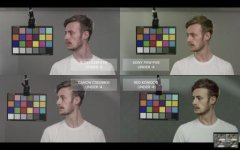
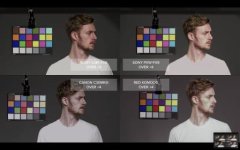
Here we are seeing, that the Fx6 and C300III (and therefor perhaps the Canon C70) are keeping up with the Komodo in DR, and not far behind in colour.
-4 stops (under exposed)
Screen Shot 2020-11-28 at 3.13.08 AM.jpg
+4 stops (over exposed)
Screen Shot 2020-11-28 at 3.13.55 AM.jpg
https://www.youtube.com/watch?v=6Z-xB5dnIfk

From this test, it could be argued that the Fx6 and C70 have more dynamic range than the Komodo.... and that means they are up there with the Dragon and Helium as well.

Of course, the web streaming hides a lot of the nuance in cameras, so it may be that there is more going on there, and to me it shows that the Komodo is at least doing really well where it matters most to cinema shooters. ...But it isn't the giant gap in image quality that gave Red its reputation back in the day.

So, Red has to tighten up their over all quality to stay relevant in the High end, especially with Sony now being a serious contender. And Red has no lower end to go to, because as of 2020, the low end is starting to look very good and very competitive. Is that nebulas owner op, music video world big enough? It might be. They better hurry up before Chinese cameras catch up.
 
Last edited:
That actually looks like a very impressive showing for the FX6 amongst those other cameras

Yeah, agreed.

I'm not complaining though, that just means all video cameras are really pretty good these days. It doesn’t mean Red got worse, as Red has been improving as well. just that everyone else made their way there finally. They still have a ways to go, but at least we are in the good enough stage of things. But it does make me wonder what Red has cooking for DSMC3, now that all the low hanging fruit is snatched up. They did pretty well with improving CMOS smear on and improving shadow performance on the Komodo, but they still lag behind the 10+ year old AlevIII in a few important areas of image quality. Ah well, we'll find out soon enough. Maybe the new Arri sensor will be a joke, and every ends up hating it. Right? Red has improved a long the way, but I don't know if we'll ever see a DSMC4, except in the way we might see Hummers and hassleblads.


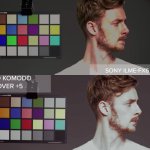
However, I know those images from the CVP video weren't very clear, but if you look up close, at the +5 stops over exposure, the Komodo still has some detail, but it is just desaturated. This is common for digital cameras to get more desaturated towards the extreme highlights, since they are not realy meant to be brought back, but to look like nice highlights. The FX6 is holding onto colour longer, but actually fully clips before the Komodo. That is why I am not a big fan of the "recovery" tests. Cameras aren't meant to be under or over exposed like that just to be brought back. But it does at least show us the DR.

23F722D2-C5A1-4C0A-80CF-A41EE6B84F56.jpg
CVP says that the Komodo is "breaking up" in the +4 over exposure, but it is actually retaining detail on into the +5 where the Fx6 gives up. The Komodo is more noisy in the under exposure tests, but it is not applying Noise Reduction, and the colors are remaining fairly good even under exposed, so that is promising. Overall impressive results from all the cameras, but I think in this particular test it is a toss up between the C300iii and the Komodo with the Fx6 not far behind at all.
 
Last edited:
I am already a sucker for vintage Leica glass so seeing those 1920's lenses got me really worked up and now I am doing research trying to find more info and some for sale lol. Now we know Aquaman is secretly on one of these forums floating around.

This should get a few people excited and add a few hundred sales.

Even I took a quick look to see if it was in stock. LOL [facepalm emoji]

It's funny because if he wasn't rich or famous, you could totally expect this dude to be on a lens forum (with his vintage lenses).

[Maybe he is!]

 
Back
Top