Justify an F35 vs an FS7

So... I own two F23s, one F35, and one FS7. I can tell you the FS7 works the most frequently, and as a business, it's the one that justifies itself on paper. The F23s and the F35 will stay though, because I love the look when I get to do passion work. And their relative rarity in the world leads me to think they won't depreciate further the way cameras of other stripes that were made in much larger quantities will.

But I'm writing now, because I think we're on the precipice of a titanic shift in cinematography. Not available to you and me yet - but on it's way. If you haven't already looked up the Lytro Cinema camera - do. Imagine a camera where depth of field, motion blur, even point of view (to an extent) can all be chosen in post - where adding elements in 3d, and 3d tracking are all cake. Where separating objects no longer takes green screen or rotoscoping. Right now the revolution is aimed at high end work with a pricetag starting at $125k. It's protected by patents, and it uses an ungodly amount of bandwidth and storage space. But this - in my opinion - is where we're headed. The F35 was $250k in 2008. Today, it's features if not it's mojo have been superceded by cameras costing less than $10k. If that's any indication, by 2024 we'll be able to buy the capabilities of the Lytro Cinema Camera for less than $10k.

But it goes one step father. Imagine if someone took four or more Lytro Cinema cameras, genlocked them together, positioned them at cross angles around a center point, and fed the data from all of the to a central mainframe that computed those discreet camera feeds (composed of color and depth data) into a single 3d composite. Imagine if in the future, you didn't have to chose a camera angle on set, and if you did - it was merely previs. Imagine if you recorded a 3d composite wide angle, that let you chose your camera angle, your camera move, your motion blur, your depth of field - your everything - in post. Imagine you were never locked in.

And - it goes yet one more step. Take the above, and consider that your hypothetical 3d composite has color data mapped to 3d positions. If you light the set 100% flat (or, as flat as possible), what would prevent you from applying lighting in post? Even your lighting decisions could be made in post.

My point is this: the brave new world is here. Tomorrow's digitial cinema isn't going to look anything like what we're doing today. All of these cameras will be obsolete. And all of these cameras will be left for those who want to try their hand at a relic of the past. Don't invest heavily in this generation of cameras. Don't break the bank of F55s or Alexas or Red Dragons. They're all going to be obsolete, not just because newer cameras will come with better specs - but because the entire way we work is going to change and is going to use a vastly different type of camera technology.
 
The Lytro tech is definitely interesting. However, I don't hold my breath for any new technology completely obliterating another into obsolescence. Creating more decisions and options in post will rarely create better stories and typically convolutes direction and aesthetic. The most interesting point I've read on here is what Mitch from C-D talked about how we may no longer be shooting video in pixels but shooting VECTOR VIDEO. I was like... wut m8? Go on....
 
The most interesting point I've read on here is what Mitch from C-D talked about how we may no longer be shooting video in pixels but shooting VECTOR VIDEO. I was like... wut m8? Go on....

Vector video is an interesting notion. I can't fathom the tech that would make it possible. But if you look carefully at the Lytro and the expanded capabilities I'm proposing, it's equally revolutionary. The point for the moment is, don't invest too heavily in anything that won't pay for itself in the next 2-3 years within your existing business model.
 
Vector video is an interesting notion. I can't fathom the tech that would make it possible. But if you look carefully at the Lytro and the expanded capabilities I'm proposing, it's equally revolutionary. The point for the moment is, don't invest too heavily in anything that won't pay for itself in the next 2-3 years within your existing business model.

In 3 years the F35 will still look great, Kodak will still be making film, people will still be shooting HD by the millions, most people will still have HD TV's and nothing much will be different, other than VR headsets on games and tons of failed "film" projects done with VR in mind but, guess what they didn't learn from the 3D fad? Nobody wants to wear anything on their head to enjoy a story and forget about kids, work and stress for a while.

And you can't light flat and make everything work in post. Reflections in eyes are one small example of something you can't change easily, nor do you want to bother with that. And Lytro isnt going to let you choose where your lens is in post either. Nothing can replace a moving imager in space.

A long time ago there was a booming business shipping giant blocks of ice from the Artic to India and other places. Tremendous blocks of ice they would load onto boats, that would partially melt before reaching the destination. It's an extinct business model. As are many others that got superceded by technologies that were not even fathomed.

The Lytro Cinema camera does allow for you to minimally move the camera off the axis. Not much, but some. But more to my point is where that technology will expand. When you link multiple Lytro cameras positioned at different angles, and intelligently build single color and depth composite model (lets not even call it an image), you would get a 3d model. Just like a video game or Maya or any other 3d environment, that environment would allow you to move a virtual camera to any angle - and to add virtual lights. I'm sure there will be technical challenges along the way. But it will come to pass.
 
it'll likely be a very labor intensive tool for several years to come, but it is cool. Just nobody tell BobZ, he'll be excited that he never has to use a cut in live action again lol

random question though, anyone know how well the FS7 does for a high speed fx camera to pair with the F35?
 
A long time ago there was a booming business shipping giant blocks of ice from the Artic to India and other places. Tremendous blocks of ice they would load onto boats, that would partially melt before reaching the destination. It's an extinct business model. As are many others that got superceded by technologies that were not even fathomed.

That's a pretty badass analogy and definitely made me think.

If ice is to moving images as in, that's what people are consuming- and the way we make it or source it is was made easier with refrigeration, the Lytro may still not be the refrigeration. The lytro tech may be giving us more options of what the ice looks like but I don't see it closing a giant gap in accessibility or efficiency- digital already happened and that's what closed the gap. So perhaps digital is the refrigeration? The lytro may give us more options and change the way we shoot but then it just seems we're sliding costs and energy back into post. And then what happens when you can't get the effect you want- you can't move that camera or digitally light something the way you want it? You have to reshoot. You lose the performances and the deliberate decisions you made that helped tell the story. You were so reliant on the ability to change things in post you lost control on the front end. Then lytro just becomes another tool in the toolchest- simply another method to make a moving image.

I agree you shouldn't invest too heavily in anything in this industry that's changing as fast as cameras are. The F35 is a terrible investment in that regard. Producers aren't asking for it, it's too heavy and cumbersome to be a workhorse depending on the type of work you get, 12bit 4444 is probably overkill etc. So I look at my F35 like a classic car. It makes me feel good to drive it and see others reactions when I roll by with my gorgeous skin tones, nice highlight rolloff and well mimic'd film grain. Luckily the price came down and I only need to rent it a dozen or so more times to start breaking even. People love classic cars so I'm put at ease owning one even if it's not the talk of the town at NAB right now. Sorry to hijack and contribute to the off topic-ness but I enjoy the bigger discussions about what will transform we do vs. the rather pedestrian "this cam vs this cam" debate.

On that note, the FS7 will cut beautifully with the F35- 99% of your audience won't even know or care. Either denoise the F35 or grain up the FS7 footage and carefully match your skins and hues and you're in business.
 
I think the classic car analogy is spot on. You don't own it to make a profit or to serve the average client. You own and use it because you appreciate it for it's uniqueness, and for it's value as a statement on how you wish to define yourself.
 
One day I hope to have a spotless garage like Jay Leno's full of velvet-roped-off classic cameras that are no longer supported without an adequate market for spare parts. The day my F35 kicks the can because I don't have $40,000 to pay for Sony's replacement parts will be the saddest day I'll ever know.
 
One day I hope to have a spotless garage like Jay Leno's full of velvet-roped-off classic cameras that are no longer supported without an adequate market for spare parts. The day my F35 kicks the can because I don't have $40,000 to pay for Sony's replacement parts will be the saddest day I'll ever know.

Right there with you. And who nows, eventually there might be significance to a museum that details the birth (avoiding the word "genesis"!) of digital cinema, and the cameras that paved the way.

I think as for spare parts - it's more going to come down to using existing F35 units to repair one another, since that will be cheaper than buying Sony parts for anything major.
 
I've spent a significant amount of time pondering whether to pick up a 2nd body for that reason. I've kept my eye on ebay prices and it seems F35s may have appreciated slightly from a few months ago based on demand? Might just be my wishful thinking. *runs down to basement where all my gear is stored to meticulously clean and put my F35 away in its flightcase*

.... **but not before caressing it, putting my finger over the PL mount to hush it and whisper "everything is going to be OK"**
 
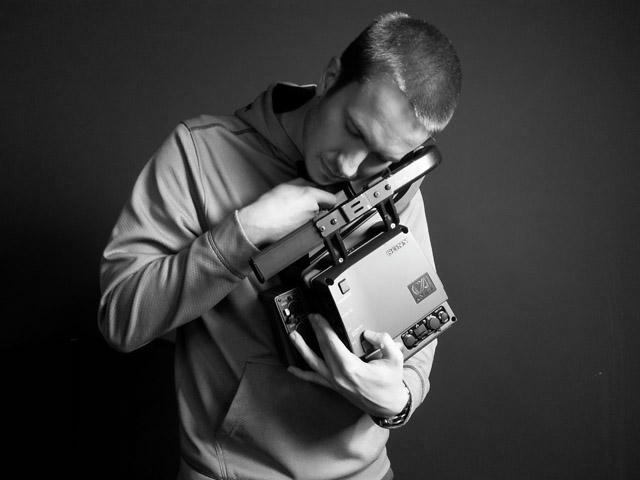
Is this you then?

d2ba4949febcdc5e2ffd84db4aae201591f5a0a58130b9671ee37e050593a1556g.jpg
 
I've spent a significant amount of time pondering whether to pick up a 2nd body for that reason. I've kept my eye on ebay prices and it seems F35s may have appreciated slightly from a few months ago based on demand? Might just be my wishful thinking. *runs down to basement where all my gear is stored to meticulously clean and put my F35 away in its flightcase*

The economic model is somewhat difficult to predict. One one hand, the F35 has suffered massive depreciation from it's original price. From what I understand it was somewhere in the range of $150k sans SRW-1 recorder (those who know better, please correct me). Today, an F35 with color viewfinder seems to command somewhere in the range of $7,500, with occasional deals that are significantly better (potentially as low as $5k). That's about 1/20th of the original value.

But unlike most camera models, the F35 has severely limited quantities worldwide. So while the demand may not be terribly high for either Sony F35s or for Red One cameras, the supply of F35s is more limited, and therefore the value has a better chance of holding.
 
We can all joke about sleeping next to our F35s but if I watched mine get run over by a bus you'd find me a very broken man with little resolve for holding back serious emotion and gutwrenching screams. My c300 on the other hand can die a miserable death with its frail 8bit codec and rickety top handle (jeez man get a grip)

While I'm not a particularly charitable person there's something to be said for snagging up the remaining good condition F35s up for backup but a part of me wants to run the course with the one I got and spread the love so others can vouch for its attributes. This community seems to uniquely back each other up with support anyway so I'll help where I can too.
 
But I'm writing now, because I think we're on the precipice of a titanic shift in cinematography. Not available to you and me yet - but on it's way. If you haven't already looked up the Lytro Cinema camera - do..

The Lytro is no doubt tech that will be with us going forward, but for the foreseeable future it's a VFX camera aimed at solving VFX problems. It asks the question: "what if you never had to extract 3d data from a 2d plate?". My response to that is that extracting 3d from plates has been easy for years, and this is why it's primarily moved to India. As large VFX shows start to transition to acquiring plates with the Lytro, the first effect will be an army of Indian roto and matchmove guys being put out of work. The camera will also slowly kill greenscreens, and good riddance. This is a big win on the VFX front, not having to pull chroma keys and do painful roto cleanup.

Bottom line, this is a camera that will make adding or removing things from the plate a lot easier. If you don't regularly add or remove things from the frames you film, there is not much reason to be jonesing for this puppy. Remember Lytro had to pivot into the VFX space when the traditional photography market rejected their camera. I tried one and couldn't find much use for it.

The F35 on the other hand asked the simple question: "what if digital acquisition could match film?". It arguably still matches it better than anything else out there, because it was focused on that now seemingly quaint objective.

I'm an F35 lover (and owner), not a hater. But the reason I can afford to be an F35 owner is becauses the masses have rejected it and move on to other things.

Absolutely, the Lytro is a VFX camera. But don't ignore my vision of what linking multiple Lytro Cinema cameras (or a successor model) together could accomplish in creating a 3d composite that allows for complete virtual camera and lighting placement in post. And dont ignore that the future of media will go beyond 2d screens. I expect that the Lytro is just the tip of the iceberg in terms of technology that will allow us to scan real world people and moving objects into 3d composite virtual representations, that will have applications in video gaming, virtual reality, cinema, holograms, concerts, advertising, and so much more. I'm not saying 2d image sensors will disappear entirely. But I think the professional creative world will move to 3d imaging in studio environments where it's possible.

For the most part I think you're right; we are heading into a fancy pants immersive VR world of sensory entertainment. But with that will come an equal and opposite reaction against it, and an embracing of the traditional medium by some segment of the market. We've seen this with stereo projection for one, not to mention the Hobbit's failed attempts at HFR cinema. Anyway, I think there will be room for old and new going forward!
 
For the most part I think you're right; we are heading into a fancy pants immersive VR world of sensory entertainment. But with that will come an equal and opposite reaction against it, and an embracing of the traditional medium by some segment of the market. We've seen this with stereo projection for one, not to mention the Hobbit's failed attempts at HFR cinema. Anyway, I think there will be room for old and new going forward!

Agreed. My key point was don't overpay for the old.
 
Okay so now that’s it been years since the OP wanted to know if the fs7 is better then the f35 I am wondering after all this time, which one do you think is better?

The comparison simply amazed me because the leagues these cameras are in couldn’t be more obvious. So what you think now?
 
Back
Top