
Navigation
Install the app
How to install the app on iOS
Follow along with the video below to see how to install our site as a web app on your home screen.
Note: This feature may not be available in some browsers.
More options
You are using an out of date browser. It may not display this or other websites correctly.
You should upgrade or use an alternative browser.
You should upgrade or use an alternative browser.
Iscorama Anamophic Lens Test
- Thread starter Rich Lee
- Start date
Lee Wilson
Veteran
so 5d records 16:9 ?
Yes.
and 2x anamorphic is too much for it
No.
so actually you will never get real anamorphic stretch on DSLR because you need to record in 4:3 ?
You get the amount of stretch inherent in the lens, being a DSLR or being in a 16:9 ratio does not effect this.

Lee Wilson
Veteran
I dunno Lee...from the videos I've seen the aspect ratio tends to be... a little too wide.
. . . for what ?
Generic Lens
Generic Lens
Has anyone use this generic anamorphic lens? Will it work?
Link:
http://cgi.ebay.com/GENERIC-16-9-AN...mera_Lenses?hash=item2c51ab9e2d#ht_500wt_1145
Generic Lens
Has anyone use this generic anamorphic lens? Will it work?
Link:
http://cgi.ebay.com/GENERIC-16-9-AN...mera_Lenses?hash=item2c51ab9e2d#ht_500wt_1145

Jean Dodge
Active member
That generic lens will make an image, the question is, how good will it be? And yes, it will vignette at a wider focal length. How wide is hard to say but you can bet the lens was designed for a small sensor on an SD video camera.
Most likely the center of the image will be much sharper than the edges if you try to use it with a vDSLR.
Most likely the center of the image will be much sharper than the edges if you try to use it with a vDSLR.
Yes, Iscorama 42. New stock, never used before. The other 6 units were already sold.Do u still have stock ?

vidatlantic
Active member
CBS, I just PM'd you.
That generic lens will make an image, the question is, how good will it be? And yes, it will vignette at a wider focal length. How wide is hard to say but you can bet the lens was designed for a small sensor on an SD video camera.
Most likely the center of the image will be much sharper than the edges if you try to use it with a vDSLR.
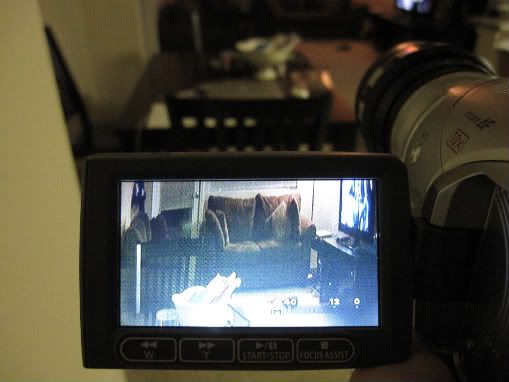
I got one just to see how it would work with a Canon HV,
Here's one I got on craiglist LA, a Kowa 16D, that is going to have me going out on black friday to get a HV40.
I know isco's work good with DSLR, but what about these HV's and Kowas?

Last edited:
Jean Dodge
Active member
The Kowa's have a good reputation. I haven't used them. It all depends on what your final presentation is. If you are making a web video, the expense of an ISCORAMA is hardly justified. But if you are hoping to present on a large screen with a quality projection system, like at a decent film festival then you are going to want the best lenses you can get your hands on.
By "generic" I am excluding the Sankor/Singer models, which I would put in a different category. Generic to me means a 16:9 shoot through / zoom thru adapter that was built to use with a 4:3 camcorder, an asian knock off of the century precision products.
Sankors were meant to use with 16mm film cameras and projectors. Let's either all stay on topic or be better at defining our terms. They tend to vary from unit to unit since many are mis-alligned from use, age and the ravages of time. A good Sankor can make a good image - not as verisitile as an ISCOrama but it will perform under the right conditions.
Keep in mind NONE of these adaptors are fool-proof and that they all must be tinkered with quite a bit, and are subject to issues on a shot-to-shot basis. Don't take anyone's word for anything, test extensively and be prepared for some time and money spent to get things right.
Lee Wilson
Veteran
The only thing I've been reading about the ISCOrama is they can't be or are very hard to rack focus.
Yep! Not easy to rack focus at all.
Jean Dodge
Active member
I disagree about follow focus issues w the iscorama. It's a manual focus lens with a still camera style helocoil but other than that it's not so bad. The singer/sankors need BOTH lenses to be set to the proper distance, while the iscos work with the A lens at infinity. You have to be careful not to mess with the adjustment on the alignment of the squeeze but other than that it can be done on set in real world conditions.... with an operator and a focus puller working in the usual manner.
I doubt you are going to get it onto a hot-head or a steadycam with a bartek, but that's an entirely different story. I just mean shots from a dolly, tripod or slider are not any harder than usual with still lenses. The whole idea of motion pictures with a vDSLR is kind of a compromise from the start. Work with what is possible and accept the limitations.
I doubt you are going to get it onto a hot-head or a steadycam with a bartek, but that's an entirely different story. I just mean shots from a dolly, tripod or slider are not any harder than usual with still lenses. The whole idea of motion pictures with a vDSLR is kind of a compromise from the start. Work with what is possible and accept the limitations.
Last edited:
I can confirm Jean's statement. The main taking lens stays at infinity focus, while the focusing is only done using the ISCORAMA focusing - and it is NOT hard at all depending a bit on the grease used within the helicoid, still shooters prefer it a bit tighter, film shooters a bit more loose - a skilled service tech can do that for about $35. Focus ends at about 2meters/6ft which can easily be extended using an achromatic +0.5 diopter to about 1meter/3ft and with a +1 diopter to about 0.67meters/2ft. I would certainly ONLY use an achromatic diopter to avoid nasty CA (chromatic aberration) and not the cheap single lens diopters on the market. (I have an ad running for such a rare +0.5 achromatic diopter here btw.)