T2i I"m looking for a smoooooth zoom

I need a constant aperture zoom with smooth action. I want to be able to zoom in\out while filming. My subjects will always be relatively close (three to ten feet) so I don't need some huge, heavy zoom. I don't really need it to be fast or automatic. I don't care about IS. And as always for me, budget is a factor.

Any suggestions?

----
Canon T2I
 
Last edited:
What you want is a motorized zoom with a rocker but since that doesn't really exist for DSLR, the next best alternative is a push/pull lens that can be modified for zoom creep. I have the Tokina version of the Vivitar 70-210 3.5 and the push/pull action is almost smooth enough for live zooming. Maybe that's a solution?
 
I find that with my tamron 18-270 i can zoom pretty darn smooth with it if i take my follow focus (a friction style) and put it on there and then manually focus my hand. This works for me when im stopped way down at like F/16. this lens doent have a very noticeable change in the light as you do it getting wider, getting longer it does a bit. I would imagine if you had a lens with a constant aperture it would work better even.
 
Tamron 17-50mm f/2.8 is awesome if you're needing constant aperture for zooms. I don't know if that's out of your budget though. They can be found relatively cheap if you look hard enough ($300 range). It would be harder to zoom with since it is wheel zoom and not push/pull zoom.*

I'm not sure how well it would work, but you could use a follow focus with it if you aren't zooming very much. I don't know if it would be a very good idea though.

If that lens is out of your range, some vintage lenses that are great for short length constant aperture zooms are the Nikon E series 36-72mm (forgot what f stop) or the Nikon E series 43-86mm (also can't recall this lens' f stop either).

The user 'subnoize' on here has one of the 36-72mm lenses for sale for around $40-60; and if you decide to get the 43-86mm, make sure you get the version with all of the engravings (f stop, focal length, etc) on the outside of the lens and not down inside near the glass. The first version with the engravings inside of the ring near the front glass is known for terrible lens flares and quality degrading since the glass isn't as good as the second version.

If you go with any other vintage zoom lenses, do some research on them and make sure they're parfocal, and NOT varifocal.

Some vintage lenses that have a constant aperture are what's called varifocal. There still may be a tad bit of distracting flickering with those. * *
 
DSLR's and their lenses were not desigined for smooth zooming. There are far more problems than just getting a smooth zoom ring.

First, DSLR lenses are not necessarily designed with a zoom mechanism that moves at a constant speed - because of the complex arrangement of elements, the rate of the zoom might change at different points throughout the zoom rings rotation, even if it is turned at a constant speed. So, even attaining a smooth zoom ring does not guarantee a smooth zoom - because the the movement of all the lens elements do not necesarily correspond to the movement of the ring in a constant, simultaneous and linear fashion.

2nd, they have aperture/exposure issues. Even with constant aperture zooms, or when stopped down so that the aperture will not be forced to change throughout the zoom range, it has been demonstrated that there is still some change in brightness.

Then, you have focus issues. Not all still lenses are designed to be parfocal. Parfocal lenses are designed to hold focus throughout the zoom range. Most camcorder lenses are designed this way, which is why the standard technique for getting precise manual focus with a camcorder is to zoom right in, adjust focus, then zoom out to frame your shot. Doing this with a non-parfocal, or varifocal lens, doesn't work. Every time you change zoom you also need to adjust the focus as well. If you try and do a smooth zoom during a shot with a varifocal lens, then the picture will become more and more blurry as you zoom. Unfortunately it's very difficult to find out if a lens is parfocal or not without actually testing it yourself, the reason being that it's something most photography reviews don't test or comment on when reviewing a lens, simply because for still photography it's not an issue.

My suggestion for shooting with DSLR's is that you treat them like film cameras, not like camcorders. When it comes to getting tighter or wider framing during a shot, this means that rather than zooming you should do what they do in the movies: dolly in or out. You can use any method you choose for this - a steadicam rig, a slider, a dolly on rails, whatever you choose. The benefit of this is that gives you the ability to change the framing smoothly with any lens you own - even a prime lens. The downside is that it requires much more setup and planning. The final output though will look a thousand times better than trying to zoom with a DSLR lens not designed for it.
 
I need a constant aperture zoom with smooth action. I want to be able to zoom in\out while filming. My subjects will always be relatively close (three to ten feet) so I don't need some huge, heavy zoom. I don't really need it to be fast or automatic. I don't care about IS. And as always for me, budget is a factor.

Any suggestions?


Canon T2I

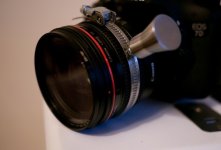
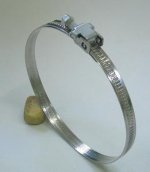
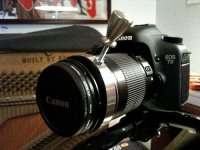
I would try a something like a hose clamp around the zoom ring with a handle attached. This method will only cost a few bucks and can be adapted to any lens. Old film camera zooms usually had a tap hole to attach a threaded handle for non motorized lenses. Longer handles may offer more steady control. You may even try adding weight to the end of the handle, this way you can just let go of the handle when you want it to start zooming automatically with gravity. With different weights and lengths you can control the zoom very consistently.
Using simple physics is always useful, cheap and available.
Your most useful constant aperture zoom for a cropped sensor will a Tamron 17-50mm 2.8 or a Canon 17-55mm 2.8 depending on your budget. I have a Tamron and it's sharp.

BTW / deltoidjohn is 100% correct on all the points he made, and it is way better to dolly than zoom. In that case you can just move the zoom handle to the focus ring to pull focus on a budget.
 

Attachments

  • FF_simple-600x409.jpg
    FF_simple-600x409.jpg
    33.8 KB · Views: 0
  • 504065_20bc36dfd617005ca0a1b688463b8b84.jpg
    504065_20bc36dfd617005ca0a1b688463b8b84.jpg
    7.6 KB · Views: 0
  • focus.jpg
    focus.jpg
    121 KB · Views: 0
Last edited:
What you want to do is a Dolly move and not a zoom. Set your marks to know your points of focus and get yourself a dolly.
 
Unless you're doing sports or choppy-sock, zooming will look sucky in anything remotely cinematic. I'd prefer a dolly, or you can "fake" dolly moves using a tripod (it's somewhere on this forum), or a glidecam. What do you have in mind for shots while zooming, exactly? Maybe there's a better way.

I have a Tokina 80-200 f2.8. It claims to keep focus while zooming, but it's not true. You have to learn to adjust focus while pushing/pulling the zoom, you can only do it by feel. Unless you're tripod is rock solid, you'll get micro-jitter and jello. So really, on a DSLR rig, the only thing that works for zooming is:
1) A strong, rock solid tripod & rig
2) A cinema quality zoom lens, costing a fortune, probably with a PL adapter, or a lot of skill & practice with a DSLR lens, and perfect vision or a nice big LCD monitor

Or, find another way to get the shots you want without zooming. Or, use a video camera with a proper video zoom lens.

good luck!
 
Nikon

Nikon

Nikon series E 75-150, constant 3.5, push pull, incredible color, about $150, must use tripod, adaptor ring,
 
Back
Top