How to use a recorder, and then what?

olindacat

Well-known member
I remember when I first joined DVXuser.com and came to this forum. I asked all the dumb questions, really dumb stuff, and I'm not much wiser for it even now. I immediately bought this: http://dvxuser.com/articles/dvxshop/SoundDVD/ and learned a lot, but there were many missing gaps.

Specifically, I still have no idea how to properly record perfect audio.

Yes, I can turn on a recorder and watch the levels. I know in-camera with external preamps is done but not advised. I bought two very good recorders and never figured out how to leverage their power because I was ignorant. Then there is the post, which is like learning Photoshop or Premiere from scratch, maybe even harder.

So, is there a good place to go to learn audio? I don't mean "ask it here" but actually recorder 101, post 101, etc.?

Or, is it worth it to try and cover it here? I see people buying the Tascams, working about noisy pres, etc., but I want to hear about folio technique, mixing technique, settings and example of how to get the crackle in voices to pop, the rattlesnake to send chills down my spine. Where do I read about mixing in music and how to do it in an NLE?

Am I so lame that all of this has been done in one place already? I've looked here: http://www.dvxuser.com/V6/showthread.php?51526-New-To-Audio-Read-This-First-Please and here: http://www.dvxuser.com/V6/showthrea...FIRST-Audio-101-Helpful-links-and-information here: https://vimeo.com/videoschool/archive/sound/all and many other websites. How did the pros learn? College? Engineering school? Do you have to be an engineer to get the crackle of a fire right?
 
My experience in life has been it's hard to beat professional experience. In almost all things there is a very large gap between the pros and others. School can be a great place to start, but involves lots of $$$ usually. Self taught is good but can be slow. School can be slow also, now that I think of it. I think finding an internship or apprenticeship might still be the single best way to learn a lot fast and become productive. I am sure others can add or argue this - and will...

Best of luck
 
Well, you could start with some specific cases:
What are you trying to record? Where and how?
What kind of results are you getting?
What do you like and not like about the recordings?

I am looking at a feature film. 90 minutes.

I am trying to record a dramatic picture with 70% of the scenes shot indoors, in large spaces with poor acoustics, 30% outdoors in Hawaii and on city streets in NY. The how is what I am looking to learn. Specifically, how to record voices and foley well. I am aware of what single-to-ratio means.

I have had many expensive miss but sold them. I currently own an NTG3 and an Octava MK-012 as well as three Sennheiser lavs. Boom pole. I have a Beachtek and a Riggy 222 which I have used with my D800E. I use a blimp and deadbeat outdoors. I also have two G3s.

I do not have a recorder, but had two before (marinate and SD722T), but could not figure out how to use them well, so I sold them.

I used the Riggy and the Beachtek to run audio into the camera. I am getting good results but nothing outstanding.

I think, for dialogue in interviews or on my community show, where quality is not an issue, my audio is fine. I do not like the fact that it is crude and lacking in any desire of refinement.

I now want to have audio in the movie that is as clean and crisp as possible. I want to layer in foley and richen the listening experience, because I sincerely believe what you hear is as important as what you see, if not more.

I am a self-taught person in everything, ask about where I might learn more, and mention college courses only because I suspect many audio pros studied audio engineering. It is a profession, not a trade per se.
 
Your first mission is to start thinking like a sound person.

Step One - A decent set of speakers in a decent listening environment. You can't hear an reasonably accurate representation of what you are listening to if your speakers and room color everything too much.

Step Two - Get out there and record stuff. Challenge yourself. Record the same thing over and over using different settings and different mics to better understand your gear. What worked well? What didn't? What was quirky/weird but possibly usable (i.e. for sound FX)?

Step Three - Read, Read, Read.

Audio-Vision - Michael Chion
Dialog Editing - John Purcell
The Foley Grail - Vanessa Ament
The Sound Effects Bible - Ric Viers
Audio Post Production - Jay Rose

There's many, many more; this is just to whet your appetite.

Spend some time at FilmSound.org; lots of good history and articles.
There's even lots of okay stuff on YouTube.


As was mentioned, nothing beats real world experience. Take every freebee gig you can to gain experience. Take every opportunity you can to observe/listen to a pro in action.

You just have to put in your time, make mistakes and experiment with whatever gear you have. There are no hard and fast rules except for the hardcore technical stuff.

"An amateur learns from his mistakes; a professional learns from the mistakes of others."
 
Your first mission is to start thinking like a sound person.

Very helpful advice, and exactly what I am doing. I just want to do my practice using a recorder I can grow into. Is it better to go cheap and learn, then upgrade? I have Genelec monitors and my editing bay, if you want to call it that, is rudimentary but better than a concrete jail cell.
 
Are you trying to do this as a one-man band....? Are you selecting locations that are not hostile to recording sync audio?

Yes and yes.


Yes, recording dialog is "Job 1". Foley is a completely different issue. Since it is done at leisure back in a sound-friendly environment. Are you sure you are not confusing Foley with SFX?

I am always confused. I can't even find my pecker half of the time Richard ;-) I mean footsteps, shuffling down hallways, doors creaking open, owls in the night, doors slamming, etc. Are those SFX?

I am NOT aware of what that means. Do you mean "signal to noise ratio" (SNR")?

Yes, sorry.

Do you mean mics (microphones)? Why did you sell them? Good microphones are perhaps the MOST important piece of gear for capturing good dialog.

Yes. I sold them because I was unable to leverage their fidelity, given my crude skills, and because (at the time) I did not need such superior sound anyway. I want to up my game now so will reinvest but want to be sure I do so wisely.

So you sold all your expensive mics and kept the cheaper ones? What was the trade-off decision?

See above.

So you had a top-of-the-line recorder, but now you are trying to record decent audio on a DSLR? Again, the trade-off decision seems to be defeating your stated goals.

I have recorded to the DSLR bc I needed to get stuff done, and hi-fidelity audio was not the priority. It is going to be more of a priority soon.

Perhaps you mean a "dead-cat"? (furry wind protective cover)

I do. My typing is horrid and I think autocorrect is not very good either.

That is probably as good as it gets recording to a DSLR. Which is why it is not recommended for top of the line audio recording.

I know.

If you could explain (and offer samples) of what you mean by "crude and lacking in any desire of refinement", we might be able to offer specific suggestions.

I wasn't looking for specifics in terms of 'listen to this and judge', but will deliver just that as soon as I settle on a new kit. I could use help with that, and the stickies we have are from 2007, so i know the options have probably changed over the years.

But you seem to be doing so many things to thwart that admirable goal. I don't understand the decisions you have made already?

Those were past decisions based on a show that airs on community TV here on Maui. The station (Akaku.org) gets airtime from TWC, and they really destroy it. So, I did not need superior audio quality at the time, just dialogue you could understand.
 
You seem desperate to jump right into the hardest audio job before you have mastered anything at all? You need to gather up the kit you have and get out there NOW and record stuff, then listen to it and really, really analyse what it sounds like on the best equipment you have available, something with very good loudspeakers. Turn the volume up and listen. What do you hear? Is it good? Almost certainly the things that will pop out are down to use, not equipment quality. Simple stuff like using a boom pole. Did you record what you intended? The voice in the middle of noisy environment, or did your technique and aiming wreck it. Did you notice the airplane flying above that spoiled the take? Did you mess up your gain settings and have distortion or tons of hiss? You DID wear headphones when recording, didn't you? What do your footsteps and ambient sounds captured sound like? Do the footsteps sound like footsteps or dull thumps? This is when you really may need to start using the F word. Foley is a totally different process, a subject of it's own. You need to experiment and learn from it. Then try a small project. Then another, getting better every time. Your big project needs developed skills you don't have yet. Spending buckets will not guarantee success. You need technical skills and well developed ears. Each little area is a subject of it's own. Booming is one - it takes lots of practice to capture the right sound AND keep out of shot. You need to be able to predict if it's going to work before you do it, so that means lots of disasters while you learn. It's clear you are keen, but you are not running before walking, you want to do a marathon in a good time with no training. It's silly! It really is like saying you want to be a doctor, and your first operation will be brain surgery. This is before you have done your first injection and discovered you hate the sight of blood! Why not spend some time with your current kit and get good with it, then buy better. Frankly selling your best tools and buying budget ones was a very strange decision. We all strive for the best, why would you waste your money like this?

Small projects first, build skills, and then in a year or two you may be ready. If you attempt big now, it will fail badly due to lack of real basic skills.
 
before you learn a specific recorder, or camera, or anything like that, there are lots of audio basics you need to know. The best thing for this is school. Lots of colleges offer programs for this. You need to learn how to hear. You need to learn all about mics. You need to learn proper gain structure. If you don't know this stuff then the best field recorder won't matter. Yeah, there are books. Yeah, there are DVD's. That's all well and good, but a good education where you really get to learn this stuff and get hands on with gear is the best way to go. There's just too much to cover in a book, a dvd, or a social media post.
 
"I still have no idea how to properly record perfect audio"
- FWIW, as a thirty+ year sound professional, I don't think I've ever achieved 'perfection'.
... but maybe I'm just s l o w .
 
You seem desperate to jump right into the hardest audio job before you have mastered anything at all? You need to gather up the kit you have and get out there NOW and record stuff, then listen to it and really, really analyse what it sounds like on the best equipment you have available, something with very good loudspeakers. Turn the volume up and listen. What do you hear? Is it good? Almost certainly the things that will pop out are down to use, not equipment quality. Simple stuff like using a boom pole. Did you record what you intended? The voice in the middle of noisy environment, or did your technique and aiming wreck it. Did you notice the airplane flying above that spoiled the take? Did you mess up your gain settings and have distortion or tons of hiss? You DID wear headphones when recording, didn't you? What do your footsteps and ambient sounds captured sound like? Do the footsteps sound like footsteps or dull thumps? This is when you really may need to start using the F word. Foley is a totally different process, a subject of it's own. You need to experiment and learn from it. Then try a small project. Then another, getting better every time. Your big project needs developed skills you don't have yet. Spending buckets will not guarantee success. You need technical skills and well developed ears. Each little area is a subject of it's own. Booming is one - it takes lots of practice to capture the right sound AND keep out of shot. You need to be able to predict if it's going to work before you do it, so that means lots of disasters while you learn. It's clear you are keen, but you are not running before walking, you want to do a marathon in a good time with no training. It's silly! It really is like saying you want to be a doctor, and your first operation will be brain surgery. This is before you have done your first injection and discovered you hate the sight of blood! Why not spend some time with your current kit and get good with it, then buy better. Frankly selling your best tools and buying budget ones was a very strange decision. We all strive for the best, why would you waste your money like this?

Small projects first, build skills, and then in a year or two you may be ready. If you attempt big now, it will fail badly due to lack of real basic skills.
This is great advice.
 
You seem desperate to jump right into the hardest audio job before you have mastered anything at all?

That's a bit harsh. I have recorded 30 episodes of a TV show over five years and while I have not 'mastered' anything, I have certainly put in countless hours of trial and error.

Foley is a totally different process, a subject of it's own. You need to experiment and learn from it. Then try a small project. Then another, getting better every time.

This was kind of the purpose of my OP. I wanted to just get something besides a camera recorder to do more learning. I was only saying my ultimate goal was to do a movie. I think we need to aim high, but if you don't think five years of dues paying to earn the right to call myself a novice isn't humle enough, I can stoop lower. I meant no insult only respect fro you and your other colleagues who I know have paid way more dues than I will ever live long enough to do.

Your big project needs developed skills you don't have yet. Spending buckets will not guarantee success. You need technical skills and well developed ears. Each little area is a subject of it's own. Booming is one - it takes lots of practice to capture the right sound AND keep out of shot. You need to be able to predict if it's going to work before you do it, so that means lots of disasters while you learn. It's clear you are keen, but you are not running before walking, you want to do a marathon in a good time with no training. It's silly!

I honestly want to practice the things I need for the dream movie I want to shoot. I will record nails tapping on a table until I get it right. Same with footsteps, rain pitter pattering on metal roofs, and the like. Why not practice what I intend to record? I only wanted to see if I should get a separate recorder and if I should have special mics. I sold my D800E and am camera less. So, I want to get my audio ducks in a row before I make the imaging plunge.


It really is like saying you want to be a doctor, and your first operation will be brain surgery.

This is why I don't come to this section much. Whatever I am doing it is obviously wrong. I am not motivated, I am dejected, but I'll get over it. I'm sorry if I offended anyone, or seemed silly.
 
You stated right off the top that "I still have no idea how to properly record perfect audio"So this makes me wonder when you say you have worked for five years doing sound for 30 episodes of a TV show.

however you also said that you got rid of your better gear because the stuff you have been working on didn't need very good sound.???

So I don't think it was or intended to be "harsh", but more a statement based on what you have described.

You also said you were intending to shoot a 90 min. feature. That after saying you still "had no idea..." leads one to think your probably jumping over your head.

I would expect someone who had done 30 TV episodes to sound like they knew more about sound, could be in part the limitations of forums and the internet.
So I don't think anyone is getting snooty saying that experience is the way to learn faster. That however requires that you are working with or for someone who does know what they are doing.

Foley, is not really what you are talking about. It's not done in the field and is almost impossible to do on your own. FX recording and production recording are fairly different skill sets and they are generally done by different people at different times in the life of a film. The tools are similar but also not generally the same.

I get the impression that your intention is to do all of the sound start to finish. That is not impossible, and no-budget films are not strangers to that workflow, but it's not ideal. Production and post are different enough that it's a big mind switch to go from one to the other.

There is lots of good information on all of it in the stickies for this list.

The main rule in both is that the skill of the person is more important than the tools they use. So questions about what equipment to get to record great sound will always get responses about learning to do it before dropping a lot of cash from anyone with a lot of experience. It's kind of a litmus test, anyone who tells you that Box X will make your recording sound a lot better, should get an asterisk unless it's in reference to some specific technical issue.
 
I would expect someone who had done 30 TV episodes to sound like they knew more about sound, could be in part the limitations of forums and the internet.
So I don't think anyone is getting snooty saying that experience is the way to learn faster. That however requires that you are working with or for someone who does know what they are doing.

The shows are not network broadcasts but free community TV stuff. In I've years I have managed to handle dialogue coming from a very loud, almost yelling show host, outdoors, indoors, while hitting the ball, in high winds, rain, etc., always with mis on him and his guest or guests. I have mixed him with a G3 and Lav, locked down my camera and boomed his three other guests as they all talked, had him hold another handheld dynamic mic with a transmitter as well, tried various things as you might imagine over that time span. I have done a lot of interviews, indoors, with boomed miss, Lavs, even a home-made sound booth with a very HQ Neumann studio condenser mic. I have done a lot of mixing tracks and syncing with Plural eyes and actually drag audio files on my timeline and get it to sync visually by hand. It is 'good enough' for that YouTube or community TV venue.

I guess I was trying to reach out to the community to see how people migrate from one place to another where the quality needs to be at a higher level. I can't imagine my riding the gain (is that the right term?) adjusting for the raised yelling voices as being the only thing I need to do by a long shot.

Foley, is not really what you are talking about. It's not done in the field and is almost impossible to do on your own. FX recording and production recording are fairly different skill sets and they are generally done by different people at different times in the life of a film. The tools are similar but also not generally the same.

Thanks. I'll figure it out but appreciate your even-handed input.

I get the impression that your intention is to do all of the sound start to finish. That is not impossible, and no-budget films are not strangers to that workflow, but it's not ideal. Production and post are different enough that it's a big mind switch to go from one to the other.

I plan to do as much as I can and if I get to a point where I think what I can produce is going to be acceptable I will do most of it, but that isn't to say if and when I have some percentage of my first effort done I won't try to recruit help. Maybe some there are fortunate enough to have the budgets I don't have. I'm just not good enough to have an investtor and I don't want to mortgage my house to pay for a full production. This is more or less a hobby for now.

There is lots of good information on all of it in the stickies for this list.

I read it all the time, and always will. I sometimes emerge from my cocoon to pop my head out to engage. I think it was foolish of me to do it this time.

The main rule in both is that the skill of the person is more important than the tools they use.

That applies to just about everything in life. I hear you.

So questions about what equipment to get to record great sound will always get responses about learning to do it before dropping a lot of cash from anyone with a lot of experience. It's kind of a litmus test, anyone who tells you that Box X will make your recording sound a lot better, should get an asterisk unless it's in reference to some specific technical issue.

I just wanted to get something besides a camera's internal audio to practice with. Because I always take a hit buying and selling gear, I thought I'd try to buy something that was useable for me now, as a person who want stop imrpove, but that I can grow into and use for an actual picture. I realize an iPhone has been good enough in the right hands, etc. I guess I was just hoping for more. My bad.
 
...complaining...free-floating anxiety.

Thank you Richard. I didn't realize I was complaining. I tried to answer your concise questions and didn't mean to whine. As far as having 'free-floating anxiety', whatever that is, I have duly noted your observations of my conduct and will refrain from putting myself out there for you to have to endure such a burden. Cheers.
 
"I still have no idea how to properly record perfect audio"
- FWIW, as a thirty+ year sound professional, I don't think I've ever achieved 'perfection'.
... but maybe I'm just s l o w .

That's funny. I know thee is no such thing as perfect. I have been around audio engineers since I was taught how to work a sound board in the Rainbow Grill at Rockefeller Center in 1979. Those were IATSE guys and when I was working in Atlantic city, on the main floor show at Playboy in 1980-2, the engineers were always saying they were 'striving for perfection'. I always remembered how seriously they took their craft wuso whenever I post on this section of DVXuser I try to be as respectful to the pros and career people as possible, only this thread has blown op on me so I will play whack a mole and hide now!
 
I've got to say all I posted this thread for was to try and improve. I am amazed at how I have irked some so much. All I wanted was input on how I could improve. Geez.
 
Alright, folks. Let's all take a step back. We have someone who really does admit to being inexperienced in sound, and wants to learn. Let's be just a little more forgiving in our advice, keeping in mind that emotion does not carry over Internet posts.

Olindacat, based on the information you have given in your posts, here's what I gather:

You've produced quite a run of community-access programming as a one-man-band production, doing the best you can but fully admitting that sound standards are low for that type of production. For working sound professionals, this doesn't demonstrate a huge base of knowledge or qualified experience simply because, as you say, standards are low and it's really just a matter of making sure everything is audible.

You've been through a couple of field recorders, but gave up on them in favor of in-camera sound with DSLR. The reasoning given is that you feel you couldn't make them work for you (I assume because you weren't satisfied with the recorded results). Remember, it is very much more the user than the tool. If you aren't confident as a user, don't ditch the tool! Ask questions then and there, and learn to maximize your results.

You have purchased, and then sold, what you say are some good (and expensive) microphones, again citing not-so-great results. See above. The good news is that the NTG-3 and the Oktava are perfectly fine for most dialog.

Now you're off to make a feature as a one-man production unit, armed with DSLR-in-camera sound recording and a couple of (actually workable) mics, paired with not a lot of experience in getting sound. That really is jumping into the deep end without ever wading through the shallow end.

I absolutely respect your OP and your desire to learn all the aspects of sound from production to post, so let's see if we can get you on the right track under the understanding that you are trying to take on a mammoth goal without the right tools (both technology and technique). Thus, we may need to take some baby steps first just to hone in on the right tips.

Keep in mind that you have essentially asked a very broad set of questions with NO simple answers. Much of this boils down to years worth of experience to figure out, and it's not possible to sum it up in an Internet post.

It's good that you have already been through the stickies, and have watched the Sound DVD. You can read books and web forums and watch tutorials all day long, but until you get out there and do something as a practice run, using what you think you have learned so far, there's little more you can find for published resources that will help.

Step out for a little trial-and-error. Do something: shoot a test scene from your script, and bring it here with JUST the dialog edit for feedback. If it sucks, be prepared to hear that with the understanding that we'll tell you why and how to fix it. If it's workable but needs some help, or if it turns out to be a pretty solid start, we'll tell you that as well.

Then try adding SFX and music and making a mix, and bring that back. Set the same expectations for feedback as above.

As for recorders, you'll be better off getting back into using a dual-system setup. DSLR in-camera presents not only quality issues but metering and monitoring challenges as well. At the very least, go for the DR-60DmkII or the DR-70D from TASCAM. That will give you decent pre-amps, metering, monitoring, and control, and you can feed your camera as well for a better reference track.

Nothing replaces having an experiencd sound mixer/boom op on your crew. When you try to do it all yourself, something will suffer. Just needed to get that out of the way. Now, here's a starting point for you for production:

1) You have a couple of perfectly usable mics. I keep an NTG-3 in my kit and it sees tons of work. You do need to make sure that BOTH mics have ample shock isolation and wind protection. Good film sound starts with good production sound, and good production sound starts with a decent mic that is used properly.

2) The goal of production sound, 95% of the time, is to get clean, clear dialog. Period. The other 5% is recording wild SFX or ambient sound beds inbetween primary dialog, which happens at the beginning/end of the shoot day or on extended breaks between scenes. Dialog first.

3) The recorder is just that: a recorder. It can control the record levels, and dialog should be averaging around -12dB with occasional peaks as high as -6dB, or even -3dB, as long as it doesn't clip. What goes into the recorder is make-or-break, and the one piece that determines your dialog recording more than anything else is proximity. Get the mic as close as you can without getting into the frame. Within 20" is generally a good range, and the close the better. If the shot is simply too wide or too far to get a boomed mic in, a wireless lav can be helpful.

4) Get room tone (:30 of recording on the same mic and recorer as the dialog, with everyone standing still and not speaking) at the end of each scene. This is what you will use to smooth out dialog edits.
5) None of this matters if you aren't wearing headphones and actively monitoring while you record. The meters can only tell you that something is being recorded, but they cannot tell you anything of the quality of that recording.

And for post-production:

1) Start with your dialog edit. That is the centerpiece, and everything else in the film is built around it. Unless it's a "silent" film.

2) Use SFX rather than Foley for now. There are plenty of good FX buyout libraries out there (we have a sticky for that). Want that campfire to sound really nice? Replace whatever you recored in production with SFX of a campfire. Need that rattlesnake to catch the viewer's attention? SFX can help make that happen. Footsteps? Clothes or bedsheets rustling? A car speeding by? The inside of a passenger train or airplane cabin? Build your sound world through SFX just like you built your visual workd through set design. And the trick (and the fun part) of SFX editing is that rarely do you hear just one sound effect used for one final sound: it's layers of different sounds put together to create one moment.

3) When you mix your sound, unless you are mixing to broadcast spec, there's no "magic formula" for levels. You likely aren't working on a true mix stage, though, so it's hard to steer you in the direction of a typical motion picture mix. Dialog may average around -30 for whispers, or -15 for regular speech or heightened/energetic dialog, and it may peak at -12 or slightly higher for sudden shouts. Narrative sound design has a very broad dynamic range (the distance between the softest and lijdest sounds). Mix your FX and music levels around your dialog. SFX that match human movement or sounds of props should sound natural in relation to dialog. (Example: it drives me nuts to hear a cell phone ring knock me out of my chair; it should sound believable within the space of the film.). Sudden sounds like crashes and explosions may peak at -6dB. Now, all those dB levels aside, you really need to trust your ears more than the meters. Which brings us to...

4) If you are mixing on computer/multi-media speakers or, worse, headphones, don't expect much. Just like headphones during production, you need a reliable set of monitor speakers in a reliable mixing space to work with confidence that what you hear in that room will translate to other spaces and playback systems. Treating a room for decent mixing isn't complicated, or dreadfully expensive.

So... go try something. Make a short, or a short scene, and bring it here for advice. Just get out there and practice!
 
Last edited:
Hi Alex:

I knew there was a reason I had faith in this forum. You've restored it beautifully, and I can tell you four or five of the folks who have given me my lashings I have been the lucky recipient of very helpful advice, so I know all of them (even Richard) are truly good people who are very awesome at what they do. It am to blame for my overly broad and inexact OP. You have helped me immensely in your response. I really can't tell you how much. There is another fellow in the cinematography section who has done the same, even helping with audio. It is invaluable and I will take what you've advised to do exactly as you have suggested.

You've been through a couple of field recorders, but gave up on them in favor of in-camera sound with DSLR. The reasoning given is that you feel you couldn't make them work for you (I assume because you weren't satisfied with the recorded results).

Not exactly. I gave up on them for two reasons: one was sync via Plural eyes on my Mac was a nightmare. Second was that my lack of an ear left me perplexed as to why I was going to the extra trouble to record this basic web/community TV video with such high quality gear. It seemed to me, at the time, that I was better off unloading the recorders as I was more than able to get what I needed then for the purposes of what I was using the recording (in camera) for. Had I been shooting for a movie, I would not have given up on the recorders. So, over the past couple of years, as my print publishing business has been dying a death of a 1000 cuts, I have dreamed about doing more in the filmmaking area. Specifically, I felt that if I can assemble a 100-page color magazine, shoot, write, do the prepress, layout, traffic, print buying, distribution, accounting, sales, etc. for 20 years, I might be able to cobble together variables in a film, albeit crudely.

My first intended venture was to be a DVX Fest. One of the Horror films. I thought that would be a good way to learn. Several years ago my wife and I actually worked on it. But, we were also working 14-8/7/365 trying to monetize the web and our print content digitally, so we have been working harder for less these past 10 years. That took away our time to devote to the first try. We never gave up hope, and when we do episodes of dagameshow.com, we try to do this or that, but the end product is a pretty messy hodge lodge. We make no excuses. It has a small fan base that gets some laughs and that is it.

But, as we are nearly out of business, and at 52 almost complete unemployable here on Maui, we have some time and so we want to work on a craft, any craft, and given she and I have been in media since we were in our teens (she in music, having worked for Radio Band of America, Quiet Man Productions, etc., and I having worked in radio advertising and stage production before getting into print, we feel we have no other place to go besides bagging groceries at Costco, only that job is too high up the pay scale for our limited talents.

So, we have some time and we have honest work ethics. I know sound is 70% of what we see and Marie agrees. I know that given my D800E is gone, and I am buying new camera gear, that I did not want to record to the camera. I know it is a no no. So, I stupidly posted my "how can I record audio for a movie" thread :-)

You have purchased, and then sold, what you say are some good (and expensive) microphones, again citing not-so-great results. See above. The good news is that the NTG-3 and the Oktava are perfectly fine for most dialog.

I had hoped so. I'd buy a TLM67 or a CMIT 5U if I thought I could justify it, but I am very well-aware that what we ant to do is going to take us a long time to learn, and so I figure these will be just fine while we learn.

Now you're off to make a feature as a one-man production unit, armed with DSLR-in-camera sound recording and a couple of (actually workable) mics, paired with not a lot of experience in getting sound. That really is jumping into the deep end without ever wading through the shallow end.

I remember telling my father I was going to start a golf magazine with money I saved selling cars here on Maui. I had never sold cars but it was the only job I cold get as I was new here and local businesses frown on new transplants. He told me I was an idiot, I didn't know what I was talking about, I'd go broke, it was too big a job for one person, etc. When I am told I can't do something I fight it, but let me say that after Marie and I tried to shoot our little DVX hoarfrost we got a very good smack in the face. So, we cut way back in terms of our own expectations and have tried to bang out 30-minute shows to get used to the entire workflow, from concept to delivery. Granted it is crap. But, we now have had years of paying out dues on a l=very low level and just want to improve. We have no delusions. We know what we make will be laughable. But at least we aren't sitting on our asses complaining about how tough life is ;-)

Keep in mind that you have essentially asked a very broad set of questions with NO simple answers. Much of this boils down to years worth of experience to figure out, and it's not possible to sum it up in an Internet post.

I know. I regret this post. I often write them and delete as fast as I can. I made this same mistake a few days ago. I have been away from posting here for a couple of years and it has been a baptism of fire, again... But your baby step advice is something we truuly do take to heart. I actually wanted to consult the mighty braintrust here before I even considered a recorder. Most would just buy one. I made that mistake five year s ago. I actually am trying to take baby steps. Even conquering a movie has to be done in baby steps, unless you have millions and are Hitchcock.

Step out for a little trial-and-error. Do something: shoot a test scene from your script, and bring it here with JUST the dialog edit for feedback. If it sucks, be prepared to hear that with the understanding that we'll tell you why and how to fix it. If it's workable but needs some help, or if it turns out to be a pretty solid start, we'll tell you that as well.

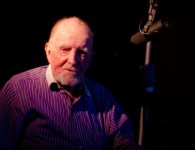
This was the set-up I made to capture only the dialogue. I went out and bought four autopoles, went to Home Depot and bought 1" pipe, cut the pipes and created a mini-recording room, hanging stage curtain material from ceiling to and covering floor. Then positioned a mic within 20" of his mouth. By the time I was at this point I had sold the 744T and still had the Marantz, but thought maybe an interface wold be better. Spent a few days at BH Photo and got Pro Tools and I think an MBox. I am not sure if the link will work as I don't see audio upload only movie but have added the clip.

ada-studio.jpg[video]https://www.dropbox.com/s/k14mn9nf2hwbnuy/dad-warehouse-take-one.wav?dl=0[/video]


Then try adding SFX and music and making a mix, and bring that back. Set the same expectations for feedback as above.

I love sound, and on Maui, we have bird and animals and noises of all kinds. Inside the crater, it is surreal. I was hoping I might be able to include that somehow an will follow your guidance.

As for recorders, you'll be better off getting back into using a dual-system setup. DSLR in-camera presents not only quality issues but metering and monitoring challenges as well. At the very least, go for the DR-60DmkII or the DR-70D from TASCAM. That will give you decent pre-amps, metering, monitoring, and control, and you can feed your camera as well for a better reference track.

Precisely why I posted this thread, bc I knew i needed to get away from in-camera audio acquisition Alex. You are the second person who told me to go Tascam and that is all I need to hear. Done. i'll have one in week.

4) Get room tone...This is what you will use to smooth out dialog edits.

Right. Re: "smooth out dialog edits" what does that mean?

5) None of this matters if you aren't wearing headphones and actively monitoring while you record.

I have used headphones religiously for five years.

3) When you mix your sound, unless you are mixing to broadcast spec, there's no "magic formula" for levels. You likely aren't working on a true mix stage, though, so it's hard to steer you in the direction of a typical motion picture mix. Dialog may average around -30 for whispers, or -15 for regular speech or heightened/energetic dialog, and it may peak at -12 or slightly higher for sudden shouts. Narrative sound design has a very broad dynamic range (the distance between the softest and lijdest sounds). Mix your FX and music levels around your dialog. SFX that match human movement or sounds of props should sound natural in relation to dialog. (Example: it drives me nuts to hear a cell phone ring knock me out of my chair; it should sound believable within the space of the film.). Sudden sounds like crashes and explosions may peak at -6dB. Now, all those dB levels aside, you really need to trust your ears more than the meters. Which brings us to...

4) If you are mixing on computer/multi-media speakers or, worse, headphones, don't expect much. Just like headphones during production, you need a reliable set of monitor speakers in a reliable mixing space to work with confidence that what you hear in that room will translate to other spaces and playback systems. Treating a room for decent mixing isn't complicated, or dreadfully expensive.

These numbers are so very helpful thanks Alex. I have two Genelec monitors. Years ago, in this exact forum, I spent a lot of time cobbling together an editing bay, with advice given, but could not afford the rent and am now starting from scratch, probably making my editing bay in my bedroom. I will cover the walls and ceiling and floor and try to make a good sound room with what I have.

You have been heroic. To everyone else who I miffed I am sorry for the OP. I meant well, but obviously didn't ask my questions properly..... Amazing as I have been around this site for a while now. I should know better. Apologies again.
 
Precisely why I posted this thread, bc I knew i needed to get away from in-camera audio acquisition Alex. You are the second person who told me to go Tascam and that is all I need to hear. Done. i'll have one in week.

Before I go ahead and buy the Tascam, I just want to ask if the PIX 240 is worth considering? I ask this because I can get two birds in one shot, using the monitor and video recording features with supposed Sound Designs audio quality, or is that a myth?
 
Back
Top