How to shoot super, extreme macro?

nedcam

Well-known member
I have the first instance where I need to get in very, very close with my AF100. It is a video on coffee grinding. I imagine since we are dealing with still lenses the best way is to buy screw on diopters? As I recall from my still photography days the center is much sharper than the edges.

My tightest glass is a Tokina 50-135 f2.8.

Thank you.
 
I have the first instance where I need to get in very, very close with my AF100. It is a video on coffee grinding. I imagine since we are dealing with still lenses the best way is to buy screw on diopters?

Um... no. The best way is to use a macro lens, a lens that's designed for the task. Unless you happen to like distortion, vignetting, uneven sharpness across the field, etc.

http://www.panasonic.net/avc/lumix/systemcamera/gms/lens/dg_macro_45.html
http://www.getolympus.com/us/en/zuiko-lens-35mm-f3-5-1-1-macro.html
http://www.nikonusa.com/en/Nikon-Products/Camera-Lenses/CloseUp-Macro/index.page
http://shop.usa.canon.com/webapp/wcs/stores/servlet/subCategory_10051_10051_-1_29759
 
This work great on a zoom - gives moderate magnification at the short end and high magnification at the long end. If the 250 is too strong, there is also a 150.

http://www.amazon.com/gp/aw/d/B000A1SZ2Y/ref=redir_mdp_mobile

Edit: @Bruce Watson: I own a Pentax 100mm DFA macro. It's a bit better than the Raynox solution for stills, but for video I prefer the flexibility of the Raynox - quality on a 1080 image are very similar when stopped down (which you always will be for reasonable DOF).
 
Last edited:
These are fantastic, and affordable. They will get you in close:

http://www.ebay.com/itm/NIKON-MICRO...34096965?pt=Camera_Lenses&hash=item2c6e993b45

Ditto that... if you buy a Micro-Nikkor 55/2.8 or older/cheaper 55/3.5, and either a Micro-Nikkor 105/2.8 or Tokina 90/2.5, you'll have your macro needs met for any platform you may use in the future.

The m43/43 options are great lenses but you're only gaining auto features which would rarely be used in macro work anyway. The Leica DG 45/2.8 is good, the Olympus 4/3 50/2 and m43 60/2.8 are nearly perfect (but pricier)

Use good stabilization and get the camera in close. Augment magnification with extension rings or diopters as possible.

Very long lenses (like your 50-135) unfortunately rarely make good macro lenses due to poor close focus distances... filter diameters are so large that quality close-up diopters for them can easily cost as much or more than a purpose-built macro lens.
 
These older Nikkor Micros are also notoriously sharp. They also do double-duty with the M43 as a reasonably fast prime.
 
The Raynox fits 52-67mm filters so will be fine on your 50-135mm. I use it on a 45-150mm Lumix (which provides IS and push-to-focus on my AF100, which is sometime handy). At 45mm the field of view is 2 inches wide, at 150mm its 0.5". Working distance from the front of the lens is around 4 inches in both cases.
 
Another way to get huge macro magnification is with a reversing ring, where you mount the lens backwards. Get a ring that mounts to your lens mount and the other side is a filter ring, then screw the lens onto the filter ring and ... macro.
 
How close do you really think you will need to get Ned?

Some of the macro stuff I shoot the lens is really close to the object to see it big, and this is with a 1:1 macro.

Just wondering if what you need is really a macro?
 
Thanks guys. For a one day job I don't think I will buy a lens though, an adapter perhaps.
 
David I think this will be like pepper, but there will be a comparison with different size grounds.
 
Got you.

I shot some coffee a while back at a roaster but can't recall using my macro on that shoot, and we did some grinds. I seem to remember using longer lenses for that, but the shoot is a little hazy now.
 
Another way to get huge macro magnification is with a reversing ring, where you mount the lens backwards. Get a ring that mounts to your lens mount and the other side is a filter ring, then screw the lens onto the filter ring and ... macro.

This works better with fast wides - the wider the lens, the more magnification. VERY difficult to focus, though, since the lens will essentially have a fixed focal point - you have to move either the camera or lens forward and backward to focus.

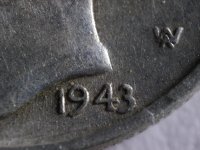
IIRC this shot was of a US dime using the Voigt 17.5 inverted

P1010201.jpg

Using my C-mount Tamron 4-12/1.2, things can get almost microscopic
 
Hey Ned

Just if it is of interest to you and what you are about to shoot.

I shoot a lot of food (and product) for TVCs.

I shoot close up but I have always found that there is a point where getting too close starts to compromise the image and becomes a look that I would classify as "documentary".

Its so close that it cant be lit with any degree of control and shape (contour). It just becomes "a shot" of nothing I can use.

I have Nikkor Macros and I have extension tubes and I have dfiopters. The tubes never get used because they cross the line into the "look" I dont want. The macros are perfect and the diopters are more of a problem solver if we run into an issue with a standard lens and that is generally not a "macro situation anyway.
 
You can also use enlarging lenses. Quite affordable. A Rodenstock or Schneider, 50mm or the 80mm, for example. Used with tubes or/and a focusing teleconverter.
 
..... I have always found that there is a point where getting too close starts to compromise the image and becomes a look that I would classify as "documentary".

+ 1 for that.

With a Zeiss 100mm Macro you can get as close as this - in a doc situation - maybe you rent it.

 
Thanks Shooter and everyone. I've got to figure out how close this client wants to go in terms of comparison of grounds fineness. I am thinking of making small mounds, as in little ant mounds, back light and a well manicured finger plays with them so the viewer can see the difference.

Thanks
 
Back
Top