Home studio, what to get? Flash & sync for 5dmk2

ICD Films

Well-known member
Hi guys. Need som advice here.

Are there decent cheap "studio kits"? How does flash triggers work? Wireless and work with 5dmk2. How does it sync with the flash? Want as little hassle as possible.

How strong flashes? "Most serious studio photographers start with about 2000 watts-seconds" Really? Sounds like a lot. I don't need super-clean iso 100 images. Also mostly interested in half-portraits/closeups/faces but on the other hand "buy once cry once"... maybe I should save up money for some good stuff instead?

Some basic advice, know little of studio photography. Just want something to play around with at home. Thanks!
 
There's two main types - speedlites with TTL metering and monolights. Sounds like you are going monolights ? Maybe start with two 320's softboxes and pair of triggers.

The main thing to realize is that in strobe photography the shutter exposure is from the start/end of the flash not the mirror in camera
 
Cheap is relative. What's your budget?

As J Davis mentioned, flash photography is broken into two catagories speedlights and strobes. Strobes are more powerful, have faster recycle time, have modeling lights, and typically run off of AC power while speedlights are portable, have ETTL metering, can do high speed sync and run off of AA batteries. I've shot plenty of studio quality portriats with speedlights, however, you won't get 100 ISO images when diffusing. In terms of price, on average speedlights range from 150-500 and strobes range from 300-1200. That being said if you want strobes, I highly recommend paul c buff alien bees or Einstiens. Both of these products are a great bang for your buck and Einstiens have some features you can't get anywhere else. The Einstiens cost $499 each which is the same as a high end speedlight. Adorama flashpoints also seem to be a good value but I have no experience with them. I did see one pre-production flashpoint strobe that had LEDs as a modeling light which was very appealing...it should be realeased sometime in the near future if not already.

Keep in mind that you also need to budget for accessories such as reflectors, softboxes or umbrellas, gels, stands, and a carrying case.

Another thing to budget for is wireless triggering. The biggest differences in features is if it uses IR or Radio transmission (you want radio) and if it can do ETTL metering, zone and power control or it just triggers the flashes in which case you have to set the power level on your flashes manually. I love pocket wizard. the multimax line is an industry workhorse but I'm in love with the flexibility that the TTL pocketwizards offer. You will need to buy a transmitter that sits on your camera and a reciever that sits on your flash. I recently bought a whole strobe kit of Einsteins so if you are interested I've listed what I bought and how much it cost. keep in mind that I shoot a lot of studio and wedding work so I needed a kit that suits my personal needs

4x Einstien strobes - $499 each
4x 180 degree reflectors - $12 each I think
4X 13' air cushion stands - $59 each
1x power inverter and battery for einstien - $250
1x spare battery for einstien - $80
1x flashpoint rolling case - $100 (Holds 4 Einsteins, 2 speedlights, gels, pocketwizards, einstien batteries, extention cords and power strip.)
2x 86" large shoot-through umbrellas - $40 each
1x extra large light stand bag (for lightstands and umbrellas) - $50
4x pocket wizard power mc2 recievers for einstien strobes - $100 each
1x pocket wizard mini tt1 - $200
1x AC3 zone controller - $80
1x CTO gel for strobes - $20
16x - binder clips to hold gels - $2

I also have another two 430ex speedlights that have flex tt5 trancievers and another pair of a mini tt1 and AC3 zone controller when I want to share my strobes with a second shooter at weddings.
 
Last edited:
2 years ago I wrestled with the same thought about studio lights versus speedlights. Today, I don't even think twice about my decision to go with speedlights for studio and even other types/styles of photography. Below are some images of my older work when I first got started, mostly shot between 200 and 400 ISO and all with one or two external 580EXII flashes.

With such clean images coming out of today's modern DSLR I see no reason to shoot with non-portable flash heads that require 120v AC. (Yes you can simulate a modelling light on a flash too if you like...) I debated a set of Elinchrom's for weeks and contemplated the serious $$$ and lack of portability so in the end decided on the Pocket Wizard mini TT1 (transmitter) and the Flex TT5 (receiver) for each of my Canon 580EXII's. Add a light modifier of your choice like a cheap umbrella, reflector disc, small soft box, beauty dish, or just bounced light off a 24x36 foam core board and the possibilities are endless.

I use these to shoot indoors and outdoors, and something MOST people don't know is that the Pocket Wizards feature a HYPERSYNC mode which will allow you to shoot beyond the 1/250th flash limit which can be real handy outdoors in bright sun to let you shoot with really high shutter speeds and descent f-stops. People swear that a "flash" is not powerful enough to compete with the sun... but they are indeed wrong, technology has changed that.

If you are on the "cheap" then leave out the wireless sync for now and you can just as easily start by using a sync cord and a single 580EX. In fact, that's my backup that I always carry a sync cord incase my wireless goes missing or breaks on a shoot. I now own three 580EXII's, one TT1 and three TT5's. Most of my work is done with one flash but on rare occasion I get all three going...


Last edited:
Starcentral, I mostly agree with what your saying, however, I use both speedlights and strobes and definitely see limitations to each. It all depends on what kind of photography your doing. For portrait work on f16 days, strobes are a must if you are looking to balance out the sun and use diffusion for mid to full length shots. You can get away with a speedlights in a small studio studio but won't be achieving studio quality ISOs unless your shooting with a wide aperture, you won't have a true modeling lamp, and you won't have the recycle time typically sought after in the studio. If you are shooting weddings in a large hall, strobes are a must if you are bouncing. On the other hand, speedlights offer very low power (lower than a strobe can achieve) which is necessary at times and are able to achieve High Speed Sync which is crucial when shooting action and need to balance ambient light.
 
....I don't need super-clean iso 100 images. Also mostly interested in half-portraits/closeups/faces...

^ yes it does depend on the photography you're doing and according to what the poster said he needed it for, I think speedlights will work just fine. Having a few will always come in handy for small events anyway, and later if you really need high power then rent or buy them at that time. Also don't forget you can always double or triple up your speed lights using two-way, three-way, four-way adapters if you really want to shoot higher apertures. :D

Umbrella_Flash_Adapter_3.jpg


Yes of course speedlights are not without its limitations but the point of my thread was to educate people and more importantly SHOW what kind of results modern speedlights will get you so its something tangible to consider. I never would have believed the types of results possible if I had never seen them myself.

ICD Films, I suggest you check out this photography forum and take a look at the small studio thread, as well as some of the samples posted there. There is certainly far more better work than mine. Check it out:
http://photography-on-the.net/forum/forumdisplay.php?f=35
 
Last edited:
Ive been doing stills since 1995 professionally.

Triggering - studio flashes have build in (or you can add on a photosensitive cell) so that when one fires they all go off

Such a system wont work on the beach but will in a studio


The best method to trigger is Pocket Wizards these are radio so work in any light over long distance

Various other brands have copied PW radio slaves - all not so go .. and cheaper

Of course you can use a wire to trigger - remember the wire only goes to one light and the other flash with that other light

There are various triggering systems with IR - I guess they work inside but wont work outdoors

How do I trigger personally.?

SOmetimes I just use a wire - or if there is a lot of traffic in the studion (models/mua) I use my wizards

Outdoors I always use wizards

What flashes?

Studio strobes with built in photo cells make for an easy system to trigger and smooth setup

In general I think studioflash can be too bright - say you desire F4ish (as is the fashion) and a close in 4X4 softbox an Elinchrom (Elly) 500 is too bright on minium settings

Really you only need studio flash (500w/s+) if you want F16 or shooting through a massive modifier or are doing a 10+person group shot

Of course studio flash have modeling lights which can help you craft your light

To me the most versatile head is the Quantum Qflash going down to 1/256 power and also having a bit of grunt 400w/s

Thats what I use on location

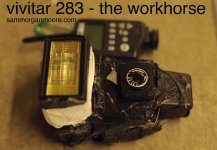
My other location gun is the Vivitar 235 - about $50 used - bizzarely I have my $300 radio receiver on it!

In the studio we have Elly 500w/s heads

I also had a 4k pack - but it broke - we have seen no need to mend it as the 500w/s give us all the grunt we need

So stuff I like..
Vivitar 283
QFlash
Elly 500 (bowens are the same)

What I dont like is the $400 brand flash guns or TTL which IMO is a waste of time
 
I am also only trying to educate. I just felt your original post was too definitive that speedlights are all any photographer needs when the truth is that most photographers need both for different situations. The poster did mentioned that he didn't need 100ISO images and that he would be shooting closueps but he also asked about stronger flashes and the possibility of future proofing.

If he is only shooting in the studio and he wants to future proof then I think strobes are a no brainer IMHO. A 580ex II is going to run you $500 the same amount as an Einstein with a pocket wizard receiver! Paul c buff actually makes better receivers than PW for $29. Only drawback is that it won't be compatible with with ETTL on speedlights. Both options give you ratio and zone control.

The Einstiens have 9 full range from 640ws down as compared to the 580EX's 7 stops. They even have a color mode that allows for consistent 5600K at all power levels which is important for serious studio photographers.

In terms of doubling, tripling and so on. Two speedlights together only gives you one extra stop of light, three will only give you 1.5 extra stops of light. If you buy an 8 square, and rig 8 speedlights, you only get an extra 3 stops of light. You would end up spending $4,000 for the power you could have gotten from one $500 strobe!
 
Last edited:
More samples of a SINGLE speedlight (580EXII) in small home studio setup.

1/125 @ f5.6 ISO 200. 580EXII set on manual power running at about half or less.

IMG_7118.jpg


Below, 1/60 @ f8 ISO 200. (and a bit too hot yet)

IMG_7090.jpg
 
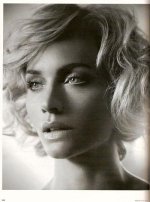
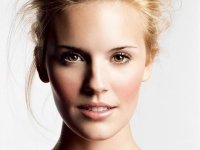
Thanks for all the info guys. I'm not a pro, just a creative person who wants to discover studio shooting. I'll post few examples of "stuff I want to re-create", so to speak. I know posting examples is silly, but since I actually think a lot of non-pro studio photography looks pretty avarage, doesn't hurt asking.

"So I know what I'm getting into".


I personally love when you get shadows, either on the face or even the background from the flash (see examples below).

936full-amber-valletta.jpgws_Maggie_Grace_portrait_1600x1200.jpg

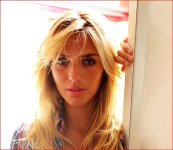
Lastly, the picture of the woman with a blown-out background (sunlight) how strong flashes do you need for this kind of shooting? Browsing flicker for "580EX II" I figure a speedlight is way too weak for this type of shooting... how much needed to counter daylight, generally speaking? (if there even is such a thing as generally speaking)

blownout.JPG

Again thanks for all the advice,
 
Last edited:
I'd say one of the biggest reasons amateur photos look like crap is because of the studio size - not necessarily the camera or the photographer. Add to that lack of proper light control or too powerful use of lights and you can have yourself a recipe for disaster.

For example when your background wall is only 5 feet (or less) from your subject, for one it becomes hard to light your subject and background separately. If your "studio/room" is only 10 feet wide and walls are white or light coloured you will get added fill to your shot making it harder to get higher-contrast images with shadows. A coloured wall or carpet will actually reflect that colour onto your subject, background, and overall scene!

If your studio is only 20 feet deep then think about what that will do for your A.) distance to the subject for the focal length you use, and B.) distance from your subject to the background and what that will mean for the aperture you want to shoot at AND also controlling the spill of your key light? You really want to shoot your subject at 18mm just so you can get 10 feet between them and the background?

We take a lot of things for granted when we see good looking images in films or photos and do not spend an extra moment to try and reverse-engineer how it may have been shot or what "tricks" were used lighting-wise or set-wise.

One of the reasons I took up studio-photography was to get better at lighting film sets and I have to say it has really helped me. When I light any film scene or give advice to others the first thing I suggest is always creating separation between your subject and background. Pull that couch 5 feet away from the wall, dress up the background a little and light it 1-2 stops less than your subjects, etc..

In studio photography by using "distance" you can light your subject without spilling on the background which means you can better control how you want your background to appear. i.e., super white, grey, or black. By using a single light source it is possible to shoot half of it on a diffusion screen to key light your subject, while the other half goes onto the background or vice versa... there are so many tricks like this to studio photography but the main thing is to work in a large enough space and learn how to use your light modifiers and what they actually do.

For example a cheap $13 umbrella could have been used on photo #2 two you posted (you can see the reflection in her eye) and the distance between her and the background is what determined the shade or level of the background. In a small studio an umbrella will hit the background harder making it "whiter" but say you had 10 feet between your subject and background it would be middle grey or possibly even dark grey/black.

Photo #1 - again, a soft key light source as you can tell by the shadow her nose has created on her face. It looks 90 degrees to her versus the traditional "45 degree key light" setup many people use. The light looks flagged adding additional shadow on her face, the background could be close behind her or far away but in either case we can see more a "spot" on the background with a nice soft diffusion causing a gradient on the background. Think about what we might do to create that look?

There was another photo you posted which now seems to have been removed but from the shadows you could tell a hard source light was used due to the hard-edged shadows the light created. This was likely the result of a direct flash head light without any diffusion used.

For creating backlit or overexposed images this is easier than you think. Just light your background 1-2 stops higher then your subject's face. You can do this using direct light without a modifier on the walls and ceiling, or an umbrella to throw and scatter the light everywhere. Here's one I did similar to that using a speedlight at full power behind the subject and then used a second light on the front for some fill (front is too hot in my opinion I might have just tried using a reflector instead). I could have just lit the area behind her instead and it would have created quite a white hot blown background - generally smaller spaces behind your subject will work better for this.

4940857670_24c870c28b_n.jpg
 
Last edited:
Great. Probably picking up a 580EX II and see where it goes from there. Stupid question -- what's the cable called that I need for 5dmk2? Google disappoints.
 
You can buy a used 580EXII for $350 on ebay if you keep an eye out for it. I bought one retail for warranty and my other two just used for around $400 two years ago.

You can get a canon off camera shoe cord like this: http://www.bhphotovideo.com/c/product/498744-REG/Canon_1950B001_OC_E3_Off_Camera_Shoe.html or shop around for an off-brand one for less money like this one: http://www.bhphotovideo.com/c/product/749770-REG/Vello_OCS_C3_TTL_Off_Camera_Flash_Cord_for.html I suggest a short and long one so you can run the cable from your camera to a speedlight on a light stand.
498744.jpg


***If you are worried about the height increase of the speedlight due to the shoe you can always try a male PC sync to male PC sync cord to go directly from your camera body sync port to the one on the 580EXii. I don't think you will run into height issues as I am using my 580's on the Pocket Wizard which is also raising the 580EX about an inch or less.

For UMBRELLA speedlight photography I suggest this:

- Photoflex multi clamp with shoe mount (will allow you to mount a speedlight to a light stand, and use an umbrella for diffusion). You can shoot-through an umbrella or bounced into an umbrella http://www.bhphotovideo.com/c/product/42160-REG/Photoflex_AC_BSWCP_Multiclamp_with_Shoe_Mount.html It features an umbrella hole in a slight angle so the speedlight head is actually pointed to the CENTER of the umbrella where it should be - not the side of it. Be CAUTIOUS with cheap imitation multi clamps!
42160.jpg


- Westcott white umbrella with removable black cover (maybe get a silver one too for more sparkly higher contrast images since you said you like shadows/contrast) http://www.bhphotovideo.com/c/product/501164-REG/Westcott_2011_43_White_Umbrella_Collapsible.html
501164.jpg


For SOFTBOX speedlight photography I suggest this:

- Chimera speed ring for Canon. http://www.bhphotovideo.com/c/product/179134-REG/Chimera_2795_Speed_Ring_for_Canon.html This allows you to mount your speedlight to a stand and also mount a Chimera softbox to it.
179134.jpg


You will need this for it too however to mount your actual speedlight to the speed ring http://www.bhphotovideo.com/c/product/52772-REG/Stroboframe_300_SHO_Flash_Mount_Adapter.html
52772.jpg


- Chimera Pro softbox plus II - 16"x22" - http://www.bhphotovideo.com/c/product/13271-REG/Chimera_1510_Pro_II_Softbox_for.html This is pretty small but most of the photos I posted on page one were shot with it, it is most useful for small objects, heads, faces, and you can get away with half-portraits. I've even pulled of 3/4 length and full body with it as seen in some photos on page 1 of this post. What sucks about the cheaper soft boxes is notice the edge of it, there is NO recessed front face to help control light spill or add extra light control options like grids, etc.. you can glue or sew on some valcro and eventually build your own flags that can be added on to stop spilling light.
13271.jpg


- Chimera single axis stand adapter - http://www.bhphotovideo.com/c/product/503982-REG/Chimera_3860_Single_Axis_Stand_Adapter.html This mounts your speed ring and softbox to your stand. You need it to adjust your softbox angle on your subject.
503982.jpg


FILL LIGHT WITHOUT A SECOND LIGHT SOURCE

You will probably find that with single source lighting you will get "too much" contrast in your images, so I do suggest for now you keep it cheap and just use a piece of foam core, or light reflector disc. If you don't have an assistant then you can use an extra light stand and a light disc holder like this. http://www.bhphotovideo.com/c/product/42107-REG/Photoflex_DL_BHOLDER_Telescopic_Litedisc_Holder.html
42107.jpg


Feel free to PM me or post any more lighting questions if you like.
 
Last edited:
If cheap options is one of the criteria then my suggestion is soft umbrella kit with continuous lights. It perfectly suits the needs of beginner and mid level photographers.
 
If cheap options is one of the criteria then my suggestion is soft umbrella kit with continuous lights. It perfectly suits the needs of beginner and mid level photographers.

We just went from 640ws to somewhere around .2ws

No way is that an appropriate amount of light let alone the effects constant light will have on your subject. Just because someone is a beginner doesn't mean they have to make the beginner mistake of using constant lighting.
 
Last edited:
Using constant lighting really isn't a mistake. Some of the best and highest paid photographers in the world use constant lighting.
 
There are also photographers that shoot solely on iphones and make a lot of money from it...

Continuous lighting in studio photography is usually only reserved for product or still life photographers and even in that area, professionals typically shoot using strobes (not so much for the power but more so because they can use a modeling lamp.) If you have any experience shooting people in a studio environment you will quickly realize that in order to achieve high quality and sharp images, you will need power! There is no way around it. You simply cant shoot a full length at f5 or above using diffusion with an 800watt light unless your ISO is cranked way up. If you are talking about cheap lighting (which is the reaon to choose continious over strobes) then you are most likely going to be buying tungsten which is going limit your color spectrum since most DSLR sensors have a native white balance of 5600. On top of this you are going ot be making your subject uncomfrotably hot and squinty.
 
Hmmm... can o' worms time, ain't it?

I shot stills for 15 years commercially before there was anything called "quicktime" or "DV", and still do. From national stuff to obscure crazy fashion designers. My .02's come from that perspective...

Constant light? Got waaay into it in the 90's just to differentiate my style. Shot Tungsten film, often 320T and pushed it as far as 1200 for the candy-colored grain. Did a lot of constant light mixed with full CTO strobes. Creative tool, not for catalog work, but don't knock it. I really dig a biax flo for a hairlight, even when using strobes. The shape of it's just-right sometimes. And when the DV (and then DSLR) revolutions came along, I was like "wow, I have all that sh*t!!!" (Lights, scrims, butterflies, grip, etc..)

But I wouldn't use constant light to try to emulate a strobe look.

Shoe-mount flash vs. packs & heads? I've used a Vivitar 285 from time to time, more for effectey-location stuff. But I'm simply (as my smart-ass daughter would say) "gay" for a 16" grid reflectors, a big beauty dish (or a disk & a 22" grid!), a huge striplight, a 6' octobank. Hard to get that going with a bunch of little TTL units. But I shoot on busy sets with people on the clock, the OP could pull that off with shoemounts and various hardware adapters if he had to. But for the $$ of adapting shoemount stuff to, say, Speedo or Norman reflectors and softboxes, it may be wiser to just get the real stuff. And modeling lights are kinda priceless...

Monolights vs. packs - I like 'em both. Monos often have killer recycle times. I generally like a row of packs in front of me and I don't like putting a mono overhead.

Monolights and shoemounts share the same massive problem: access. Stick something overhead or in a corner and start tweaking an eight here, a quarter stop there... huge pain. It's a lot easier to just reach down and turn a knob.

If you want to get serious about a studio/fashion style, you will eventually get packs & heads. If you do, there's a ton of used pro stuff out there. I use Speedotron Black Line - I have a pack that must be from 1979 that I use weekly - I have modern stuff with dial-down power. It's serious gear that can live forever, and you can find lots of used deals. Recycle times and flash duration aren't like a Profoto rig though- but neither is the price! Heck, I still have some Novatron stuff I started with - scary to hang a softbox on those little heads though.

The thing is, if you've got a good eye and creative ideas, you can do amazing stuff with duct tape, fabric and cardboard. Don't get too hung up on the gear.
 
Bowens is probably the best bang for the buck. They are cheap, sturdy and the newer gemini models come with a radio card slot that works with the Pocket Wizard flawlessly.

Starting out with 2000w??? What bs to be honest.... I shoot commercial photography full time and while we do shoot on 3200w generators from Bron Color, I at most shoot them on 1600w when doing white background product shots and for food and model photography I always stay a lot lower.

At home I have my 500w geminis and for people photography they are perfectly adequate. I wish though I had a couple of 1000w as well just to have that freedom but oh well...

Oh... and the old Pocket Wizard is fine for the Geminis, no need to spend more than you need.

Stay clear of small on camera flashes like the speedlites etc. It's just not the same no matter what you stick them on / in... they were made for on the road jobs.
 
Back
Top