BACKGROUND
I'm just about to purchase a GH1 to use as the source for audio-visuals. For about 30 years I've been producing 3-screen audio-visuals, mostly on wilderness themes, and I'm about to migrate them to HD with appropriate changes to the format. It will be a big job, and while I'm learning how to edit in HD and migrate the shows, I thought I would insert some new video clips to liven up the visuals. Thus the GH1.
I will probably get bitten by the video bug while I'm playing with the GH1 and try my hand at new wilderness shows -- a combination of stills and video. I also have vague ideas of getting into short documentaries.
A PORTABLE, HIGH-EFFICIENCY LIGHT SOURCE
That brings me to the subject of this post -- shooting video in low-light conditions. At this stage I have no idea what type of videos and documentaries I will be doing, but I can imagine some of them will involve low-light scenes: people pitching a tent on dusk; early morning around camp; campfire scenes; forest scenes. I may need a reasonable light source as well as a fast lens.
For the light source, before I go ahead and design and build it, I would like some comments from people who have experience in this sort of thing. I have the expertise to design and put it together, but I know little about the light requirements for shooting video.
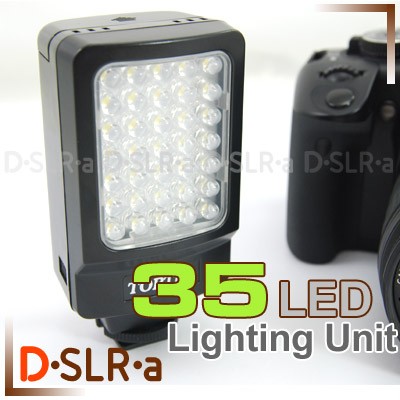
My idea is to build a 5 mm LED array, say 4 x 4 (16 LEDs), powered by 6 AAA, NiMH batteries. It would fit on a circuit board not much bigger than a matchbox (without the batteries). Such an array would produce about 200 candelas for about 10 hours (or double that for 5 hours using a bigger array) at a beam angle of 30 degrees. I would make it switchable so that the intensity could be easily altered, and have someone hold the light or use a midget tripod. I have built an array of six LEDs for use as a bicycle light, and it was quite adequate for night time riding, throwing light about 6 metres ahead and 2 metres on each side.
The specs of the LEDs are here:
http://www.superbrightleds.com/cgi-...on=DispPage&Page2Disp=/specs/w18015_specs.htm
Or I might choose to use warm white LEDs:
http://www.superbrightleds.com/cgi-...on=DispPage&Page2Disp=/specs/WW7035_specs.htm
I have some questions. Assume I have the stock lens and a 50 mm, 1.4 lens.
Q1: The specs for the LEDs show a spectral graph, give the correlated colour temperature, and the CIE 1931 Chromaticity Coordinates. Which of those would be most useful in generating a custom colour balance for the GH1?
Q2: Is it a sensible idea to use such a light for illuminating people around a campfire? I imagine I would want to keep the effect of flickering flames, so would not want to wash that away with too much artificial light. Would the combination of firelight and LED light bugger up the lighting altogether?
Q3: What about for dim forest shots? And I may want to do interviews in dark alleys (...don't ask!). Also, side lighting in interview situations wouldn't go astray, would it?
Q4: Assuming this idea is not completely half-baked, should I use the white LED or the Warm White?
Any comments most appreciated.
Last edited: