Good LED light kit for interview & photo shoots

yes it has changed i have a buddy of mine that has c-stand's and even Arri light kit but I want something of my own.

I think I would want bi-color LED lights like maybe the F&V lights which are pretty awesome used them on set not too bad i didn't notice any green cast.
 
David is exactly right. That is why I bought the daylights only - if I want tungsten, I can always gel, plus if I want to change the color temp, I have more freedom and fine-grained control with gels than fooling around with the bi-colors. You are paying more for the bi-colors than the daylight ones, and you're getting half the light output. Crazy.
 
If I were putting together a kit from scratch I would do it in this order.

1 used Beefy Baby stand
2 medium light stands
2 used C-stands
1 4x4 black floppy
1 4x4 white foam core
1 15amp power strip, this is USA
2 25' stingers
1 50' stinger
2 milk crates
a dozen wooden C-47
small assortment of pony clamps
1 Jokerbox
4 15lb sandbags
assortment of color correction & diffusion gels
1 roll black wrap

These are things you will always be able to keep as as base and be able to build upon as needed.

My pick as first time lights to get "Best Bang" for the buck?

1 4x55w Biax w/both daylight & Tungsten tubes & Extra tube case
1 F&V daylight 1x1 LED
1 used Mole or ARRI 650w Fresnel w/scrim set & barn doors
1 Chinese lantern w/ large CFL daylight & Tungsten

The above would allow you to cover a lot of ground and be a great building point.
 
[...]My pick as first time lights to get "Best Bang" for the buck?

1 4x55w Biax w/both daylight & Tungsten tubes & Extra tube case
1 F&V daylight 1x1 LED
[...].

I'd like to point out, that a single F&V daylight is $415, but a bundle of 3 is $1,050 and you get a nice case too. It seems to me, it's worth springing for the bundle, even just to start with, because you'll have far more options that way.

That said - and I'm a fan of those lights, and own them - one note of caution is strongly advised here for the budget conscious. One of the biggest strengths of LED lights is the ability to power them through batteries, so you can take them into the field, or even on location they don't have to put a strain on the AC power (which is limited in a typical home). Unfortunately, F&V lights are very, very expensive to power through batteries. They have a V-mount, and as we know batteries (and chargers!) for those are fiercely expensive. Yes, there are adapters you can buy to convert the V-mount to regular mount Sony style NP batteries, and those are about $50, but then, each takes 2 NP batteries and if you want decent quality NP batteries, you'll again shell out quite a bit. So a big heads up on that cost for those who are watching their budgets. Also, these lights don't come with barn doors (though many users don't see the point of those on LED lights), so that's something to keep in mind if you want to gel using the doors. With all those caveats, these are fantastic lights.
 
Interesting. The older Aputures AL528 series had decent reviews, but had some problems with flicker and color issues, but were very affordable at around $160. These new guys are about $100 more, but I wonder how they compare. I'd like a shootout between these and the F&Vs. The guy from cheesycam did a test about a year ago and was supposed to follow up with a better test with better light meters, but that never happened for whatever reason... I suspect something funky, as they advertise on his site and he's strangely silent (not even mentioned these new lights), which leads me to believe he just doesn't want to say anything negative. Too bad. Somebody should do a comparison!

EDIT: Looking at the Aputure website, the HR672 come in a few varieties, W for wide, S for spot and so on, like in the earlier series. In the specs it shows the spot one (S) has 4800 lux @ 1m, but keep in mind that's 25 degree beam angle. The wide (W) has 2080 lux @ 1m with 75 degree beam angle. Here's what's even more interesting: compared to their earlier lights the AL528S the new lights have slightly lower output, because the older lights had 5000 lux @ 1m (and 463 footcandles vs 444 in the new ones), at the same 25 degree beam angle. This is interesting insofar as the older lights were 528 LED lights and the newer ones are 672 - I would have to guess the higher CRI fidelity lowers the output so even with more LEDs you get less light output. By comparison the F&V daylight is 2860 lux @ 1m with 60 degree beam angle. As to quality of light - hard to say, as CRI is not the only thing that matters. They do claim no flicker at all, so at least hopefully that problem has been solved. The price is of course quite impressive considering all the extras you get like a remote and batteries.
 
Last edited:
Not a budget solution but I think it is worth checking the Dedo DLed 4.1

This is my 'interview light' or rather my 'get out of jail' light (where I still use tungsten for formal interviews when power and time are available)

Unlike a panel this light can be crammed in my sticks bag (a huge saving on air craft where checking a second bags costs big bucks)

This light is a life saver on a show floor (no power availabe) or for super fast work in or outdoors.

The fact that it can be pulled to a fine spot means it can even fill a face in full sun.

Used with a dedo softbox it becomes a softer and nicer source than a 1.1 panel (although maybe with less grunt)

S
 
Yeah, Dedo lights are the Rolls Royce of portables. But with a Rolls Royce price to match... I wish I could afford them :(
 
Interesting. The older Aputures AL528 series had decent reviews, but had some problems with flicker and color issues, but were very affordable at around $160. These new guys are about $100 more, but I wonder how they compare.

I have a pair of the new Aputure Amaran AL-H160 High CRI 95+ 160 Ultra LED lights ( roughly 4x5 inch panel ) and the color is better than any other LED lights I own, including the F&V K4000 1x1 lights.

I have a sneaking suspicion that manufacturers are holding back on delivery of these new 95+ CRI lights as they won't be able to move the old stock once the new ones are on the market. I know that I would never buy any of the F&V K4000 lights again if I have the opportunity to buy the CRI 95+ lights instead. F&V is bringing their own 95+ CRI 1x1 LED panels to market, but they are double the price of the earlier lights.
 
Thanks, TheDingo. I would think that the HR672 series are of the same light quality as your AL-H160, just bigger. I'm very encouraged by the fact that light quality is so good as you claim. My only "wishing upon a star" in the case of these larger panels, would be for a bit more umph, like more light output. They're slightly anemic. Of course, if you want power in LEDs, there's always the Alzo 3300 Ultra High Power LED - but I have no idea about the light quality of these, plus they are noisy (fan) and a bit more cash ($750). We live in exciting times!
 
David is exactly right. That is why I bought the daylights only - if I want tungsten, I can always gel, plus if I want to change the color temp, I have more freedom and fine-grained control with gels than fooling around with the bi-colors. You are paying more for the bi-colors than the daylight ones, and you're getting half the light output. Crazy.

The Bi-color's have half the output of a daylight.

If I were putting together a kit from scratch I would do it in this order.

1 used Beefy Baby stand
2 medium light stands
2 used C-stands
1 4x4 black floppy
1 4x4 white foam core
1 15amp power strip, this is USA
2 25' stingers
1 50' stinger
2 milk crates
a dozen wooden C-47
small assortment of pony clamps
1 Jokerbox
4 15lb sandbags
assortment of color correction & diffusion gels
1 roll black wrap

These are things you will always be able to keep as as base and be able to build upon as needed.

My pick as first time lights to get "Best Bang" for the buck?

1 4x55w Biax w/both daylight & Tungsten tubes & Extra tube case
1 F&V daylight 1x1 LED
1 used Mole or ARRI 650w Fresnel w/scrim set & barn doors
1 Chinese lantern w/ large CFL daylight & Tungsten

The above would allow you to cover a lot of ground and be a great building point.

Thanks guys really helping me out appreciate it
 
Not a budget solution but I think it is worth checking the Dedo DLed 4.1

This is my 'interview light' or rather my 'get out of jail' light (where I still use tungsten for formal interviews when power and time are available)

Unlike a panel this light can be crammed in my sticks bag (a huge saving on air craft where checking a second bags costs big bucks)

This light is a life saver on a show floor (no power availabe) or for super fast work in or outdoors.

The fact that it can be pulled to a fine spot means it can even fill a face in full sun.

Used with a dedo softbox it becomes a softer and nicer source than a 1.1 panel (although maybe with less grunt)

S

They are legit if i can come up with that much money i'll definetly buy them
 
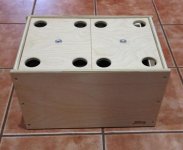
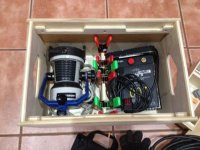
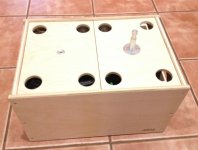
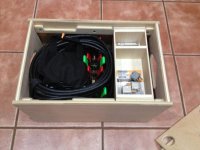
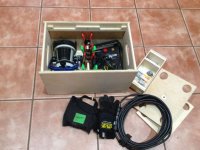
A few bad pics of my Joker 200 HMI in a Jokerbox gaffer bundle.
 

Attachments

  • Joker Box 02.jpg
    Joker Box 02.jpg
    69.3 KB · Views: 0
  • Joker Box 03.jpg
    Joker Box 03.jpg
    80 KB · Views: 0
  • Joker Box 05.jpg
    Joker Box 05.jpg
    92.9 KB · Views: 0
I have to wonder about the variances in all of the lighting setups. The LEDs have proliferated like bugs, and it amazes me about the variation of the units. There is a new portable spectrometer coming out from Sekonic and I wonder if it was because of a conversation I had a while ago with there techies about the variations in lighting set ups. They are coming out with a unit that will analyze the lighting, CRI, lumens, lux, and temperatures. By having this data one could theoretically mix any adjustable light sources to what they wanted instead of blinding choosing an LED set up and hoping that it really did put out what you think it is putting out.

The unit is called the Spectromaster C-700 and C700R. Key features include
Measures LED, HMI, Fluorescent, Tungsten, Natural Light and Flash in 1 nanometer(nm) output wavelength increments from 380 to 780 nm
Wide measurement range of Color Temperature (1,600 to 40,000K) and illumination(1 to 200,000lx in ambient light, 20 to 20,480lx・s in flash light) in both Digital andFilm Mode

Right now most of us have waveform monitors and that helps with reflective lighting, but this is like incident metering on steroids. I use a Sekonic 478DR for my still photography and some video work, but having something that can assess the light source? I think this will be huge. As a disclaimer, I do not work for Sekonic or any of their parent or subsidiary companies. I just thought I would throw this in here for interest and comment.

http://www.sekonic.com/downloads/pr--c700&c700r.pdf
 
Back
Top