Flash XDR on HPX300

Both companies CFOs will be happy but I fear Jan will frown. :)

Mike, does the XDR record 720p24 at 100Mb/s GOP and 160Mb/s I-frame? If so, the bandwidth difference would be 4x. That would only 2.2:1 compression.

Why do that? IF the XDR gives you the full bandwidth at 720, reasons are:

1) Less compression information losses

2) Not full spatial or chroma information loss. To avoid capturing noise, the camera has optical and digital filters around the Nyquist limit of 540lp/ph on this camera. So frequencies between 360 and 540lp/ph (roughly 15-27lp/mm on FF35) are at much lower contrast (MTF percentage). This is an advantage of oversampling cameras like the Red One.

One advantage of that combo is that you could always just shoot the HPX300 natively of for some reason your couldn't manage both devices, you wanted to be compatible with other cameras in the shoot (my WAG is for an HPX200 at NAB) or AVC Intra output was preferred by the customer. Does the XDR record regular XDCAM also, making it a univeral XDCAM source?

1237126304.jpg


P.S.
One Red One user noted that because of the weight, the support equipment would cost as much as the camera.
 
Last edited:
The XDR does not do I-Frame at this time.


.....


Best,

Jan


1. I am looking at my XDR menu as we speak and it most certainly DOES do I-frame. The XDR does I-frame at 100 and 160mbps data rates.

2. I am wondering how many people have actually SEEN the various 50, 100, Long GOP, 100, 160 I-Frame recordings out of the XDR?
My only experience with the P2 card visual quality was with the limited DVX200 - it appeared too soft - but I am sure it was a limitation of the camera and not the codec. At the time, off loading was a pain but that has since been fixed as well.
My experience with the XDR has been wonderful. Huge quality and portability improvement with our XLH1 and XHG1.

I wished Adam Wilt would get his hands on an XDR and do some in depth testing and comparisons of these 2 options. And of course in should include color correction testing results.

And even the 8bit vs. 10bit debate will be moot when C-D adds their 10bit option. I do wonder how many folks will see the added value of 10 bit when considering the extra data wrangling and storage and actually use it.
 
You can't compare the HVX200...totally different compression. It is DVCProHD, an 8-bit MPEG2 I-frame protocol that was far and away the best for years. The new stuff is AVC Intra, an H.264 codec 10-bit 4:2:2 I-frame protocol at bit rates (depending on frame size and frame rate) not that far off the XDR.

Also, the HVX200 is a little prosumer camera with a fixed lens and undersampled 960x540 sensors. The HPX300 is has interchangable lenses and a latest technology full 1920x1080 3 sensor setup up.
 
Yes, in all of our modes, we use full bandwidth.

How about 10-bit 4:4:4 to 720p? Everyone is so used to 1:1 photo site to pixel processing they will scream...but my guess is that format, which loses no chroma information per 720p pixel to 1080p but still has significantly less compression could result in the best images with 1080 sensors for the reasons I posted earlier.

Is it possible?
 
You can't compare the HVX200...totally different compression. It is DVCProHD, an 8-bit MPEG2 I-frame protocol that was far and away the best for years. The new stuff is AVC Intra, an H.264 codec 10-bit 4:2:2 I-frame protocol at bit rates (depending on frame size and frame rate) not that far off the XDR.

Also, the HVX200 is a little prosumer camera with a fixed lens and undersampled 960x540 sensors. The HPX300 is has interchangable lenses and a latest technology full 1920x1080 3 sensor setup up.

And that is why I said I am sure it was a limitation of the camera.

The point is there are a lot of folks here debating without having actually seen the footage out of the XDR or the new Panny. Its all about what actually ends up on screen.

That is what I am looking to hear about - or better yet see.

One other point - what is the bit depth of the AUDIO of AVC? The XDR records in 24bit; I honestly don't know about the audio bit depth out of the new Panny to AVC.
 
It is 16-bit. However, few on this forum discuss sound...I will pick up a Samson Zoom H4n soon as its out with 24-bit/96Khz 2-channel.
 
Wow, I just caught this thread and had to grap another beer.

You guy's are way caught up in the specs. The HPX300 is a lower-end camera, at least by my standards. I loss track of how many $10,000 to $30,000 cameras I have bought in the last 25 years. If you're shooting weddings, corporate, industrial, , this could be the camera for you. But so could a Sony, JVD or Canon. The client isn't going to see the difference. He WILL see if you can tell a story.

It's all about money and where you're at. If you're just starting, buy a lower end camera that you can afford and rent a high-end cam for those jobs that need them. Later on in life, when you become Spielberg's DP, then shoot a $200,000 camera, etc.

Years ago, I shot a insert for an infomercial in a car. My BetaSP was too large. So,I pulled out my Hi-8mm video cam, and mixed the shot later in editing with my Beta video. No one called me and said: "Hey, what's with that lousy video in the car?" . They were more interested in hearing the story.

Anybody, remember Blue Blockers? All shot on Hi-8 and grossed around 12 million.

How many of you have HD scopes and HD-SDI monitors? And, I'm not talking about a computer screen.

I had a good weekend watching sports in HD. I also noticed all of the aritfacts of the video compression on all of the networks. So what are we seeing? 4:2:0? It looks worse than that. Yes, the cable and dish guy's are really compressing the heck out of the feed.


Forget about bits, and enjoy life with a bite of an In-N-Out Burger.

JohnnyD
 
Wow, I just caught this thread and had to grap another beer.


I had a good weekend watching sports in HD. I also noticed all of the aritfacts of the video compression on all of the networks. So what are we seeing? 4:2:0? It looks worse than that. Yes, the cable and dish guy's are really compressing the heck out of the feed.


Forget about bits, and enjoy life with a bite of an In-N-Out Burger.

JohnnyD

Whenever I hear reference to the Discovery Channel and BBC spec requirements I get a kick out the logic of shutting out content by raising the bar and producer's cost by setting that spec bar so many levels above the quality that is broadcast to endviewer's screens. It doesn't make a lot of sense to me. As stated, what comes off the sattelite or down the cable is so highly compressed and bit rate limited that is not even anywhere close to their spec.

I can understand a level or two up for editing, archiving, manipulation headroom. But let's allow some common sense into the spec based upon the final broadcast output spec.
 
Wish list for XDR/nano
- Composite out of recorded stuff from the device, in a way it should play back what been recorded on the CF card to store confidence on it recording or a small LCD monitor on the unit itself which play whats been recorded (in a way like pre-read what we had in Beta days where the head reads out what been just recorded, hope i remember it properly) this will instill faith on your product

- camcorder hooking device which can be used to power the unit & also keep it hooked to the camera

- Audio output thru Ear phone

- custom file naming or something were we can give identity of the shooter/camera

- instead of rubber cover of CFcards etc we should get plastic cover which can slide up/down this way we wont have to spend time fitting the rubber covers and/or risk it being lost in field.

Also

I have asked it earlier if we use this type of a adapter then on one side we mount any AB Mount batt & on other side we mount XDR. We provide XDR power from power tap plug on abtts or AB mount... will this combo work

http://antonbauer.com/hotswap.htm

http://switronix.com/product_details.php?cmd=info&id=200

or if not from the Power tap port can we use the power output from the camera back the 12v 5a dc out .. will that supply enough power to run xdr or nano flash !
 

Attachments

  • HPX300 back.jpg
    HPX300 back.jpg
    122.7 KB · Views: 0
Last edited:
Whenever I hear reference to the Discovery Channel and BBC spec requirements I get a kick out the logic of shutting out content by raising the bar and producer's cost by setting that spec bar so many levels above the quality that is broadcast to endviewer's screens. It doesn't make a lot of sense to me. As stated, what comes off the sattelite or down the cable is so highly compressed and bit rate limited that is not even anywhere close to their spec.
If the idea is good enough and it as for example Deadliest catch outrules large cams for most of the production they even accept dv/hdv. Discovery's shows are mostly relativly high end anyway so getting one financed won't be impossible, rates for renting Gold standard equipment aint that high.

Well take a look at BBC HD and planet earth which are broadcasted from time to time. At least here in Norway where we can get BBC HD(nordic version) its basicly a showcase of how good TV can be technically...with todays equipment. And if tomorrow allows for way more efficient compression or more bandwith, you will gett better results if the source for compression are a HDcam-sr master(even if the recorded codec was xdcam/dvcprohd, you are likely to color correc it and choose to render in much higher bitrates) and generally the images look as good as possible from the start. Recompressing an already compressed signal like hdv is not the best idea for good pictures...
 
thread topic is " Flash XDR on HPX300 "

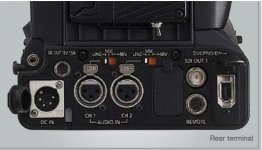
And i still wonder how does CD suggest to mount XDR or Nano on HPX300 type corders. still no clear pix on this.
 
Wow, I just caught this thread and had to grap another beer.

You guy's are way caught up in the specs. The HPX300 is a lower-end camera, at least by my standards. I loss track of how many $10,000 to $30,000 cameras I have bought in the last 25 years. If you're shooting weddings, corporate, industrial, , this could be the camera for you. But so could a Sony, JVD or Canon. The client isn't going to see the difference. He WILL see if you can tell a story.

It's all about money and where you're at. If you're just starting, buy a lower end camera that you can afford and rent a high-end cam for those jobs that need them. Later on in life, when you become Spielberg's DP, then shoot a $200,000 camera, etc.

Years ago, I shot a insert for an infomercial in a car. My BetaSP was too large. So,I pulled out my Hi-8mm video cam, and mixed the shot later in editing with my Beta video. No one called me and said: "Hey, what's with that lousy video in the car?" . They were more interested in hearing the story.

Anybody, remember Blue Blockers? All shot on Hi-8 and grossed around 12 million.

How many of you have HD scopes and HD-SDI monitors? And, I'm not talking about a computer screen.

I had a good weekend watching sports in HD. I also noticed all of the aritfacts of the video compression on all of the networks. So what are we seeing? 4:2:0? It looks worse than that. Yes, the cable and dish guy's are really compressing the heck out of the feed.


Forget about bits, and enjoy life with a bite of an In-N-Out Burger.

JohnnyD

You are absolutely right...TV is hammered. I usually ask people to compare ABC to NBC...as part of a 1080 vs 720 discussion.

Now, I totally absolutely 100% disagree with you on the importance of the recorder. A $1000 consumer camera with a high end recorder (I don't have and from the XDR, but is a link to HR11->Cineform and there will be HF S10->Cineform footage in a week or so: (Click picture for link to video)

Without a high quality recording, many lens and sensor differences appear small. With it, huge.

Production quality is an important part of the perceived quality of the product. A great script and editng inside poor quality leads to 'it's a shame it didn't look better'. A bad script in high production quality leads to yawn's a trips for coffee, etc. Good production quality sometimes keeps your audience over the weak points.

Going from SD to HD created a 6x increase in data. Temporal compression was added in some cases, and some had higher data rates. HDV and AVCHD is the same data rate as DV and relies on temporal compression or algorithms. XDCAM EX raises the core rate 40%.

We are advancing production quality in three areas this year. First, AVC Intra, the 45Mb/s Class 6 SDHC Canons, and the XDR are a major advance in recording quality. The digital camera hybrids and the CMOS consumer cameras are using oversampled sensors where dramaitcally increase the MTF in mid and higher spatial frequences were detail lives. And while it hasn't hit most of the professional camcorders, the digital hybrids, the RED, and some high end professional systems are using larger sensors that offer reduced noise in addition to increased DOF control.

A good 2008 camera, like the EX1/EX3 will seem very much like DV in a few years. People still use this forums namesake, the DVX100, but the expectation will be much higher.
 
Wish list for XDR/nano
- Composite out of recorded stuff from the device, in a way it should play back what been recorded on the CF card to store confidence on it recording or a small LCD monitor on the unit itself which play whats been recorded (in a way like pre-read what we had in Beta days where the head reads out what been just recorded, hope i remember it properly) this will instill faith on your product

- camcorder hooking device which can be used to power the unit & also keep it hooked to the camera

- Audio output thru Ear phone

- custom file naming or something were we can give identity of the shooter/camera

- instead of rubber cover of CFcards etc we should get plastic cover which can slide up/down this way we wont have to spend time fitting the rubber covers and/or risk it being lost in field.

Also

I have asked it earlier if we use this type of a adapter then on one side we mount any AB Mount batt & on other side we mount XDR. We provide XDR power from power tap plug on abtts or AB mount... will this combo work

http://antonbauer.com/hotswap.htm

http://switronix.com/product_details.php?cmd=info&id=200

or if not from the Power tap port can we use the power output from the camera back the 12v 5a dc out .. will that supply enough power to run xdr or nano flash !


Hi Big Brother-
Attached is a comprehensive FAQ on the nanoFlash, this should answer most of your questions. Here's a couple of comments on the immediate concerns.

1) We do have HDMI output on the nanoFlash, so you will be able to view footage on low-cost portable LCD monitors at much higher resolution than composite video.

2) We have mounting points on 3 sides of the nanoFlash. The bottom of the box has a 1/4-20 tripod mount. We are also developing AB and IDX mounting plates which bolt onto the back of the nanoFlash. We will also have a battery plate on the top of the nanoFlash for Sony camcorder battery.

3)Audio output is not possible on the nanoFlash, we simply ran out of room on the box. Can you monitor off your camera?

4) We are adding metadata support for cameraman, camera number, scene and take numbers.

5) Yes, we agree that a sliding cover would be better than a removable cover, I will speak to our mechanical designer about this concept.

Best-
Mike Schell
 

Attachments

No possible way will 100mbps long-GOP MPEG-2 be better than AVC-I @ 100mbps. But it would almost certainly be better than DVCPRO-HD, and should be better than AVC-I 50mbps.

Respectfully disagree with you Barry. Because there is more than one way to look at an image when you use the word "better".

For a small image quality increase, OK. But, then what are your workflow options? You could take all that footage and transcode to an I frame codec, which essentially means your re-compressing your footage and then whats the difference in image quality? Not to mention the amount of time I have just wasted to do so. This is certainly something I cannot ask a client to do. Oh by the way, you will need to transcode all that footage OR have horrible render times due to mpeg2. Oh you have a deadline? Bah, just pay your editor overtime!

I know this is just one case scenario and if you shot and are editing yourself and are prepared to eat that - fair enough. But my clients (I know them) would NOT be happy. And what of my clients working in p2? ME: Ok heres your mpeg2 files. THEM: Are you stupid?
 
Noel.

I don't know which NLE you or your clients use, but I have worked with the XDR 100mbps footage and it edits easy in Edius.

In fact, I can edit from the CF card in the USB reader.

And I agree, these higher level/bitrate codecs are going to be closer than farther apart and any image difference will be splitting hairs from a final delivery point of view imho.
 
Back
Top