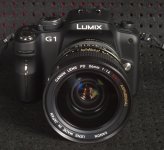
Fast wide angle lens to use with GH1

Not true. It depends on how you look at it... In respect to taking stills...then yes. But since we are all coming from the perspective of filmakers... then not at all.

I found the 50mm too long so I picked up the Sigma 30mm for portraits and low light. Honestly, the Vivitar 28mm f2 is good, but will not come close to the low light of the sigma nor the sharpness. At f2 the vivitar is pretty soft imo.
 
True, but just so it is known. Plus the vivtar is under 100 used and I got the sigma for 315 used at KEH. so it's more like 3 or 4 times more expensive.
 
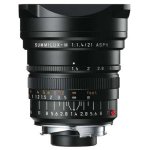
The Canon 24mm F1.4 in FD mount is not cheap and the Leica 21mm F1.4 is about $4K.

5230192000_ea95182652_b.jpg

41gQaUMeQxL.jpg
 
Last edited:
Please define what is wide.

Crop factor is 2x so all the mentioned lens are "normal view" or moderate tele.
This is what I find in all photograph manuals. Am I missing something?
A 14mm aka 28mm would be a moderate wide lens on this camera
 
The Voigtlander offers a really awesome option for night shots and for having a very controllable DOF. I'm buying this for sure as I'm doing some night shoots and this offers me options to keep lights to a minimum and to achieve the kind of look that I"m hoping to achieve. For the cash it's a steal and a half. If you had a canon name on this it would be 2200... I also know that lenses retain their value more so than cameras so if we choose wisely we'll be able to utlize this for a while.
 
Please define what is wide.

Crop factor is 2x so all the mentioned lens are "normal view" or moderate tele.
This is what I find in all photograph manuals. Am I missing something?
A 14mm aka 28mm would be a moderate wide lens on this camera

I'm not a film-maker, and have never shot on anything on real movie film more than 8mm/Super8mm, but film-makers here say the field of view of lenses on the GH1 are similar to that of a 35mm movie camera, because of the sensor size is so close to 35mm MOVIE film size. I think in terms of 35mm SLR photo camera FOV, so the 35mm SLR film "equivalent" numbers (2X crop) make more sense to me, since I still shoot with my old 35mm SLRs for fun (although very rarely now). So, in my head 14mm is "wide"....20mm is good "standard" length, and the 45mm f2.8 is a "portrait" telephoto length, on the GH1. If you come from a 35mm cinema background versus 35mm still photography background, these lens lengths may mean different things to you. Either way, just get out and shoot with what you got, and find what works best for you! :)
 
Yes, and thank you for pointing this out. It seems to get lost in threads like this that m43's 2x crop factor effectively doubles the focal length of adapted 35mm lenses. So my Canon FD 35mm becomes a 70mm equivalent on the GF1/GH1/etc. Even the native m43 lenses are locked to this math -- the 20mm pancake has the equivalent focal length of a 40mm lens on a 35mm film camera.

So while it's fun to talk about old Canon 24mm glass, if you found one you could afford it would still wind up as a 48mm equivalent when adapted to m43 cameras.

This is why you see guys dicking around with super-wide C-mount CCTV lenses, trying to get a wide effective focal length with a 12mm C-mount, except that doesn't work either because it vignettes like crazy because the image circle doesn't quite cover the sensor. My feeling is the 14mm f/2.5 Panasonic prime is the widest possible full-coverage lens for m43 sensors.

I have to say this, though -- my wife shoots with a Lumix LX5, whose Leica zoom lens is a true 24mm at the near end, and I've shot 720p video with it just for grins. Frankly, I don't care for this wide a focal length for video. Maybe if I was shooting Westerns I'd feel differently, but I prefer normals and short teles for video. Between the 20mm pancake and my Canon FD 35mm and 50mm, I'm pretty much set. I don't feel the need to go wider for video, and the FD 85mm/f1.8 I love for stills is nutty long for video so never gets used for that. For my needs, 20/35/50 (in 35mm terms, 40/70/100) covers all my bases.

For those jonesing for a wide, do yourself a favor and actually shoot some video with a true wide. Use a consumer camcorder at its widest focal length, or a point and shoot like the LX5. I'd wager most who lust for wider glass for DSLR video wouldn't be as excited by the reality.


Please define what is wide.

Crop factor is 2x so all the mentioned lens are "normal view" or moderate tele.
This is what I find in all photograph manuals. Am I missing something?
A 14mm aka 28mm would be a moderate wide lens on this camera
 
The OP was specifically asking for suggestions in the 20-30mm range; I can't speak to what was on his/her mind when s/he used 'wide' in the header.
 
I have a lot of old glass and the Panasonic 20mm is one of my best lenses. I have some 1.4 and 1.2, but the 1.7 is amazingly good wide open, so it is faster than the 1.4 stopped down to 2.8 for the equivalent sharpness. So unless I actually want that blurry look, I go for the 20mm almost all of the time. It's noticeably wider that the Voigtlander, 40 versus 50.
 
Yes, but it sounded as though the OP thinks a 20mm wide angle lens stays a 20mm wide on a GH1.

I agree with mojo, the Vivitar 28mm f/2.0 is too soft wide open to be a viable candidate. Unfortunately, it's the only affordable legacy glass I've found under 30mm and faster than f/2.5. So, I agree with the others about the Panasonic 20mm. It's an amazing lens and a steal for $350. I haven't tried the more expensive 25mm f/.95 Voightlander but Phil Bloom's videos with it look great.

The OP was specifically asking for suggestions in the 20-30mm range; I can't speak to what was on his/her mind when s/he used 'wide' in the header.
 
I'm not a film-maker, and have never shot on anything on real movie film more than 8mm/Super8mm, but film-makers here say the field of view of lenses on the GH1 are similar to that of a 35mm movie camera, because of the sensor size is so close to 35mm MOVIE film size. I think in terms of 35mm SLR photo camera FOV, so the 35mm SLR film "equivalent" numbers (2X crop) make more sense to me, since I still shoot with my old 35mm SLRs for fun (although very rarely now). So, in my head 14mm is "wide"....20mm is good "standard" length, and the 45mm f2.8 is a "portrait" telephoto length, on the GH1. If you come from a 35mm cinema background versus 35mm still photography background, these lens lengths may mean different things to you. Either way, just get out and shoot with what you got, and find what works best for you! :)

I'm saying exactly the same thing. Speaking in terms of 35mm and photography all the lens suggested are not wide.
 
This is why you see guys dicking around with super-wide C-mount CCTV lenses, trying to get a wide effective focal length with a 12mm C-mount, except that doesn't work either because it vignettes like crazy because the image circle doesn't quite cover the sensor. My feeling is the 14mm f/2.5 Panasonic prime is the widest possible full-coverage lens for m43 sensors.

...

For those jonesing for a wide, do yourself a favor and actually shoot some video with a true wide. Use a consumer camcorder at its widest focal length, or a point and shoot like the LX5. I'd wager most who lust for wider glass for DSLR video wouldn't be as excited by the reality.

I agree with you: in real world video a 20mm aka 40mm it's the best option and a true wide finds few real applications.
Actually there are some cases you want a really true wide lens: I shoot underwater ambient and a true 20mm is considered the bare minimum. In uw photography you will find that the best lenses are 10.5 fisheye or zoom 10-17mm. For uw video the most appreciated wa converters, like Phatom or Talacetor, will give you an angle of view of 100-120 degree.
The trick of underwater ambient shoots is reducing the distance between the lens and the subject as much as possible.
A 2x crop factor is a huge disadvantage because there a few options and very expensive. Actually the lumix lens aren't very fast too...
 
Last edited:
There is a very nice lens (you need an adapter) which is the Sigma 24mm Super-Wide II. You can get it cheap. It was never my favorite lens for my film cameras, but for some reason works great on the GH1. I still use the Panasonic 20mm, however. My Sigma copy is well made, sharp lens.
 
Last edited:
I'm not a film-maker, and have never shot on anything on real movie film more than 8mm/Super8mm, but film-makers here say the field of view of lenses on the GH1 are similar to that of a 35mm movie camera, because of the sensor size is so close to 35mm MOVIE film size. I think in terms of 35mm SLR photo camera FOV, so the 35mm SLR film "equivalent" numbers (2X crop) make more sense to me, since I still shoot with my old 35mm SLRs for fun (although very rarely now). So, in my head 14mm is "wide"....20mm is good "standard" length, and the 45mm f2.8 is a "portrait" telephoto length, on the GH1. If you come from a 35mm cinema background versus 35mm still photography background, these lens lengths may mean different things to you. Either way, just get out and shoot with what you got, and find what works best for you! :)

I'm saying exactly the same thing. Speaking in terms of 35mm and photography all the lens suggested are not wide.

I don't think it's just about the FOV you get in a cinema vs photography camera or situation. It's also the depth perception and how far away the background appears to be from the subject. That all changes when you change the focal length of the lens and the lens distance from the subject. I don't know anyone that would consider a 25mm lens to be normal, even though the FOV of a 25mm lens on a m4/3 camera will be similar to a 50mm lens. It's still a 25mm lens, still a 25mm focal length, and thus is still a wide lens. Normal lenses are typically going to be your 35mm and 50mm. Smaller focal lengths are wide and longer focal lengths are tele. I understand where you're all coming from though, because you're not used to the 2x crop factor. It didn't really seem like anything new to me though for some reason, even though I've never shot 35mm cinema before.
 
I do not agree here :-)
20-25mm are normal lenses on m43.
Perspective changes only with camera position relative to object.
And lens only crop necessary part according to its FOV (if it is perfect distortion free lens).
This is simple basics.
So, all this theory of 25mm being 50mm FOV, but still 25mm feel is crap.
 
In 4/3 or m4/3 anything below 20mm can be considered wide angle. So a rough guide I go with is:
7-12mm - Ultra Wides
14-18mm - Standard Wides
20-30mm - Standard
35mm - 60mm Short Tele or portrait
70mm > Tele

In response to the OP, the 14mm 2.5 is a possible contender if you are after a prime.
 
I don't believe your information is accurate. There have been countless threads about this on every camera forum since m43 cameras hit the market, and some people still don't understand what the format's 2x crop factor does to the look and behavior of a legacy lens which has been adapted to an m43 camera like the GH1.

Once more with feeling: all lenses, even the native m43 ones currently being produced, double their equivalent focal length when used on a camera with 2x crop factor. So the 20mm pancake sees the world as a 40mm lens would on a 35mm film camera, which is the reference point for equivalency. A 35mm Canon lens becomes a 70mm when I put it on my GF13, a 50mm lens becomes a 100mm, and so on.

Where this subject inflames pedants is in their framing the "debate", if such settled argument can be called that, as a clash between those defenders of absolute scientific fact and the great unwashed who aren't actually strangling puppies but they might as well be because they're saying 20mm lenses magically transform into 40mm lenses and that's a tragic oversimplification of the vectors involved because sine cosine angle vector victor one niner one niner mayday mayday we're going down.

For the rest of us who just want to shoot images, it's a simple, settled fact. Double your lens's rated focal length and you'll know how it's going to behave on your m43 camera. It's really that simple. Anyone who tries to tell you that a 25mm lens still presents a wide angle view when used on an m43 camera is guilty of one or more of the following:

1, They've never actually tried it, and are just extrapolating their old experience with film cameras;

2. They have tried it, but have never used an actual 25mm lens on a 35mm camera so they don't know what a true wide angle lens view looks like:

3. They do know what it looks like, and they have tried a 25mm lens on their m43 camera, but they disregard the obvious and gross optical differences between the two because it doesn't gel with their entrenched assumptions. Also, some people are just contrarian.

This isn't a subtle thing, so it continues to surprise me that some people persist in debating it. Like the man said, I've seen things. I've seen what a 25mm lens sees on a 35mm film camera, and I've seen what a 25mm lens sees on an m43. They are not the same thing. Swap the film camera's lens for a 50mm, though, and they are the same thing.


I don't think it's just about the FOV you get in a cinema vs photography camera or situation. It's also the depth perception and how far away the background appears to be from the subject. That all changes when you change the focal length of the lens and the lens distance from the subject. I don't know anyone that would consider a 25mm lens to be normal, even though the FOV of a 25mm lens on a m4/3 camera will be similar to a 50mm lens. It's still a 25mm lens, still a 25mm focal length, and thus is still a wide lens. Normal lenses are typically going to be your 35mm and 50mm. Smaller focal lengths are wide and longer focal lengths are tele. I understand where you're all coming from though, because you're not used to the 2x crop factor. It didn't really seem like anything new to me though for some reason, even though I've never shot 35mm cinema before.
 
There aren't many wide options at all. Even the 20 1.7 isn't wide with the 2x crop factor.

If only the Nikon 14-24 2.8 could have manually controllable aperture.... It's expensive, but it covering 28-48mm 2.8 is a good fit for wide to normal. Of course with it's protruding front lens element, you would have to mount a ND filter differently, but....
 
Back
Top