JMtheDP
Veteran
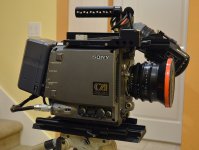
The first time you lay eyes on an F35 your immediate thought might be "well, that's handheld out the window." It certainly was one of mine.
I was replacing a Sony F900 which, for those who don't know, is a camera that uses the shell and basic layout of a 2/3" broadcast camera. It was designed to make handheld as pleasurable as possible. I still miss it.
However, handheld with the F35, now I have had the time to work with it, is not so bad. Yes, the camera is heavy, BUT it can be quite well balanced which is a lot more than I can say for many DSLR/F3/etc rigs.
Most of the users on here have adapted third party solutions for other cameras to their F35s and I am not going to judge them - if something works for you, it works for you. I wanted to go down the "official" route as much as I could.
If you've read my other posts, you'll see this as a recurring theme, but the F35 works just like its 35mm counterparts. Fortunately, this is one area where the Panavision Genesis and the F35 differ. The Genesis uses Panavision mounts and the F35 uses ARRI ones. Handy, because you can't buy Panavision accessories.
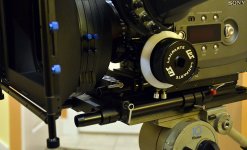
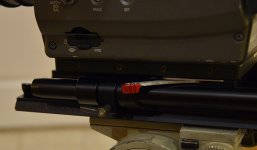
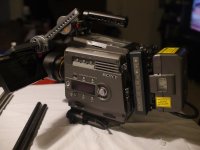
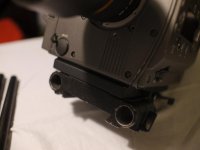
The F35 should have a "riser plate" on the bottom of it. This is a metal plate, around 10mm thick. That is there to make sure the camera is the correct height to take an ARRI bridge plate and leave the lens port the correct distance from it. The F35 will accept a bridge plate from the ARRI 535 or 435. I have an ARRI BP-5 bridge plate, which was designed for the 535 and takes 19mm studio rods.
If you are not familiar with rods and bars, you can find research and information elsewhere but generally there are three standards - 15mm lightweight, 15mm studio and 19mm studio. I strongly recommend F35 users go with 19mm studio, it is very common and strong. 15mm lightweight are the next most common and easy to find parts for, but you'll need to make up a special bracket to get the F35 to take them (a few people bought cameras from places like Otto Nemenz which I believe had these on). 15mm studio I strongly advise against. I believe it is more common in the USA than Europe, but in the UK I have never encountered it. Whatever you pick, you need to make sure all your accessories fit it!
Now, once you have your bridge plate then you will require an ARRI dovetail plate. It is a long plate (usually between 12" and 18") which slots neatly into the bridge plate. This lets you mount and balance the camera. The dovetail plate gets screwed onto your tripod's quick release plate.
For handheld, if you have all of the above, I recommend buying two things: 1. A pair of moose bars (handlebars) and a shoulder support.
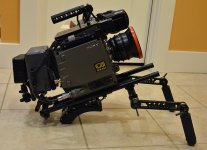
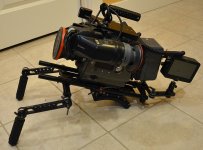
The moose bars are easily available. I use Ronford Baker ones. They cost about £250 - £300 but are an industry standard.
The shoulder support could be something simple like a towel, but I use a Ronford baker shoulder support that they developed for the RED. It is a long plate with a curved shoulder pad. It slides into the ARRI bridge plate in place of the dovetail and perches on your shoulder. It is designed to be able to "rock" side to side a little, so it takes account of your shoulder not always being level.
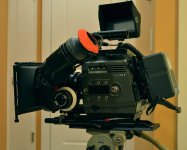
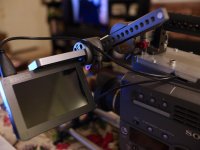
This solution works pretty well for me. I still don't recommend working like this on your own - it is best to get an assistant to lift/take away the camera from your shoulder. However, if you have a fairly balanced setup then this is actually not a bad setup for handheld at all. I have quite an unusual viewfinder system which is not as bad as it looks, but I do recommend anyone without a viewfinder to buy one - I personally find them infinitely better for handheld than a screen. But that's personal preference.
Anyway, here are some pictures for illustration and I hope this has been helpful.
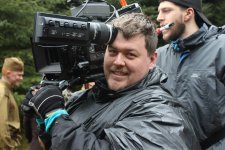
On the left you can see me operating, that's a viewfinder not a brain sucker.
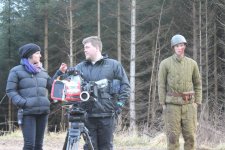
On the right, I am resting the camera on the tripod so hopefully you can see the shoulder pad a little better. Bewildered extra in WWII costume not required for handheld.
I was replacing a Sony F900 which, for those who don't know, is a camera that uses the shell and basic layout of a 2/3" broadcast camera. It was designed to make handheld as pleasurable as possible. I still miss it.
However, handheld with the F35, now I have had the time to work with it, is not so bad. Yes, the camera is heavy, BUT it can be quite well balanced which is a lot more than I can say for many DSLR/F3/etc rigs.
Most of the users on here have adapted third party solutions for other cameras to their F35s and I am not going to judge them - if something works for you, it works for you. I wanted to go down the "official" route as much as I could.
If you've read my other posts, you'll see this as a recurring theme, but the F35 works just like its 35mm counterparts. Fortunately, this is one area where the Panavision Genesis and the F35 differ. The Genesis uses Panavision mounts and the F35 uses ARRI ones. Handy, because you can't buy Panavision accessories.
The F35 should have a "riser plate" on the bottom of it. This is a metal plate, around 10mm thick. That is there to make sure the camera is the correct height to take an ARRI bridge plate and leave the lens port the correct distance from it. The F35 will accept a bridge plate from the ARRI 535 or 435. I have an ARRI BP-5 bridge plate, which was designed for the 535 and takes 19mm studio rods.
If you are not familiar with rods and bars, you can find research and information elsewhere but generally there are three standards - 15mm lightweight, 15mm studio and 19mm studio. I strongly recommend F35 users go with 19mm studio, it is very common and strong. 15mm lightweight are the next most common and easy to find parts for, but you'll need to make up a special bracket to get the F35 to take them (a few people bought cameras from places like Otto Nemenz which I believe had these on). 15mm studio I strongly advise against. I believe it is more common in the USA than Europe, but in the UK I have never encountered it. Whatever you pick, you need to make sure all your accessories fit it!
Now, once you have your bridge plate then you will require an ARRI dovetail plate. It is a long plate (usually between 12" and 18") which slots neatly into the bridge plate. This lets you mount and balance the camera. The dovetail plate gets screwed onto your tripod's quick release plate.
For handheld, if you have all of the above, I recommend buying two things: 1. A pair of moose bars (handlebars) and a shoulder support.
The moose bars are easily available. I use Ronford Baker ones. They cost about £250 - £300 but are an industry standard.
The shoulder support could be something simple like a towel, but I use a Ronford baker shoulder support that they developed for the RED. It is a long plate with a curved shoulder pad. It slides into the ARRI bridge plate in place of the dovetail and perches on your shoulder. It is designed to be able to "rock" side to side a little, so it takes account of your shoulder not always being level.
This solution works pretty well for me. I still don't recommend working like this on your own - it is best to get an assistant to lift/take away the camera from your shoulder. However, if you have a fairly balanced setup then this is actually not a bad setup for handheld at all. I have quite an unusual viewfinder system which is not as bad as it looks, but I do recommend anyone without a viewfinder to buy one - I personally find them infinitely better for handheld than a screen. But that's personal preference.
Anyway, here are some pictures for illustration and I hope this has been helpful.
On the left you can see me operating, that's a viewfinder not a brain sucker.
On the right, I am resting the camera on the tripod so hopefully you can see the shoulder pad a little better. Bewildered extra in WWII costume not required for handheld.