FS7: Dynamic range stress test

Ran across these frames from a scene in my feature that demonstrate just how useful high dynamic range can be. Context of the scene- bride is running away from her wedding past guests in the foyer. I'm following her with the camera handheld, 60fps, unable to ride the exposure (shot started upstairs) Exposure is set for inside, outdoors looks hopelessly blown out.

foyer test 1.jpg

Frame grabs closer to the door show just how blown out.

foyer test 2.jpg


foyer test 2.5.jpg

After pulling down with RGB curves, most all detail is recovered except for the sky.
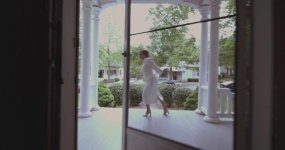
foyer test 3.jpg

I ended up needing only the very last part of the shot. Without the high DR, it would have been completely unusable.
 
Sorry to be pedantic but that's NOT an illustration of HIGH dynamic range (HDR). It's an illustration of WIDE dynamic range.


From Sony's own site:

http://www.sony.co.uk/pro/article/broadcast-products-dynamic-range-pxw-fs7


[h=1]Capturing High Dynamic Range with the PXW-FS7 for greater creative flexibility[/h]
The PXW-FS7 makes it easier to record and work with high dynamic range content using S-Log2 and S-Log3 gamma modes, processing the output from the sensor (in XAVC mode) so that the entire dynamic range is captured in the 10-bit recording. When shooting in RAW, S-Log2/3 is still beneficial as it can be used for the viewfinder display and also provide reference metadata – so when you begin editing RAW footage, your starting point will be the same as what you saw through the viewfinder.
 
Shooting fireworks at night, over a carnival seems to be the ultimate test of dynamic range. Being able to see the unlit areas of the grounds where the spectators are, as well as handling the bright colored fluorescent lights without blowing them out to white and without sensor noise encroaching on the shot is a real challenge. But the shots above are surprising, too. I also would have thought the shot was a lost cause. It's amazing what the sensor can handle.
 
From Sony's own site:

http://www.sony.co.uk/pro/article/broadcast-products-dynamic-range-pxw-fs7


Capturing High Dynamic Range with the PXW-FS7 for greater creative flexibility


The PXW-FS7 makes it easier to record and work with high dynamic range content using S-Log2 and S-Log3 gamma modes, processing the output from the sensor (in XAVC mode) so that the entire dynamic range is captured in the 10-bit recording. When shooting in RAW, S-Log2/3 is still beneficial as it can be used for the viewfinder display and also provide reference metadata – so when you begin editing RAW footage, your starting point will be the same as what you saw through the viewfinder.

Lol the Sony marketing folk are also wrong - and not for the first time...

I did say I was being pedantic:-)
 
Double pedant.

A camera that can record a high dynamic range could be said to be a high dynamic range camera.

'HDR' is the post technique of using secondaries or stacked exposures in post to to collapse a wide dynamic range scene into the output range of the delivery media.

I guess WDR and HDR are the best use of language.

Ref this scene Im guessing that the outside portion of the image is best represented by applying a tracked secondary in post to that area.

Wider in the realm of the low budget DP job it is IMO important to discuss shots with the director that transition through space as they need a raw cam or serious light to do properly.

S
 
"Lol the Sony marketing folk are also wrong - and not for the first time..."

Maybe the Sony marketing guys are also in charge of camera functionality - like when waveforms and MLuts can and can't be used, etc. That would explain a lot.:smile:
 
i would also consider this high DR but not "HDR" which is mostly used to describe the look of layering or combining multiple exposures....IMO the FS7 simply has pretty crazy high dynamic range....i usually open up enough to make sure the shadows are clean and am always surprised how much i can still recover in the highlights....
but this situation is obviously very extreme....
RED has the HDRX function of shooting 2 tracks at once with different exposure and combining them in rcx....with epic that is supposed to provide up to 18 stops but in reality the combination of higher compression along with obvious issues with movement i never got good use out of it....

the FS7 to me really seems to have 14 stops...in this case i might have tried a tiffen ultra contrast filter which does a pretty good job of opening up the shadows a little (or maybe gives the appearance of doing it) but it also gets tricky when shooting into bright lights or going from really dark to really bright....
 
"Lol the Sony marketing folk are also wrong - and not for the first time..."

Maybe the Sony marketing guys are also in charge of camera functionality - like when waveforms and MLuts can and can't be used, etc. That would explain a lot.:smile:

..or in S&Q mode, or in playback, or.... . . .
 
FS7 has highlight latitude of about 6.2 stops, shadow latitude about 7 stops depending on how much noise is tolerable to you. Alexa has 7.4 above 18% grey and also roll-off is much nicer instead of hard clipping.
 
I can imagine the F65 is simply in another world, compared to these cameras. It's s/n ratio is 77dB--20dB better than FS7 and F5. With a noise floor that low, imagine you could underexpose and pull much clean detail out of the shadows anyway.
 
Back
Top