Canon R5 Announced with 8k

Let’s not get off-topic regarding which one and keep to the tampon question that this topic is now about.

The problem with your tampon analogy is that no one is insisting that we keep talking about I Am Cuba. By all means, get us back on track!

I think we got here by talking about the R5 design and how it could be better for various modes of operation, including gimbal. Then we started talking about gimbal shooting in general, and then about liberated camera movement in general.

And that's why cameras like the R5 are so exciting - because they're so small and it opens up possibilities you don't have with a larger camera. Plus, everyone needs a crash cam and ideally one that won't compromise on quality too much.

If you want a camera this small that records 8K RAW internally with IBIS and continuous AF, this may be your only option.

On a related note, did anyone else think that The Dark Knight Rises had worse cinematography than The Dark Knight? It's been a while since I saw them, but I remember thinking that Rises was full of static tableau shots and I attributed that to their shooting on IMAX which was probably a big rig that may have been harder to move or maybe mentally discouraged it. What's the use of having the best IQ in the world if you can't move the camera?

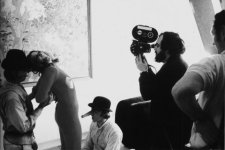
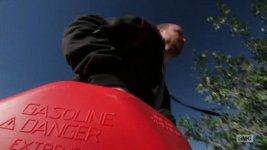
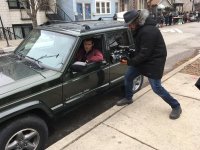
Here's a few memorable shots that relied on small camera rigs -
B6739AE57.jpg
16-1-1050x620.jpg
gas.jpg
 
Here's a few memorable shots that relied on small camera rigs
Breaking Bad had hundreds of those kind of shots over the years...they put cameras in so many amazing places and angles.

Sometimes the scene wasn't really part of the story or it was unimportant, but they set a mood by doing it.

Like if someone was digging a hole then they had a camera on the shovel showing the shovel hit and break ground or even toss dirt, or if a person was pushing some random cart then they had one by the wheel showing the wheel spin or the ground and feet moving and pushing it...things like that just continuously in so many episodes.

Just like with the gasoline tank above...show gasoline, show pouring from the tank's/liquid's perspective.

Timelapses were great too.
 
Been doing small cameras for a long time,

back on the first RED EPIC

back on an Aaton A-Minima

It's not new.

Hence the vehemence of what is only my opinion about the HDMI position being in the least inconvenient place.

Look at the behind the scenes on Extraction with Australian director and former stunt performer Sam Hargrave OPERATING the camera.

https://www.youtube.com/watch?v=9On7fXQk0ZM

Sam also operated AND COREOGRAPHED the well known stairwell scene in Atomic Blonde this way where the camera feels like it's IN THE FIGHT.
https://variety.com/2017/artisans/p...nute-action-scene-charlize-theron-1202512814/

I've built a lot of smaller rigs over the years....

This style of operating is more nimble and agile than regular hand held.

I think what's FASCINATING to me is the current obsession with gimbals.

Gimbals driving camera design ? No thanks. Personally I hate gimbals and they are already going away now ( and I say this as an R2 and master wheels owner)

Look how the P4K setup is here. I really can't see the HDMI issues UNLESS you're into gimbals.

Oh and to bring it back to topic....

Not interested in using an R5 for this kind of work.

1. It's probably too small to be a good hand held camera.
2. Guessing the camera files are only 10bit no matter how Raw it is.

P4K.jpgTR-102_BTS4_GD0004.jpgIMG_8296.jpg
 
Last edited:
Been doing small cameras for a long time,

back on the first RED EPIC

back on an Aaton A-Minima

Right, well, small is a relative term. Not all the cameras and rigs you mentioned/showed can fit everywhere and accomplish everything. Not that you always need that - lots of times a huge camera rig will work just fine.

But I think that mirrorless cameras - Sigma fp, pocket 6k, Sony/Canon are in a size league of their own. (I'm not sure the size difference between the fp and the others really matters, but I haven't played with it.)

I agree that the R5 is too small for convenient cradled HH operation. Although the beauty of a small camera is that you can add bulk/accessories to get it where you want. And also - for the Kubrick-style handheld of holding a pistol grip in front of his face (which was very much his preferred method and he felt allowed him the most framing control), I think the R5 would work with a grip and a loupe, or maybe even with the regular EVF. (Of course, Kubrick probably would have balked at using anything without an optical view finder because of the inherent delay.)

Of course, having IBIS on a camera is probably a downside if you want to achieve a shaky handheld look. I don't think the sensor locks completely in place if you turn it off, not sure.

Question - why do you think gimbals are going away? Are people preferring the organic moves of steadicam instead?

For me and my Ronin-S, it's largely about pulling off dolly moves. And I don't have the expertise or usually the time at my shoots to deal with a real steadicam. The Ronin-S is so frigging fast and easy. No one is saying gimbals are perfect.

I think for less refined modes of production (doc, corporate etc), gimbals are a godsend. And high-specced small cameras as well.

Plus, I don't see any of the cameras you mentioned besides the BM pocket passing through the crack in the cube sculpture that I referenced previously. In a real movie with a real rig, that shot would have to be composited. And in briefcase mode, you could pass a Ronin-S through a cracked window. (That would be an infrequent circumstance, to be sure.)

But yeah generally the Epic can probably be rigged small enough for most of these shots. The Alexa mini maybe less so.
 
Last edited:
Right, well, small is a relative term. Not all the cameras and rigs you mentioned/showed can fit everywhere and accomplish everything. Not that you always need that - lots of times a huge camera rig will work just fine.

But I think that mirrorless cameras - Sigma fp, pocket 6k, Sony/Canon are in a size league of their own. (I'm not sure the size difference between the fp and the others really matters, but I haven't played with it.)

You're talking about "micro" cameras here.

The deviation of topic was about "small" cameras. Kubrick's 2C isn't a micro camera.

Rarely do they need to be *that* small. I can and have done whole scenes with the camera rigs I've shown above. But I wouldn't (probably) do a whole scene on a micro or GoPro. There's a difference there.

I agree that the R5 is too small for convenient cradled HH operation. Although the beauty of a small camera is that you can add bulk/accessories to get it where you want. And also - for the Kubrick-style handheld of holding a pistol grip in front of his face (which was very much his preferred method and he felt allowed him the most framing control), I think the R5 would work with a grip and a loupe, or maybe even with the regular EVF. (Of course, Kubrick probably would have balked at using anything without an optical view finder because of the inherent delay.)

I'll disagree with you there.

That camera he was holding was an Arri 2C and would only work with the vertical grip. It's literally the motor of the camera. it's not a pistol grip. It wasn't an option to not have one (till much later look up flat base or Arri 35-3)

I doubt he wanted a pistol grip for "control". The fact that the director is operating is the "control" here. I'm going to bet that he actually owned the camera.

The EVF contact of having to have an eye is a requirement on a film camera because the film is fogged if you take your eye off the viewfinder during a shot. You have to have it on or off during a take. Or you fog the film for a few frames each time you do it. Some viewfinders had dowsers that would automatically close but you still flashed frames and they weren't that good in daylight.

(Video splits aren't really around and widespread till the late 80's and aren't functionally useful for framing till maybe the mid 90's on a film camera.)

I see no advantage to having an EVF on the body, EXCEPT for the inherent advantages of using an EVF. The ability to see better in glare and bright conditions, the better to see more critically and in some cases, be more connected to what's happening in the shot (like blinkers on a horse.

I'd argue though I can add an EVF to those above rigs and get the same thing.

Pistol grip ? I don't think in reality it's great. Ask all those Digital Bolex users....It just doesn't work that way. A pistol grip and the eyepiece though does give you two points of contact. That does help.


Of course, having IBIS on a camera is probably a downside if you want to achieve a shaky handheld look. I don't think the sensor locks completely in place if you turn it off, not sure.

Putting on my "Olympus Visionary" hat, IBIS can be really great. On the new EM1MK3 you can actually set the IBIS sensitivity and over ride its performance based on focal length. But it doesn't replace a dolly or a steadicam or handheld.


Question - why do you think gimbals are going away? Are people preferring the organic moves of steadicam instead?

Because you can always TELL a gimbal move. There are obvious "tells" and once you know what they are, you're forever bugged by them. You call steadicam "organic" and that's a word I hate hearing on set :-)

I'd call it more "natural" or "reactionary" A gimbal shot tends to be inherently robotic and smooth to the point of distraction. I feel like it draws attention to itself. There's always a framing delay. If you're making minor framing corrections during the shot they're always late.

Now for sure, there's plenty of shots that gimbals are the perfect tool for. And many shots they're great at doing. But they feel very un-assocaited from the content most of the time in my view. And mostly I want to bring the audience into the story, not stand them off from it. That's what a gimbal shot does to me most of the time.

I always see people doing gimbal demos and shaking the camera around and going to the ground and then high. But in actual use....on set ?

Nine times out of ten you DO NOT need these kinds of moves and they are better done using other techniques. A lot of gimbal use is lazy. It's basically wave the camera around, orbit a few times, use a wide lens, go close, cut print move on.

I don't often see gimbal shots that I think, they could only have done that on a gimbal. Mostly I see gratuitous gimbal shots that could easily be done using other means and usually with a better result.


For me and my Ronin-S, it's largely about pulling off dolly moves. And I don't have the expertise or usually the time at my shoots to deal with a real steadicam. The Ronin-S is so frigging fast and easy. No one is saying gimbals are perfect.

I get it totally. We all do things we'd rather not do to get the shot.

But the shot will always be a gimbal shot. And if that's what you're using all the time, how the hell will your handheld or dolly or steadicam or whatever shot operating get better ? It becomes a crutch. People don't want to spend the time taking it off to re-balance so then they just keep shooting with it as a gimbal. Put your hand up if you've done that ?

I think for less refined modes of production (doc, corporate etc), gimbals are a godsend. And high-specced small cameras as well.

As I said, I'm not knocking them. I own a R2 and an Ronin S and master wheels and a bunch of other custom gimbal gear. I love designing a gimbal shot. And that's what I'm arguing. Use them for what they're good at, not as a crutch. I don't know your work at all, I'm just saying I see a lot of overuse of a gimbal. I think it's because it's easy and simpler than taking the camera off the damn gimbal and to be prepared, dare I say, PLANNING to tell the story visually using other parts of the visual vocabulary we have at our disposal.

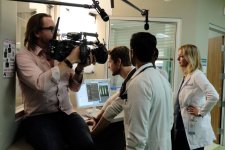
I did a gimbal shot on The Resident where the camera starts wide overhead an operating table, lot's of chaos, the camera drops into the surgical field on a descender rig, we pop it off and I carry it handheld. pull out and tilt back up. While it was inside the filed, the lights dimmed and the actors all ducked out of shot to leave just the surgeon by himself operating and having a panic attack as I orbit the room, now lit very theatrically and dark with no one there except the surgeon and the patient, before reversing the move, diving into the surgical field again and then connecting back to the descender rig and floating up above the operating table again with all the actors and nurses back in place and the lighting back to normal.

Not many ways you can do a shot like that smoothly except on a gimbal.

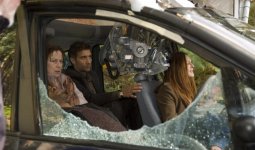
I used the Ronin S with a pocket camera and master wheels to shoot 4 actors in a car, panning on dialogue, front and back seats and looking out the window. Driving along when something happens (an accident that you see though the windshield) and then while pointing forward it's disengaged from inside the car and then carried to the accident in one shot. Again, can't think of many other ways to do that shot but on a gimbal and a SMALL one at that.


Plus, I don't see any of the cameras you mentioned besides the BM pocket passing through the crack in the cube sculpture that I referenced previously. In a real movie with a real rig, that shot would have to be composited. And in briefcase mode, you could pass a Ronin-S through a cracked window. (That would be an infrequent circumstance, to be sure.)

Sure, like I said, for those kinds of shots they're great. But they're not a substitute for a dolly or a steadicam or hand held. Other than specific examples like I mentioned and films like 1917, there really isn't a LOT of use for gimbals on a lot of narrative drama sets that I see.

JB
 
Last edited:
I'll disagree with you there.

That camera he was holding was an Arri 2C and would only work with the vertical grip. It's literally the motor of the camera. it's not a pistol grip. It wasn't an option to not have one (till much later look up flat base or Arri 35-3)

I doubt he wanted a pistol grip for "control". The fact that the director is operating is the "control" here. I'm going to bet that he actually owned the camera.

I see no advantage to having an EVF on the body, EXCEPT for the inherent advantages of using an EVF. The ability to see better in glare and bright conditions, the better to see more critically and in some cases, be more connected to what's happening in the shot (like blinkers on a horse.

I'd argue though I can add an EVF to those above rigs and get the same thing.

Pistol grip ? I don't think in reality it's great. Ask all those Digital Bolex users....It just doesn't work that way. A pistol grip and the eyepiece though does give you two points of contact. That does help.

Because you can always TELL a gimbal move. There are obvious "tells" and once you know what they are, you're forever bugged by them. You call steadicam "organic" and that's a word I hate hearing on set :-)

I'd call it more "natural" or "reactionary" A gimbal shot tends to be inherently robotic and smooth to the point of distraction. I feel like it draws attention to itself. There's always a framing delay. If you're making minor framing corrections during the shot they're always late.

Nine times out of ten you DO NOT need these kinds of moves and they are better done using other techniques. A lot of gimbal use is lazy. It's basically wave the camera around, orbit a few times, use a wide lens, go close, cut print move on.

I don't often see gimbal shots that I think, they could only have done that on a gimbal. Mostly I see gratuitous gimbal shots that could easily be done using other means and usually with a better result.

I get it totally. We all do things we'd rather not do to get the shot.

But the shot will always be a gimbal shot. And if that's what you're using all the time, how the hell will your handheld or dolly or steadicam or whatever shot operating get better ? It becomes a crutch. People don't want to spend the time taking it off to re-balance so then they just keep shooting with it as a gimbal. Put your hand up if you've done that ?

Sure, like I said, for those kinds of shots they're great. But they're not a substitute for a dolly or a steadicam or hand held. Other than specific examples like I mentioned and films like 1917, there really isn't a LOT of use for gimbals on a lot of narrative drama sets that I see.

JB

Interesting responses.

It's been about 10 years since I did a deep dive into Kubrick literature, but I'm pretty sure the only camera he ever owned was an eyemo. In any case, they could have rented whatever he wanted for clockwork. I remember reading something about how he liked having his fingers on the base of the camera and keeping his arms tucked in. I remember thinking that that mode of holding the camera was similar to using a reflex or rangefinder camera, and he used to be a photojournalist. I could be wrong.

Yes, you could add an EVF to those rigs, although I think the size/length of the rig and placement of the EVF influence the operating style. My first camera was a 7D that I used with a Zacuto shoulder mount with an offset arm and a loupe, putting the back of the camera right in front of my eye. I could also operate it off the rig just pressing the loupe into my face. I actually really liked having the optical axis of the lens in line with my eye, panning was extremely natural as if the camera were an extension of my head. When the camera is on your shoulder and the viewfinder is offset, it's somewhat less intuitive.

Yes, I agree a gimbal can look robotic. With a low acceleration and high deadband, I think you can feather the move a bit, but I'm only 100% happy with the results once the move has begun. A dolly would often be better if I had that option. And even on my steadicam merlin, although it wasn't as stable under my use, I had more control over panning speed and stopping the move. With the gimbal, it's hard to react instantaneously and I need to anticipate the action.

Usually, I have multiple cameras built (depends on the type of shoot). I did a conference recently where my assistant manned a GH5 and GH4 on tripods getting wide and medium shots of the speakers. I had a C300 and 5Dmk3 in another room shooting lit interviews when interviewees were scheduled. And I had my S1 on the Ronin-S to run around and get b-roll. We switched the GH5 to a slider a couple times and that was the only rebuilding we had to do.

A lot of times, I use the gimbal like a monopod anyway, for rapid camera placement and reframing. You lose the benefit of a fluid head, but you can pull off tracking shots on the fly.

If I'm hired by a corporate video agency, usually it will be on FS7 handheld all day with a tripod available for longer interviews.

But generally I feel that any shots that would benefit from the tight control that proper handheld shooting offers would benefit even more from being on tripod. And if I'm moving around too quickly to be on a tripod, I might as well use a gimbal. The only times I really *want* to go handheld is for a handheld look, which is not often for the type of work I do.

But yes, I largely agree that on a narrative set you will find more reason for a handheld look and more opportunities to use a dolly instead of a gimbal. But the R5 would probably not find use as an A camera on such sets anyway, although it would be great to have a camera with those features and price point that delivered high enough IQ to qualify.
 
That camera he was holding was an Arri 2C and would only work with the vertical grip. It's literally the motor of the camera. it's not a pistol grip. It wasn't an option to not have one JB

I'm going totally off topic. 1.) The 2C was the first 35mm camera I ever AC'ed in college in 84'. So what? But there it is. On that shoot, the "DP" got confused by the light baffles in the viewfinder and pulled them out with a pair of pliers. Made good fun for me, when returning to the rental house the next day.

2.) I know cool people; One of my friends is a Star Wars history researcher in his spare time and figured out that the hand-held scanner prop used in that famous scene where the Falcon flies over the Yavin Jungle (used by the guy up in the trashcan on a pole) was a quick cobble together by the shooting crew of a a Minolta spot meter and a couple Arri 2C motors all gaffer tapped together. This knowledge sparked a frenzy in the Star Wars prop making circles, and suddenly used 2C motors were being bought off of e-bay at an alarming rate. The "solution" to this shortage were high quality, spot-on resin copies of them, and here is a an example of "fake" 2C motors painted up by another friend of mine that look very, very real...

https://www.therpf.com/forums/threa...itively-identified.293646/page-7#post-5034190

Yep....
 
John, how do you like the master wheels?

They are GREAT, Very solid and reliable. I got the hard wire cable expecting their to be latency in the wireless and for when there would be range issues and it just works. Never even plugged in the 50M cable I got.

Had it on a dolly running around a huge set on The Resident that was giving us lot's of RF grief on the video side and it just kept on working.

I can't say the same for the Alpha wheels (hate) or the Walter Klasson wheels. Don't even bother.

I've been eyeing the SRH3 next though...i think they're great. Have tried it out a few times.

Do you use the force pro at all?

I have one. But i don't use it as much as I thought I would. I used to have a movi M15 and used the mimic all the time with that till it err....flew off a cable sled and smashed into a million pieces...

So I went to Ronin. MUCH faster to balance and set up, less issues and really I got it because of the Master Wheels. Got one of the first sets in the US.

I've used the force pro a few times but I find it...drifts out a lot. But it actually is great for a looser / hand held feel. Hard mounted to a dolly and running down corridors in front of people, i can whip pan between two actors on the move and it looks pretty damn like hand held, but kind of smooter, without looking like a gimbal shot.

I'm also a fan of hand held sitting on a dolly like this as well. I tend to go Ronin if the speed is high on the move or needs to be agile.

JB
 
It's been about 10 years since I did a deep dive into Kubrick literature, but I'm pretty sure the only camera he ever owned was an eyemo. In any case, they could have rented whatever he wanted for clockwork. I remember reading something about how he liked having his fingers on the base of the camera and keeping his arms tucked in. I remember thinking that that mode of holding the camera was similar to using a reflex or rangefinder camera, and he used to be a photojournalist. I could be wrong.

Seems to me not really ? A rangefinder is very small. Like with a 50mm lens it's basically about the same size as a Sigma FP. Much smaller than a 2C. I don't see much cross over in how they're held.

I shoot Leica M and I think Kubrick was more a speed graphic / rollei shooter anyway. A speed graphic IS closer to a 2C. He was only a Photojournalist for a short time in his early 20's and didn't much like it.


Yes, you could add an EVF to those rigs, although I think the size/length of the rig and placement of the EVF influence the operating style. My first camera was a 7D that I used with a Zacuto shoulder mount with an offset arm and a loupe, putting the back of the camera right in front of my eye. I could also operate it off the rig just pressing the loupe into my face. I actually really liked having the optical axis of the lens in line with my eye, panning was extremely natural as if the camera were an extension of my head. When the camera is on your shoulder and the viewfinder is offset, it's somewhat less intuitive.

Putting yourself in-line with the camera is an important operating concept. I suggest though it was the fact you were using a Loupe that helps keep away the distractions outside the frame...one of the downsides of operating with a screen that EVERYONE does now.

First of all, thanks for making me go and look at all my old photos !!

Here's a shot of a hand held 35-3 ala Kubrick's 2C but no vertical motor. They are a pig to hand hold like this.
https://flic.kr/p/2vYq7G
(From Lake Mungo)


I found a picture of my rig from a comedy show I did YEARS ago called Twentysomething.. We were originally very low budget, was single camera and at the last min the director wanted two cameras. They're only budgeted RED so we went to DSLR's instead.
https://flic.kr/p/92Lo2f

Very much in the "pistol grip" style with the monopond, but I actually found I often over corrected on pans using this (often with lens OIS active) A lot of monopod users seem to end up putting little heads on their monopods. I went monopod on LONGER lenses as you can see.

Here's a shot with the other camera operating what is known as "Melbourne Style" where you sling a cine saddle and tuck your elbows into it or the camera itself.
https://flic.kr/p/92Lqed
Gee, look at all that neat HDMI cabling by the way...

Here's another Melbourne style on the RED EPIC
https://flic.kr/p/pXNnwn

And if you want to go backwards fast with someone and FEEL it, then this type of rig works well. Means you can see where you're going and you have more peripheral awareness.
https://flic.kr/p/fa8bZ6

But I do find the operating is better through a viewfinder. You're more connected.

Here's an easy rig build with an panavised F55 and a long EVF rig
https://flic.kr/p/p2bdjo

And the same idea with a full size Alexa. Notice how the EVF is rigged like a reverse periscope.
https://flic.kr/p/p2bQam

But I love using lot's of different cameras. I've shot whole scenes with this rig.
A naked OG pocket cinema camera in someones face pulling my own focus. This was a dramatic moment for the actor and it worked to be in that space with her.
https://flic.kr/p/ibSUXb

I like trying to simulate hand held on tripods and have tried all the rigs.

The "baby bouncer", using a windsurfer grommet and springs
https://www.flickr.com/gp/johnbrawley/1JH192

The Yoga ball (better than a tennis ball or deflated soccer ball)
https://www.flickr.com/gp/johnbrawley/g63f33

My favourite was the blue Bosu balance ball in this shot but the grips hated it because...well the camera wanted to fall of it all the time...
https://www.flickr.com/gp/johnbrawley/w04AD6

I even bought at great expense, one of these about 10 years ago...
https://www.cartoni.com/products/fluid-heads/fluid-heads-sfx/h561-airfloater/

Couldn't make any money on it and I didn't like it much, but in the last two years they suddenly came into fashion so I found I was renting mine out to others.

Which is a long winded way of saying, I love operating and to me the most critical step is the camera build. I use lot's of cameras within the same scene because they all do different things well, and the way you build that camera is so critical to it's success. How you hold, contact, stear, balance, walk and operate the camera is everything.


Yes, I agree a gimbal can look robotic. With a low acceleration and high deadband, I think you can feather the move a bit,

My eyes glazed over there...sorry...I don't really agree. I've had world class head techs, gimbal techs. I can always feel the latency and over correction of an active system like this.

I had a steadicam operator who has a VOLT on my last show and I can tell when it's on and not. Mostly I tell him to leave it off. To me it looks as obvious as a post warp stabilisation.

Again, we should spin this off to another thread....we're getting into operating aesthetics and I can't help myself.

JB
 
Last edited:
They are GREAT, Very solid and reliable. I got the hard wire cable expecting their to be latency in the wireless and for when there would be range issues and it just works. Never even plugged in the 50M cable I got.

Had it on a dolly running around a huge set on The Resident that was giving us lot's of RF grief on the video side and it just kept on working.

I can't say the same for the Alpha wheels (hate) or the Walter Klasson wheels. Don't even bother.

I've been eyeing the SRH3 next though...i think they're great. Have tried it out a few times.


I have one. But i don't use it as much as I thought I would. I used to have a movi M15 and used the mimic all the time with that till it err....flew off a cable sled and smashed into a million pieces...

So I went to Ronin. MUCH faster to balance and set up, less issues and really I got it because of the Master Wheels. Got one of the first sets in the US.

I've used the force pro a few times but I find it...drifts out a lot. But it actually is great for a looser / hand held feel. Hard mounted to a dolly and running down corridors in front of people, i can whip pan between two actors on the move and it looks pretty damn like hand held, but kind of smooter, without looking like a gimbal shot.

I'm also a fan of hand held sitting on a dolly like this as well. I tend to go Ronin if the speed is high on the move or needs to be agile.

JB

Thanks John! I've only found handful of non-DJI reports on the master wheels so that's great to hear. Would the SRH3 be for larger loads or other functions the R2 can't perform?
 
John Brawley said:
...we're getting into operating aesthetics and I can't help myself.

JB
Um, yes please.

(God, if i have to talk about another stills camera release that out performs a video camera...)
 
Thanks John! I've only found handful of non-DJI reports on the master wheels so that's great to hear. Would the SRH3 be for larger loads or other functions the R2 can't perform?

R2 and a light payload + master wheels is pretty great.

Ofcourse your director has to be gimbal savvy. We had a director go through 8hrs of the day flawlessly, then all of a sudden he wants to do a 180 degree turn at the end of a long take and... well use you imagination.
 
/
R2 and a light payload + master wheels is pretty great.

Ofcourse your director has to be gimbal savvy. We had a director go through 8hrs of the day flawlessly, then all of a sudden he wants to do a 180 degree turn at the end of a long take and... well use you imagination.

What was the set up? Can't you do this if it's inverted/outside bar removed?
 
Back
Top