Canon 5d mark iii improved- olpf removed for higher resolution

You're beating a dead horse, man. I get it, you think this is a bad idea. So DON'T DO IT.
Why is it beating a dead horse? I see NO clear advantage to removal of the OPLF as of yet. NONE. But in ANdrew's latest upload I see a clear disadvantage to removing, and that is IR contaminates. Reminds me of when I bought the Leica M8 that had no AA filter and color shots of black material were magenta (or pink) and they had to send every buyer filters to compensate.
SO far I'm able to get a clean and sharp image stock just by adding post sharpen that takes 5 secs to do in post. Then if I put my Leica R glass on the cam, I'm seeing very nice results. Then, I take stills with the camera and use it as it's designed. For me, I'm seeing better sharpness than I can get out of my AF100 no sweat, so I "feel" I can get almost 900 lines of detail. Maybe thats just me, but I'll take it. I'll also take shooting at 5000ISO comfortably and 10000 ISO and getting away with it.
3hats uploaded a rez chart, but he shot it wrong and didn't fill the frame. So up until now, I have seen no evidence that removing the OPLF has achieved anything. But at least 3hats did the right thing and let MaxMax dig into the camera. Andrews test was ridiculous and contaminated with IR.
 
The AF100 is the LAST camera I would compare for sharpness or resolution. You know, you can shoot a chart and determine how many lines of detail you are getting. You either get it or you don't, resolution doesn't have to be "felt". It's pretty easy to measure.

I think the point being made is, if you don't approve of doing this, or you don't see the advantage, or what have you, move on. No one is forcing you to stay and contribute to a conversation that you think is pointless. No one has done tests to prove one way or another yet. Until such time, nothing has been proven.
I used the AF100 as comparison because it gets 800 lines in measured res and I own one, make money with it, and continue to use it. So if my Mk3 stock is outperforming my AF100 on my system visually, it would be the FIRST comparison I would make.
Nobody forcing me to continue the conversation? Well, in a conversation, some will agree and disagree. It's called debate. I'm not IN this conversation to disprove the OPLF removal. But from everything I've seen (that being very little), I can and will say I don't see the advantage of it. I see more CONS than I see PROS in fact to date. I'm throwing in my 2 cents to the subject while I schedule out making $45,000 over the next 3 weeks with the very camera we're discussing shooting stills and video on the same project with a crew of myself and one guy.

Saying move on, is like saying lets only listen to those who agree. I value this forum as a place for total discussion. Let's not change that for any reason or sense of pride.
I applaud 3hats for doing the conversion. Whether it was worth it is in his hands. At least he took a proper route in doing the conversion. EOSHD (ANdrew) is getting ready to post how to do this DYI with only a pink image to show thus far. Again, takes me back the the Leica M8 issues of IR problems.

What I am saying is that a camera that beats the resolution of the AF100 is probably not going to impress many people since a lot of people think the AF100 is soft to begin with, hence the AF100/GH2 discussions that go on constantly. People want a higher resolute image out of the AF100, so it's hardly a great benchmark of acceptable performance in that department, if resolution is important to you.

I don't think there is any question that people reading this thread are aware of:

(1) dust system operation
(2) warranty
(3) IR contamination

But what has not been answered scientifically is what has removing 1 or 2 OLPFs done to the resolution of the camera. Just because someone hasn't done the test yet or has been quite isn't an admission that nothing has changed. One minute 3hats doesn't see a difference, the next minute he has. He's trying to help, trying to get someone with an unmodified 5dmk3 for comparison but it hasn't happened yet. The problem is when people start making claims of truth and DEMANDING tests which is quite rude. Has it occurred to you that maybe some of the people who would be willing to test more are tired of the sense of entitlement people feel in bossing them around, or accusing them of being dishonest?


And really, how much you make with the 5Dm3 doesn't matter, because honestly, people have made a lot more money with a lot inferior cameras over the years, even accounting for inflation. I am sure it's your skill that matters, not the equipment. You keep turning this into a question of "Is the 5dm3 with post sharpening good enough for professional work" and the answer is totally subjective because it really depends on what a person wants, not what you find acceptable. The 5Dm2 was used professionally broadcasted to thousands of homes over and over, yet, it is clear most of us are unhappy with it's image.

If someone wants to try and get more out of their camera, so be it. If we never push the boundaries of these cameras, sometimes we never know what they are capable of doing. If someone hadn't hacked into the GH1/2, would we know how much more the camera was capable of? Not everyone uses their cameras for their income every day, and some people enjoy pushing their purchased technologies farther, or breaking them. If someone is spending $3k for a camera and they decide to remove the OLPF, obviously they either (a) are smart enough to know what they are doing risk wise or (b) are about to learn a valuable lesson.
 
Dusty
i knew I was not shooting it correctly, could you give me a heads up on how it is supposed be shot?
looking to reshoot it with an unmodified 5D3. The issue of IR is very real, and yes, I go back and forth on whether the mod truly is giving more resolution. You should be happy, you can sit back and count that 45k with knowledge you didn't "hurt" your camera.
Thanks
 
Last edited:
Dusty
i knew I was not shooting it correctly, could you give me a heads up on how it is supposed be shot?
looking to reshoot it with an unmodified 5D3.
Thanks
The triangles at the 16:9 need to point to the edge of the frame so that you don't see them.
I would like to see this test, but you should also shoot some fabrics, textures, skin, and wides stopped down on iris and set the cameras up the same and do no color correction. Also, include some shots of the modified mk3 with less aggressive sharpening applied.

Set both cams up using the prolost settings: http://prolost.com/blog/2012/4/10/prolost-flat.html
 
Last edited:
Thanks, makes sense
the updated resolution video can be seen here:
https://vimeo.com/40977807
I have a great idea, why don't one of you guys with a 5D3 do your own test. School me on how it should be shot as well as show off the virgin 5D3.
 
Last edited:
i knew I was not shooting it correctly, could you give me a heads up on how it is supposed be shot?
Yes, as was said before, the triangles should be pointing at the exact edge of the frame line. When framed up properly, the white triangles should just disappear by a pixel, and the black triangles (arrowheads) should be pointing at the exact edge of the frame. It's never easy to get it perfectly framed up, especially on a DSLR with a prime, it's actually rather a pain in the butt because every time you move the camera you need to re-focus, and every time you re-focus it changes the image size due to lens breathing, so it's a bit of a tedious chore to move the camera closer, focus, closer, focus, ack, back up a little, focus, etc.

Also you want to ensure that the camera is perfectly square to the chart, definitely don't want it angled one way or the other, the center of the lens should be optically centered at the center of the chart.

A few more things -- print that chart as big as you possibly can. You don't want a low-res printer or ink splatter from an inkjet ruining your resolution results. Ideally you should print it across four sheets of paper and tape it all together to get the chart as big (and therefore as high-res) as possible. And shoot with a sharp, sharp, sharp lens, stopped down to the sweet spot (f/5.6 usually).

Finally -- shoot it straight for a few seconds, and then shoot just the tiniest bit of movement to reveal any aliasing. A very, very slight wiggle of the tripod handle should be enough to just barely move the image a few pixels left or right, then up or down.

Finally finally, make a note of all your camera settings so someone can program their camera exactly the same and try to duplicate your results. Shoot with sharpening off, make a note of what lens you used, etc. And no post-processing should be done, upload the file exactly as it is recorded to the memory card.

Lots of rules, I know, but if you get it exactly right, and then someone else does it with their unmodified camera and duplicates the shooting circumstances exactly, then we should have a definitive answer as to what sharpness difference and what aliasing difference exists between the modified camera and the stock camera.

Thanks!
 
@ Rick

I think lots of people were let down, I will agree with that about the mk3. SOme thought that it would have RAW (LOL) and then some would expect 1000 lines native. I got my camera very early and maybe the first on these forums to have it. I loaded clips and saw a very clean image, but was kinda soft. So I put my blend of sharpening on it and it just popped like bloom expresses. At first I set in cam sharpening at 2, but have since gone to zero and sometimes 1. THe camera is 95% moire and alias free. Pretty much what everybody complained about the past 3 years. The codec is better and you have choices, even 720/60p. So "IF" I were Canon, that is what I would have addressed. And they did and did it well. As a stills camera (75% of my work with it) its a 100% upgrade. The advantages to the video being clean are not far behind.
So opening the camera and doing the conversion for "Maybe" 5% increase in rez while VOIDING your warranty throws a sense of caution. Then factor in IR and any other ailments and I conclude it's not a big enough difference to do it.

There are all sorts of cameras out there that will resolve what you are looking for. C300 comes to mind. If you're seriously drawing enough capital with your business, buy that or rent it. If not, you're stuck with under 1000 lines, more like 900.

So, lets keep in mind that this camera is a FF still photography cam, built like a tank, and still offers video as a function. But after a touch of post sharpening is out performing my AF100, which is a video camera (and still a very good one and I consider the best value for what it is and is pack with natively for the buck).

I see lots of guys going from HDSLR, to AF100, to FS100 and already jumping ship with NABS announcements (not trying to point you out Rick). All for maybe, MAYBE, 50-100 more lines of res? I know, 240fps on the fs700 with a 4k unannounced upgrade maybe in 2013. But by then, they will jump ship for whatever is announced at NAB 2013? Take those 3 cameras (HDSLR,AF100, FS100) and one has spent $12,000 or more and thats before lenses and extras. My advice. Don't buy anything now and rent for paying jobs (bill client and make them pay for it), take 25% of your profits from those jobs and buy a camera next year after 4K and true 1080p hits the sub $10,000 market.

Tell me. What Sub $10,000 camera that has an s35 sensor produces an image at 1000 lines without any drawback? Don't say Scarlet. Don't say Gh2. Scarlet is $16,000 minimum to have a shooting package with 1 battery that last 1/2 hour. We all know that the Gh2 is false resolution (but it can "look" or "feel" nice). So, What Sub $10,000 camera that has an s35 sensor produces an image at 1000 lines? And we expect them to make one for under $4000? Maybe the BMDC will so this? People might want to think about getting by another year with the camera in hand and see how this 4k rush trickles down to an affordable price.
The AF100, FS100, Mk3, Gh2, are all very capable cameras to own or hold onto just a bit longer. Hell, by this time next year, C300's will be going for $7500 or 4k will be more accessible for those searching for the big screen.
I don't really call NAB 2012 the year of the camera. I call it the year of the beginning of whats to come....
 
Last edited:
"We all know that the Gh2 is false resolution (but it can "look" or "feel" nice)."

Um, no we don't. The GH2 will give your AF100 a run for resolution any day. It's missing other feature, but res is not one.
 
Just received an interesting email from Dan at MaxMax. He indicated that, indeed, you might get different results by removing only the single filter, as in the British DIY experiments. And he did not rule out the possibility of software playing some role as well. All of these points have been brought up in this discussion. Good work people.
i don't know that he can or would do the procedure for my camera at this point but the request is in.
i know this just infuriates most you folks, but now I just want to know what's going on.
 
Hey Bill,

Thanks for posting the test chart. While the downscaled still was not quite as sharp as in Jason's test: https://vimeo.com/39517721, it is fairly close.
However, I did not see any improvement in resolution (perhaps maxes out at 860 or so lines, and past 900, complete diffusion).

If a no-OLPF camera is producing higher resolution by just removing one OLPF (need to test with a chart), then simply pulling the vibration connector would be a good test to check for a firmware behavior change.
 
@ Rick

I think lots of people were let down, I will agree with that about the mk3. SOme thought that it would have RAW (LOL) and then some would expect 1000 lines native. I got my camera very early and maybe the first on these forums to have it. I loaded clips and saw a very clean image, but was kinda soft. So I put my blend of sharpening on it and it just popped like bloom expresses. At first I set in cam sharpening at 2, but have since gone to zero and sometimes 1. THe camera is 95% moire and alias free. Pretty much what everybody complained about the past 3 years. The codec is better and you have choices, even 720/60p. So "IF" I were Canon, that is what I would have addressed. And they did and did it well. As a stills camera (75% of my work with it) its a 100% upgrade. The advantages to the video being clean are not far behind.
So opening the camera and doing the conversion for "Maybe" 5% increase in rez while VOIDING your warranty throws a sense of caution. Then factor in IR and any other ailments and I conclude it's not a big enough difference to do it.

There are all sorts of cameras out there that will resolve what you are looking for. C300 comes to mind. If you're seriously drawing enough capital with your business, buy that or rent it. If not, you're stuck with under 1000 lines, more like 900.

So, lets keep in mind that this camera is a FF still photography cam, built like a tank, and still offers video as a function. But after a touch of post sharpening is out performing my AF100, which is a video camera (and still a very good one and I consider the best value for what it is and is pack with natively for the buck).

I see lots of guys going from HDSLR, to AF100, to FS100 and already jumping ship with NABS announcements (not trying to point you out Rick). All for maybe, MAYBE, 50-100 more lines of res? I know, 240fps on the fs700 with a 4k unannounced upgrade maybe in 2013. But by then, they will jump ship for whatever is announced at NAB 2013? Take those 3 cameras (HDSLR,AF100, FS100) and one has spent $12,000 or more and thats before lenses and extras. My advice. Don't buy anything now and rent for paying jobs (bill client and make them pay for it), take 25% of your profits from those jobs and buy a camera next year after 4K and true 1080p hits the sub $10,000 market.

Tell me. What Sub $10,000 camera that has an s35 sensor produces an image at 1000 lines without any drawback? Don't say Scarlet. Don't say Gh2. Scarlet is $16,000 minimum to have a shooting package with 1 battery that last 1/2 hour. We all know that the Gh2 is false resolution (but it can "look" or "feel" nice). So, What Sub $10,000 camera that has an s35 sensor produces an image at 1000 lines? And we expect them to make one for under $4000? Maybe the BMDC will so this? People might want to think about getting by another year with the camera in hand and see how this 4k rush trickles down to an affordable price.
The AF100, FS100, Mk3, Gh2, are all very capable cameras to own or hold onto just a bit longer. Hell, by this time next year, C300's will be going for $7500 or 4k will be more accessible for those searching for the big screen.
I don't really call NAB 2012 the year of the camera. I call it the year of the beginning of whats to come....

I mostly agree with all of this. It is fairly close to my conclusion.
In reality I think the BMCC is a Mark I and is going to come filled with bugs and issues. I think next year will either see a vastly improved version or some kind of leap into larger sensors. However, people are just blindly assuming the latter and that feels a little presumptuous to me at this point. As an investment this, combined with a built in battery that will have a 2-3 year max for holding charges means that as an investment it will drop sharply. Further, I think a lot of these cameras will be resold when the latest and great 2013 update happens. Without the software, (which many will keep) the camera will plummet to at least half it's value within one year. So if you buy this camera it is with the knowledge that it is for the work you will need to do NOW. If you don't have a need for it immediately, better to wait.
My criteria for moving on camera wise actually has more to do with the manner in which the way I am working is changing. I am frequently pulling stills directly from video. I like the naturalness of not having to ask my subject to stop or pose. If I see it while I am rolling, I got it. In my opinion more and more people will be working this way. I rent a RED Epic for this. Therefore my camera of choice MUST have at least 4k, 5K is even better (witness 2700 pixel height vs 2160). The only thing keeping me from buying a Scarlet is the Dragon upgrade. I need to be able to shoot 24/25p and have that larger height, extended DR is also huge. I feel certain by next years time, the market and my professional needs will have matured and dovetailed by then. It is then and only then that I will drop the big money. If BMCC comes in with either a larger sensor or 4k and still maintains such a great price point, it is the only thing that will make me consider modifying my strategy.
If Canon thinks for one second that they can maintain total opaqueness at the prices they are charging, and not move their tails technologically for another 3 years, in this rapidly evolving market, they are going to have a rude awakening.
 
Last edited:
As an investment this, combined with a built in battery that will have a 2-3 year max for holding charges means that as an investment it will drop sharply.

Can you cite your source? So I can put it in the FAQ over on BMCuser.
 
Can you cite your source? So I can put it in the FAQ over on BMCuser.

I believe I read it there in one of the threads. Several members commented on this. The comment related to the steady way in which a rechargeable battery loses it's capacity to hold power, arriving at something like 80% after the first year. I think if their was one thing I would encourage BMCC to take a second look at, it would be this.
 
I believe I read it there in one of the threads. Several members commented on this. The comment related to the steady way in which a rechargeable battery loses it's capacity to hold power, arriving at something like 80% after the first year. I think if their was one thing I would encourage BMCC to take a second look at, it would be this.

I've read every thread, there hasn't been an answer yet. Basically, because BMD hasn't said anything yet. Nobody knows what battery is in the camera until they're told, nobody knows the warranty situation.

So, of course, if there's something that BMD stated that's actually a fact, let me know and I'll be happy to add it to the FAQ, because people are still asking this same question all over the net, and nobody has an exact answer.

Not even John Brawley, who actually has the camera.
 
I've read every thread, there hasn't been an answer yet. Basically, because BMD hasn't said anything yet. Nobody knows what battery is in the camera until they're told, nobody knows the warranty situation.

So, of course, if there's something that BMD stated that's actually a fact, let me know and I'll be happy to add it to the FAQ, because people are still asking this same question all over the net, and nobody has an exact answer.

Not even John Brawley, who actually has the camera.

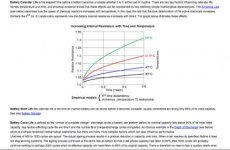
FYI, here:
http://www.mpoweruk.com/life.htm

Screen shot 2012-04-25 at 8.03.56 AM.jpg

I might add that this article explains calendar and cycle fade, and is very specific to mention their relationship to heat. A camera like this is going to produce tremendous heat, just look at how hot an iphone can run.
 
Last edited:

Well, to put it a little less subtle: nobody knows for certain how long the battery life will be. Just like nobody knows for certain (or people are assuming) BMD will release a large sensor camera next, right? Nobody knows.

So until they comment, the safe practice is to add a disclaimer that what's being posted isn't factual, just a guess or assumption on the part of the user. You kinda stated exact numbers, anyone that hasn't been paying attention may see that and start saying it elsewhere.

Even if the figure is right, until BMD says it's right, then not a single person outside of BMD or with exact info knows. S'all m'sayin'.
 
Back
Top