C700: C700 FF - Detailed Info

jcs

Veteran
http://learn.usa.canon.com/resources/articles/2018/eos-c700-ff-cinema-intro.shtml

Like the Alexa LF, it's slightly wider than FF (stills), yet still fits in the standard FF image circle. Pretty cool to fully utilize the wider FOV possible given the aspect ratio of cinema vs. film (17:9 vs 4:3).
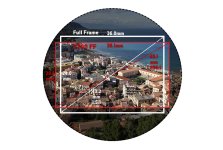
eos-c700-ff-4.jpg

Not clear why they're calling it "large format":

It’s a large format 17:9 sensor – slightly wider and shorter than traditional full frame dimensions, and that can enhance the capture of wide-angle panoramic scenes

when it uses FF lenses. Perhaps parity with Alexa LF marketing? Neither is large format, not even medium format. They both use FF lenses. Alexa 65 is medium format (requires MF lenses): how are the Alexa LF and C700 FF large format?

Look forward to seeing some footage, especially side-by-side to C700 / C300 II / C200 showing True 4K improvements + wider angle and shallow DOF capabilities (and hopefully color accuracy improvements).
 
Not clear why they're calling it "large format"

Neither is large format, not even medium format. They both use FF lenses. Alexa 65 is medium format (requires MF lenses): how are the Alexa LF and C700 FF large format?

Marketing. Plain and simple.

Maybe they could call it Large(r) Format.


Regarding the aspect ratio: Cinema used to mainly be 4:3 until TV. Then the movie industry needed something to help separate themselves, so they came up with wider aspect ratios, like 1.85:1 and 2.35/2.40:1. The DCI 17:9 aspect ratio is a relatively recent addition(essentially 1.85:1, its just ever so slightly wider at 1.88:1)(16:9 is 1.77:1)

Yes, maybe they could call it Large(r) Format :) . Red's going with "MONSTRO™ 8K VV". Seems like that camera should shoot out sparks and flames and make loud blown hemi-V8 noises when you operate it. On a serious note, they refer to it as a full frame camera. ARRI, Red, Sony, and Canon now have full frame cinema cameras. Is Panasonic next?

As for marketing, ARRI has been pretty legit, rating the Alexa sensors at >14 stops, and they truly deliver (unlike some other brands). So it was surprising that they jumped on the hype bandwagon for FF (magical 3D) and "Large Format".

DCI 4K: 4096x2160 (True 4K in pixels) vs. 3840x2160 (3.8K rounds up to 4K... marketing again? ;), "proper" term is UHD), 4096/2160 = 1.896, or 1.9:1. Noticed some recent content shot at 2:1 (via IMDB tech specs). Aspect ratio certainly affects the mood. Really enjoyed the mixed aspect ratios of Wes Anderson's The Grand Budapest Hotel: http://www.slate.com/blogs/browbeat...w_wes_anderson_movie_has_three_different.html
 
I do wish everyone differentiated between 4K and UHD, but again, the marketing guys won than one. It's all a numbers game. Isn't it funny how we went from referring to the vertical resolution in HD(720, 1080) which is arguably the more important one, to all of a sudden the horizontal, which is the more impressive sounding, because it's a larger number.
 
Isn't it funny how we went from referring to the vertical resolution in HD(720, 1080) which is arguably the more important one, to all of a sudden the horizontal, which is the more impressive sounding, because it's a larger number.

Actually, the horizontal makes more sense to me. If you still did vertical, UHD and 4K would be the same. Also, when you were asking the resolution of a film, all of the different aspect ratios could cause confusion. I would see people complaining that the 1080p file they wanted was only 960p because they didn't understand that the top and bottoms were cropped relative to their TV resolution.
 
Anybody know what this means with regards to debayering the sensor data: "4K/UHD and 2K/Full HD data is ultimately generated using non-additive resizing."?
 
Over-sampling implies taking multiple samples (pixels) and creating a weighted sum to produce an output pixel. This involves a series of multiply-additions. Non-additive resizing seems to imply simple decimation: nearest-neighbor resizing (skipping pixels and taking just one sample for the output pixels). This doesn't make sense, as nearest neighbor, while very fast to compute, produces the worst possible result: highly aliased. The C300 I used a 4K sensor and a kind of non-additive resizing by directly sampling the Bayer grid to get R & B, and then adding together two G (averaging them) to get the full HD RGB output. However this still uses an addition for G (which computes a Box downsample (low pass) filter). Another possibility is a deBayer algorithm that goes straight from 5.9K 4K/UHD and 2K/HD. However said Bayer algorithm would ultimately be doing additive resizing/downsampling in the math. Perhaps someone from Canon can clarify.
 
Back
Top