Better deal in HDSLRs

The Panasonics GH seem to be the one having less lens options to pick from, or am I wrong?

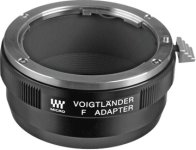
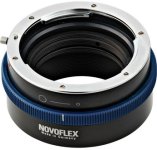
The Panasonic GHx cameras can use almost ANY lens ever made, so when it comes to lens options it has the MOST options.

For example, you can use...

- PL mount cine lenses
- Canon FD lenses
- Canon EF lenses
- Canon EF-S lenses
- Contax lenses
- Hasselblad lenses
- Leica M lenses
- Leica R lenses
- Mamiya lenses
- Minolta lenses
- Nikon AI-S lenses
- Nikon AF lenses
- Nikon G lenses
- Olympus OM lenses
- Olympus 4/3 lenses
- Olympus M4/3 lenses
- Panasonic M4/3 lenses
- Pentax lenses
- Voightlander M lenses
- Voightlander M4/3 lenses
- Zeiss M lenses
- Zeiss ZE / ZF lenses

...I am sure I've forgotten a few brands, but all of these lenses can be used with any of the Panasonic GHx cameras with the correct adapter.
 
What TheDingo said, but yeah with native lenses...it is a bit harder to just grab. You have to get the right adapter, make sure it's a good one,.....a little more research involved.
That said, after the research is done....you can go with pretty much ANY system of lenses you want.
 
What I meant is that you have to use an adapter, and then buy the lenses for that adapter. You can't have different adapters for several lens families.

Native lenses, originally with the Pana bayonet, I found just a few.
 
People make a much bigger deal about rolling shutter than it really is. I shot an action film on the T2i, with shakey cam and the rolling shutter issues are hardly noticeable Nobody has even brought up the few issues that are there. Keep that sensor in front of your pivot point on pans and it'll do wonders.
 
Sure you can. You can use as many different types as you like. Myself, I use three different adapters...

My use of words was inaccurate: you shouldn't, not you can't, use different adapters, or the risk for collimation errors might multiply.

Keep that sensor in front of your pivot point on pans and it'll do wonders.

Can you clarify that a bit more?

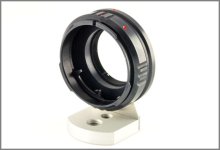
If you're right, then above's "ciecio7 Micro 4/3 Adapter for Canon FD Lenses with Built-In Tripod Support" it's putting the pivot point in front of the sensor, and might influence rolling shutter artifacts. Is that so?
 
You can use any number of lenses with the GH2 and adaptors, but there will be a significant crop factor due to its small sensor size. So for fast wide lenses you are better off with lenses designed specifically for the 4/3 sensor (there is a limited number to chose from, but the Voigtlander 25mm is meant to be a fantastic lens).
 
you shouldn't use different adapters or the risk for collimation errors might multiply.

Not true at all.

Good adapters are precision machined, sometimes better than lenses are, so the fit is tight and exact.

With a good adapter + lens combination there should be no "play", it should be a solid fit.

This is why I sought out the ciecio7 Canon FD adapter, as I had tried a few FD adapters, and was not happy with most of them.
( the ciecio7 adapters are machined from one solid piece of Duraluminum, so no moving parts, no screws used to assemble it )

The tripod mount is also very handy for longer lenses, so the strain is taken by the adapter and not the camera.

Sorry to disagree, but your "not true at all" statement should be followed by a "... in my opinion".

Absolutely ALL lenses, cameras and adapters can have collimation errors, and they should be checked with a collimator. Perhaps this story from this very same forum might show that:

http://www.dvxuser.com/V6/showthread.php?131115-serious-35mm-adapter-back-focus-(collimation)-errors

This doesn't mean that those errors might be gross and obvious, and only apparent on certain circumstances. Particularly if those images with "errors" are blown up o very big screens.

When you use several adaptors, and several lenses for each adaptor, the chances of collimation errors do multiply. That is the absolute true.
 
You can use any number of lenses with the GH2 and adaptors, but there will be a significant crop factor due to its small sensor size.

If you use the Full Frame 35mm Still Photo format as your point of reference, then yes there is a significant crop factor.

However, if you use the 35mm motion picture formats, 3-perf academy or Super 35, then the crop factor is actually pretty small.

Add in the new MetaBones SpeedBooster adapter, and the crop factor may be close to non-existant depending on the lens and format you are using for comparison.


So for fast wide lenses you are better off with lenses designed specifically for the 4/3 sensor

Totally agree here.

There are some great M4/3 lenses to choose from, but we could always use more...

- SLR Magic 12mm f/1.6
- Olympus 12mm f/2.0
- Pansonic 14mm f/2.5
- Olympus 17mm f/1.8
- Voightlander 17.5mm f/0.95
- Panasonic 20mm f/1.7

- Panasonic 7-14mm f/4.0
- Panasonic 12-35mm f/2.8
 
Absolutely ALL lenses, cameras and adapters can have collimation errors, and they should be checked with a collimator.

I would only have a lens checked for collimation errors if there is a noticeable problem. In most cases the problem shows up as either a loss of resolution or optical defects like CA.

The example thread you posted was specifically about 35mm DOF adapters, which are notorious for collimation and back-focus problems.

This is NOT the same a mounting a high quality lens to a high quality M4/3 adapter, where unless the lens was poorly made, or the lens was physically mistreated, collimation errors don't magically appear for no reason.

When you use several adaptors, and several lenses for each adaptor, the chances of collimation errors do multiply. That is the absolute true.

You will have to show me empirical proof of this, as I have never experienced this in more than 30 years of professional photography using many cameras from 35mm Nikon up to 8x10 Sinar cameras.

I have seen collimation errors from badly made or abused lenses, but for the most part high quality professional gear does not have this problem.
 
I might also add that in relation to the OP, there is not going to be any significant advantage with the FS100 with adapted lenses. If collimation errors with mft mount are a concern one could get something like the Hot Rod PL adapter, have it tested, shimmed if necessary and then just shoot-away with your set of Arri Master Primes or Cooke S4s.
 
Last edited:
Collimation problems were always a concern in film cameras, where the blow up on a film screen might show focus and resolution problems. It was not a photography concern, really.

Usually you had to mate a specific camera to a specific set of lenses and never mix them with other lenses. There were other problems to be solved like color tint or other aberrations, so you usually did further tests before shooting started.

Zooms helped solve that problem too, at least for eventual collimation adjustment of just one lens.

I didn't try to undermine what you said, just say that that is a potential issue to be dealt with if you plan to show this on a very large screen, which would be my case in this project.

You don't need to go to the extent of using a PL adapter or uses Zeiss or Cooke primes, as long as you test things thoroughly.

I don't quite follow what are the issues with the crop problems in the GH2. AFAIK lenses provide a certain perspective, lens wise, according to the sensor frame size and shape. In 35mm photo, 50mm was considered a "normal" lens, but for 35mm film, that was 40mm. In 16mm film, a normal lens was 25mm.

So it will all depend on where a specific lens came from or was designed for. A Canon lens will be slightly different, perspective wise, on a 7D (22.3 x 14.9mm sensor) than on a 5D (36 x 24mm), a ~ 1.5 ratio. A Pana GH2/GH3 sensor is 17.3 x 13mm, a ~1.33 ratio. So say a 50mm "normal" lens for the 5D will be like an 85mm on the 7D and close to 90mm on the GH3.

In fact now I see why some people get away with using C mount Bolex lenses on the GH: the frame is very close to 16mm. A "normal" lens in the GH would also be close to 25mm.

What I mean is there is a change in perspective, not really a crop question. There's a crop because you have to go farther for a certain frame if you compare the lenses on their original cameras.

The FS100 sensor is very close to the 5D, so lens perspectives should be similar.
 
The FS100 sensor is very close to the 5D, so lens perspectives should be similar.

The GH3 is actually closer to the FS100 in video than an FS100 and a 5D. The GH2 is even closer to the FS100 due to it's over sized multi-aspect sensor.
The FS100 is 23.6 x 13.3
The GH2 is 18.8 x 10.6
The 5D is 36 x 24

If the FS100 was a true Super35 sensor it would be larger, but it's smaller than that and very close to DX/APSC sensors.
 
Last edited:
Well, in fact the FS100 frame is closer to the 7D family of Canon cameras, but it's a true 16:9/1.77 ratio. Diagonal should be around 28mm, so in fact it's not a Super35.

To defend the FS100, it should be stated that it's the same sensor size as on the Sony F3L, so they are in good company.

Another point is that to get a 16:9 frame ratio from the 1.5 ratio Canons, both large or smaller sensors, you will also crop up and above.
 
As a total noob looking into a 5d, which two pro lenses would be the best to get first? I have read lots of threads and get a bit confused sometimes. It seems a 50mm 1.4 usm may be a good one to stArt with. Thanks!
 
Can't go wrong with a good 50mm. Then get something on the wide angle side. I'll let the lens experts weigh in on which ones, but an 18/20mm a 50mm and an 85mm would be a nice range to have.
 
Back
Top