I've seen a lot here about recording equipment, mics, technique in the field etc. What I don't see is much discussion of the sound monitoring chain in post. I'm moving my business to a new location and will have the opportunity to do new setups for audio post for video. I'm not talking recording studio mixers and soundproof rooms, just a reliable, neutral environment with some good monitors to do a nice clean clear mix of dialog tracks. What are folks using for speakers, amplification etc? I am working mainly on Mac Pro's, Premeire & Audition CC 2015.5. Field recording with good mics and a Zoom H6.

Navigation
Install the app
How to install the app on iOS
Follow along with the video below to see how to install our site as a web app on your home screen.
Note: This feature may not be available in some browsers.
More options
You are using an out of date browser. It may not display this or other websites correctly.
You should upgrade or use an alternative browser.
You should upgrade or use an alternative browser.
Best Practices and suggestions for Monitoring in Post
- Thread starter ric8138
- Start date

There's actually been quite a bit of discussion, in various threads, regarding monitors and treating the room for accurate mixing.
http://www.dvxuser.com/V6/showthread.php?333102-Studio-Monitors
http://www.dvxuser.com/V6/showthread.php?344060-New-Monitors-Subwoofer
http://www.dvxuser.com/V6/showthread.php?325256-Near-Field-Monitor-recommendations-Basic-needs
http://www.dvxuser.com/V6/showthread.php?318326-Benefits-of-monitors-for-post
Just for a few starting places.
There's actually been quite a bit of discussion, in various threads, regarding monitors and treating the room for accurate mixing.
http://www.dvxuser.com/V6/showthread.php?333102-Studio-Monitors
http://www.dvxuser.com/V6/showthread.php?344060-New-Monitors-Subwoofer
http://www.dvxuser.com/V6/showthread.php?325256-Near-Field-Monitor-recommendations-Basic-needs
http://www.dvxuser.com/V6/showthread.php?318326-Benefits-of-monitors-for-post
Just for a few starting places.
Thank you! That's just what I needed, but didn't know what to search for!
... but didn't know what to search for!
Advanced Search > Single Content Type > keyword "monitors", search entire posts, Search in Forum(s) "Location Sound/Post Audio".

John Willett
Veteran
When I'm editing I have a Grace m903 monitor controller plugged into the computer (USB) feeding a pair of ME-Geithain RL906 active monitors. :thumbsup:
I also have both open back headphones (Sennheiser HD 800) and closed back (Sennheisr HD 25-1) to check things.
I also have both open back headphones (Sennheiser HD 800) and closed back (Sennheisr HD 25-1) to check things.

Jim Feeley
Veteran
John's Geithain monitors sound impressive (get it? "sound impressive"? I crack me up). But Ric, what's your budget?
These days, my favorite low-cost audio monitors for post are the JBL LSR305. US$300/pair. I end up in lots of post facilities, have a solid background in audio....worked in and built equipment for recording studios (granted, that's much easier than actually designing the studios or equipment), and do lots of location and post audio for corporate and doc stuff now. So I have some sense of what I'm talking about (though frankly, John W and his peers probably have better ears at this point than me). I love me some expensive speakers. But the inexpensive JBLs are really decent...not hyped like some low-cost monitors aimed at music consumption or production, not fatiguing, powered & shielded (as are many monitors these days), widely available. Give them a listen.
http://www.jblpro.com/www/products/recording-broadcast/3-series/lsr305#.V6NrD8f_uSA
Richard Crowley
Veteran
+1 for the new JBL 3-series powered monitors.
They appear to be a solid result of years of JBL engineering and produced at a very popular price.
I really like my LSR305 pair and will probably buy a pair of LSR308 as well.
Perhaps just because I am a west-coast kid, I grew up liking JBL and Altec-Lansing and the west-coast brands. (Or the "west-coast sound" as some people call it.)
I'll never forget the reaction from my friend's mother (who was not an audiophile in any sense of the word) upon hearing east-coast Acoustic Research AR-3 speakers.
"It sounds like there's a pillow in front of them!"
I'm sure this is what the old-school, staid east-coast people think of JBL, et.al.
They appear to be a solid result of years of JBL engineering and produced at a very popular price.
I really like my LSR305 pair and will probably buy a pair of LSR308 as well.
Perhaps just because I am a west-coast kid, I grew up liking JBL and Altec-Lansing and the west-coast brands. (Or the "west-coast sound" as some people call it.)
I'll never forget the reaction from my friend's mother (who was not an audiophile in any sense of the word) upon hearing east-coast Acoustic Research AR-3 speakers.
"It sounds like there's a pillow in front of them!"
I'm sure this is what the old-school, staid east-coast people think of JBL, et.al.
I'm sure this is what the old-school, staid east-coast people think of JBL, et.al.
View attachment 115735[/QUOTE]
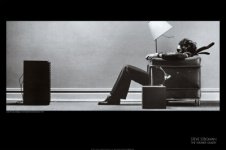
Ha! one of the best advertising images (Maxell Tapes I believe) of all time, it truly captures what it feels like to be "blown away" by the music. I always imagine that he's listening to the Beatles' "Revolver". But seriously folks, thanks so much for your input. The JBL 305's look like a good deal for me. My budget is less than $1K. I probably would have just plugged them into the headphone output without realizing. Thanks again.
Richard Crowley
Veteran
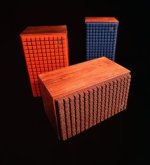
The speaker in that advert photo looks very much like the JBL L-100 "Century", a VERY popular monitor speaker for both home and studio use.
It looks like it has that iconic "egg-crate" foam grille on the front.
It looks like it has that iconic "egg-crate" foam grille on the front.

Noiz2
Sound Ninja
...
Perhaps just because I am a west-coast kid, I grew up liking JBL and Altec-Lansing and the west-coast brands. (Or the "west-coast sound" as some people call it.)
I'll never forget the reaction from my friend's mother (who was not an audiophile in any sense of the word) upon hearing east-coast Acoustic Research AR-3 speakers.
"It sounds like there's a pillow in front of them!"
Now that is interesting. I'm also a west coast boy, or was, and the pillow was kind of how I felt about JBL speakers. I didn't like Tannoy much either. But one thing I came to realize was that a lot of post houses were seriously under powering them (in the edit rooms). Most speakers get a bit mushy if they are powered by a piece of junk. Which may be why many speaker companies have gone to powered monitors. I suspect that many speakers I didn't like (by good companies) were just not powered properly. One place with a big name used 40W home stereo receivers in most of the edit rooms...
My recommendation is to try and find someplace that is using the speakers and listen to them a bit. You don't want muddy but you also don't want overly bright speakers that will fatigue your ears quickly. I have heard a couple of set ups using Genelec speakers. By reputation they should be great, but I found them really brittle and didn't like them much at all. Meyers on the other hand I find very detailed and clear. The highs are defined but not brittle. But I don't know if they even make a real near field monitor. You want some space with them generally. Both are $$$ and I have been very happy with my $ monitors from Yorkville, not exactly the name brand to show you are "in the know", but everyone who has listened to them has like them (or lied?) and I know at least one composer who went out and bought a pair because of the sound and low ear fatigue factor. They come powered now but I'm running them off a 100W per channel amp.
I have also used Audix "Hothouse" powered monitors. I don't think they make them any more but surprisingly decent for a small powered speaker pair.
BTW one thing that most not professionals never do and pretty much every professional does is to take the front covers off. Every decent grade speaker has removable front covers and removing them will make a pretty big difference in sound quality.
Bruce Watson
Veteran
I'm moving my business to a new location and will have the opportunity to do new setups for audio post for video. I'm not talking recording studio mixers and soundproof rooms, just a reliable, neutral environment with some good monitors to do a nice clean clear mix of dialog tracks.
The most important aspect of this is the room. Avoid if at all possible 8' ceilings. Why? In a sitting position, your ears will be almost exactly half way between the floor and the ceiling -- where the most common and pronounced room mode will be. This isn't going to help your ability to hear at all. This is why studios tend to have 12' ceilings.
Second, the other dimensions of the room matter too. Bigger is almost always better, and if you can keep your dimensions close to the golden ratio you'll spread your room modes out and make controlling them easier.
Third, if you're going to use monitor speakers (and you want to maintain your sanity), you will absolutely need to treat a small room. If you're doing dialog only you might get out of some of the bass traps, but you're definitely going to have to control your first reflections. This doesn't mean you turn the place into an anechoic chamber. It means a mix of absorption and dispersion. IOW, you don't want a dead room, you want one that's damped but alive.
This, this, is why so much monitoring for dialog work is done with headphones. Headphones take the room out of the equation, and with mono dialog work there's no stereo sound field to judge. Once you add music in stereo, or multi-channel, you have to use monitors to fully understand the sound. At that point headphones cause more problems than they solve.
Much as you want to just buy some speakers and start working, you'll be best served in the long run (and heck, the even the short run) by treating the room first. Hit the acoustic forums; it's all be discussed at length over and over and over again.
Not what you wanted to hear, I know. I didn't like it either, but the laws of physics really don't care at all what we like or don't like.