Best lens setup for GH1

Right now I have the kit lens and I also picked up the 20mm f/1.7, but not sure if I'm going to keep it. Or either of them for that matter.

I figured with the kit lens and the 20mm, I would have a pretty good setup. The only things missing would be wide and tele in low light. So, I figured get a wide angle converter for the 20mm and pick up a fast tele lens.

However, I've also considered selling one or both lenses, and purchasing all manual lenses. So, I'm wondering what lens setup other people are using and recommend. If I go all manual, what lenses seem to work best.
 
I have the kit lens, and then I'm invested (Barely) in Pentax glass for my...you know...photo shooting.

I find myself using the Kit lens about 50% of the time, and my Pentax 50mm prime about 50% of the time.

Honestly I prefer manual lenses. The Panasonic lenses focus-by-wire can be maddening at times, and on shooting video you're basically doing everything on the lens manually anyway.

If it were me, I'd keep the kit lens for when you need the range and auto-functions, and go manual for the rest.

The tricky part is finding another 20mm lens?
 
The Panny lenses are not even close to worth the price. They're trying too hard to make everything high tech and automatic, but it doesn't work as well as giving you a proper, reliable focus ring with numbers on it in most cases. Sometimes auto is good, as is wide angle, so I am probably keeping the kit lens, but most of the time I don't use it. Slow, bad for manual, unreliable on focus and zoom (no markings being a big problem), expensive.

But you won't get something that wide if you don't use a M4/3 lens. Or whatever it's called.
 
Manual lenses look horribly soft and painful to watch while the camera operator tries to find the proper focus a lot of the time. The crop factor is also terrible. I don't see the point of everybody going crazy about the prime lenses when the results are not that good. The 20mm f/1.7 is a perfect choice if you need a lens for low light situations. Otherwise get some lights and lit whatever you are shooting.
 
I don't know, I just got an FD adapter after a long, long wait, and I'm pretty impressed by how easy it is to focus...
 
Manual lenses look horribly soft and painful to watch while the camera operator tries to find the proper focus a lot of the time. The crop factor is also terrible. I don't see the point of everybody going crazy about the prime lenses when the results are not that good. The 20mm f/1.7 is a perfect choice if you need a lens for low light situations. Otherwise get some lights and lit whatever you are shooting.

Sorry. This is way off the mark. It's not hard to focus with MF lenses especially with MF assist on the GH1, the crop factor doesn't make any difference whether you are using a 35mm prime lens or an m4/3 lens. Sure, they can make wider faster lenses specifically for the m4/3 mount since it's easier to make a lens with a smaller image circle, but the crop factor is still there.

The best stuff I've seen with the GH1 has been with MF primes, and they certainly don't look "soft." The Panasonic lenses are definitely sharp, no doubt about that, and the 20 f/1.7 is awesome, but to use such a sweeping statement about MF glass is just nonsensical.

If you're absolutely worried about sharpness, you can use Zeiss 35mm lenses on the Contax mount, but I've seen very, very sharp stuff with Canon FD lenses.

Canon FD lenses that make sense on the GH1 are these:

17mm f/4
20mm f/2.8
24mm f/2.0 or f/1.4 L (if you can find one)
28mm f/2.0
35mm f/2.0
50mm f/1.4 or f/1.2
85mm f/1.8 or f/1.2 (f/1.2 if you can afford it)
100mm f/2.8 or f/2.0 (hard to find in f/2)
135mm f/2.5 or f/2.0
200mm f/2.8
 
Sorry, but all those non 4/3 lenses do soften the image a lot. If people don't want to see that its Ok but to get the best and sharpest image Panasonic as well as other lens manufacturers need to continue developing lenses for this size sensor. Also prime lenses tend to produce more skew and "jello". There are some awful looking videos out there using prime lenses not intended originally for 4/3s sensors.
 
Sorry, but all those non 4/3 lenses do soften the image a lot.

John, can you please explain what it is exactly that putting a famously sharp lens like the Zeiss 100mm 2.0 Makro Planar on a GH1 does to soften the image? Because, assuming a quality adapter is used, that just doesn't make any sense.
 
Sorry, but all those non 4/3 lenses do soften the image a lot. If people don't want to see that its Ok but to get the best and sharpest image Panasonic as well as other lens manufacturers need to continue developing lenses for this size sensor. Also prime lenses tend to produce more skew and "jello". There are some awful looking videos out there using prime lenses not intended originally for 4/3s sensors.

If you think they're soft it might just be because people get a little DOF crazy and shoot with these lenses wide open which does make them kind of soft usually, when they should be shooting 1-3 stops closed.

The only effect lens would have on rolling shutter is that it is typically more visible at higher focal lengths...so yes a 600mm prime might be more prone to rolling shutter on the GH1 than your kit lens at 14mm....
 
Sorry, but all those non 4/3 lenses do soften the image a lot. If people don't want to see that its Ok but to get the best and sharpest image Panasonic as well as other lens manufacturers need to continue developing lenses for this size sensor. Also prime lenses tend to produce more skew and "jello". There are some awful looking videos out there using prime lenses not intended originally for 4/3s sensors.

1. 35mm lenses may resolve less than m4/3 lenses, I will give you that, lenses designed for smaller sensors/film sizes have to resolve more.

2. However, the m4/3 sensor, even in the best case scenario, cannot resolve as much information as on 35mm film (in its best case scenario), from my testing, it seems to me that 35mm lenses can resolve more detail than the m4/3 sensor can handle, so I don't know why that would appear soft.

3. Skew and Jello? You can't go by a few badly shot videos on the web to make this determination, everything I've seen is to the absolute contrary, the best, sharpest, jello free stuff has been with 35mm prime lenses shot with proper technique. There have been quite a few threads on this and the overall census was the jello is actually less prevalent when shooting with non m4/3 lenses (at least the kit lens)

The m4/3 lenses except for the pancake are much slower than most 35mm lenses and the footage one sees from m4/3 kit lens at maximum is shooting at f4 and thus much more is in sharp focus, almost any lens is going to look good at f4.

Because they have such a small wide open aperture, I think many would agree the kit lens is limiting because too much is in focus even when wide open, and you don't have much ability to get shallow DOF when the scene calls for it.

For some work, I can see how this would be advantageous, but for narrative work it seems like 35mm primes have the edge, save for the 20mm pancake.

But not sharp enough?

That I just don't see. If you've been watching a bunch of videos with compression and the 35mm primes were shot wide open at f1.4 or f2. then of course they are going to look softer than the kit lens at f4-5.6, but at the same aperture and focal length, I doubt you'd be able to distinguish the results.

Beyond that, good 35mm primes should have less distortion and whatever "skew" is than the very long kit zoom, all else being equal, although the kit lens uses some software correction.
 
John, can you please explain what it is exactly that putting a famously sharp lens like the Zeiss 100mm 2.0 Makro Planar on a GH1 does to soften the image? Because, assuming a quality adapter is used, that just doesn't make any sense.

Maybe the crop factor? Who knows, but in a lot of the videos shot with prime lens you can clearly see a softer image overall. If you can't see it then fine, but to the trained eye is very clear. The same with the "jello". It gets accentuated with longer focal length. Which is what the crop factor does to any lens used with an adapter on the GH1.
 
John, all lenses m4/3, Nikon, whatever, are effected by crop factor the exact same way on the GH1. The effective field of view of the GH1's kit lens is 28mm-280mm, not 14mm-140mm. There is no way for the type of lens (at the same focal length, for example the kit lens at 50mm and a Nikon 50mm) to have any different effect on jello as that is a result of the way the CMOS sensor works and has nothing to do with the optics.

As for a softer image, this is probably the result of people using their primes at wider apertures for shallow DOF, resulting in focusing difficulties and general softness...if you use one of these lenses at 1-3 stops closed it is at its sharpest (while still getting nice shallow DOF and decent low light performance.)
 
I feel pretty confident in saying that prime vs. zoom, manual vs. kit, etc., has no bearing whatsoever on rolling shutter performance.

As for prime shots being softer than zoom shots -- the opposite should be true. The reason people even put up with the hassle of using primes is because they're sharper. But the practical reason is probably a whole lot simpler -- the kit lens can autofocus, and the prime can't. And so it's probably a case of people missing focus on the prime.

Second reason, as Ben says, is the same as the first but for a different reason. Lots of newbie shooters seem to think that their lens only has one aperture worth using, and that's wide-open, because they're going for minimal DOF. And minimal DOF means a greatly increased chance of blowing the focus. At f/4 or f/5.6 you have a reasonable amount of DOF and focusing is not impossible. At f/1.4, it's dramatically more difficult to get and hold focus.
 
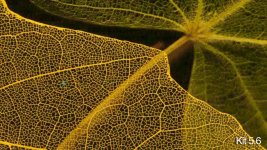
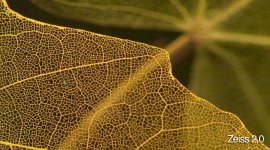
Did a quick test using the kit lens at 5.6 versus the Zeiss 100mm wide-open at 2.0. These are stills. Used a Z-Finder to focus. Of course, the Zeiss has a much shallower DOF. But you can compare the parts that are in focus. I put a blue dot on the area I thought provided the best comparison. To my eyes, the Zeiss wins hands down. Judge for yourself which is sharper.
 

Attachments

  • Kit-5.6.jpg
    Kit-5.6.jpg
    223.2 KB · Views: 0
  • Zeiss-2.0.jpg
    Zeiss-2.0.jpg
    195.1 KB · Views: 0
Did a quick test using the kit lens at 5.6 versus the Zeiss 100mm wide-open at 2.0. These are stills. Used a Z-Finder to focus. Of course, the Zeiss has a much shallower DOF. But you can compare the parts that are in focus. I put a blue dot on the area I thought provided the best comparison. To my eyes, the Zeiss wins hands down. Judge for yourself which is sharper.

Gosh darn that Zeiss 100mm f2 is friggin' sharp at F2, awesome, just awesome. There's a bit more contrast in the Panny at 5.6, but not much considering you're shooting 3 stops slower! Wow wow wow. The Zeiss is definitely sharper even at f2.
 
Yeah, that Zeiss is a very sweet lens. It's the first lens ever made by Carl Zeiss that uses ARRI/ZEISS Master Prime cinematography optics.
 
Maybe the crop factor? Who knows, but in a lot of the videos shot with prime lens you can clearly see a softer image overall. If you can't see it then fine, but to the trained eye is very clear. The same with the "jello". It gets accentuated with longer focal length. Which is what the crop factor does to any lens used with an adapter on the GH1.


John, I have recently used my Canon FD 50mm f1.4 a lot, and yes of course, at f1.4 everything is very soft.

Have a look at my recent stuff, shot mostly with that glass:

http://www.vimeo.com/7799576

It is VERY soft. By the way, I like that as you still get high resolution, but the edges are not oversharp (because of internal light deflection / reflection, etc..). But this is clearly due to the wide open iris.

Stopped down a bit it gets very sharp.

Yitter and yello is clearly worse! But thats clear as well: as there is not image stabilization, every small (higher frequency) disturbance gets directly to the sensor, which has a harder time to compensate for yitter.

With the kit lens, the sensor already sees a stabilized image (hence much lower frequency disturbance), and therefore it is much easier to compensate for yitter / jello. You can clearly see some yittery images in my footage above.

Still, I have to say the possibilities with fast, manual glass are so amazing (and much more fun), that I am completely sold (I'm already looking for additional FD lenses!)

best regards, Gunther
 
Back
Top