Article pushing 8K hard

I don't think what he said sounds promising.

You need to read the first line in context of the rest of the post, which was meant to be ironic. But it's hard when just reading a few lines of text.

I don't mind 8K per se, I just think the discussions should be framed correctly... not as the promise as the 'next great thing' for consumer's home sets.

It seems to me that 8K capture and projections on larger screens is a no brainer. Many theatres are digital today. And many of them 2K. Watching 2K on a screen 30 feet wide is pretty far from sitting close to a 65" OLED at home in terms of density. Generally, I still find it much more immersive to sit farther away form a large screen, than close to a small one, but I do think that theatre size 'screens' could do with quite a bit more resolution (projected) before I wouldn't notice.
 
Sorry, I can have a hard time detecting irony even in person.

Key & Peele "text message confusion": https://youtu.be/naleynXS7yo

Obviously the guy is a salesman. And certainly in a theater or for certain types of films, I think there are benefits from higher resolutions. I just think that for most of the stuff that people are watching and in the screen sizes and at the distances they're watching, HD is fine. But it doesn't help people sell expensive new sets to acknowledge that.
 
The TV manufacturers want to sell larger size TV's with more pixels/higher res. Nothing's wrong with that.

However, far fewer buyers can dedicate a full wall for a 75"-98" screen and most folks won't be able to tell the difference for under-65" from their normal viewing positions. So, the size/res combo - and one might as well include the dynamic range/brightness in here - is kind of nearing its end.

The two big potential developments are 3-D/hologram TV's and the Over-the-Air 4K broadcast. The hologram TV has been around for a few years but has failed to capture the imagination of the masses thus far. 4K OTA is undergoing trials and is supposed to start rolling out toward the end of the year.
 
ugh not more 3D attempts. 3D will never take off because it sucks.

2D photography already has an illusion of depth.

I think the next interesting development is VR/360. But that will be specialty content and require headsets not screens.
 
Looks like Sony is launching a $7k 75" 8K TV.

Article notes "while some streaming services offer 4K HDR streaming, there is still a dearth of 8K content"

Yeah there's like zero 8K content! Have any Monstro VV movies been mastered and released in 8K?

They mention video games though and I can actually see the massive benefit of this to gamers. More detail in your game, which can probably produce an arbitrary amount of detail depending on processing power.

https://www.flatpanelshd.com/news.php?subaction=showfull&id=1592555672
 
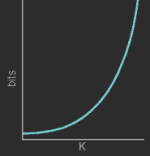
The thing about resolution is that the cost and benefit grow oppositely.

If you are measuring in K, it is one-dimensional.
4K is not just twice as many bits as 2K, it is 4 times.
8K is 16 times as much data as 2K.
The number of bits grows quadratically.

growth.png

Meanwhile, after a certain point, resolution has diminishing returns. I remember hating VHS. When DVD came along, it looked twice as good, because it was. From DVD to Blu-ray, the difference is subtle. Many people are content with their DVD collections.

benefit.jpg

If producers made decisions with any kind of rationality, they would consider two factors: (1) angle of view, and (2) pixels per degree.

angle of view

It doesn't matter how big a screen is. It matters how big a screen is and how close you are to it. This forms angle of view.

[table="class:grid"]
[tr][td]Horizontal Angle[/td][td]Note[/td][td]From a 55" TV[/td][/tr]
[tr][td]
10°​
[/td][td]average SDTV living room[/td][td]
22' 10"​
[/td][/tr]
[tr][td]
20°​
[/td][td]average HDTV living room?
watching a movie on my phone[/td][td]
11' 4"​
[/td][/tr]
[tr][td]
25°​
[/td][td]my ideal living-room set-up
my 13.3" laptop in my lap[/td][td]
9'​
[/td][/tr]
[tr][td]
26°​
[/td][td]THX maximum back row in a movie theater[/td][td]
8' 8"​
[/td][/tr]
[tr][td]
30°​
[/td][td]SMPTE recommended back row
a 15" laptop in my lap[/td][td]
7' 6"​
[/td][/tr]
[tr][td]
36°​
[/td][td]THX recommended back row[/td][td]
6' 2"​
[/td][/tr]
[tr][td]
45°​
[/td][td]my closest comfortable for 16:9 movies[/td][td]
4' 10"​
[/td][/tr]
[tr][td]
50°​
[/td][td][/td][td]
4' 4"​
[/td][/tr]
[tr][td]
55°​
[/td][td]my closest for 2.40:1 movies[/td][td]
3' 10"​
[/td][/tr]
[tr][td]
60°​
[/td][td]SMPTE maximum (?)[/td][td]
3' 6"​
[/td][/tr]
[tr][td]
70°​
[/td][td]IMAX average[/td][td]
2' 10"​
[/td][/tr]
[tr][td]
80°​
[/td][td]maximum IMAX, front row in a cheap theater?[/td][td]
2' 4"​
[/td][/tr]
[tr][td]
90°​
[/td][td]mayday![/td][td]
2'​
[/td][/tr]
[/table]

30-45° doesn't sound big, but it is where things feel immersive, and it about where most people like to sit, even in a movie theater. But one's angle of view could be 20-60°, depending on taste and situation. Beyond that is rare, like in an IMAX, and for most things it is uncomfortably close.

pixels per degree

[table="class:grid"]
[tr][td]40[/td][td]SDTV
DVD (more res, but TVs got bigger then too)
35mm movie
2K theater[/td][/tr]
[tr][td]60[/td][td]conscious minimum[/td][/tr]
[tr][td]90[/td][td]2K living room
4K theater[/td][/tr]
[tr][td]150[/td][td]physical and subconscious maximum[/td][/tr]
[/table]

This is a bit loosey goosey, but it is after much reading and self testing. Like I said, more resolution equals more pleasure until a certain point. For me it is about 60 pixels per degree. This I am arbitrarily calling my "conscious minimum". Something seems to happen at that point where, if I am consciously distinguishing pixels, it gets almost impossible, although there is a subconcious awareness of discreteness. Then around 90 pixels per degree, a black-and-white grid softens into gray. From 90 to 150, I can't consciously tell if there is a difference, but I can feel a difference, if that makes any sense.

(I tested it by programming a resolution switch every 3 seconds and asking myself if one picture "felt" sharper than the other, though I could not consciously tell any difference. After 150 pixels per degree, even the feeling disappeared. It just so happens that it matches scientific literature about the resolution of the human eye (typically stated as "0.39 arcminutes")).

---

So yes, an argument can be made for 8K or even more (60° x 150 = 9K). But bear in mind that would be 16 times as much data and maybe only feel 10% nicer. You are also starting to run up against the sharpness of some lenses. 8K is 114 line pairs per millimeter on a 135 sensor and 165 lp/mm on an S35 sensor.
 
Last edited:
The poor guys that have to do CGI for 8k. 4K was bad enough. Good luck to them. 8K cgi? Get outta here. (my current understanding is the human eye can only see 4K anyways)
And the red shooting to be honest looked 1/2 the res of what it was shot on. So, do 2K CGI for 8K because poor 8K shot footage will probably still look like real 2K footage when ideally shot which is never the case. For indie's or Hollywood-endleless-budget?. Ya just got me goin' there. :) (ducks for cover lol. my bad. it's friday.-Cheers)

Not true. Depends on the size of the display and your viewing distance from it.
 
Run&Gun: Yeah but now your getting technical. I mean holy crap, are we going the rout of bringing theater cinema into the home...haha...I think I just answered my own question. But really, I'd still settled for a 4:3 analog tv with 640x480 res, whatever it was. 540 I think, whatever. Happy Fridays. -Cheers man.
 
The thing is with resolution (and bit depth) just because you can't perceive it IN THE VIEWING MOMENT doesn't mean it doesn't make a difference in post UPSTREAM when you're trying to grade or manipulate those shots beyond the less than ideal circumstances we sometimes find ourselves in when shooting in the real world.

That's when supersampling from larger resolution makes a difference.

We have to not see a resolution number and make assumptions about the delivery vs the acquisition.

JB
 
The two big potential developments are 3-D/hologram TV's and the Over-the-Air 4K broadcast. .

This gave me a chuckle. The lead paragraph in an article about Facebook's failing VR experiment uses 3D TVs as an analogy.

For a few years seemingly everyone thought 3D television would become the next big thing. Networks raced to create 3D programming and while it all looked cool, it turned out that two dimensions were plenty for most people and 3D television essentially disappeared.
https://www.thestreet.com/.amp/technology/maybe-the-metaverse-nfts-arent-the-next-big-things

3D viewing sucks
 
https://www.engadget.com/8k-denon-ps5-fathers-day-morning-after-130021145.html

8K receivers are here ... I might wait for 16k 'cos then they'll be worth their weight in gold.

Not if the Europeans have anything to do with it. Your 4K OLED and almost any TV over 49" won't meet the new EU green regs. The "Energy Efficiency Index (EEI)" which comes into effect March 2023. How this will effect the worldwide market as to various model distribution I don't know, but it will sure complicate things.

Chris Young

https://ymcinema.com/2022/10/06/is-this-the-end-of-8k-tvs/

"The end of OLED and 8K TVs?

According to the new energy classification, almost all modern TVs between 49 and 85 inches diagonal (and larger) end up in the energy efficiency class “G” (explore the slide below). This is the worst class, at least according to the European Union. And all televisions, regardless of whether they are LCD, OLED, Mini-LED, QLED, Micro-LED, etc., that have been classified in this class and exceed the upper limits defined for energy consumption, may cease to be marketed from March 2023, especially those well-sold TV with 8K HDR capabilities, since the brightness is a solid factor that pushes up the energy consumption."
 
And the Euros do have problems with energy. With NordStream 2 or without.

it's a measure designed to reduce climate change, not prevent an energy shortage. I, for one, am all in favor. "Grandpa, why did polar bears go extinct?" "Because we wanted to watch our nature programs in 8K HDR."
 
it's a measure designed to reduce climate change, not prevent an energy shortage. I, for one, am all in favor. "Grandpa, why did polar bears go extinct?" "Because we wanted to watch our nature programs in 8K HDR."

Didn't Europe suffer from a major drought in the summer of 2022?
 
Back
Top